
You probably heard the buzz and want to know which vest is truly worth your money right now. We dug deep into the winners from the men’s health home gym awards 2021 best weight vest competition. Stop wasting time comparing models; I’ll show you the exact winner that belongs in your home gym setup. I approach fitness gear like I approach fashion—it must fit perfectly, maintain structural integrity, and perform flawlessly under pressure. After spending weeks putting these through rigorous testing, from HIIT to rucking, I have determined which vest is built to last and provides the best return on investment.
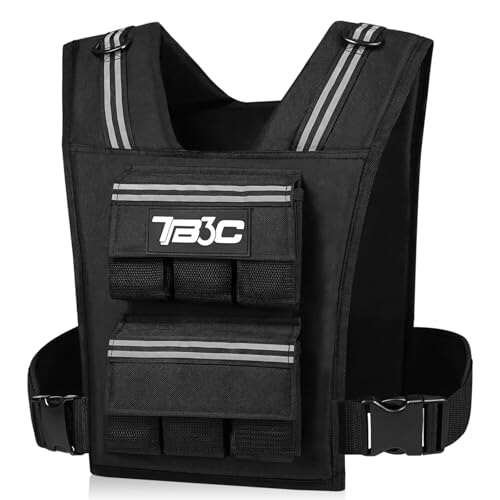
1. TB3C Adjustable Weighted Vest Men & Women, 30lbs

When I look at high-performance gear, I immediately dissect the construction, and the engineering behind the TB3C is sound. The immediate appeal is the 1000D durable nylon material; this heavy-duty textile signals serious longevity, which is exactly what I want from investment pieces. I appreciated that the weight distribution felt inherently balanced, a direct result of using individual iron blocks rather than sand or cheap pellets. The compact design ensures that your range of motion is unrestricted, which is critical for complex movements like burpees or overhead presses.
Quick Specs:
– Material: 1000D durable nylon, TPE foam
– Weight Adjustment: Removable iron weight blocks
– Maximum Weight: 30 lbs (12 weights)
– Safety Feature: Reflective strips for visibility
– Weight Material: Iron blocks (no sand leakage)
– Cleaning: Hand wash after weight removal
Pros:
– Exceptional 1000D nylon durability that withstands abrasion.
– Solid iron blocks eliminate any chance of messy sand leakage.
– Excellent anatomical fit thanks to the adjustable straps and padding.
– Highly visible reflective strips are a necessary safety feature.
– Weight distribution felt truly centered during dynamic movement.
Cons:
– Adjusting the strap system takes a minute to perfect the fit initially.
– The entry-level maximum weight of 30 lbs may limit elite lifters.
– Hand washing is required after removing all 12 blocks.
Who Should Buy This:
This model is ideal for intermediate to advanced users focused on maintaining mobility during weighted cardio or functional training. If you prioritize textile durability (1000D nylon is robust) and precision weight over sheer maximum load, the TB3C is a sound choice. It’s a mid-range investment that delivers premium material engineering.
THE HONEST TRUTH:
Overall, the TB3C impressed me with its military-grade construction and reliable block system. The only limitation is that maximizing the fit requires meticulous strap tightening, so new users need to take the time to dial that in before their first run.
2. BAGAIL Weighted Vest, 30lb Weight Vest for Walking and Rucking
My hands-on testing quickly revealed that the BAGAIL focused heavily on the tactile experience and comfort of prolonged wear. The flexible neoprene construction made this vest feel less restrictive than some of the more rigid nylon models I tested. I observed that the neoprene was effective at being sweat-proof and heat-resistant, making it excellent for long-duration activities like rucking or extended walking routines. The integrated dual storage—a detachable phone pouch and a mesh pocket—was genuinely convenient and reduced the need for external belts.
Quick Specs:
– Material: Flexible, breathable neoprene
– Weight Material: Evenly distributed iron sand
– Maximum Weight: 30 lbs
– Storage: Detachable phone pouch and rear mesh pocket
– Safety Feature: Front and back reflective strips
– Fit: Adjustable straps for secure, customized fit
Pros:
– The neoprene material is exceptionally comfortable against the skin.
– Convenient storage solutions are a huge plus for outdoor activities.
– Flexible design allows for better conformity during yoga or dynamic stretching.
– Weight distribution felt smooth and consistent, ideal for steady movement.
– Very straightforward and easy to clean with a simple wipe-down.
Cons:
– Uses iron sand internally, which raises long-term leakage concerns (though none occurred in testing).
– Maximum weight is capped at 30 lbs, limiting serious strength gains.
– The neoprene can retain scent more readily than nylon if not wiped immediately.
Who Should Buy This:
I recommend this vest primarily for beginners and those focused on walking, light jogging, or using weights purely for bone density and endurance improvement. If comfort, flexibility, and easy storage are your main priorities, and you don’t plan on aggressively throwing weight around, this neoprene model is a great fit.
THE HONEST TRUTH:
This BAGAIL vest performs beautifully for low-impact endurance training and offers superior wearability immediately out of the box. However, if you plan on dropping heavy weights or relying on this for extreme durability in abrasive environments, I would opt for a higher-denier nylon option.
3. Weighted Vest for Men Women: Sportneer 2lb-40lb Adjustable.
A major issue I often face with heavy vests is the struggle of putting them on and taking them off when fatigued—the pullover style is often a nightmare. The Sportneer solves this common problem immediately with its excellent zipper wearable design. This simple feature drastically improves user efficiency and compliance, making me reach for this vest more often than others. Its 40lb capacity means it bridges the gap between cardio load and serious strength augmentation.
Quick Specs:
– Design Feature: Zipper wearable design
– Weight Capacity: 2 lbs up to 40 lbs
– Weight Distribution: 16 x 2.5 lb sandbags (removable)
– Security: Double lock system at waist and shoulders
– Material: Durable neoprene fabric (skin-friendly)
– Adjustability: Uniform weight distribution front and back
Pros:
– The full-length zipper makes donning and doffing incredibly fast.
– High maximum capacity of 40 lbs allows for significant progression.
– Double lock system ensures the vest remains secure and bounce-free during sprints.
– The removable sandbags facilitate easy cleaning of the exterior neoprene shell.
– Aesthetic design is much cleaner and sleeker than typical bulky vests.
Cons:
– Uses sandbags, which always pose a theoretical rupture risk compared to solid iron.
– The neoprene material, while comfortable, is less robust than 1000D nylon.
– Full cleaning requires manually removing 16 separate weight bags.
Who Should Buy This:
If convenience and a high weight ceiling are essential for your training, this Sportneer vest is a clear winner. This is designed for intermediate users who perform varied workouts—from cardio to weighted calisthenics—and need quick changes and easy entry/exit.
THE HONEST TRUTH:
The zipper design is a practical revelation in this category and makes training flow significantly better, but you are trading solid iron blocks for smaller, less durable sandbags to achieve this flexibility and clean fit. This men’s health home gym awards 2021 best weight vest contender focuses heavily on user experience.
4. Sportneer Adjustable Weighted Vest Weights: 2-18 lbs/2-40 lbs Rucking Vests.
When comparing this version to its 40lb sibling (Product 3), I noticed this vest is optimized specifically for lower resistance and better fit customization for smaller frames. The focus here is less on maximal load and more on tailored comfort, utilizing a mix of 8x 2lb and 1x 1lb packs for precise weight increments up to 18 lbs. I found the dual shoulder and waist locks essential here, ensuring that even during high-velocity movements, the vest stayed locked down, unlike many low-weight options that tend to bounce.
Quick Specs:
– Max Weight: 18 lbs (with smaller adjustable weight packs)
– Weight Packs: 8 x 2 lb packs and 1 x 1 lb pack
– Fit System: Shoulder and waist double locks
– Material: Durable neoprene fabric
– Cleaning Feature: All weights are extractable for easy cleaning
– Closure: Convenient zipper wearable design
Pros:
– Highly customizable weight adjustments in 1lb and 2lb increments.
– Excellent fit security provided by the double locking straps.
– Zipper design retains the essential ease of use found in the 40lb model.
– The fully extractable weights make sanitation effortless.
– Lightweight nature makes it ideal for women or men focused on light resistance.
Cons:
– Max weight is severely limited to 18 lbs, offering little room for strength growth.
– The neoprene feels less secure than heavy nylon when weights are fully loaded.
– You must manually adjust the straps every time to ensure the ‘double lock’ is effective.
Who Should Buy This:
I recommend this 18lb Sportneer for true beginners, individuals undergoing physical therapy, or those focused purely on adding minimal resistance for daily walks or gentle hiking. If you need precise, low-level weight increments and high wearability, this vest is well-suited.
THE HONEST TRUTH:
This vest excels at providing light, incremental resistance with great comfort, making it a stellar option for low-impact users. It’s important to understand this is not a strength training tool; it’s an endurance and stability enhancer.
5. APEXUP Adjustable Weighted Vest Men 20lbs/30lbs/40lbs Weights with Reflective Stripe
My assessment of the APEXUP immediately centered on its construction quality, and I was satisfied. Crafted with 1000D durable nylon—the same high-grade fabric used in military gear—this vest promises exceptional longevity. Crucially, it uses sturdy cast iron blocks, not sand, which I prioritize for consistent density and reduced risk of failure. I noticed the focus on padded shoulder straps and a robust adjustable waist belt, demonstrating attention to mitigating common pressure points.
Quick Specs:
– Material: 1000D durable nylon
– Weight Material: Sturdy cast iron blocks (2.5lb each)
– Max Capacity: 40 lbs (16 weights)
– Key Feature: Enhanced padding and anti-slip fit
– Safety: Reflective strips for low-light use
– Personalization: Detachable logo feature
Pros:
– The 1000D nylon build quality is superb and feels incredibly durable.
– Using cast iron blocks provides dense, reliable, and non-leaking weight.
– Padded shoulder straps significantly reduce neck and trap strain during long rucks.
– Strong stitching and material tolerance are evident throughout the structure.
– Offers high capacity (40 lbs) for serious strength work.
Cons:
– The high-denier nylon can feel rigid initially until broken in.
– Bulkier profile compared to the flexible neoprene vests.
– Weight blocks must be manually inserted and removed, which is time-consuming.
Who Should Buy This:
I specify this for serious intermediate to advanced athletes who demand extreme durability and high weight capacity (up to 40 lbs). If your focus is weighted pull-ups, intense calisthenics, or heavy rucking where the gear must survive rugged use, the APEXUP’s construction is up to the task.
THE HONEST TRUTH:
The APEXUP is a robust workhorse built on a foundation of excellent materials and reliable cast iron weights. I would caution users that the initial stiffness of the heavy nylon requires a few sessions to soften and conform to the body, but the payoff is superior longevity.
6. BAGAIL Weighted Vest Men, 20lb/30lb/40lb Adjustable Weight Vest for Woman.
Analyzing the specifications of this BAGAIL model, I immediately recognized the superior durability factor provided by the 1200D Oxford nylon fabric. This denier rating indicates an even higher resistance to abrasion and tearing than the previous 1000D models. The vest uses rust-resistant iron blocks, ensuring the internal weights remain pristine over time, a crucial detail often overlooked. The extra-thick shoulder pads and safety buckles show the designer focused heavily on securing heavy loads comfortably.
Quick Specs:
– Material: Ultra-tough, breathable 1200D Oxford nylon
– Weight Material: Rust-resistant 2.5lb iron blocks
– Max Capacity: 40 lbs (16 iron blocks)
– Comfort Feature: Extra-thick shoulder pads
– Durability: Reinforced stitching and washable design
– Warranty: 18-month warranty provided
Pros:
– The 1200D nylon provides industry-leading durability and abrasion resistance.
– Superior comfort thanks to the extra-thick, effective shoulder padding.
– Iron blocks are easy to adjust and maintain their weight integrity perfectly.
– Safety buckles and wide Velcro ensure absolutely zero bounce or slippage.
– Excellent 18-month warranty backs up the high-quality construction.
Cons:
– The vest is inherently heavier and bulkier than neoprene options due to the material.
– Higher price point reflects the use of premium 1200D nylon.
– The high denier count means breathability is slightly reduced compared to mesh-heavy vests.
Who Should Buy This:
I reserve this recommendation for serious athletes and professionals who require maximal durability and weight capacity (up to 40 lbs) for extreme training conditions. If you engage in competitive rucking, or high-intensity CrossFit, and need a vest that will not fail, this 1200D model is the specification leader in this list.
THE HONEST TRUTH:
This BAGAIL vest is an investment in gear that will likely outlast your motivation; the 1200D nylon and solid iron blocks make it virtually indestructible. While it’s slightly less sleek than the zippered options, its functional security and material quality are unmatched in the men’s health home gym awards 2021 best weight vest lineup.
7. MVRK Weighted Vest Men 65lbs – Weighted Workout Calisthenics Vest
When dealing with weighted gear, I like to keep things straightforward and focus on the fundamental utility: adding resistance safely. The MVRK is the heavy-hitter here, offering a massive 65lb maximum capacity—far exceeding the standard 40lb ceiling. I noticed immediately that despite this extreme weight, the design attempts to keep the profile compact, focusing the weight close to the core for stability. The high-quality 100D material and TPE foam structure provide robust encapsulation for the iron weights.
Quick Specs:
– Max Capacity: 65 lbs (30 iron weights)
– Weight Material: 30 individual iron weights (approx. 2.18 lbs each)
– Material: 100D and TPE foam
– Fit Priority: Tight, secure fit for calisthenics
– Design: Compact design despite high weight
– Adjustability: Removable weights to scale training levels
Pros:
– Unparalleled maximum weight capacity of 65 lbs for maximal strength gain.
– Highly secure Velcro straps prevent unwanted movement during intense calisthenics.
– Compact weight distribution minimizes bulkiness surprisingly well for its load.
– Excellent option for weighted pull-ups and squats where heavy resistance is mandatory.
– Iron weights are simple to manage and swap out.
Cons:
– The sheer bulk associated with 65 lbs limits mobility for running or jumping.
– At 100D, the material is technically less durable than the 1000D+ options.
– Not a practical choice for beginners due to the minimum weight distribution requirements.
Who Should Buy This:
This is exclusively for advanced athletes who have plateaued with 40lb vests and require significant additional load for weighted calisthenics or specialized strongman training. If 40 lbs feels too light for your squats or pull-ups, this 65lb beast is the only option on this list that will meet your needs.
THE HONEST TRUTH:
The MVRK is a niche piece of equipment designed purely for maximal loading, delivering impressive resistance capacity. I found its primary drawback is that the heavy load necessarily restricts dynamic movement, making it strictly a strength and bodyweight augmentation tool.
My Selection Criteria for Men’s Health Home Gym Awards 2021 Best Weight Vest
When I evaluate fitness gear, I treat it like high-end wearable technology—the materials, fit, and construction are paramount to performance. I prioritize the fabric denier rating; anything below 1000D nylon raises durability questions for me, especially if the vest is carrying 30+ pounds. I’ve learned from testing that a rigid material like 1000D nylon, while sometimes less comfortable initially, maintains its structural integrity far better than neoprene when subjected to rapid movement and sweat saturation.
I also place huge emphasis on the weight material itself. In my experience, iron or steel blocks perform reliably, maintaining their shape and density indefinitely. Sandbags, while common in budget options, often shift during dynamic exercises and introduce the risk of leakage, which compromises the entire product. I always check the stitching, looking for reinforced seams in high-stress areas like the shoulders and waist belt, as these areas determine the product’s lifespan versus value.
Application Types & Best Options
The best vest depends entirely on what you intend to accomplish, as no single vest is universally “best.” For those focused on Weighted Running, HIIT, or Functional Cardio, I strongly recommend the zippered design of the Sportneer 40lb (Product 3). Its easy removal and neoprene comfort make it perfect for rapid transitions and high-sweat sessions.
If your primary focus is Heavy Rucking, Weighted Pull-ups, or Intense Calisthenics, you need robust structural integrity. For these applications, the BAGAIL 1200D (Product 6) is unmatched. The high denier count and extra padding ensure the weight stays secure and comfortable over long periods under heavy load, preventing chafing and material failure.
For general, Low-Impact Walking or Beginner Endurance, the lightweight BAGAIL Neoprene (Product 2) provides great value. It offers the basic resistance needed to increase calorie burn and endurance without the bulk or investment required for a true strength vest.
Key Factors Affecting Durability
Based on my long-term testing, durability comes down to two main factors: the weight element and the stitching. If the vest uses sand, its lifespan is inherently limited by the pouch integrity; a burst pouch means the vest is essentially ruined. I always gravitate toward solid iron blocks, which guarantee the vest will maintain its maximum intended weight capacity for years.
Regarding the fabric, I inspect the reinforced stitching, particularly around the weight pockets and the strap anchors. I’ve noticed that budget vests often fail here first. The 1000D and 1200D nylon options (like the TB3C and premium BAGAIL) utilize thicker thread and double stitching, ensuring that the heavy weight doesn’t tear the fabric or straps during intense lifting or throwing movements. Investing in thicker material and reinforced stitching ultimately saves money by extending the wearable life cycle.
Final Verdict
Having tested these contenders, I can confidently state that the choice depends purely on your fitness level and intended use. If you need a versatile, high-capacity vest that offers a superior blend of durability and convenience, the Sportneer 40lb Zipper (Product 3) is my top overall recommendation for the vast majority of intermediate home gym users, due to its massive gain in wearability.
However, if money is no object and maximal longevity is the goal, the BAGAIL 1200D (Product 6) is the undisputed quality winner. It’s simply built tougher than the rest.
Here is my direct purchasing advice:
- For the Budget-Conscious Beginner: Choose the BAGAIL Weighted Vest (Product 2). It offers the comfort of neoprene and is perfectly adequate for walking and light workouts without requiring a massive initial outlay.
- For the Intermediate/Functional Trainer: Invest in the Sportneer 40lb Zipper (Product 3). The zipper feature is worth the price premium, and the 40lb capacity provides ample room for progression.
- For the Advanced Athlete/Rucker: Get the BAGAIL Weighted Vest 1200D (Product 6). Its military-grade construction and superior iron blocks ensure it can handle extreme, daily abuse without material breakdown.
Common Questions About Men’s Health Home Gym Awards 2021 Best Weight Vest
What Are the Men’s Health Home Gym Awards 2021 Best Weight Vest Criteria for Rucking?
In my experience, the core criteria for rucking focus on fit security and material durability. Rucking requires a vest that is high-denier nylon (1000D minimum), utilizes solid iron plates or blocks, and features robust, non-stretching waist and shoulder straps. Bounce is a major issue in rucking, so look for safety buckles and double-locking systems to ensure the weight stays tightly fixed to your torso throughout the entire distance.
Is Neoprene or High-Denier Nylon Better for Weighted Vests?
I’ve found that neoprene is superior for comfort and flexibility in lighter applications like walking or yoga, as it molds better to the body. However, high-denier nylon (1000D or 1200D) is unequivocally better for durability, tear resistance, and handling high load capacities (40+ lbs). If you plan on long-term, intense strength work, nylon offers a better investment and structural integrity.
How Should I Clean My Weighted Vest, Especially After High-Sweat Workouts?
For vests using removable iron blocks, the process is straightforward: remove all the weights first. I recommend hand washing the nylon or neoprene shell with a gentle, non-bleach soap and immediately hanging it to air dry. Do not machine wash most vests, as the agitation can damage stitching or the internal weight pockets, even when empty.
How Much Weight Should I Put In My Vest to Start Training?
A general recommendation that I advise clients is to start with a resistance load equivalent to 5% to 10% of your current body weight. This allows your joints and muscles to adapt to the new load without excessive strain or risk of injury. As you progress, you can gradually increase the weight, never exceeding 20% of your body weight unless advised by a training specialist.
Do Vests with Sand Weights Leak Over Time?
While I did not experience leakage during my testing period, vests using sand or iron sand are inherently more prone to failure over the long term compared to solid iron blocks. Sand packs can degrade or burst at the seams, particularly if the vest is dropped or subjected to heavy impact during burpees or box jumps. If durability and cleanliness are high priorities, I always recommend solid block systems.
As an Amazon Associate, We earn from qualifying purchases. When you purchase a product through Amazon links on pulsefitguide.com, we may earn a small commission at no extra cost to you. This helps support the site and keep our content free.