
Quick Summary: For joint health, both treadmill and outdoor running offer benefits and drawbacks. Treadmills provide a controlled, cushioned surface that can be gentler on joints, while outdoor running offers varied terrain and natural shock absorption, but also carries risks from uneven surfaces. The best choice depends on individual factors like your joint health history, running form, and the specific environment.
Choosing between running on a treadmill and hitting the pavement (or trail!) can feel like a big decision, especially when you’re thinking about your knees and ankles. It’s totally normal to wonder which option is kinder to your joints. We all want to stay active and healthy without causing ourselves pain!

This guide is here to break down the science in a super simple way. We’ll look at what makes each type of running unique and how that impacts your joints. Think of me as your friendly coach, helping you figure out the best path forward for your body.
We’ll explore the cushioning, impact, and other factors that matter. By the end, you’ll have a clear picture to help you decide what works best for YOU.
Treadmill vs. Outdoor Running: What’s Happening to Your Joints?
When you run, your joints, especially in your knees, hips, and ankles, have to absorb the shock of your feet hitting the ground. This impact is a natural part of running, but how much shock your joints experience can change depending on where you run.
Both treadmills and outdoor surfaces have different ways of handling this impact. Understanding these differences is key to making a choice that supports your joint health and helps you avoid unnecessary strain.
The Treadmill Experience: Controlled Impact
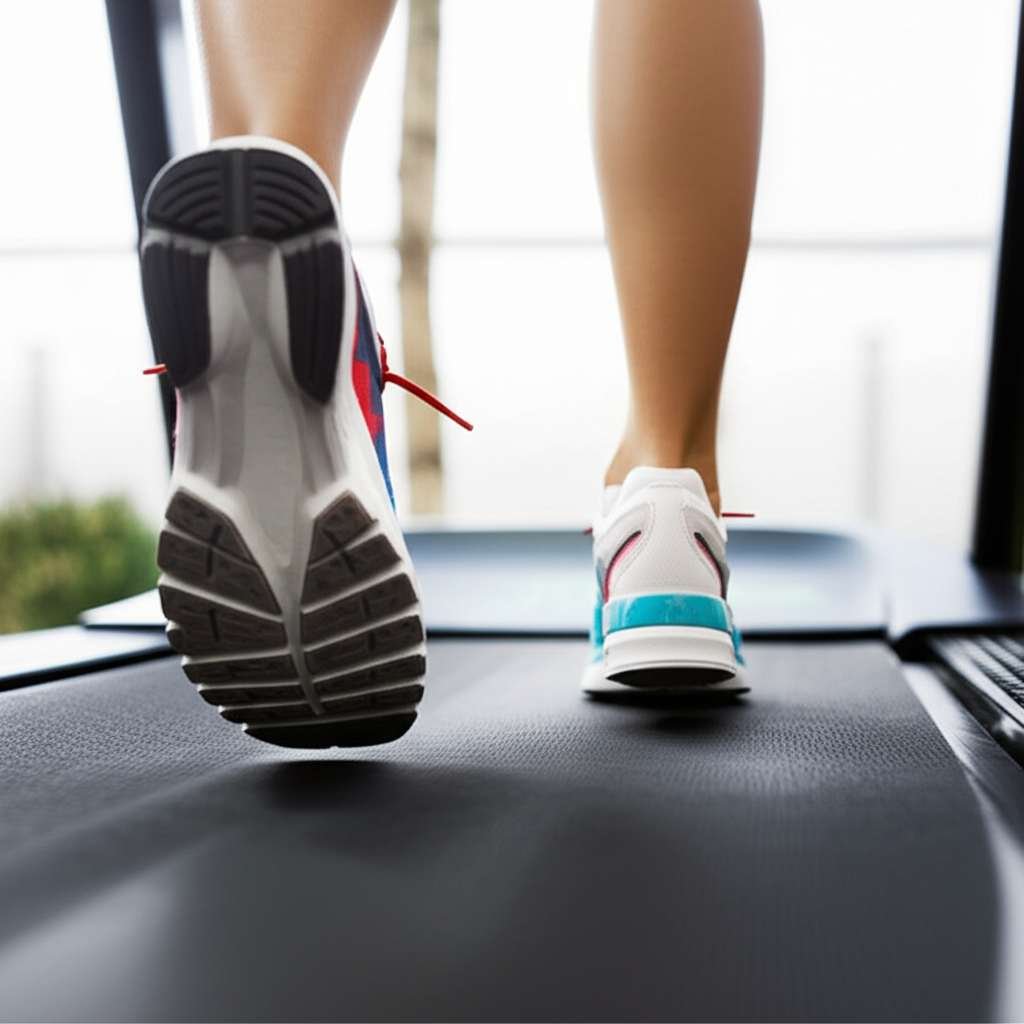
Treadmills are designed with a running belt that moves under your feet. This setup offers a consistent and predictable surface to run on. Many modern treadmills also have built-in cushioning systems designed to absorb some of the impact for you.
This controlled environment can be a real plus, especially if you’re new to running or have concerns about your joints. The predictable surface means you don’t have to worry as much about sudden twists or uneven ground.
Pros of Treadmill Running for Joints:
- Consistent Cushioning: Most treadmills have a cushioned deck that absorbs impact, potentially reducing stress on your knees, hips, and ankles compared to very hard outdoor surfaces.
- Controlled Environment: The flat, even surface eliminates the risk of tripping on uneven terrain, twists from roots or rocks, or sudden changes in surface hardness.
- Pace and Incline Control: You can precisely control your speed and incline, allowing for gradual increases in intensity and controlled workouts, which can be beneficial for joint rehabilitation or building strength slowly.
- Weather Independence: You can run regardless of rain, snow, or extreme heat, which can help maintain a consistent training schedule without exposing your joints to unpredictable environmental stresses.
Cons of Treadmill Running for Joints:
- Repetitive Motion: The consistent, flat surface can lead to repetitive stress on the same joints and muscles. This can sometimes lead to overuse injuries if not varied.
- Less Natural Gait: Some runners find that the moving belt encourages a slightly different stride, which might not engage stabilizing muscles as effectively as outdoor running.
- Lack of Variety: The lack of varied terrain means your body doesn’t adapt to different stresses, which can be a disadvantage for building resilience in your joints and connective tissues over time.
- Potential for Over-Reliance on Cushioning: Relying solely on treadmill cushioning might not fully prepare your body for the varied impacts encountered when running outdoors.
The Outdoor Running Experience: Natural Variation
Running outdoors exposes you to a variety of surfaces – asphalt, concrete, dirt trails, grass, and more. Each of these has its own unique impact characteristics.
While some outdoor surfaces can be harder than a treadmill belt, others, like trails or grass, offer natural shock absorption. The varied terrain also forces your body to adapt, engaging more stabilizing muscles.
Pros of Outdoor Running for Joints:
- Varied Impact: Running on different surfaces like trails, grass, or even softer paths can offer natural shock absorption, which can be beneficial for joint health.
- Muscle Engagement: Uneven terrain requires your body to use more stabilizing muscles around your joints. This can lead to stronger, more resilient joints over time.
- Natural Gait: Outdoor running often promotes a more natural running form, as your body adapts to the ground beneath you.
- Mental Benefits: The fresh air, scenery, and sense of exploration can reduce stress, which indirectly benefits overall well-being and may even reduce perceived pain.
Cons of Outdoor Running for Joints:
- Harder Surfaces: Running on concrete or very hard asphalt can deliver a significant impact to your joints, potentially increasing the risk of stress fractures or joint pain if not managed.
- Uneven Terrain Risks: Trails and uneven paths can increase the risk of ankle sprains, twists, or falls, which can lead to acute joint injuries.
- Inconsistent Conditions: Weather can affect your run, making surfaces slippery or hard, and unpredictable conditions can put extra stress on joints.
- Lack of Control: You have less control over the impact and surface consistency compared to a treadmill.
Key Factors Affecting Joint Impact
When we talk about which is “better” for your joints, it’s not just about the machine versus the outdoors. Several other factors play a huge role in how your joints feel after a run.
These include the specific surface you’re running on, your own body mechanics, and even the shoes you wear. Let’s break these down a bit.
Surface Hardness
The material your feet land on is a big deal. Think about the difference between jumping on a trampoline versus jumping on concrete – it’s a lot softer on the trampoline!
Similarly, running surfaces vary in hardness. Concrete is generally the hardest, followed by asphalt, then softer tracks, and then natural surfaces like grass or dirt trails. A harder surface means more impact force travels up through your legs and into your joints.
A study published in the Journal of Applied Biomechanics highlighted how different surfaces affect impact forces during running. They found that softer surfaces tend to reduce the peak impact forces experienced by the runner.
Cushioning Technology
Both treadmills and modern running shoes come with different levels of cushioning. This technology is specifically designed to absorb some of the shock from your stride.
Treadmill decks can range from very firm to highly cushioned. Likewise, running shoes have a wide spectrum of cushioning, from minimalist designs to maximalist ones with thick foam midsoles. The right cushioning can significantly reduce the forces transmitted to your joints.
For example, advanced foam technologies in shoes, like those found in many popular brands, are engineered to provide both a soft landing and energy return, helping to dissipate impact forces. The Cooper Institute often discusses how shoe technology impacts performance and injury prevention.
Running Form and Biomechanics
How you run is arguably one of the most important factors. Even on the softest surface, poor running form can put excessive stress on your joints.
Things like overstriding (landing your foot too far in front of your body), a heavy heel strike, or a lack of proper knee bend can all increase impact. Good form, on the other hand, helps your body absorb shock naturally and efficiently.
This is where a coach or physical therapist can be incredibly helpful. They can analyze your gait and suggest adjustments to improve your biomechanics, reducing the load on your joints no matter where you run.
Previous Injuries and Joint Health
If you have a history of joint pain, arthritis, or previous injuries, your joints might be more sensitive to impact. In these cases, a more controlled and cushioned environment can be beneficial.
A treadmill might be a safer starting point or a go-to option if you’re experiencing joint discomfort. However, it’s always best to consult with a healthcare professional or physical therapist who can provide personalized advice based on your specific condition.
According to the National Institute of Arthritis and Musculoskeletal and Skin Diseases (NIAMS), low-impact exercises are often recommended for individuals with arthritis to maintain fitness while minimizing joint stress.
Treadmill vs. Outdoor Running: A Side-by-Side Comparison
To make things even clearer, let’s put the key differences into a table. This can help you quickly see where each option stands when it comes to your joints.
| Feature | Treadmill Running | Outdoor Running |
|---|---|---|
| Surface Consistency | High (flat, predictable) | Low (varied terrain: concrete, asphalt, trails, grass) |
| Cushioning | Built into the deck, varies by machine | Depends on surface (hardest on concrete, softest on grass/trails) and shoe technology |
| Impact Force | Generally moderate and consistent; can be reduced by treadmill cushioning | Can be high on hard surfaces, lower on softer surfaces; varies with each step |
| Risk of Acute Injury (e.g., sprains, falls) | Low (stable surface) | Moderate to High (uneven terrain, obstacles) |
| Risk of Overuse Injury (e.g., stress fractures, joint pain) | Moderate (repetitive motion on a consistent surface) | Variable (depends on surface, form, and intensity) |
| Muscle Engagement (Stabilizers) | Lower (less need to adapt to terrain) | Higher (requires constant adjustment to unevenness) |
| Control Over Workout | High (pace, incline, time) | Lower (affected by environment, traffic, hills) |
| Weather Dependence | None | High (can force changes due to rain, snow, heat) |
Making the Best Choice for Your Joints
So, is one definitively “better” than the other? The truth is, it’s a personal decision based on your body, your goals, and your circumstances.
For many beginners, or those with existing joint issues, starting with a treadmill can be a smart move. It allows you to build a base fitness level in a controlled environment. You can gradually increase your mileage and intensity without the added stress of unpredictable outdoor conditions.
If you’re heading outdoors, choosing your surfaces wisely is crucial. Opt for softer paths like well-maintained trails, grass, or even a running track over hard concrete sidewalks whenever possible.
Tips for Joint-Friendly Running (Indoors & Outdoors)
No matter where you choose to run, there are always ways to be kinder to your joints. Here are some practical tips:
- Warm-Up Properly: Always start with 5-10 minutes of light cardio (like brisk walking) and dynamic stretches (leg swings, arm circles) to prepare your muscles and joints for the impact.
- Cool Down and Stretch: After your run, take a few minutes to walk and then perform static stretches, holding each stretch for 20-30 seconds. Focus on your calves, hamstrings, quadriceps, and hips.
- Wear the Right Shoes: Invest in good quality running shoes that fit well and are appropriate for your foot type and running style. Replace them regularly (typically every 300-500 miles).
- Gradually Increase Intensity: Avoid sudden jumps in distance, speed, or frequency. Follow the “10% rule” – don’t increase your weekly mileage by more than 10% week over week.
- Listen to Your Body: This is the most important tip! If you feel pain, especially sharp or persistent joint pain, stop running. Rest, ice, and consider consulting a healthcare professional.
- Incorporate Strength Training: Stronger muscles around your joints provide better support and shock absorption. Focus on exercises for your quadriceps, hamstrings, glutes, and core.
- Cross-Train: Mix in other low-impact activities like swimming, cycling, or elliptical training. This gives your joints a break from the repetitive impact of running while still improving cardiovascular fitness.
- Focus on Good Form: Try to maintain an upright posture, a slight forward lean from the ankles, and aim for a midfoot or forefoot strike rather than a heavy heel strike. Keep your cadence (steps per minute) relatively high (around 170-180 is often recommended).
When to Lean Towards the Treadmill
You might find the treadmill is your best friend if:
- You are recovering from a joint injury.
- You have a diagnosed condition like arthritis that flares up with impact.
- You live in an area with very hard or unsafe running surfaces.
- You need to precisely control your workout due to specific training goals or limitations.
- Weather is consistently a barrier to outdoor running.
When to Embrace Outdoor Running
Outdoor running might be a great fit if:
- You enjoy being in nature and the mental benefits it provides.
- You want to challenge your body with varied terrain and improve your proprioception (your body’s awareness of its position in space).
- You have access to safe, softer running paths like trails or parks.
- You’re looking to build resilience in your joints and supporting muscles.
- You want to experience the variety and sensory input that outdoor environments offer.
FAQ: Your Treadmill vs. Outdoor Running Questions Answered
Q1: Is running on a treadmill bad for my knees?
Running on a treadmill isn’t inherently bad for your knees. In fact, the cushioned deck can be gentler than hard surfaces like concrete. However, repetitive motions and poor form can still cause knee pain. Focusing on good form, proper footwear, and listening to your body is key.
Q2: Can outdoor running be too hard on my joints?
Yes, outdoor running can be harder on your joints if you consistently run on very hard surfaces like concrete or asphalt, or if you have poor running form. Uneven terrain also increases the risk of twists and sprains. Choosing softer surfaces like trails or grass and wearing supportive shoes can help mitigate this.
Q3: Which surface is the absolute best for joint pain – treadmill, asphalt, or trail?
There’s no single “best” surface for everyone, as it depends on your individual joint health and how you run. Generally, trails and grass offer the most natural shock absorption. Treadmills provide consistent cushioning. Asphalt and concrete are typically the hardest and can put more stress on joints.
Q4: Should I alternate between treadmill and outdoor running?
Absolutely! Alternating can be a great strategy. It allows you to get the benefits of varied terrain and muscle engagement from outdoor running, while also using the controlled, cushioned environment of the treadmill for consistent workouts or recovery days. This cross-training approach can help prevent overuse injuries.
Q5: How important are running shoes for protecting my joints?
Running shoes are extremely important! They provide cushioning to absorb impact, support your foot’s natural mechanics, and can help prevent injuries. Wearing the wrong shoes, or worn-out shoes, can significantly increase the stress on your joints.
Q6: I’m a complete beginner. Where should I start running for my joints?
As a beginner, starting on a treadmill can be a good option because it offers a controlled environment and consistent cushioning. Alternatively, if you’re running outdoors, choose a flat, soft surface like a park path or a grassy area, and focus on short, easy runs to build up gradually.
Q7: Can strength training help my joints if I run?
Yes, strength training is crucial! Stronger muscles around your knees, hips, and ankles act like natural shock absorbers, supporting your joints and reducing the load they experience during running. Incorporating exercises for your glutes, quads, hamstrings, and core is highly recommended.
Conclusion: Your Joints, Your Choice, Your Health
Deciding whether a treadmill or outdoor running is “better” for your joints isn’t about finding a single right answer, but rather understanding what works best for you. Both options have unique advantages and potential downsides.
The treadmill offers a predictable, cushioned environment that can be incredibly beneficial, especially for beginners or those managing joint pain. It allows for controlled training, regardless of the weather.
Outdoor running, on the other hand, engages your body in more dynamic ways, builds resilience through varied terrain, and offers the mental boost of being in nature. The key outdoors is to be mindful of your surface choices and potential hazards.
Ultimately, the most joint-friendly approach involves listening to your body, using appropriate footwear, warming up and cooling down, incorporating strength training, and gradually progressing your running routine. By being informed and making smart choices, you can enjoy the incredible benefits of running while keeping your joints happy and healthy for miles to come.
As an Amazon Associate, We earn from qualifying purchases. When you purchase a product through Amazon links on pulsefitguide.com, we may earn a small commission at no extra cost to you. This helps support the site and keep our content free.