

To prevent overeating, mastering portion control is key. Start by using smaller plates and serving sizes, and listen to your body’s hunger cues to avoid eating out of habit or boredom. Planning your meals ahead of time and practicing mindful eating can also make a big difference.
Portion control helps you enjoy your favorite foods without going overboard by managing how much you serve yourself. It involves being mindful of serving sizes, using proper tools like measuring cups, and paying attention to your hunger signals. With a few simple strategies, you can maintain a balanced diet and prevent overeating for better health and well-being.
Eating large portions can often lead to consuming more calories than your body needs, making it difficult to maintain a healthy weight. Many of us struggle to recognize true hunger versus emotional or mindless eating. By integrating portion control techniques into your daily routine—such as pre-portioning snacks, choosing smaller dishes, and eating slowly—you can develop healthier eating habits that promote fullness and satisfaction without excess. This practical approach to mindful eating helps you stay in tune with your body while still enjoying delicious meals without guilt or overindulgence.

How to Use Portion Control to Prevent Overeating
Understanding Portion Control and Its Benefits
Portion control involves managing the amount of food you eat in one sitting. It helps prevent overeating by making you aware of how much food you need to feel satisfied without excess. Using portion control can support weight management, improve digestion, and promote healthier eating habits overall.
Why Overeating Happens
Many people eat more than necessary because of large portion sizes, distractions during meals, or emotional eating. Recognizing these triggers is the first step toward better portion awareness. Being mindful can help you avoid eating beyond your body’s actual needs.
Key Principles of Portion Control
- Eat only until you feel satisfied, not stuffed.
- Use smaller plates and bowls to naturally limit portion sizes.
- Serve food in the kitchen instead of eating directly from packages.
- Pay attention to hunger and fullness cues.
Tools to Help Manage Portions
Measuring Cups and Spoons
Measuring tools help you learn what a proper portion looks like for different foods. Using them initially can train your eye to judge appropriate serving sizes.
Food Scales
A kitchen scale provides precise measurements, especially useful for weighing meats, vegetables, and snacks. It makes portion control more accurate and consistent.
Portion-Control Plates and Containers
Specialized plates and containers are designed to fit recommended portion sizes. They make it easier to serve and store correct amounts of food.
Practical Strategies for Portion Control
Follow Standard Serving Sizes
Knowing common serving sizes for different foods simplifies portion control. For example, a serving of cooked pasta is about half a cup and a serving of meat is roughly three ounces.
Pre-Portion Meals and Snacks
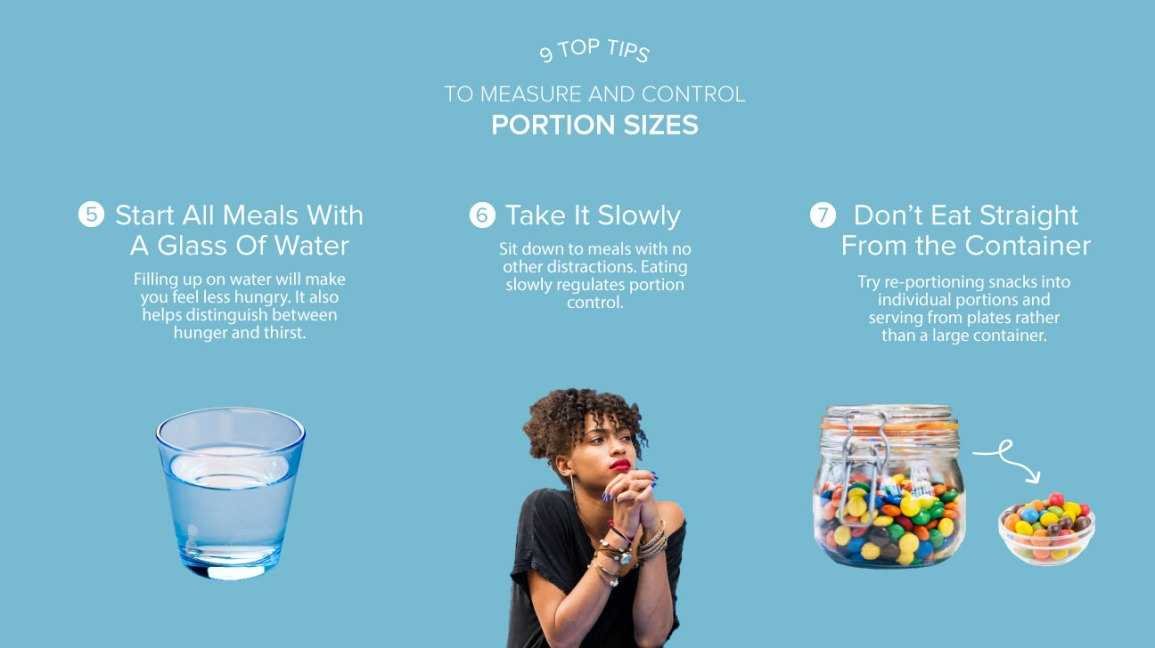
Dividing larger packages into smaller servings ahead of time prevents overeating. This approach makes it easier to grab a controlled portion when hungry.
Use Your Hands as Portion Guides
Your hands can serve as simple, portable tools for estimating portions:
- Fist: about one cup of cooked rice or pasta.
- Palm: roughly three ounces of meat or chicken.
- Thumb: about one tablespoon of butter or peanut butter.
Meal Planning for Effective Portion Control
Planning meals ahead of time helps you manage quantities and maintain variety. Include balanced portions of proteins, carbs, fats, and vegetables to improve nutrition and prevent overeating.
Create a Balanced Plate
Use the “Plate Method” as a visual guide:
| Food Group | Recommended Portion |
|---|---|
| Vegetables | Half of the plate |
| Proteins | One quarter of the plate |
| Carbohydrates | One quarter of the plate |
| Fats and oils | Small amounts as needed |
Incorporate Snacks Wisely
Opt for small, controlled portions of snacks like nuts, fruit, or yogurt. Avoid eating directly from large packages, which can lead to mindless overeating.
Mindful Eating Techniques
Being present during meals enhances your awareness of how much you’re consuming. Focus on your food, chew slowly, and savor each bite to recognize fullness cues.
Eat Without Distractions
Turn off screens and avoid multitasking during meals. This reduces mindless eating and helps you listen to your body’s signals.
Pause Between Bites
Taking breaks allows your brain to process fullness signals. Put down your utensils after each bite and assess how you feel before continuing.
Understanding Hunger and Fullness Cues
Learning to distinguish between true hunger and emotional or boredom eating is key. Eat when hungry and stop when satisfied, not when the plate is empty or cravings are strong.
Use the “Hunger Scale”
Rate your hunger from 1 to 10, with 1 being starving and 10 being overly full. Aim to eat when you’re around 3 or 4 and stop at about 6 or 7.
Drink Water Before Meals
Sometimes thirst is mistaken for hunger. Drinking a glass of water before eating can help you feel fuller and prevent unnecessary overeating.
Building Sustainable Habits
Consistent practice of portion control methods creates lasting healthy habits. Start small and gradually incorporate these strategies into your daily routine.
Track Your Portions and Progress
Keeping a food journal or using apps can help you stay accountable. Monitoring your intake makes you aware of habits and areas for improvement.
Stay Flexible and Patient
Adjust your portion control practices as needed. Remember that perfection isn’t necessary—progress is what counts toward healthier eating habits.
Related Topics
- Healthy meal planning tips
- Balancing macronutrients for optimal health
- Managing emotional eating triggers
- How to read food labels for portion sizes
- Meal prepping ideas for portion control
Using portion control doesn’t mean you have to sacrifice enjoyment or variety. By applying these practical tips and tools, you can better regulate your intake, prevent overeating, and develop a healthier relationship with food. Making mindful choices and paying attention to your body’s signals are simple steps toward a more balanced and satisfying diet.
How to stop Overeating for Weight Loss with Portion Control
Frequently Asked Questions
What are practical ways to measure appropriate portion sizes at home?
Use common household items to estimate portion sizes, such as a fist for vegetables or a deck of cards for lean meats. Investing in a set of measuring cups and a food scale also helps ensure accuracy. Planning meals in advance allows you to serve balanced portions without overestimating, making it easier to stick to your dietary goals.
How can mindful eating help with controlling portions?
Practicing mindful eating involves paying close attention to your hunger and fullness cues. Slow down your eating pace, savor each bite, and avoid distractions like screens. This awareness helps you recognize when you are satisfied, preventing overeating and fostering healthier eating habits.
What strategies enable consistent portion control when dining out?
Opt for smaller menu options or share dishes with others when dining out. Consider requesting half portions or taking leftovers home. Paying attention to your body’s signals and resisting the temptation to order extras reinforce disciplined portion sizes outside your home environment.
How can meal prep contribute to better portion management?
Preparing meals in advance allows you to portion out servings before eating. Using containers divided into specific sections can help control the amount of each food group you consume. This planning minimizes impulsive eating and supports staying within your desired calorie range.
What role does hydration play in preventing overeating?
Drinking a glass of water before meals can help you feel fuller, reducing the likelihood of overeating. Staying well-hydrated throughout the day also prevents mistaking thirst for hunger, helping you make more conscious decisions about when and how much to eat.
Final Thoughts
How to use portion control to prevent overeating is essential for maintaining a healthy diet. Keep servings small and use smaller plates to help regulate your intake. Pay attention to hunger cues and avoid eating out of boredom.
Planning meals ahead of time prevents impulsive eating and helps manage portions effectively. By practicing these strategies, you can enjoy your favorite foods in moderation. Small, consistent changes make a big difference in preventing overeating and supporting your overall wellness.
As an Amazon Associate, We earn from qualifying purchases. When you purchase a product through Amazon links on pulsefitguide.com, we may earn a small commission at no extra cost to you. This helps support the site and keep our content free.