

To create a weekly weight loss meal plan, start by setting realistic goals, then choose balanced, nutrient-rich foods that fit your tastes and lifestyle. Planning ahead ensures you stay on track and avoid unhealthy temptations. Incorporate portion control and variety to keep your meals satisfying and sustainable.
A well-structured weekly meal plan can make your weight loss journey more manageable and enjoyable. It helps you stay organized, control calorie intake, and ensure you’re nourishing your body properly. By dedicating a little time each week to planning, you can make healthier choices more consistently and avoid last-minute, less healthy options. Whether you’re a beginner or looking to refine your routine, creating a thoughtful meal plan is a powerful step toward reaching your weight loss goals with confidence and ease.

How to Create a Weekly Weight Loss Meal Plan
Creating a weekly meal plan for weight loss might sound hard at first, but with some simple steps, you can make it easier and more effective. A good plan helps you stay on track, avoid unhealthy snacks, and enjoy tasty meals that support your goals. Let’s explore how to build a meal plan that fits your lifestyle and goals.
Understanding Your Caloric Needs
Before starting your meal plan, knowing how many calories you need each day is important. Your daily calorie requirement depends on your age, size, activity level, and weight loss goals. Use online calculators to get an estimate of your maintenance calories and then subtract 500 calories to aim for weekly weight loss.
For example, if your maintenance calories are 2000 per day, try to eat around 1500 calories daily. This creates a calorie deficit that helps your body burn stored fat. Remember, it’s best to not go below 1200 calories for women and 1500 for men unless supervised by a healthcare professional.
Setting Realistic Weight Loss Goals
Set goals that are clear and achievable. Losing one to two pounds each week is a safe and sustainable target. Avoid fad diets or extreme calorie cuts that can harm your health or cause you to lose muscle instead of fat. Small, consistent changes help you build habits that last.
Decide how many days a week you want to cook at home and plan accordingly. If you’re busy, choose simple recipes that can be prepared quickly. Remember, consistency is key, so choose a plan you can realistically follow.
Choosing Nutritious and Satisfying Foods
Focus on incorporating a variety of foods to get all essential nutrients. Include lean proteins like chicken, turkey, fish, eggs, and plant-based options. Fill half of your plate with vegetables such as spinach, broccoli, and peppers for fiber and vitamins.
Whole grains like brown rice, oats, and whole wheat bread supply energy and fiber. Healthy fats from sources like avocados, nuts, seeds, and olive oil support heart health and keep you feeling full longer. Limit added sugars and processed foods to avoid unnecessary calories.
Planning Balanced Meals
Each meal should contain a good mix of protein, carbs, and healthy fats. This balance helps control hunger and stabilize blood sugar levels. Use a simple plate method:
- Half the plate: Vegetables or fruits
- One quarter: Protein
- One quarter: Whole grains or starchy vegetables
- Small amount: Healthy fats
Sample meal: Grilled chicken with roasted vegetables and a small serving of brown rice topped with a drizzle of olive oil.
Creating a Weekly Meal Schedule
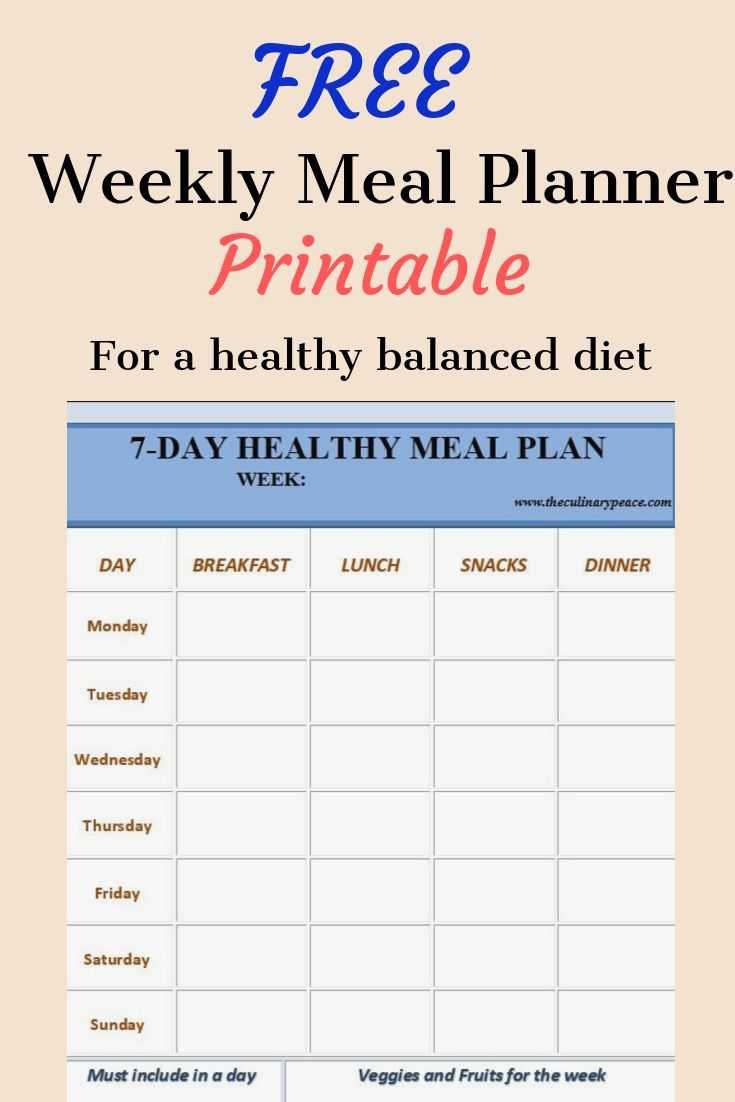
Start by listing breakfast, lunch, dinner, and snacks for each day. Mix and match meals to prevent boredom. Include favorite healthy recipes and new ideas to keep the plan exciting. Use a printable chart or app for easy access.
Plan some “batch cooking” days to prepare multiple meals at once. Store portions in containers to save time during busy weekdays. This way, you avoid last-minute unhealthy choices and stay on track.
Incorporating Snacks Wisely
Healthy snacks can prevent hunger between meals and keep your energy steady. Choose options like fresh fruit, Greek yogurt, nuts, or veggie sticks with hummus. Keep snack portions small and avoid processed snacks high in sugar or salt.
Pre-portion snacks in small containers or bags. Having ready-made snacks ready helps you avoid impulsive, less healthy choices.
Meal Prep Tips and Tricks
Prepare ingredients ahead of time. Wash, chop, and store vegetables in the fridge. Cook grains and proteins in bulk to use throughout the week. Use versatile ingredients to create different meals.
Invest in good storage containers. Label meals with dates to keep food fresh. This helps save time and reduces food waste.
Staying Flexible and Making Adjustments
Your plan shouldn’t feel restrictive. If you have a special occasion or craving, find healthier ways to indulge. For example, swap ice cream with frozen yogurt or baked chips instead of fried ones.
Track your progress and note how different foods make you feel. Adjust portion sizes or ingredients to better suit your preferences. Flexibility makes it easier to stick with your plan long-term.
Monitoring Your Progress
Keep a food journal or use apps to log what you eat daily. Tracking helps identify patterns, such as areas where you can improve. Weigh yourself weekly but don’t get discouraged by minor fluctuations.
Taking progress pictures and measuring your body can also motivate you. Celebrate small victories and stay focused on your journey.
Additional Tips for Success
Stay hydrated by drinking plenty of water. Aim for at least 8 glasses per day. Avoid sugary drinks that add empty calories.
Get enough sleep each night. Lack of sleep can increase hunger hormones and lead to overeating. Manage stress with activities like walking, meditation, or hobbies.
Remember, patience is vital. Weight loss takes time, but steady efforts pay off. Stick with your plan and adjust as you learn what works best for you.
Using Technology to Support Your Meal Plan
Apps can help you plan meals, track calories, and create shopping lists. Many apps offer recipes, portion guides, and reminders to stay on schedule. Use technology to stay organized and motivated.
Social media groups or online forums can also provide support and ideas. Sharing your progress and challenges encourages accountability and inspiration.
Creating a Shopping List Based on Your Meal Plan
Make a list of all needed ingredients before grocery shopping. Focus on whole foods and avoid impulse purchases. Organize your list by categories like produce, grains, proteins, dairy, and pantry items.
Stick to your list to prevent buying unnecessary items that can derail your plan. Consider buying in bulk for staple items to save money.
Developing a weekly weight loss meal plan is about understanding your needs, choosing nutritious foods, and preparing ahead. By setting realistic goals and staying flexible, you create habits that support your health and weight loss journey. Keep track of your progress, adjust when needed, and enjoy the process of making healthier choices each day. With consistency and patience, your plan will help you reach your goals successfully.
Build The Perfect Meal Plan To Get Ripped (4 Easy Steps)
Frequently Asked Questions
What should I consider when planning my weekly meal variety for weight loss?
When planning your weekly meals, focus on including a variety of nutrient-dense foods that keep you satisfied and energized. Incorporate different sources of lean proteins, vegetables, fruits, whole grains, and healthy fats. Aim for diversity to prevent boredom and ensure your body gets a broad spectrum of nutrients necessary for overall health and weight management. Additionally, consider your personal preferences and any dietary restrictions to create a sustainable plan.
How can I ensure my meal portions support my weight loss goals?
To support your weight loss efforts, measure your portions carefully and stick to your planned serving sizes. Use measuring cups or a scale to be precise, especially during the initial stages. Fill half your plate with vegetables, a quarter with lean protein, and a quarter with whole grains or starchy vegetables. Paying attention to portion sizes helps maintain a calorie deficit while still providing enough nutrients to keep you full and energized.
What strategies can help me stay on track with my weekly meal plan?
Stay organized by preparing your meals ahead of time and creating a shopping list based on your weekly plan. Set specific times for meal preparation to maintain consistency. Incorporate flexibility by planning for healthy snacks and occasional treat meals to avoid feeling deprived. Tracking your meals using a journal or app can also help you monitor your progress and make adjustments as needed to stay aligned with your goals.
Final Thoughts
Creating a weekly weight loss meal plan helps you stay organized and focused on your goals. Start by choosing nutritious foods you enjoy and plan balanced meals for each day. Incorporate a variety of vegetables, lean proteins, and whole grains to ensure proper nourishment.
Stick to your plan consistently and adjust it as needed to fit your lifestyle. Remember, how to create a weekly weight loss meal plan is about balance and consistency. This approach makes healthy eating manageable and keeps you motivated on your journey.
As an Amazon Associate, We earn from qualifying purchases. When you purchase a product through Amazon links on pulsefitguide.com, we may earn a small commission at no extra cost to you. This helps support the site and keep our content free.