
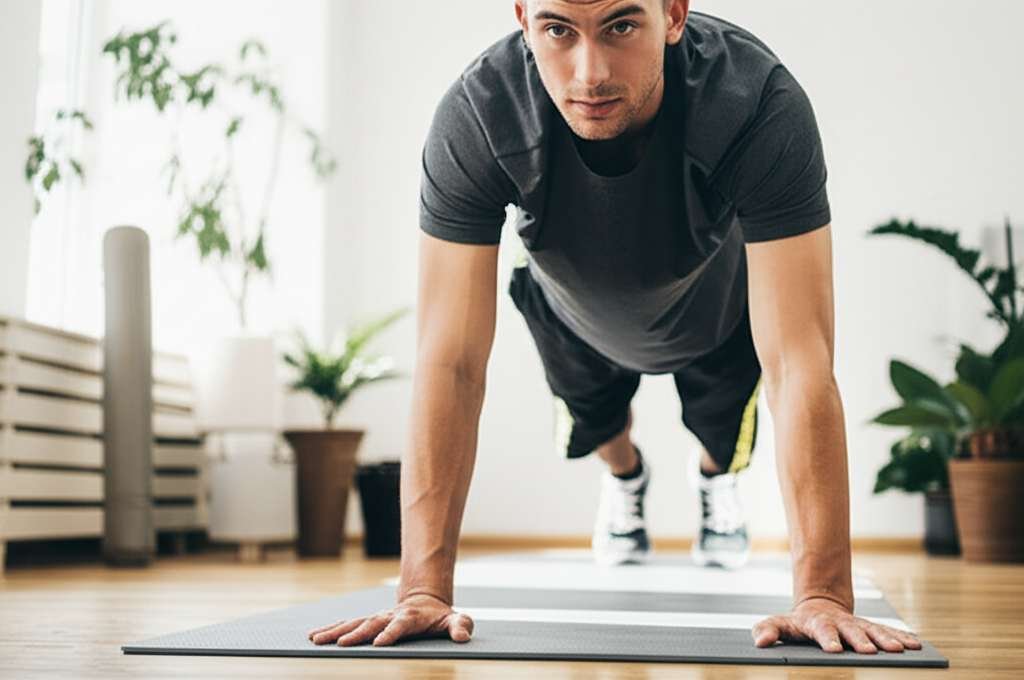
Quick Summary: Achieve effortless weight loss for men with simple, effective home exercises. Focus on consistency, compound movements, and gradually increasing intensity for sustainable results without needing a gym. These exercises target key muscle groups and boost metabolism.
Hey there! So, you’re looking to shed a few pounds but the thought of hitting the gym feels like too much? Or maybe you’re finding weight loss confusing and not sure where to start. I get it. It can feel overwhelming, but I’m here to show you that losing weight at home is totally achievable and doesn’t have to be a chore.
We’ll break down easy-to-follow exercises that you can do right in your living room. No fancy equipment needed, just your own body and a little bit of dedication. We’ll focus on making it simple and effective.
Ready to discover how you can get great results without leaving your house? Let’s dive in!
Understanding Weight Loss Basics for Men
Weight loss boils down to a simple principle: burning more calories than you consume. For men, this often involves understanding how your body uses energy and how different types of exercises can help.
Think of your body like a car. To move forward, it needs fuel (calories from food) and it burns fuel to do things (your metabolism). If you want the car to go further on less fuel, you either need to give it less fuel or make it more efficient. In weight loss terms, this means adjusting your diet and increasing your calorie burn through exercise.
Men often have a higher muscle mass than women, which means they naturally burn more calories at rest. This is a great starting point! Our goal is to build on that by adding exercises that boost your metabolism even further.
Calories In vs. Calories Out
This is the fundamental equation of weight loss. “Calories in” refers to the food and drinks you consume. “Calories out” is the total number of calories your body burns throughout the day, including during workouts and even while you’re sleeping. This is known as your Total Daily Energy Expenditure (TDEE).
To lose weight, your “calories out” must be greater than your “calories in.” For example, if you consume 2500 calories a day and burn 3000 calories, you’ll be in a calorie deficit of 500 calories. A deficit of about 3500 calories typically results in one pound of fat loss.
The Role of Muscle Mass
Muscle tissue is metabolically active, meaning it burns calories even when you’re not exercising. The more muscle you have, the higher your resting metabolic rate (RMR) will be. This is why strength training is crucial for sustainable weight loss, not just for looking good, but for making your body a more efficient calorie-burning machine.
When you lose weight, you want to lose fat, not muscle. Strength training helps preserve and build muscle mass, ensuring that the weight you lose is primarily from fat stores. This also contributes to a more toned physique.
Why Home Exercises Are Great for Beginners
Starting at home removes many common barriers. There’s no commute, no waiting for equipment, and you can exercise in complete privacy. This can significantly reduce intimidation and make it easier to build a consistent habit, which is key for long-term success.
You can start with zero equipment and gradually add simple tools as you progress. The focus is on mastering basic movements and building a foundation of strength and cardiovascular fitness. This approach ensures you’re learning proper form and listening to your body.
Essential Home Exercises for Weight Loss Men

The most effective home exercises for weight loss leverage your body weight and focus on compound movements. These are exercises that work multiple muscle groups at once, giving you more bang for your buck in terms of calorie burn and muscle engagement.
Cardiovascular Exercises to Burn Calories
Cardio is vital for burning calories and improving heart health. When done at home, you can achieve an excellent workout without any special equipment.
1. Jumping Jacks
A classic for a reason! Jumping jacks get your heart rate up quickly and work your entire body. They are a fantastic way to warm up or to incorporate into a high-intensity interval training (HIIT) routine.
How to do it: Start standing with your feet together and arms at your sides. Jump your feet out to the sides while simultaneously raising your arms overhead. Then, jump back to the starting position. Repeat for 30-60 seconds.
2. High Knees
This exercise mimics running in place, but with an emphasis on bringing your knees up high. It’s a great way to elevate your heart rate and engage your core.
How to do it: Stand with your feet hip-width apart. Begin to run in place, bringing your knees up towards your chest as high as possible. Pump your arms to add momentum. Perform for 30-60 seconds.
3. Burpees
Considered a full-body exercise, burpees are incredibly effective for burning calories and building strength. They combine a squat, a plank, a push-up (optional), and a jump.
How to do it: Start standing. Drop into a squat, place your hands on the floor, and kick your feet back into a plank position. (Optional: perform a push-up here). Jump your feet forward to return to a squat position, then jump explosively upwards, reaching your hands overhead. Repeat for 30-60 seconds.
4. Mountain Climbers
This exercise targets your core, shoulders, and legs while providing a great cardiovascular challenge. It’s like doing a plank with a running motion.
How to do it: Start in a high plank position, with your hands directly under your shoulders and your body in a straight line from head to heels. Bring one knee towards your chest, then quickly switch legs, as if you are running in place. Keep your core engaged and hips as stable as possible. Perform for 30-60 seconds.
Strength Training Exercises to Build Muscle
Building muscle is key to boosting your metabolism and achieving a leaner physique. These bodyweight exercises require no equipment and target major muscle groups.
1. Squats
Squats are a foundational exercise that works your quadriceps, hamstrings, glutes, and core. They are incredibly effective for building lower body strength and burning calories.
How to do it: Stand with your feet shoulder-width apart, toes pointing slightly outward. Keeping your chest up and back straight, lower your hips as if sitting back into a chair. Go as low as you can comfortably, ideally until your thighs are parallel to the floor. Push through your heels to return to the starting position. Aim for 3 sets of 10-15 repetitions.
2. Push-Ups
Push-ups are a fantastic upper body exercise that works your chest, shoulders, and triceps, while also engaging your core. You can modify them to make them easier or harder.
How to do it: Start in a plank position with your hands slightly wider than shoulder-width apart. Lower your chest towards the floor by bending your elbows, keeping your body in a straight line. Push back up to the starting position. If standard push-ups are too difficult, perform them on your knees. Aim for 3 sets of as many repetitions as possible (AMRAP) with good form.
3. Lunges
Lunges are excellent for working your legs and glutes individually, which helps identify and correct muscle imbalances. They also improve balance and stability.
How to do it: Step forward with one leg and lower your hips until both knees are bent at a 90-degree angle. Your front knee should be directly above your ankle, and your back knee should hover just above the floor. Push off your front foot to return to the starting position. Alternate legs. Aim for 3 sets of 10-12 repetitions per leg.
4. Plank
The plank is a powerful core exercise that strengthens your abdominal muscles, back, and shoulders. It’s crucial for overall stability and posture.
How to do it: Start in a push-up position, then lower yourself onto your forearms. Your elbows should be directly under your shoulders, and your body should form a straight line from head to heels. Engage your core and glutes, and hold this position. Aim to hold for 30-60 seconds, for 3 sets.
5. Glute Bridges
This exercise targets the glutes and hamstrings, which are important for posture and athletic performance. It’s also great for relieving lower back tension.
How to do it: Lie on your back with your knees bent and feet flat on the floor, hip-width apart. Your arms should be by your sides. Squeeze your glutes and lift your hips off the floor until your body forms a straight line from your shoulders to your knees. Hold for a moment, then slowly lower back down. Aim for 3 sets of 15-20 repetitions.
Exercises with Minimal Equipment (Optional)
If you have a few basic items, you can expand your home workout options significantly. These can add resistance and variety.
Resistance Bands
Versatile and affordable, resistance bands can mimic many gym exercises. They add variable resistance, meaning the tension increases as you stretch the band.
Exercises: Banded squats, lateral walks, rows, bicep curls, and triceps extensions.
Pros: Portable, affordable, adjustable resistance, good for joint health.
Cons: Can snap if old, resistance levels might be limiting for advanced users.
Dumbbells or Kettlebells
These weights add direct resistance to exercises like squats, lunges, and presses, leading to greater muscle growth and calorie burn.
Exercises: Goblet squats, Romanian deadlifts, overhead presses, bent-over rows, kettlebell swings.
Pros: Effective for building strength and muscle, wide range of exercises possible.
Cons: Can be expensive, require storage space, need to select appropriate weights.
For more information on strength training principles, the National Institutes of Health offers valuable insights into exercise and muscle physiology.
Creating Your Home Workout Plan
A structured plan is more effective than random workouts. Let’s map out a simple yet effective routine.
Frequency and Duration
Aim for at least 3-5 days of exercise per week. Each session can be 30-45 minutes long. Consistency is more important than intensity when you’re starting out.
Start with shorter workouts if needed, perhaps 20-30 minutes, and gradually increase the duration as your fitness improves. It’s better to do a short workout consistently than a long one sporadically.
Sample Weekly Schedule
This is a template; feel free to adjust it based on your schedule and how your body feels. Listen to your body and incorporate rest days.
| Day | Focus | Example Exercises |
|---|---|---|
| Monday | Full Body Strength | Squats, Push-ups, Lunges, Plank, Glute Bridges (3 sets of 10-15 reps) |
| Tuesday | Cardio & Core | Jumping Jacks, High Knees, Mountain Climbers (30-60 sec each), Plank holds (3 sets of 45-60 sec) |
| Wednesday | Rest or Active Recovery | Light walk, stretching |
| Thursday | Full Body Strength | Repeat Monday’s routine or slightly vary exercises (e.g., wider stance squats, incline push-ups). |
| Friday | Cardio & Core | Burpees (3 sets of 8-12 reps), High Knees, Mountain Climbers (30-60 sec each), Side Plank (3 sets of 30 sec per side) |
| Saturday | Rest or Active Recovery | Leisurely walk, yoga, or stretching. |
| Sunday | Optional Light Activity | A longer walk, cycling, or any enjoyable physical activity. |
Progressive Overload for Continuous Results
To keep seeing results, you need to gradually increase the challenge for your body. This is known as progressive overload. Don’t worry, it’s simpler than it sounds and can be done at home.
Here’s how you can apply progressive overload:
- Increase Repetitions: If you can comfortably do 10 push-ups, aim for 12 or 15 in your next workout.
- Increase Sets: If you’re doing 3 sets, try adding a 4th set.
- Decrease Rest Time: Shorten the rest period between sets by 15-30 seconds.
- Increase Difficulty: Progress from knee push-ups to standard push-ups, or from regular squats to jump squats.
- Add Resistance: If you have weights or resistance bands, use them and gradually increase the weight or band tension.
The key is to challenge yourself just enough so that your body adapts and gets stronger. For more on progressive overload, check out resources from ACE Fitness.
Warm-Up and Cool-Down
Never skip these crucial parts of your workout! A warm-up prepares your body for exercise, reducing the risk of injury, while a cool-down helps your body recover.
Warm-up (5-10 minutes): Start with light cardio like jogging in place, jumping jacks, or high knees. Follow with dynamic stretches such as arm circles, leg swings, and torso twists. The goal is to increase blood flow and gently move your joints through their range of motion.
Cool-down (5-10 minutes): End with static stretches. Hold each stretch for 20-30 seconds. Focus on major muscle groups worked during your session, such as your hamstrings, quadriceps, chest, and back. This helps improve flexibility and reduce muscle soreness.
Nutrition Tips for Men to Support Weight Loss
Exercise is a powerful tool, but nutrition plays an equally, if not more, important role in weight loss. Focusing on whole, unprocessed foods will fuel your body and support your goals.
Prioritize Protein
Protein is essential for building and repairing muscle tissue, which, as we discussed, boosts your metabolism. It also helps you feel fuller for longer, reducing cravings and overall calorie intake.
Good sources: Lean meats (chicken, turkey, lean beef), fish, eggs, dairy products (Greek yogurt, cottage cheese), legumes (beans, lentils), tofu, and protein powders.
Embrace Whole Foods
Whole foods are foods that are minimally processed and retain their natural nutrients. They are typically more filling and nutrient-dense than processed alternatives.
Focus on:
- Vegetables: Aim for a variety of colorful vegetables at every meal. They are low in calories and packed with vitamins, minerals, and fiber.
- Fruits: Great for snacks and desserts, providing natural sweetness and essential nutrients.
- Lean Proteins: As mentioned above, these are building blocks for muscle and satiety.
- Healthy Fats: Found in avocados, nuts, seeds, and olive oil. These are important for hormone production and overall health.
- Whole Grains: Oats, quinoa, brown rice, and whole wheat bread provide sustained energy and fiber.
Stay Hydrated
Drinking enough water is crucial for metabolism, energy levels, and can even help curb appetite. Sometimes, thirst can be mistaken for hunger.
Tip: Carry a water bottle with you and sip throughout the day. Aim for at least 8 glasses (about 2 liters) of water per day, more if you are exercising intensely or in hot weather.
Mindful Eating and Portion Control
Paying attention to your hunger and fullness cues can prevent overeating. Eating slowly and savoring your food allows your brain to register that you are full.
Tips:
- Use smaller plates.
- Don’t eat directly from the package.
- Listen to your body’s signals: eat when you’re hungry, stop when you’re comfortably full.
- Be aware of serving sizes, especially for calorie-dense foods.
Tips for Staying Motivated
Motivation can ebb and flow, and that’s completely normal. The trick is to have strategies in place to keep you moving forward.
Set Realistic Goals
Instead of aiming for drastic weight loss immediately, set smaller, achievable goals. For example, aim to exercise 3 times this week, or to drink 8 glasses of water each day.
Achieving these smaller goals builds confidence and momentum. Celebrate these small victories! They are stepping stones to your larger objectives.
Track Your Progress
Seeing how far you’ve come can be a huge motivator. This doesn’t just mean the number on the scale.
Ways to track:
- Workout Log: Note down the exercises you did, the reps, sets, and how you felt.
- Measurements: Track changes in your waist, hips, and other body parts.
- Photos: Take progress photos every 4-6 weeks.
- How you feel: Notice improvements in energy levels, sleep quality, and mood.
Find an Accountability Partner
Having someone to share your journey with can make a big difference. This could be a friend, family member, or even an online community.
You can check in with each other, share successes and challenges, and even work out together virtually. Knowing someone is counting on you can be a powerful motivator.
Make It Enjoyable
If you dread your workouts, you won’t stick with them. Find activities you genuinely enjoy.
Ideas:
- Listen to your favorite music or podcasts while you exercise.
- Try different types of home workouts – dance fitness, HIIT, yoga, bodyweight circuits.
- Incorporate fun activities like active video games or home sports challenges.
FAQs About Home Exercises for Weight Loss Men
How long does it take to see results from home exercises?
Results vary from person to person, but you can start feeling stronger and noticing small changes within 2-4 weeks if you are consistent with your workouts and diet. Significant visible changes typically take 1-3 months.
Do I need any equipment for these exercises?
No, not at all! The core exercises provided (squats, push-ups, lunges, planks, cardio movements) use only your body weight. You can add optional equipment like resistance bands or dumbbells later for more challenge.
How many calories can I burn doing home exercises?
The number of calories burned depends on the intensity, duration, and type of exercise. For example, a 30-minute vigorous bodyweight circuit could burn anywhere from 200-400 calories. Cardio exercises like burpees and high knees will generally burn more calories than static holds like planks.
Can I lose belly fat with home exercises?
Spot reduction (losing fat from a specific area) isn’t really possible. However, a consistent program of full-body exercises, combined with a healthy diet, will lead to overall fat loss, including from your belly. Exercises like planks and mountain climbers help strengthen your core, which can improve the appearance of your midsection as you lose fat.
What is the best time of day to exercise for weight loss?
The best time is the time you can stick to consistently. Some find morning workouts boost their metabolism for the day, while others prefer evening workouts to de-stress. Experiment and see what fits best into your schedule and energy levels.
How can I make my home workouts more challenging over time?
As mentioned in the progressive overload section, you can increase repetitions, sets, decrease rest times, use more challenging exercise variations (e.g., jump squats instead of regular squats), or add resistance bands or weights.
Is it enough to just exercise, or do I need to diet too?
For effective weight loss, both exercise and diet are crucial. Exercise helps burn calories and build muscle, while diet controls calorie intake. You can’t out-exercise a bad diet. Combining both provides the best and most sustainable results.
Conclusion: Your Path to Effortless Weight Loss at Home
Embarking on a weight loss journey from home is entirely within your reach. By understanding the basics of calorie balance, prioritizing strength training to build metabolism-boosting muscle, and incorporating effective cardio, you have a powerful toolkit at your disposal.
Remember, consistency is your greatest ally. Start with the simple exercises outlined here, focus on proper form, and gradually challenge yourself as you get stronger. Pair this with smart nutrition choices—focusing on whole foods, protein, and hydration—and you’re setting yourself up for success.
Don’t get discouraged by slow progress or occasional setbacks. Every workout completed and every healthy meal chosen is a step in the right direction. You’ve got this! Enjoy the process, celebrate your wins, and know that effortless results are achievable with the right approach and a little bit of dedication right in your own home.
As an Amazon Associate, We earn from qualifying purchases. When you purchase a product through Amazon links on pulsefitguide.com, we may earn a small commission at no extra cost to you. This helps support the site and keep our content free.