
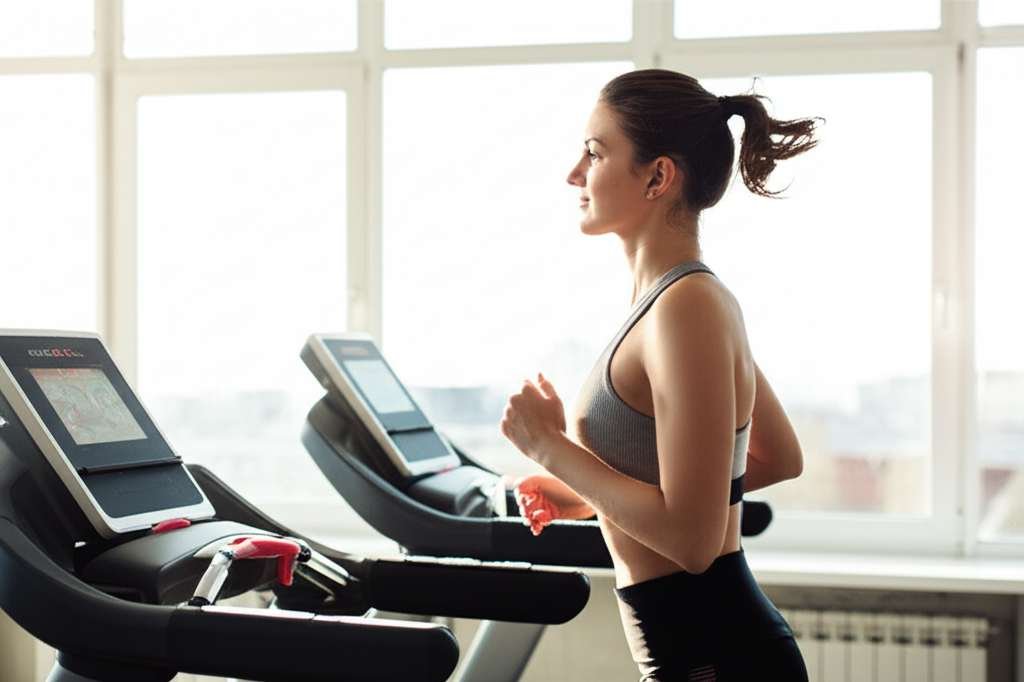
Yes, you absolutely can lose weight by walking on a treadmill! It’s an accessible and effective way to burn calories, improve your fitness, and reach your weight loss goals when combined with a healthy diet. This guide will show you exactly how to make the treadmill work for you.
Can I Lose Weight By Walking on a Treadmill? Your Essential Guide
Feeling a bit confused about where to start with weight loss? You’re not alone! Many people find it overwhelming to figure out how to shed those extra pounds. You might be wondering if a simple activity like walking on a treadmill is enough.
The good news is, it can be! Walking on a treadmill is a fantastic way to get your body moving and burn calories. It’s a low-impact exercise that’s easy on your joints, making it perfect for beginners. We’ll break down exactly how to use a treadmill effectively for weight loss, step by step.
Ready to turn those treadmill sessions into real results? Let’s dive in!
The Science Behind Treadmill Walking and Weight Loss
Weight loss essentially boils down to a simple principle: burning more calories than you consume. This is often called achieving a “calorie deficit.” When your body uses more energy (calories) than it takes in from food, it starts to tap into stored fat for fuel, leading to weight loss.
Walking on a treadmill is a powerful tool for creating this calorie deficit. It’s a form of cardiovascular exercise, meaning it gets your heart pumping and your body working. The harder your body works, the more calories it burns. The intensity and duration of your treadmill walk will directly impact how many calories you burn.
Think of your body like a car. To move, it needs fuel (calories). When you walk, you’re asking your body to use its fuel. If you use more fuel than you put in (through food), your body will use the stored fuel (body fat) to keep going.
How Many Calories Does Treadmill Walking Burn?
The number of calories you burn on a treadmill depends on several factors. These include your body weight, the speed you walk, the incline of the treadmill, and how long you walk for.
Generally, heavier individuals burn more calories than lighter individuals doing the same activity because it takes more energy to move a larger mass. Similarly, walking at a faster pace or on an incline significantly increases calorie expenditure.
Here’s a general idea of calorie burn based on weight and speed, assuming a 30-minute walk. Remember, these are estimates:
| Body Weight | Speed (mph) | Estimated Calories Burned (30 mins) |
|---|---|---|
| 150 lbs | 3.0 mph (moderate pace) | 130-160 calories |
| 150 lbs | 4.0 mph (brisk pace) | 180-220 calories |
| 200 lbs | 3.0 mph (moderate pace) | 170-210 calories |
| 200 lbs | 4.0 mph (brisk pace) | 240-300 calories |
Adding an incline can further boost your calorie burn. For instance, walking at a 5% incline can increase calorie expenditure by up to 50% compared to walking on a flat surface at the same speed!
The Role of Diet in Treadmill Weight Loss
While walking on the treadmill is excellent for burning calories, it’s crucial to remember that diet plays an equally, if not more, important role in weight loss. You can’t out-walk a bad diet.
If you walk for 30 minutes and burn 200 calories, but then consume an extra 500 calories in snacks or sugary drinks, you haven’t created a calorie deficit for the day. Focusing on a balanced diet rich in whole foods, lean proteins, fruits, and vegetables will support your weight loss efforts much more effectively.
For sustainable weight loss, aim to combine your treadmill workouts with mindful eating habits. This means paying attention to portion sizes, choosing nutrient-dense foods, and limiting processed foods, sugary drinks, and excessive unhealthy fats.
Getting Started: Your Treadmill Walking Plan

Ready to hit the treadmill? Here’s a simple, step-by-step plan to get you started and keep you motivated.
Step 1: Set Up Your Treadmill Safely
Before you even step on, ensure your treadmill is in a safe and stable location, away from traffic and with enough space around it. Read the user manual for specific instructions on operation and safety features.
- Clearance: Make sure there’s enough space behind the treadmill in case of an accidental slip.
- Level Surface: Ensure the treadmill is on a flat, stable surface.
- Power: Plug it into a grounded outlet.
- Safety Clip: Always attach the safety clip to your clothing. This will stop the treadmill if you fall.
Step 2: Warm-Up Properly
Never jump straight into a vigorous pace. A good warm-up prepares your muscles for exercise and reduces the risk of injury. This should take about 5 minutes.
- Start at a very slow walking pace (1.5-2.5 mph).
- Gradually increase your speed to a comfortable walking pace.
- You can also do some light dynamic stretches off the treadmill, like leg swings and arm circles.
Step 3: Determine Your Walking Pace and Incline
This is where you start burning calories! Your goal is to walk at a pace that elevates your heart rate and makes you breathe a bit harder, but you can still hold a conversation (this is known as moderate intensity).
- Beginner Pace: Start with a pace of 2.5-3.5 mph. Focus on maintaining this for at least 20-30 minutes.
- Increasing Intensity: As you get fitter, you can gradually increase your speed. Aim for a brisk walk where you feel challenged but not exhausted.
- Using Incline: Start with a 1-2% incline. This mimics walking outdoors and can help burn more calories. Gradually increase the incline as you feel stronger. A higher incline is excellent for building leg strength and burning more fat.
The American Heart Association recommends at least 150 minutes of moderate-intensity aerobic activity per week. This translates to about 30 minutes of brisk walking, five days a week. For weight loss, you might need to aim for more, or increase the intensity.
Step 4: Cool Down
Just as important as warming up, cooling down helps your body gradually return to its resting state. This also takes about 5 minutes.
- Slowly decrease your speed to a very slow walk.
- Continue walking until your heart rate and breathing return to normal.
- Once off the treadmill, perform static stretches, holding each stretch for 20-30 seconds. Focus on your hamstrings, quadriceps, calves, and glutes.
Step 5: Consistency is Key
The most effective treadmill walking plan is one you can stick to. Aim for a regular schedule.
- Frequency: Start with 3-4 days a week and gradually increase to 5-6 days if possible.
- Duration: Begin with 20-30 minute sessions and aim to build up to 45-60 minutes as your fitness improves.
- Listen to Your Body: Rest days are important for recovery. Don’t push yourself too hard, especially when starting out.
Making Treadmill Walking More Effective for Weight Loss
Simply walking isn’t always enough. Here’s how to optimize your treadmill workouts to maximize calorie burn and promote fat loss.
1. Vary Your Speed and Incline (Interval Training)
Your body can adapt to a steady routine, making it less effective over time. Introducing variety, known as interval training, can significantly boost calorie burn and improve cardiovascular fitness.
How to do it:
- Walk at a moderate pace for a few minutes.
- Then, increase your speed or incline significantly for 30-60 seconds, making it harder to talk.
- Return to your moderate pace for 1-2 minutes.
- Repeat this cycle for 20-30 minutes.
This type of training can burn more calories in a shorter amount of time and leads to an “afterburn effect” where your body continues to burn calories at an elevated rate even after you’ve finished exercising. You can find more on High-Intensity Interval Training (HIIT) principles from sources like the American Heart Association.
2. Increase Your Walking Duration
As your fitness improves, gradually extend the length of your treadmill sessions. Walking for longer periods means burning more calories. If you start with 30 minutes, aim to increase by 5-10 minutes each week until you reach 45-60 minutes per session.
3. Track Your Progress
Most treadmills have consoles that display your speed, distance, time, calories burned, and heart rate. Use these metrics to monitor your workouts and see how you’re progressing. Many modern treadmills also connect to fitness apps, allowing for more detailed tracking and analysis.
Keeping a workout journal or using a fitness app can help you stay accountable and motivated. Seeing how far you’ve come can be a powerful motivator!
4. Add Resistance (If Your Treadmill Allows)
Some treadmills offer features like resistance bands or hand weights that can be incorporated into your workout. Using these can help build muscle, which in turn boosts your metabolism and helps you burn more calories even at rest.
5. Stay Hydrated
Drinking water before, during, and after your workout is essential for overall health and can aid in weight loss. Water helps your body function optimally during exercise and can help you feel fuller, potentially reducing overall calorie intake.
Beyond the Treadmill: The Importance of a Holistic Approach
While your treadmill is a fantastic tool, remember that sustainable weight loss is a journey that involves more than just exercise. Combining your treadmill walking with these strategies will yield the best results:
Nutrition is Paramount
As mentioned, diet is a cornerstone of weight loss. Focus on whole, unprocessed foods. This includes lean proteins (chicken, fish, beans), plenty of fruits and vegetables, and whole grains. Portion control is also key. Learning to identify appropriate serving sizes can make a big difference.
Consider tracking your food intake for a few days using an app or a journal. This can help you understand where your calories are coming from and identify areas where you can make healthier choices. Resources like MyPlate from the USDA offer great guidance on building healthy eating patterns.
Strength Training
While walking is great for cardio, incorporating strength training is vital for building muscle mass. Muscle tissue burns more calories at rest than fat tissue, meaning a higher muscle mass can boost your metabolism and help you burn more calories throughout the day, even when you’re not exercising.
You don’t need a gym to start. Bodyweight exercises like squats, lunges, push-ups, and planks can be done at home. Aim for 2-3 strength training sessions per week, focusing on different muscle groups.
Sleep and Stress Management
Don’t underestimate the power of sleep and managing stress! Lack of sleep can disrupt hormones that regulate appetite, leading to increased cravings for unhealthy foods. High stress levels can also lead to weight gain, particularly around the abdomen.
Aim for 7-9 hours of quality sleep per night. Find healthy ways to manage stress, such as meditation, yoga, spending time in nature, or engaging in hobbies you enjoy.
Listen to Your Body and Be Patient
Weight loss is a marathon, not a sprint. There will be days when you feel more motivated than others. Celebrate small victories, and don’t get discouraged by plateaus or occasional slip-ups. Consistency and patience are your greatest allies.
Frequently Asked Questions About Treadmill Weight Loss
Q1: How often should I walk on the treadmill to lose weight?
A1: For weight loss, aim for at least 5 days a week. Start with 30-minute sessions and gradually increase duration or intensity as you get fitter. Consistency is more important than intensity when you’re starting.
Q2: What’s the best speed and incline for losing weight on a treadmill?
A2: The “best” settings depend on your fitness level. Aim for a brisk pace (around 3.5-4.0 mph) where you can talk but feel challenged. Incorporate an incline of 1-5% to increase calorie burn. Interval training, alternating between moderate and higher intensity, is also very effective.
Q3: Can I lose weight just by walking on a treadmill without changing my diet?
A3: While walking burns calories, it’s very difficult to lose significant weight without dietary changes. You’d likely need to walk for very long durations to offset an unhealthy diet. Combining treadmill walking with a balanced, calorie-controlled diet is the most effective strategy for weight loss.
Q4: How many calories can I expect to burn in a 30-minute treadmill session?
A4: This varies greatly by your body weight, speed, and incline. A 150-pound person walking at a moderate pace might burn 130-160 calories in 30 minutes, while a 200-pound person walking briskly could burn 240-300 calories. Using a treadmill’s calorie counter can give you a personalized estimate.
Q5: Is it better to walk or run on the treadmill for weight loss?
A5: Running burns more calories per minute than walking because it’s a higher-intensity activity. However, walking is more sustainable for longer durations and is less impactful on your joints, making it a great option for beginners and for daily consistency. Both can be effective for weight loss when done consistently and combined with a healthy diet.
Q6: How long will it take to see results from walking on a treadmill?
A6: Visible results typically start to appear after 4-6 weeks of consistent effort. This depends heavily on your starting weight, how consistently you exercise, and your dietary habits. Focus on non-scale victories too, like increased energy levels and better-fitting clothes.
Conclusion
So, can you lose weight by walking on a treadmill? The answer is a resounding yes! It’s a fantastic, accessible, and beginner-friendly way to boost your calorie expenditure, improve your heart health, and take significant steps towards your weight loss goals. By understanding the principles of calorie deficit, creating a structured walking plan, and incorporating strategies like interval training, you can make your treadmill sessions incredibly effective.
Remember that consistency is your superpower. Couple your treadmill workouts with a nutritious diet, and you’ll be well on your way to achieving sustainable weight loss. Don’t forget to listen to your body, celebrate your progress, and be patient with yourself. This journey is about building healthy habits for life, and your treadmill is a brilliant partner to help you get there. Keep moving, stay motivated, and you will see the results!
As an Amazon Associate, We earn from qualifying purchases. When you purchase a product through Amazon links on pulsefitguide.com, we may earn a small commission at no extra cost to you. This helps support the site and keep our content free.