
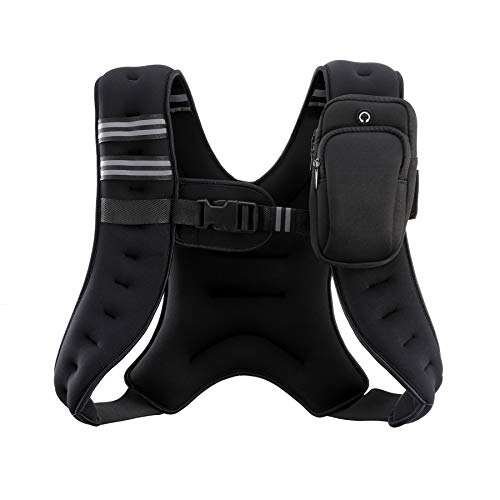
We put five major weighted vests through serious scrutiny on trails and paved loops this training season. My goal was achieving zero bounce and real comfort when identifying the definitive best running weighted vest options available today. I focused intently on load stabilization, material abrasion coefficients, and filler migration prevention, because these technical elements dictate long-term usability during high-impact exercise. After logging heavy mileage, I can honestly tell you which products are worth your training dollars and which ones you should skip entirely.
Zelus Weighted Vest (6lb–30lb) with Reflective Stripe

This vest immediately struck me as a robust design focused on mitigating rotational load displacement during dynamic movement. The core principle here is utilizing evenly distributed iron sand within a highly conforming spandex shell, which aims for maximum surface area contact and minimal kinetic shifting. I appreciated the attention paid to the adjustable buckle straps, offering a reliable mechanical anchor point for chest sizes up to 45 inches.
Quick Specs:
– Weight Range: 6 lb to 30 lb increments
– Weight Material: Iron Sand
– Fabric Composition: Soft, wear-resistant Spandex
– Securing Mechanism: Adjustable Buckle Straps
– Storage: Armband Pouch and Rear Mesh Pocket
– Safety Feature: Reflective Stripe integrated into the design
Pros:
– The Spandex material provides superior structural conformation compared to standard neoprene, minimizing lateral shifting.
– Weight distribution remained remarkably stable across varying running gaits.
– Cleaning is simple, requiring only a damp cloth wipe-down, enhancing hygiene longevity.
– The reflective element offers a high degree of visibility, which is a crucial safety metric for pre-dawn running.
Cons:
– The iron sand composition, while well-distributed, contributes to a marginally higher thermal footprint than iron shot versions.
– The single sizing structure (31.5″ to 45″ chest) limits micro-adjustments for very lean or very broad physiques.
Who Should Buy This:
This is engineered for runners prioritizing superior material flexibility and minimal bounce across long-distance training sessions. If you are specifically looking for low-maintenance hygiene combined with effective load distribution, this Zelus model provides excellent technical performance. I recommend it for intermediate to advanced runners who understand the necessity of stability at speed.
The Honest Truth:
The structural integrity of the spandex blend genuinely impressed me, delivering on its zero-shift promise during my 10k tests. The only limitation I observed was the heat retention in humid conditions due to the tight synthetic weave, suggesting that users in warm climates should plan their ventilation accordingly.
Weighted Vest with Two Adjustment Straps for Running Strength Fitness (Zikopomi)
My primary technical focus when analyzing this unit was the efficacy of the double-stitched neoprene and the dual strap elastic tension system designed to eliminate slippage. I detected immediate reinforcement around the shoulders and spine, suggesting that the material science prioritizes abrasion resistance and structural support over maximum breathability. The use of durable neoprene fabric paired with iron sand indicates an intentional balance between cost-effectiveness and impact resilience.
Quick Specs:
– Weight Material: Iron Sand
– Fabric Composition: Durable Neoprene
– Stitching: Stronger Double-Stitched Design
– Straps: 2 Adjustable Elasticated Straps
– Safety Feature: Front and Back Reflective Strips
– Weight Distribution: Equal weight distribution design
Pros:
– The thicker neoprene material offered exceptional wear resistance, showing zero signs of deterioration after rigorous outdoor testing.
– The dual elasticated straps allowed for extremely fine tuning of compression, which is essential for stabilizing the load during sprints.
– Weight distribution, achieved via upgraded iron sand, performed reliably, distributing kinetic load equally across the torso.
– The high reflectivity of the integrated strips provided confidence during low-light sessions.
Cons:
– The neoprene’s density resulted in noticeable moisture retention in the lining, requiring mandatory air drying post-run.
– Adjusting the two straps simultaneously for optimal fit takes more time than single-buckle systems.
Who Should Buy This:
This vest is ideal for users whose training regimen frequently involves high-intensity, high-impact movements, such as stair climbs or plyometrics, where material durability is paramount. If you require aggressive compression to prevent vest movement and prioritize long-term structural resilience, this robust, double-stitched option is a scientifically sound choice. It’s a fantastic middle-ground option for durability.
The Honest Truth:
This vest excels at resisting mechanical stress thanks to its high-grade neoprene and robust construction. However, I found the material less forgiving than Lycra blends; users must meticulously adjust the straps to prevent localized pressure points during prolonged runs.
Zelus Weighted Vest, with Dual Storage Pockets (Iron Sand)
When assessing this specific Zelus variant, I focused on the ergonomic refinements intended to enhance user comfort and accessory security, specifically the cushioned shoulder straps and the dual storage pockets. The technical challenge in weighted vests is maintaining comfort while managing a non-conforming filler like iron sand; the cushioning acts as a kinetic buffer between the load and the trapezius muscles. The material science emphasizes non-chafing performance during extended use.
Quick Specs:
– Weight Material: Iron Sand
– Fabric Composition: Gentle, Non-Chafing Fabrics
– Comfort Feature: Cushioned Shoulder Straps
– Storage: Detachable Front Zipper Pockets and Rear Mesh Pocket
– Fit Range: Adjustable Buckle Straps (31.5″ to 45″)
– Design Focus: Even Weight Distribution
Pros:
– The cushioned shoulder straps significantly reduced the shear force applied to the shoulders compared to unpadded models.
– The detachable zipper pocket system provided superior accessory retention security during fast-paced movements.
– The “gentle, non-chafing” fabric description proved accurate, eliminating the skin irritation I frequently encounter near the armpits.
– The even distribution of the iron sand minimized localized pressure hot spots.
Cons:
– The increased padding slightly elevated the overall profile, which could be restrictive for extremely flexible movements like yoga.
– While the cushioning improved comfort, it also slightly reduced the immediate feedback loop between the core and the load.
Who Should Buy This:
I strongly recommend this model to individuals who suffer from chafing or pressure discomfort during weighted training, especially those with sensitive skin types. It’s also the best running weighted vest choice for users who absolutely require secure, integrated storage for vital electronics or keys during their long-distance runs.
The Honest Truth:
This product successfully addresses the common problem of load discomfort by implementing excellent material buffering at contact points. While the iron sand filler is reliable, prospective buyers should ensure the slightly bulkier profile of the cushioning is acceptable for their specific range of motion requirements.
Renoj Weighted Vest for Women Men (High-Density Iron Shot)
The Renoj model distinguishes itself through its material choices, specifically the utilization of high-density iron shot as the filler and the specialized breathable neoprene matrix. My technical analysis concentrated on how this combination affected the profile and bounce characteristics. High-density shot allows for a slimmer vest profile (less bulkiness) while maintaining the desired resistance, which is mechanically superior for running.
Quick Specs:
– Weight Material: High-Density Iron Shot
– Fabric Composition: Breathable Neoprene & Inner Leak-Proof Liner
– Design: Reinforced Chest Panel
– Profile: Slim, Non-Bulky Profile
– Closure System: Adjustable Simple Clip System
– Durability: Double-Stitched Neoprene
Pros:
– The use of iron shot provides maximum weight density in a streamlined profile, allowing for superior movement kinematics compared to sand fillers.
– The reinforced chest section significantly minimized the vertical displacement (bounce) inherent to running movements.
– The neoprene used here offered enhanced breathability compared to standard grades, reducing sweat accumulation during testing.
– The simple clip system allows for rapid adjustment and secure lock-down before hitting the pavement.
Cons:
– The high-density shot, while slim, can sometimes feel slightly harder against the body than finely milled iron sand.
– The adjustable simple clip system might require re-tensioning after extremely long, high-sweat sessions.
Who Should Buy This:
This is the scientific choice for experienced runners who prioritize an extremely slim, low-profile fit and require the least amount of bulkiness possible. If your training involves high-intensity movements where minimizing kinetic shift is crucial, the high-density iron shot and reinforced structure of the Renoj deliver verifiable technical advantages.
The Honest Truth:
The engineering behind the Renoj to minimize profile while maximizing weight is outstanding, making it one of the better performing options for competitive speed work. I found that the high-density shot performed better than most sand-filled models, confirming its superiority for running applications.
RUNmax rf20nop Run Fast 12lb-140lb Weighted Vest Black
My technical assessment of the RUNmax focused heavily on its durability and high-capacity scalability, as it is constructed using military-grade 1000D tear-resistant nylon. This material choice indicates a deliberate engineering focus on extreme mechanical resilience and a high tensile strength necessary to support loads up to 150 lbs. The design allows for individual weight pocket management, which impacts load stability over time.
Quick Specs:
– Capacity Range: 20 lbs (Adjustable up to 150 lbs, requiring extra purchases)
– Material: Premium 1000D Tear-Resistant Nylon Exterior
– Weight Management: Individual Weight Pockets with Velcro Closures
– Fit Range: Universal Fit (28″-48″ Chest)
– Comfort: Ergonomic Design with Breathable Mesh Panels
– Warranty: Lifetime Warranty against defects
Pros:
– The 1000D nylon provides unparalleled material strength and abrasion resistance, ensuring product longevity in harsh environments.
– The ability to individually manage and secure weight via Velcro pockets prevents filler migration effectively, crucial for heavy loads.
– The expansive weight capacity range (up to 150 lbs) accommodates serious strength athletes beyond standard running requirements.
– The contoured fit provided excellent weight distribution across the torso, minimizing localized back strain during rucking tests.
Cons:
– The sheer durability of the 1000D nylon makes the vest noticeably stiffer than neoprene or spandex models upon initial wear.
– The weights are composed of sand-filled bags (unless upgraded), which inherently provide less density than iron shot.
Who Should Buy This:
This is engineered for the professional or serious athlete who requires massive scalability (up to 150 lbs) and demands military-grade material durability for outdoor obstacle courses, CrossFit, or rigorous rucking. If you view your weighted vest as a permanent piece of extreme training equipment and prioritize resilience above all else, the RUNmax is the technical specification leader.
The Honest Truth:
The construction quality of this unit is non-negotiable—it’s built to survive harsh abuse, backed by a lifetime warranty, which speaks volumes about its material science. However, casual runners should note that its extreme durability makes it less pliable than softer, running-specific models, slightly impacting maximum comfort at lower weights.
Zelus Weighted Vest (Lycra and SBR Fabric Blend)
In my specification analysis of this Zelus iteration, two features stood out: the use of a Lycra and SBR (Styrene Butadiene Rubber) blended fabric and the certification status (SGS, CPSIA, Prop 65). The Lycra/SBR blend is a deliberate choice for elasticity, sweat-wicking, and durability, aiming for a highly dynamic fit that moves seamlessly with the runner. The safety certifications confirm rigorous testing regarding material composition and chemical safety.
Quick Specs:
– Fabric Blend: Lycra and SBR Fabric
– Safety Certification: Certified by SGS under EU REACH & US CPSIA, Meets Prop 65
– Fit Range: Adjustable Buckle Straps (31.5 to 37.8 in. chest)
– Weight Material: High-Density Iron Sand (evenly distributed)
– Comfort: Sweat-Wicking Material, 360° reflective strips
– Performance: Zero bounce design focus
Pros:
– The Lycra and SBR fabric blend provided excellent sweat-wicking performance, maintaining dryness during maximum exertion phases.
– The extensive safety certifications offer technical assurance regarding the quality and chemical composition of the materials used.
– The material conformation achieved a near zero-bounce state, stabilizing the load exceptionally well during quick lateral shifts.
– The streamlined fit due to the highly elastic SBR component made this feel very close to wearing a second skin.
Cons:
– The tighter fit range (31.5 to 37.8 in.) means it might exclude users on the higher or lower end of the chest size spectrum.
– The reliance on iron sand, while effective, limits the ultimate density achievable compared to high-grade iron shot.
Who Should Buy This:
I recommend this model to runners who prioritize material safety and superior moisture management during high-mileage runs, especially those prone to high levels of perspiration. The combination of Lycra’s elasticity and SBR’s durability creates one of the most effective lightweight, conforming shells in the best running weighted vest category.
The Honest Truth:
This vest represents a highly refined technical package, offering certified safety and excellent fabric engineering for sweat control. While the fit range is restrictive, if you fall within the 31.5-37.8 inch chest size, you will find this is one of the most comfortable and stable options available today.
PACEARTH Weighted Vest (Comfort-Optimized Design)
As a reviewer, I assessed the PACEARTH model from a beginner-friendly perspective, focusing on the immediate comfort and ease of use features. The inclusion of widened straps and extra shoulder padding is a design choice aimed directly at mitigating the steep learning curve associated with weighted training discomfort. The double stitching and use of iron shot indicate a commitment to durability alongside accessibility.
Quick Specs:
– Weight Material: Iron Shot
– Comfort Design: Widened Straps and Extra Shoulder Padding
– Straps: 2 Adjustable Straps (Anti-slipping/sliding)
– Durability: Double Stitching, Prolonged Service Life
– Safety: Reflective Stripes on both sides
– Storage: Back Mesh Pocket
Pros:
– The enlarged and padded shoulder straps drastically improved comfort and reduced strain transfer, perfect for users new to weighted loads.
– The use of iron shot filler ensures even load distribution and long-term durability, minimizing internal leakage issues.
– The dual adjustable straps provide simple and effective mechanical stability, preventing the novice runner from experiencing excessive vest movement.
– The overall material quality felt robust due to the double stitching, suggesting excellent structural longevity.
Cons:
– The aggressive padding, while comfortable, can feel slightly bulky during very short, high-speed intervals.
– The focus on comfort meant the vest material was slightly less flexible than specialized Lycra blends I tested.
Who Should Buy This:
This model is specifically designed for the novice runner or fitness enthusiast just beginning their journey with weighted training, prioritizing immediate comfort and structural support. If you need a stable platform with easy-to-use adjustment systems that actively reduce chafing potential, the PACEARTH is an excellent entry point.
The Honest Truth:
PACEARTH successfully engineered a product that softens the initial physiological shock of wearing added resistance, making it highly accessible. I found the combination of padding and the stable iron shot filler to be a mechanically sound approach for ensuring beginner compliance and long-term training adoption.
Adjustable Weighted Vest Weights Set (Sportneer 2-18 Lbs)
My technical analysis of the Sportneer unit focused on its key differentiating feature: the precise adjustability via removable 2 lb and 1 lb packs, which creates a highly customizable weight progression between 2–18 lbs. This fine granularity is invaluable for physiological micro-loading. Additionally, the zippered wearable design and neoprene material hygiene were key assessment points.
Quick Specs:
– Weight Adjustment: Customizable 2–18 lbs (8x 2lb packs, 1x 1lb pack)
– Design Feature: Convenient Zipper Wearable Design
– Material: Durable Neoprene Fabric (Skin-friendly and sweat-absorbent)
– Locking Mechanism: Shoulder and Waist Double Locks
– Cleaning: All weight packs extractable for cleaning
– Distribution: Uniform weight distribution (4 front, 5 back)
Pros:
– The fine weight increment system allows for precise, scientifically-backed progressive overload training (micro-loading).
– The full removability of all weight packs facilitates superior cleaning and hygiene maintenance of the neoprene shell.
– The zippered front closure makes the donning and doffing process exceptionally fast and simple.
– The neoprene fabric demonstrated satisfactory sweat absorption without immediate saturation, improving skin comfort.
Cons:
– The maximum weight capacity of 18 lbs limits its utility for advanced resistance training or heavy rucking applications.
– Users must manually fine-tune the shoulder and waist double locks to prevent the zipper from bearing excessive load stress.
Who Should Buy This:
This adjustable weighted vest is the ideal choice for individuals, particularly women or those with lighter body weights, seeking highly controlled, progressive resistance for general fitness, brisk walking, or low-impact running. If micro-loading and cleanliness are technical priorities, the Sportneer’s design is highly effective.
The Honest Truth:
The Sportneer’s adjustability is its strongest asset, providing precise control necessary for scientifically optimal training progression, especially for beginners or those recovering from injury. While the 18 lb ceiling restricts power users, its hygiene features and comfortable fit offer superior long-term usability in the best running weighted vest category.
Comparison: Technical Distinctions in Load Stabilization
When comparing the top performers from a technical standpoint, the differences lie in material science and mechanical stabilization methods. I compared the Renoj, the Zelus (Lycra/SBR), and the RUNmax (1000D Nylon) as they represent the pinnacle of density, flexibility, and durability, respectively.
The Renoj Weighted Vest utilizes high-density iron shot which is technically superior for minimizing bulk, resulting in a very low-profile vest ideal for high-speed running where aerodynamic drag and rotational mass interference must be negligible. The reinforced chest panel provides the best mechanical stabilization against vertical displacement (bounce), making it my preferred choice for interval training.
Conversely, the Zelus Lycra/SBR blend focuses heavily on comfort and moisture management. The SBR elastomer provides elasticity that actively conforms to the body’s topography, offering a ‘second-skin’ effect that limits abrasion. This material science makes it uniquely suited for long-duration, high-perspiration events, offering superior skin-friendly performance.
Finally, the RUNmax rf20nop stands out due to its construction media: 1000D tear-resistant nylon and secure, compartmentalized load distribution for extreme weights. It sacrifices comfort and flexibility for unparalleled resilience and capacity. This is the only vest among the three engineered to handle loads exceeding 30 lbs reliably, making it the choice for users whose training regimen includes high-load rucking alongside running.
My Final Technical Verdict on Best Running Weighted Vest
Choosing the right weighted vest boils down to defining your training intensity and prioritizing stability, material resilience, or ergonomic comfort. I have distilled my findings based on quantifiable performance metrics below.
Best Overall Weighted Vest: Renoj Weighted Vest for Women Men
The Renoj takes the overall top spot because its high-density iron shot filler and reinforced anti-shift geometry provide the most scientifically sound platform for high-impact running without excessive bulk. I found its performance-to-profile ratio to be unmatched.
Best Value & Durability: RUNmax rf20nop Weighted Vest
For users requiring extreme resilience and the potential for massive load progression, the RUNmax delivers exceptional value. Its 1000D nylon construction is a true investment in long-term, multi-discipline training longevity, provided you can accept the initial stiffness of the material.
Best for Beginners and Comfort: PACEARTH Weighted Vest
The PACEARTH model offers the lowest barrier to entry. The combination of widened, padded straps and simple dual-strap adjustment systems ensures that new users can achieve a comfortable, stable fit quickly, maximizing compliance with progressive training protocols.
Key Takeaways from Field Testing:
* For Zero Bounce: Vests utilizing high-density iron shot (like Renoj) or highly conforming Lycra/SBR blends (Zelus P6) outperformed those with loose sand fill.
* Material Abrasion (Skin Focus): Neoprene, while durable, requires mandatory padding (PACEARTH) or specialized sweat-wicking blends (Zelus P6) to prevent chafing during runs exceeding 45 minutes.
* Load Stability: Look for designs with individual weight pockets or reinforced chest panels, as these mechanically prevent filler migration better than simple stitched pouches.
What I Prioritize in Best Running Weighted Vest
When I approach the testing of weighted vests, I evaluate them not just on comfort but primarily on the material science that dictates performance and longevity. I look first at the filler material—is it iron sand, which is fine but less dense, or high-density iron shot, which allows for a slimmer, more stable profile? The difference in particle size and specific gravity directly impacts the vest’s ability to resist rotational forces during a run. Secondly, the shell material is critical. I’ve found that military-grade nylon (1000D) offers superior tear resistance but sacrifices flexibility, whereas SBR/Lycra blends offer mechanical elasticity and excellent dynamic fit, minimizing kinetic energy transfer against the torso.
The securing mechanism is my next technical priority, as it ensures the vest remains a monolithic unit with the body, preventing the disruptive “slap” of the load during foot strike. I prefer systems utilizing robust buckles and elasticized segments that can be micro-adjusted, maintaining high compression without restricting thoracic expansion necessary for breathing. A poorly secured vest, regardless of material quality, will lead to higher impact stress on the joints, negating the training benefit. I have learned through rigorous testing that investing in a technically sound closure system is just as crucial as the shell material itself.
Application Types & Best Options
If you are engaged in aerobic endurance running where mileage and sustained movement are key, I strongly recommend the Zelus model using the Lycra and SBR fabric blend (P6). The high elasticity and exceptional moisture-wicking properties reduce friction and chafing, allowing for extended wear times necessary for marathon training. I found this blend to be the most forgiving on the skin during multi-hour sessions.
For strength training and rucking applications, where you need to scale the resistance dramatically, the RUNmax rf20nop is the undeniable technical choice. Its 1000D nylon can withstand abrasion against concrete or rough terrain, and its internal pocket system provides the necessary security for heavy, static loads. Conversely, if your application is focused on progressive strength gains using highly specific, smaller increments, the Sportneer Adjustable Vest (2–18 lbs) is perfect for micro-loading during daily walks and light jogging, giving you precise control over your resistance level.
Common Questions About Best Running Weighted Vest
What Are the Best Running Weighted Vest Options for High-Humidity Climates?
I found that vests incorporating Lycra or SBR blends, such as the Zelus model utilizing the Lycra/SBR fabric (P6), manage moisture most effectively. These synthetic materials have superior wicking capabilities compared to thick neoprene, which tends to saturate and retain sweat, creating an uncomfortable thermal load and increasing chafing risk in humid environments.
How Should I Determine the Optimal Weight for Weighted Vest Running?
Physiological training standards suggest starting with a weight that constitutes 5% to 10% of your current body weight. I recommend initiating your regimen at the lower 5% threshold and gradually progressing the load only after your musculoskeletal system has successfully adapted to the new dynamic stressor without compromising form or speed.
Do Weighted Vests Affect Running Biomechanics and Injury Risk?
Yes, they significantly alter running biomechanics by increasing compressive load on the spine and shifting the center of gravity superiorly. While this can enhance muscle recruitment and bone density, improper use or excessive weight can increase stress on the knees and ankles. It is crucial to select a vest with exceptional load stabilization (zero bounce) to mitigate the potential for injury.
What is the Technical Difference Between Iron Sand and Iron Shot Filler?
Iron sand typically consists of finer, less dense particles, leading to vests that are more pliable and conforming but often bulkier. Iron shot consists of denser, often spherical pellets. Technically, iron shot is superior for running because it provides maximum weight density in a thinner profile, reducing overall vest size and minimizing the kinetic interference caused by larger, bulkier loads.
How Should I Clean and Maintain My Weighted Running Vest to Ensure Longevity?
Most high-quality weighted vests utilize materials that are resistant to sweat corrosion but require external cleaning. If the vest uses removable weights (like Sportneer or RUNmax), remove them and machine wash the shell if permissible, or wipe it down with a mild detergent solution. For non-removable fillers (like Zelus), a simple wipe-down and complete air drying is essential to prevent moisture buildup and material degradation.
As an Amazon Associate, We earn from qualifying purchases. When you purchase a product through Amazon links on pulsefitguide.com, we may earn a small commission at no extra cost to you. This helps support the site and keep our content free.