


Quick Summary: Fat Burn and Cardio on Fitbit track different exercise intensity levels. Fat Burn focuses on moderate-intensity workouts to use fat for fuel, while Cardio targets higher intensity for better cardiovascular health and calorie burn. Understanding this helps you choose the right workout for your goals.
Ever feel a bit lost when you look at your Fitbit and see terms like “Fat Burn Zone” or “Cardio Zone”? You’re not alone! Many of us want to get healthier and fitter, but figuring out the best way to exercise can feel like a puzzle.
It’s totally understandable to feel confused. There’s so much information out there, and sometimes it just doesn’t click. But don’t worry! We’re going to break down exactly what these Fitbit zones mean in a super simple way.
By the end of this guide, you’ll know exactly how to use your Fitbit to make your workouts work smarter for you, whether you’re aiming to burn fat or boost your overall fitness. Let’s dive in and make sense of it all!
Understanding Your Fitbit Heart Rate Zones
Your Fitbit tracks your heart rate during exercise, and it uses this information to tell you which “zone” you’re in. Think of these zones as different levels of effort. They help you understand how hard your body is working and what your body is focusing on during that workout.
These zones are based on your maximum heart rate, which is usually estimated by subtracting your age from 220. For example, if you’re 30 years old, your estimated maximum heart rate is 190 beats per minute (bpm). Your Fitbit then uses percentages of this number to define the zones.
Knowing these zones can help you tailor your workouts. You can aim for specific zones depending on whether you want to improve your endurance, burn more calories, or specifically target fat burning. It’s all about working smarter, not just harder!
The Fat Burn Zone: What It Means and Why It Matters
The Fat Burn Zone is generally considered a moderate-intensity level of exercise. On most Fitbits, this zone typically falls between 50% and 69% of your maximum heart rate. So, for our 30-year-old example (max heart rate 190 bpm), the Fat Burn Zone would be roughly 95 bpm to 131 bpm.
During this type of exercise, your body is very efficient at using fat as its primary source of fuel. This doesn’t mean you’re only burning fat during higher-intensity workouts, but this zone is optimal for teaching your body to tap into fat stores for energy. It’s a great place to be if your main goal is to reduce body fat over time.
Workouts in the Fat Burn Zone are usually sustainable for longer periods. This makes them ideal for activities like brisk walking, light jogging, cycling at a relaxed pace, or even some forms of yoga. They are less taxing on your body, allowing for quicker recovery.
Benefits of Exercising in the Fat Burn Zone
- Fat Utilization: Your body preferentially uses fat for energy, which can be beneficial for fat loss goals.
- Endurance Building: It helps improve your body’s ability to sustain physical activity for longer periods.
- Lower Impact: Typically less strenuous, making it suitable for beginners or those recovering from injuries.
- Stress Reduction: Moderate exercise can be a great way to manage stress and improve mood.
- Improved Cardiovascular Health: Even at moderate intensity, it strengthens your heart and lungs.
The Cardio Zone: Pushing Your Limits
The Cardio Zone, often called the “Cardiovascular” or “Peak” zone, represents a higher intensity of exercise. This zone typically starts around 70% of your maximum heart rate and goes up to 85% or even higher, depending on the Fitbit model and settings. For our 30-year-old example, this would be approximately 133 bpm and above.
When you’re in the Cardio Zone, your body is working much harder. You’ll likely feel breathless and find it challenging to hold a conversation. While your body still uses fat for fuel, it starts relying more on carbohydrates because they provide energy much faster than fat.
This zone is fantastic for improving your heart health, increasing your lung capacity, and burning a significant number of calories in a shorter amount of time. It’s where you build serious stamina and boost your overall fitness level.
Benefits of Exercising in the Cardio Zone
- Maximum Calorie Burn: You burn more calories per minute compared to the Fat Burn Zone.
- Improved Cardiovascular Fitness: Significantly strengthens your heart and lungs, increasing your VO2 max (a measure of aerobic fitness).
- Enhanced Stamina: Builds your ability to perform at higher intensities for longer.
- Metabolic Boost: Can lead to a greater “afterburn” effect, where your metabolism stays elevated even after the workout.
- Anaerobic Threshold Improvement: Helps your body become more efficient at working when oxygen supply is limited.
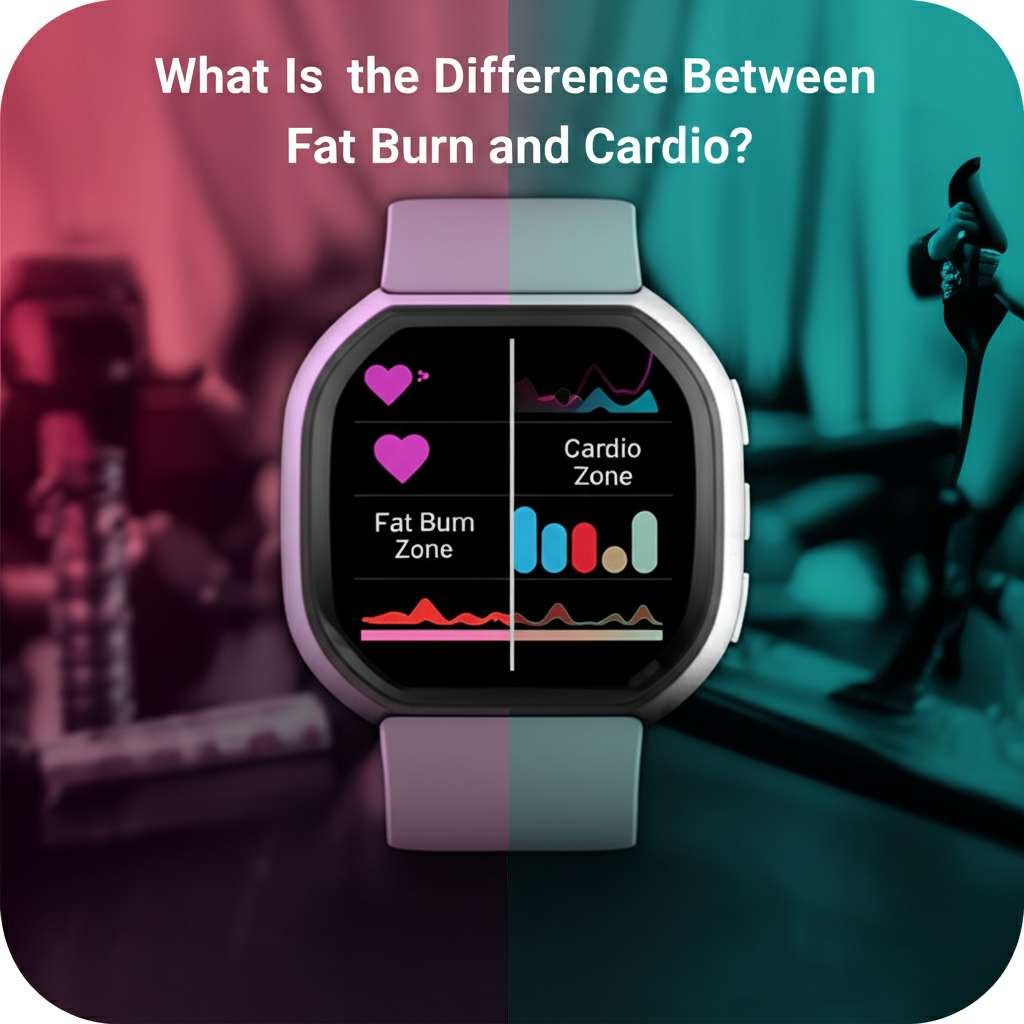
What Is the Difference Between Fat Burn and Cardio on Fitbit? A Direct Comparison
The core difference between the Fat Burn and Cardio zones on your Fitbit lies in the intensity of your workout and how your body primarily uses energy. It’s not about one being “better” than the other, but rather about understanding what each zone helps you achieve.
Think of it like this: Fat Burn is like a steady, long drive on a highway, focused on efficiency. Cardio is like a sprint on a track, all about speed and power. Both have their place in a well-rounded fitness plan.
Here’s a table to help visualize the key distinctions:
| Feature | Fat Burn Zone | Cardio Zone |
|---|---|---|
| Intensity Level | Moderate | High |
| Heart Rate Percentage (Approximate) | 50-69% of Max Heart Rate | 70-85%+ of Max Heart Rate |
| Primary Energy Source | Fat | Carbohydrates (but still uses fat) |
| Perceived Exertion | Can talk in full sentences | Can only speak a few words |
| Typical Activities | Brisk walking, light cycling, yoga, elliptical | Running, HIIT, vigorous swimming, intense cycling |
| Main Benefit Focus | Fat utilization, endurance building, lower impact | Cardiovascular improvement, calorie burn, stamina |
| Duration Suitability | Longer durations (30+ minutes) | Shorter durations, with recovery periods |
It’s important to remember that your body is always using a mix of both fat and carbohydrates for energy, even at rest. The percentage of each shifts based on the intensity and duration of your activity. These zones simply highlight where the balance tips.
How Your Fitbit Determines These Zones
Your Fitbit uses your heart rate to determine which zone you’re in. It continuously monitors your pulse during workouts.
The calculations are typically based on your estimated maximum heart rate. Most Fitbits use the standard formula: 220 minus your age. Some newer models or premium features might offer personalized heart rate zones based on your fitness level, which can be more accurate.
For example, if your Fitbit is set to track your heart rate, it will show you in real-time which zone you’re currently in during your exercise. This visual feedback is incredibly helpful for staying on track with your workout goals.
Can You Customize Your Fitbit Heart Rate Zones?
Yes, in many cases, you can customize your Fitbit heart rate zones. This is a great feature because the “220 minus your age” formula is just an estimate and might not be perfectly accurate for everyone.
To customize your zones:
- Log in to your Fitbit account on the Fitbit website or app.
- Navigate to your settings or profile.
- Look for “Heart Health” or “Exercise Zones.”
- You should see options to manually enter your maximum heart rate or even specific zone thresholds.
Consulting with a healthcare professional or a certified fitness trainer can help you determine more accurate personal heart rate zones. They can guide you through tests like a graded exercise test (GXT) if you want a very precise measurement. For most beginners, the default settings are a good starting point, but customization can enhance accuracy.
Choosing the Right Zone for Your Fitness Goals
So, which zone should you aim for? The answer really depends on what you want to achieve with your fitness routine.
If your primary goal is to reduce body fat and improve your endurance for longer activities, spending more time in the Fat Burn Zone is beneficial. This is excellent for building a solid foundation of fitness.
If you’re looking to boost your overall cardiovascular health, increase your stamina for higher-intensity activities, or burn a lot of calories quickly, then incorporating the Cardio Zone into your workouts is key. This is great for improving your race times or feeling more energetic throughout the day.
When to Focus on the Fat Burn Zone
You should prioritize the Fat Burn Zone if:
- You’re new to exercise and want to build a consistent habit without feeling overwhelmed.
- Your main goal is fat loss and you want to train your body to become more efficient at using fat for fuel.
- You need to build endurance for longer events like a 5K or 10K walk/run.
- You are recovering from an injury or have physical limitations that require lower-impact activities.
- You want to improve your active recovery on days between more intense workouts.
Activities like walking, light jogging, cycling at a moderate pace, swimming laps at a relaxed speed, or using an elliptical machine are perfect for staying in this zone. Aim for sessions that are at least 30 minutes long to maximize the benefits.
When to Aim for the Cardio Zone
You should aim for the Cardio Zone if:
- You want to improve your heart health and increase your V02 max.
- Your goal is to burn a significant number of calories in a shorter workout time.
- You’re training for an event that requires bursts of speed or high intensity.
- You want to improve your athletic performance and build greater stamina.
- You’re looking for a challenging workout that pushes your limits and boosts your metabolism.
Activities like running, interval training (HIIT), playing sports like basketball or soccer, swimming sprints, or high-intensity cycling classes are great for reaching this zone. These workouts are often shorter, ranging from 20 to 45 minutes, and may include periods of rest or lower intensity in between.
The Importance of a Balanced Approach
For most people, the best strategy is to incorporate both the Fat Burn and Cardio zones into their weekly fitness routine. This balanced approach offers the most comprehensive benefits for both fat loss and overall cardiovascular health.
A sample weekly plan might look something like this:
- Monday: Brisk Walk (Fat Burn Zone) – 45 minutes
- Tuesday: Interval Running (Cardio Zone bursts with Fat Burn recovery) – 30 minutes
- Wednesday: Rest or Light Yoga (Below Fat Burn Zone)
- Thursday: Cycling (Fat Burn Zone) – 40 minutes
- Friday: HIIT Class (Cardio Zone focus) – 25 minutes
- Saturday: Long hike or swim (Fat Burn Zone) – 60+ minutes
- Sunday: Rest or Active Recovery
This variety helps prevent burnout, reduces the risk of injury, and ensures you’re working on different aspects of your fitness. It keeps your body guessing and helps you achieve well-rounded results. Remember, consistency is key, and finding a routine you enjoy is crucial for long-term success.
Beyond Heart Rate: Other Factors to Consider
While heart rate zones are a powerful tool, they aren’t the only way to gauge your workout intensity or effectiveness. Listening to your body and considering other factors can provide a more complete picture of your fitness journey.
Your perceived exertion, how you feel during and after a workout, and the overall goals you’ve set are all important pieces of the puzzle. For instance, some people have naturally higher or lower heart rates due to genetics or certain medications, which can make the standard zones less precise.
Let’s explore these other elements that contribute to a successful fitness plan.
Perceived Exertion (RPE) and the Talk Test
Perceived Exertion (RPE) is a subjective measure of how hard you feel you are working. It’s a great complement to heart rate monitoring. The “Talk Test” is a simple way to gauge your RPE:
- Low Intensity (Below Fat Burn Zone): You can sing or talk easily.
- Moderate Intensity (Fat Burn Zone): You can talk comfortably in full sentences but might be a little breathless.
- High Intensity (Cardio Zone): You can only speak a few words at a time before needing to catch your breath.
- Very High Intensity (Peak Zone): You can barely speak at all.
This is incredibly useful because it doesn’t require any technology. You can use it anywhere, anytime. It helps you connect with your body’s signals and understand your effort level intuitively.
The Role of Nutrition in Fat Burning
It’s crucial to remember that exercise is only one part of the weight loss equation. Nutrition plays a massive role, especially when it comes to burning fat. You can’t out-exercise a bad diet!
To effectively burn fat, you need to be in a calorie deficit, meaning you consume fewer calories than your body burns. While exercise helps increase the calories you burn, your dietary choices determine your calorie intake. Focusing on whole, unprocessed foods, lean proteins, healthy fats, and plenty of fruits and vegetables can support your fat-burning goals.
For more on building a healthy eating plan, the USDA’s Healthy Eating Index offers valuable guidance on nutritional recommendations.
Consistency and Progression
Whether you’re in the Fat Burn zone or the Cardio zone, consistency is more important than occasional extreme efforts. Aim to be active most days of the week. Start with what feels manageable and gradually increase the duration, frequency, or intensity of your workouts.
Progression is how you continue to see results. As your fitness improves, what was once challenging will become easier. Your Fitbit can help you track this progress, showing you how your heart rate changes for the same activity over time or how you can push into higher zones for longer.
Don’t be discouraged if you don’t see changes overnight. Sustainable fitness and fat loss take time and patience. Celebrate small victories and stay committed to your healthy habits.
Frequently Asked Questions (FAQ)
What is the best Fitbit zone for losing weight?
Both the Fat Burn and Cardio zones contribute to weight loss, but in different ways. The Fat Burn zone is excellent for sustained calorie expenditure and training your body to use fat for fuel, making it great for longer workouts. The Cardio zone burns more calories per minute and improves cardiovascular fitness. A balanced approach that includes both is often most effective for overall weight management and health.
Can I do HIIT workouts in the Fat Burn zone?
High-Intensity Interval Training (HIIT) is designed to push you into higher heart rate zones, primarily the Cardio and Peak zones, for short bursts. While your body still burns fat during HIIT, the primary goal is to improve anaerobic capacity, cardiovascular fitness, and burn a high number of calories quickly. You might dip into the Fat Burn zone during the recovery intervals, but the workout itself is generally too intense for the Fat Burn zone to be the main focus.
How many calories does the Fat Burn zone burn compared to the Cardio zone?
The Cardio zone generally burns more calories per minute than the Fat Burn zone because it’s a higher intensity. However, you can typically sustain workouts in the Fat Burn zone for longer periods. So, a 60-minute workout in the Fat Burn zone might burn a similar or even greater total number of calories than a 30-minute workout in the Cardio zone, depending on the individual and the exact intensity.
Why is my Fitbit showing me in the wrong heart rate zone?
Several factors can affect your Fitbit’s heart rate readings. Ensure the tracker is snug on your wrist (not too tight, not too loose) and positioned correctly above the wrist bone. Sweaty wrists can also interfere with readings. If you have very fair skin, tattoos on your wrist, or a naturally high resting heart rate, the default calculations might be less accurate. Consider customizing your heart rate zones in the Fitbit app for better accuracy.
Do I need to stay in a specific zone to burn fat?
While the Fat Burn zone is optimal for maximizing the percentage of fat used as fuel during exercise, you don’t need to stay exclusively in this zone to burn fat. Your body burns calories (from both fat and carbohydrates) during any exercise that expends energy. The key to fat loss is creating a consistent calorie deficit over time, achieved through a combination of diet and regular physical activity across various intensity levels.
Is it bad to always stay in the Cardio zone?
Constantly exercising in the Cardio zone can lead to burnout, increase the risk of injury, and may not be sustainable long-term for everyone. It also doesn’t allow your body to fully benefit from the endurance-building and fat-utilizing aspects of lower-intensity exercise. A well-rounded fitness plan includes periods of lower intensity (like the Fat Burn zone) for recovery and building aerobic base, interspersed with higher intensity training.
Conclusion
Understanding the difference between the Fat Burn and Cardio zones on your Fitbit is a game-changer for achieving your fitness goals. The Fat Burn zone, at moderate intensity, helps your body efficiently use fat for fuel and builds endurance, making it ideal for longer, sustainable workouts.
On the other hand, the Cardio zone, at higher intensity, is your go-to for boosting cardiovascular health, increasing stamina, and burning a significant number of calories in a shorter time. Both zones play a vital role in a comprehensive fitness plan.
Remember, the best approach is often a balanced one. By strategically incorporating workouts that target both zones, alongside a healthy diet and consistent effort, you’ll be well on your way to a fitter, healthier you. Listen to your body, stay consistent, and enjoy the journey – your Fitbit is just one of the many tools helping you get there!
As an Amazon Associate, We earn from qualifying purchases. When you purchase a product through Amazon links on pulsefitguide.com, we may earn a small commission at no extra cost to you. This helps support the site and keep our content free.
