


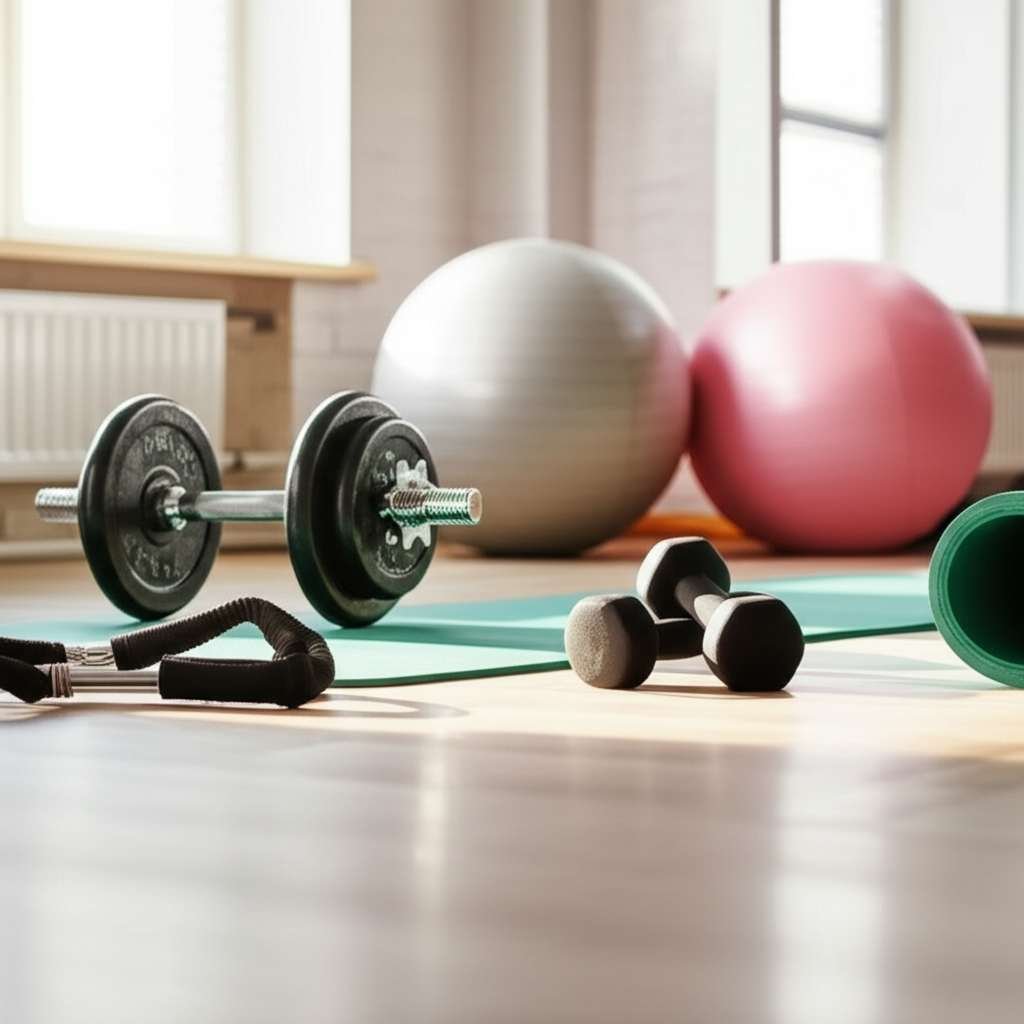
20 strength training home workouts can be a highly effective way to burn fat. By building muscle, you boost your metabolism, meaning your body burns more calories even at rest. These exercises require minimal equipment, making them accessible and practical for consistent fat loss at home.
Feeling a bit lost when it comes to weight loss? You’re not alone. Many people find it confusing, especially when trying to figure out the best way to burn fat without fancy gym equipment or complicated diets.
It’s totally understandable to feel that way! The good news is that shedding those extra pounds can be simpler than you think, especially when you know where to start.
We’re going to dive into some amazing strength training exercises you can do right at home. These aren’t just about building muscles; they’re powerful tools for burning fat and boosting your overall health.

Get ready to discover how easy and effective home-based strength training can be for achieving your fat-burning goals. We’ll break it down step-by-step, making it super clear and totally doable.
Why Strength Training is Your Fat-Burning Secret Weapon
You might think cardio is the only way to burn fat, but strength training plays a HUGE role. When you lift weights or use your body weight to build muscle, you’re essentially creating a fat-burning furnace for your body.
Muscle tissue is more metabolically active than fat tissue. This means that the more muscle you have, the more calories your body burns throughout the day, even when you’re just sitting around or sleeping. Think of it as an investment in a higher metabolism!
This is why incorporating strength training into your routine is essential for long-term fat loss and maintaining a healthy weight. It helps you sculpt your body and keep the fat at bay, even when you’re not actively exercising.
Getting Started: What You Need for Home Strength Training
The beauty of home strength training is that you don’t need a lot of fancy gear to get started. Your own body weight is a fantastic tool, and a few simple items can really enhance your workouts.
Here’s a quick rundown of what you might want to consider:
- Your Body Weight: This is your primary tool! Exercises like squats, push-ups, and lunges use your own resistance to build strength.
- Resistance Bands: These are inexpensive, versatile, and great for adding extra challenge to exercises. They come in different resistance levels.
- Dumbbells or Kettlebells: If you have a few pairs of dumbbells or a kettlebell, you can perform a wider variety of exercises and gradually increase the weight as you get stronger. Start with lighter weights if you’re new to this.
- A Yoga Mat: This provides cushioning and grip for floor exercises, making them more comfortable and safer.
- A Sturdy Chair or Bench: Useful for exercises like step-ups, triceps dips, and Bulgarian split squats.
Don’t feel pressured to buy everything at once! Start with bodyweight exercises and gradually add equipment as you become more comfortable and consistent with your training.
The 20 Essential Strength Training Home Workouts for Fat Burning
Here are 20 effective strength training exercises you can do at home to torch calories and build lean muscle. We’ve categorized them by the main muscle groups they target for clarity.
Lower Body & Glutes
Strong legs and glutes are powerhouse muscles that burn a lot of calories. These exercises will target them effectively.
- Bodyweight Squats: The king of lower body exercises. Stand with your feet shoulder-width apart, lower your hips as if sitting back into a chair, keeping your chest up and back straight. Go as low as comfortable, then push through your heels to return to standing.
- Lunges: Step forward with one leg, lowering your hips until both knees are bent at a 90-degree angle. Your front knee should be directly above your ankle, and your back knee should hover just off the floor. Push off your front foot to return to the starting position. Alternate legs.
- Glute Bridges: Lie on your back with knees bent and feet flat on the floor, hip-width apart. Lift your hips off the ground, squeezing your glutes at the top. Lower slowly.
- Calf Raises: Stand with your feet flat on the floor. Rise up onto the balls of your feet, lifting your heels as high as possible. Hold briefly, then lower with control.
- Wall Sits: Lean against a wall and slide down until your knees are bent at a 90-degree angle, as if sitting in an invisible chair. Keep your back flat against the wall. Hold for time.
- Step-Ups: Use a sturdy chair or step. Step up onto the surface with one foot, bringing your other foot to meet it. Step back down, leading with the same foot. Alternate leading legs or complete reps on one side before switching.
Upper Body & Core
Building strength in your upper body and core not only improves posture but also contributes significantly to your calorie burn.
- Push-Ups: Start in a plank position with hands slightly wider than shoulder-width apart. Lower your chest towards the floor, keeping your body in a straight line. Push back up to the starting position. If standard push-ups are too difficult, perform them on your knees.
- Plank: Position yourself on your forearms and toes, keeping your body in a straight line from head to heels. Engage your core muscles and avoid letting your hips sag or rise too high. Hold for time.
- Triceps Dips (using a chair): Sit on the edge of a sturdy chair with your hands gripping the edge next to your hips. Slide your hips forward off the chair. Lower your body by bending your elbows, keeping your back close to the chair. Push back up using your triceps.
- Dumbbell Rows (if you have dumbbells): Hinge at your hips, keeping your back straight, with a slight bend in your knees. Let the dumbbells hang towards the floor. Pull the dumbbells up towards your chest, squeezing your shoulder blades together. Lower with control.
- Bicep Curls (if you have dumbbells): Stand or sit with a dumbbell in each hand, palms facing forward. Keeping your elbows tucked in, curl the weights up towards your shoulders. Lower slowly.
- Overhead Press (if you have dumbbells): Stand or sit with a dumbbell in each hand at shoulder height, palms facing forward. Press the dumbbells straight up overhead until your arms are fully extended. Lower with control.
- Superman: Lie face down on the floor with your arms and legs extended. Simultaneously lift your arms, chest, and legs off the floor, squeezing your back muscles. Hold briefly, then lower with control.
Full Body & Compound Movements
These exercises work multiple muscle groups at once, making them incredibly efficient for calorie burning and overall fitness.
- Burpees: Start standing, drop into a squat, place hands on the floor, kick feet back into a plank, do a push-up (optional), jump feet back to squat, then jump up explosively with arms overhead.
- Mountain Climbers: Start in a plank position. Bring one knee towards your chest, then quickly switch legs, as if you’re running in place in a plank. Keep your core engaged and hips stable.
- Jumping Jacks: A classic for a reason! This cardio-infused strength move gets your heart rate up and works multiple muscles.
- Inchworms: Start standing. Bend at the hips and place your hands on the floor. Walk your hands forward into a plank position. Then, walk your feet forward towards your hands, keeping your legs as straight as possible. Stand up.
- Bear Crawls: Start on your hands and knees, then lift your knees slightly off the ground. Crawl forward, backward, or sideways, moving opposite arm and leg together. Keep your back flat and core tight.
- Deadlifts (with dumbbells or kettlebell): Stand with feet hip-width apart, with a dumbbell or kettlebell on the floor in front of you. Hinge at your hips and bend your knees to grip the weight. Keeping your back straight and chest up, stand up by driving through your heels and squeezing your glutes at the top. Lower the weight with control by hinging at your hips.
- Thrusters (with dumbbells): Hold a dumbbell in each hand at shoulder height. Perform a squat. As you stand up from the squat, press the dumbbells overhead. Lower the dumbbells back to shoulder height as you prepare for the next squat.
Structuring Your Home Strength Training Program
Now that you have your exercises, how do you put them together? Consistency is key, and a structured plan makes it much easier to stick with.
Choosing Your Reps and Sets
For fat burning and muscle building, a common recommendation is to perform 3-4 sets of 8-15 repetitions for each exercise. The key is to choose a weight or resistance level that makes the last few repetitions challenging but still allows you to maintain good form.
If you’re using bodyweight and find an exercise too easy for 15 reps, you can:
- Increase the number of repetitions.
- Increase the number of sets.
- Slow down the tempo of the exercise (e.g., take longer to lower into a squat).
- Make the exercise harder (e.g., progress from knee push-ups to standard push-ups).
Rest Between Sets
Aim for about 60-90 seconds of rest between sets. This allows your muscles to recover enough to perform the next set effectively without completely losing intensity.
Workout Frequency
For beginners, starting with 2-3 strength training sessions per week is a great goal. Allow at least one rest day between sessions to let your muscles recover and rebuild. As you get fitter, you can gradually increase the frequency to 3-4 times per week.
Sample Weekly Schedule (Beginner)
Here’s a simple way to structure your week:
| Day | Activity | Notes |
|---|---|---|
| Monday | Full Body Strength Training | Choose 5-7 exercises from the list, focusing on compound movements. |
| Tuesday | Active Recovery or Rest | Light walk, stretching, or complete rest. |
| Wednesday | Full Body Strength Training | Choose a different set of 5-7 exercises, or repeat Monday’s. |
| Thursday | Active Recovery or Rest | Light walk, stretching, or complete rest. |
| Friday | Full Body Strength Training | Focus on exercises you found most challenging or enjoyable. |
| Saturday | Cardio or Fun Activity | Go for a run, bike ride, dance, or play a sport. |
| Sunday | Rest | Allow your body to fully recover. |
Progression: How to Keep Getting Stronger
Your body is amazing at adapting. To continue seeing results, you need to challenge it progressively. This is known as progressive overload, and it’s crucial for ongoing fat burning and muscle growth.
Here are ways to apply progressive overload:
- Increase Weight/Resistance: If you’re using dumbbells or resistance bands, gradually use heavier ones.
- Increase Repetitions: Once you can comfortably complete 15 reps with good form, try to do 16 or more.
- Increase Sets: Add an extra set to your existing exercises.
- Decrease Rest Time: Shorten the rest periods between your sets.
- Improve Form/Range of Motion: Focus on executing the exercise with better technique or a deeper range of motion.
- Increase Frequency: Add another workout day to your week if your body can recover.
- Try More Challenging Variations: For example, progress from knee push-ups to full push-ups, or from bodyweight squats to goblet squats with a dumbbell.
Listen to your body. Pushing too hard too soon can lead to injury. It’s better to make small, consistent increases than to overdo it and set yourself back.
Nutrition for Fat Burning
While strength training is fantastic for boosting your metabolism, nutrition is the other side of the fat-burning coin. You can’t out-train a bad diet, as the saying goes!
Focus on whole, unprocessed foods:
- Lean Proteins: Chicken, fish, beans, lentils, tofu, eggs. Protein helps build and repair muscle and keeps you feeling full.
- Complex Carbohydrates: Oats, brown rice, quinoa, sweet potatoes, whole-grain bread. These provide sustained energy.
- Healthy Fats: Avocados, nuts, seeds, olive oil. Fats are essential for hormone production and satiety.
- Fruits and Vegetables: Packed with vitamins, minerals, and fiber, they are crucial for overall health and help with fullness.
Hydration is also super important. Drinking plenty of water throughout the day supports all bodily functions, including metabolism and exercise performance. The U.S. Geological Survey recommends about 8 glasses (64 ounces) of water per day, but this can vary based on activity level and climate.
Creating a slight calorie deficit is generally needed for fat loss. This means consuming slightly fewer calories than your body burns. However, don’t drastically cut calories, as this can slow your metabolism and lead to muscle loss. A gradual, sustainable approach is always best.
Common Beginner Questions About Strength Training for Fat Burning
It’s normal to have questions when you’re starting something new! Here are some common ones:
Q1: How long will it take to see results?
A1: This varies for everyone! You might notice increased energy and strength within a few weeks. Visible fat loss and muscle definition often become more apparent after 4-8 weeks of consistent training and healthy eating.
Q2: Do I need to do cardio as well?
A2: Cardio is excellent for heart health and can contribute to calorie expenditure, but strength training is key for building muscle that boosts your metabolism long-term. A combination of both is often ideal for optimal fat loss. Aim for 2-3 strength sessions and 2-3 cardio sessions per week.
Q3: Will strength training make me bulky?
A3: For most women, it’s very difficult to build large, bulky muscles without very specific, intense training and often, a significant calorie surplus. Strength training will help you build lean muscle, which tones your body and actually helps you look slimmer and more sculpted.
Q4: What if I can’t do a full push-up?
A4: That’s perfectly fine! Start with knee push-ups or incline push-ups (hands on a raised surface like a table or counter). Focus on mastering the form with these modifications. As you get stronger, you can progress to full push-ups. The Harvard Health Publishing offers great insights into mastering push-ups.
Q5: How much weight should I lift?
A5: For fat burning and muscle toning, you want to lift a weight that challenges you to complete 8-15 repetitions with good form. The last few reps should feel difficult, but not impossible. If you can easily do more than 15 reps, the weight is likely too light.
Q6: What’s the best time of day to work out?
A6: The “best” time is the time you can consistently stick to! Some people prefer mornings for a metabolism boost, while others like evenings to de-stress. Listen to your body and find what works for your schedule and energy levels.
Q7: Can I do these workouts every day?
A7: It’s generally not recommended to work the same muscle groups intensely every single day. Muscles need time to recover and rebuild. Aim for 2-3 full-body strength workouts per week, with rest days or active recovery in between.
Conclusion
Embarking on a journey to burn fat and build strength at home is more achievable than you might think. With these 20 essential strength training home workouts, you have a clear roadmap to get started.
Remember, consistency is your greatest ally. Focus on proper form, listen to your body, and celebrate every small victory along the way. By combining these effective exercises with mindful nutrition, you’re well on your way to a healthier, stronger, and more confident you.
Don’t wait for the “perfect” moment. Start today, even with just a few exercises, and build from there. Your future self will thank you for it!
As an Amazon Associate, We earn from qualifying purchases. When you purchase a product through Amazon links on pulsefitguide.com, we may earn a small commission at no extra cost to you. This helps support the site and keep our content free.
