


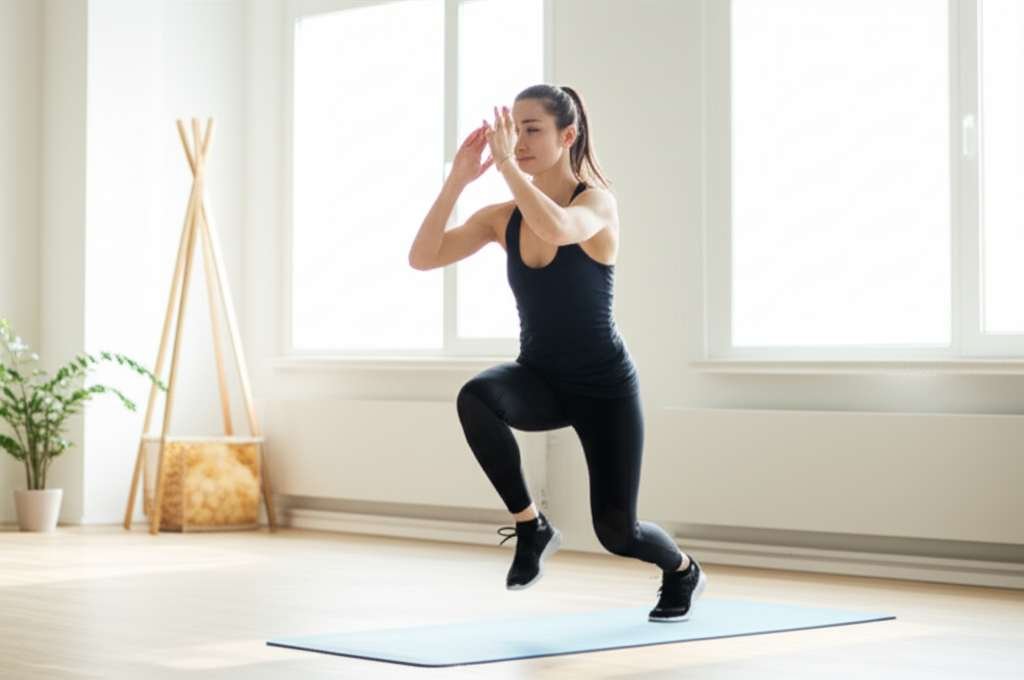
Looking for effective cardio you can do at home? This guide offers 15 simple, gym-free cardio workouts perfect for beginners, helping you boost fitness and burn calories right from your living room. Get ready to move!
Feeling stuck with your fitness goals because the gym feels like a mountain to climb? You’re not alone! Many of us find the idea of complex gym equipment or crowded workout spaces a bit overwhelming, especially when starting out.
The good news is, you don’t need a gym membership to get your heart pumping and see amazing results. Effective cardio can happen anywhere, anytime, with just your body and a little space.
This article is your friendly guide to 15 fantastic cardio workouts you can do right at home. We’ll break down each one so you can easily jump in and start building a healthier you, one move at a time.
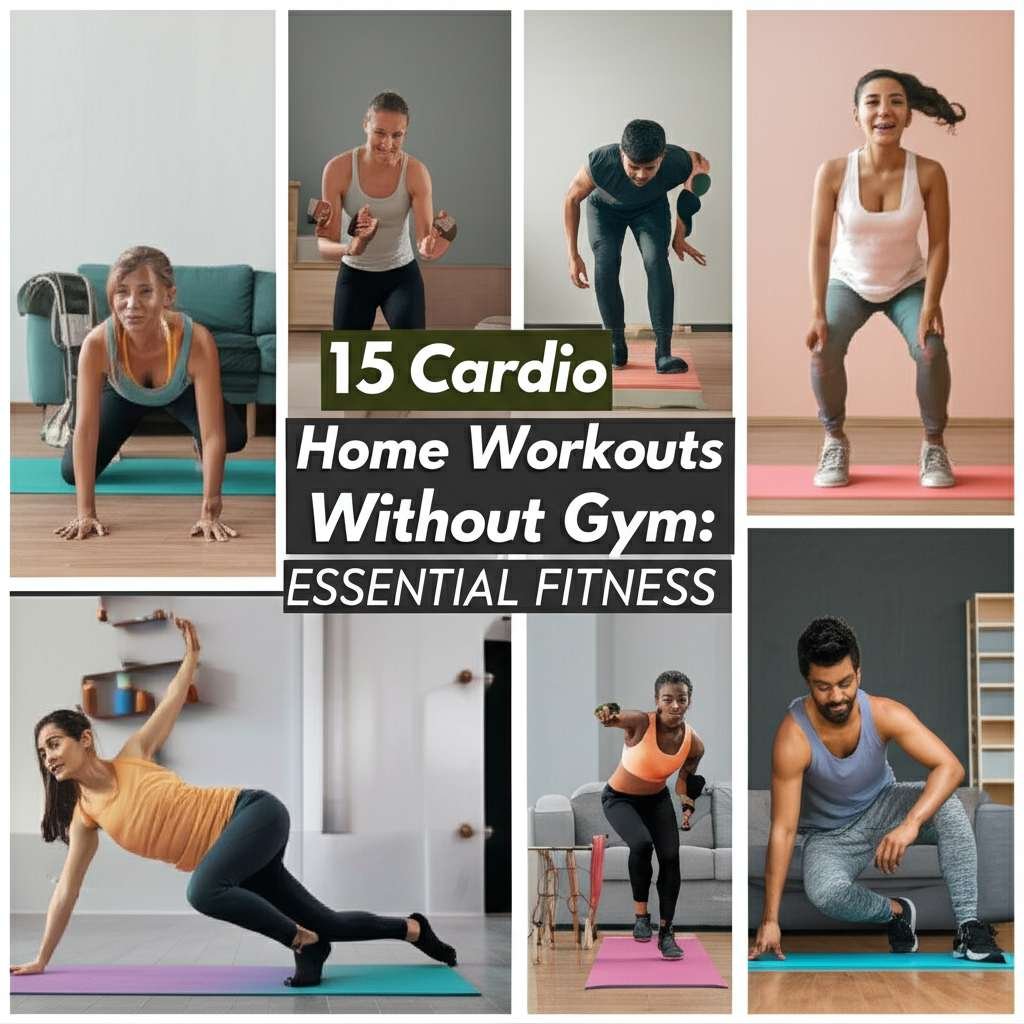
Let’s dive into how you can transform your home into your personal fitness studio!
Why Cardio at Home is Your New Best Friend
Cardiovascular exercise, or cardio, is a cornerstone of a healthy lifestyle. It’s not just about burning calories; it’s about strengthening your heart, improving your mood, and boosting your overall energy levels. When you can do this from the comfort of your own home, it removes many common barriers to exercise.
Think about it: no commute time, no waiting for machines, and the freedom to wear whatever you like! For students and young adults, especially, fitting in exercise can be tough with busy schedules and limited budgets. Home cardio offers a practical, affordable, and accessible solution.
Science backs this up! Regular cardio exercise has been shown to improve cardiovascular health significantly. The American Heart Association recommends at least 150 minutes of moderate-intensity aerobic activity or 75 minutes of vigorous-intensity aerobic activity per week. Home workouts can help you easily meet these goals.
Getting Started: Your Home Cardio Toolkit
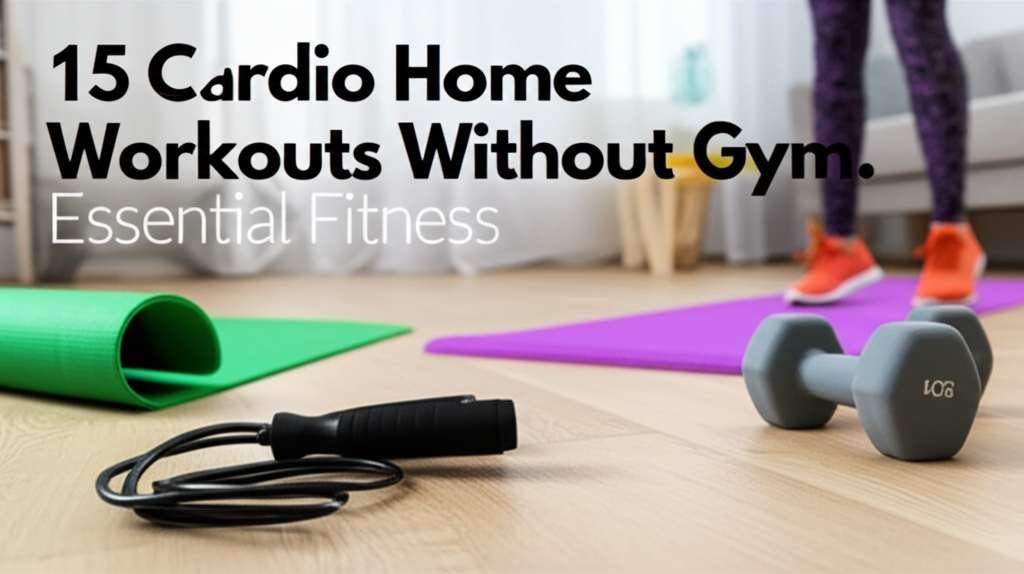
Before we jump into the workouts, let’s talk about what you might need. The beauty of home cardio is that it often requires very little equipment. Your own body is your primary tool!
However, a few simple items can enhance your experience and results:
- Comfortable Shoes: Crucial for supporting your feet and joints during impact exercises.
- Water Bottle: Staying hydrated is key to performance and recovery.
- Yoga Mat or Comfortable Surface: For exercises that involve floor work or cushioning.
- Optional: Jump Rope: A classic, highly effective cardio tool that’s inexpensive and portable.
- Optional: Resistance Bands: Can add an extra challenge to some cardio moves, increasing calorie burn and muscle engagement.
- Optional: Timer or Fitness Tracker: To keep track of your workout duration and intensity.
Remember, the most important thing is to start. Don’t let a lack of fancy equipment stop you. Your enthusiasm and consistency are far more valuable!
15 Cardio Home Workouts Without Gym: Essential Fitness
Here are 15 effective cardio workouts you can do without ever leaving your house. We’ve designed them to be beginner-friendly, with variations to increase intensity as you get fitter.
1. Jumping Jacks
A timeless classic! Jumping jacks are a full-body exercise that gets your heart rate up quickly. They work your legs, arms, and core.
How to do it:
- Stand with your feet together and your arms at your sides.
- Simultaneously jump your feet apart wider than shoulder-width and raise your arms overhead.
- Jump back to the starting position.
Beginner Tip: Start with step-jacks, where you step one foot out to the side while moving your arms, then repeat on the other side. This reduces impact.
2. High Knees
This move mimics running in place, focusing on bringing your knees up high. It’s great for cardiovascular health and strengthens your leg muscles.
How to do it:
- Stand tall with your feet hip-width apart.
- Lift your right knee towards your chest as high as comfortable, while simultaneously pumping your left arm forward.
- Quickly switch legs, bringing your left knee up and pumping your right arm.
- Continue alternating at a brisk pace.
Beginner Tip: Focus on the form and controlled movement first. You can gradually increase the speed.
3. Butt Kicks
This exercise targets your hamstrings and glutes while providing a good cardio workout. It’s a great way to warm up or cool down.
How to do it:
- Stand tall with your feet hip-width apart.
- Keeping your thighs relatively vertical, try to kick your glutes with your heels.
- Pump your arms naturally as if you were jogging.
- Alternate legs quickly.
Beginner Tip: You can perform butt kicks in place or while lightly jogging forward or backward.
4. Skaters
Inspired by ice skaters, this lateral movement improves agility and works your lower body and core. It’s a lower-impact option that still delivers a great cardio punch.
How to do it:
- Start standing with your feet together.
- Hinge at your hips and bend your knees slightly, then leap to the right, landing on your right foot.
- As you land, bring your left foot behind your right ankle.
- Swing your arms naturally to help with balance and momentum.
- Immediately leap to the left, landing on your left foot and bringing your right foot behind your left ankle.
- Continue alternating sides.
Beginner Tip: Focus on controlled leaps. You can also perform a “step-back” version by stepping one foot behind the other instead of leaping.
5. Mountain Climbers
This dynamic exercise works your core, shoulders, and legs while significantly elevating your heart rate. It’s like a moving plank!
How to do it:
- Start in a plank position, with your hands directly under your shoulders and your body in a straight line from head to heels.
- Engage your core.
- Bring your right knee towards your chest, keeping your hips low.
- Quickly switch legs, bringing your left knee towards your chest.
- Continue alternating legs in a running motion.
Beginner Tip: Start slow, focusing on keeping your hips down and your core engaged. You can also do a slower version by tapping your foot forward instead of driving the knee.
6. Burpees (Modified)
Burpees are a full-body, high-intensity exercise. For beginners, we’ll start with a modified version to make it accessible.
How to do it (Modified):
- Start standing.
- Place your hands on the floor in front of you and step your feet back one at a time into a plank position.
- Step your feet back forward, one at a time.
- Stand up.
Progression: Once comfortable, you can add a jump at the end or transition directly from the plank to a squat.
Beginner Tip: Focus on controlled movements and good form. Avoid jumping until you feel strong and stable in the plank position.
7. Squat Jumps
This plyometric move combines a squat with an explosive jump, targeting your lower body muscles and providing an excellent cardio challenge.
How to do it:
- Stand with your feet shoulder-width apart.
- Lower into a squat, as if sitting back into a chair, with your chest up and back straight.
- Explode upwards into a jump, extending your legs and arms.
- Land softly back into a squat position.
Beginner Tip: Ensure you have a stable base and a good squat form before adding the jump. If jumping is too much, focus on a powerful stand-up from the squat.
8. Lunges (Walking or Stationary)
Lunges are fantastic for working your legs and glutes, and can be made a cardio exercise by performing them continuously or with a slight jump.
How to do it (Walking Lunges):
- Start standing tall.
- Step forward with your right leg, lowering your hips until both knees are bent at a 90-degree angle. Your front knee should be directly above your ankle, and your back knee should hover just off the floor.
- Push off your back foot and step forward with your left leg into the next lunge.
- Continue alternating legs.
Beginner Tip: For stationary lunges, perform all reps on one leg before switching. Focus on keeping your torso upright and your front knee from going past your toes.
9. Jump Rope (Imaginary or Real)
Jumping rope is one of the most efficient cardio workouts available, burning a high number of calories in a short time. Even without a rope, you can mimic the motion.
How to do it:
- Stand with your feet together.
- Hold the imaginary rope handles (or a real one) and begin jumping, keeping your jumps small and controlled.
- Use your wrists to turn the rope.
- Focus on a steady rhythm.
Beginner Tip: If using a real rope, start with basic two-foot jumps. If you don’t have a rope, mimic the arm motion and jump rhythmically.
10. Plank Jacks
This exercise combines the core-strengthening benefits of a plank with the cardio boost of jumping jacks. It’s a challenging, yet effective, move.
How to do it:
- Start in a plank position with your hands directly under your shoulders and your body in a straight line.
- Keeping your core engaged and hips as still as possible, jump your feet wide apart, as if doing a jumping jack with your legs.
- Jump your feet back together to the starting position.
Beginner Tip: Instead of jumping, you can step one foot out to the side at a time, then bring it back. This reduces the impact and makes it more accessible.
11. Jumping Rope Variations (if you have one!)
Once you’ve mastered the basic jump rope, you can add some fun variations to keep things interesting and challenge your coordination.
Examples:
- Alternating Foot Jumps: Mimics running.
- Criss-Cross: Cross your arms in front of you as you jump.
- High Knees: Bring your knees up higher with each jump.
- Double Unders: Swing the rope under your feet twice with each jump (advanced!).
Beginner Tip: Start with one variation at a time and master it before moving on. Consistency is key to improving coordination and endurance.
12. Stair Climbing
If you have stairs in your home, they are an excellent, underutilized cardio machine! It’s a powerful workout for your legs and glutes, and a great calorie burner.
How to do it:
- Walk or run up and down your stairs at a brisk pace.
- You can do this continuously for a set time or incorporate it into intervals.
Variations:
- Single Step: Step up one step at a time.
- Two Steps: Step up two steps at a time (more challenging).
- Side Steps: Face sideways and step up.
- Backwards Steps: For an extra challenge and different muscle engagement.
Beginner Tip: Start with walking up and down for 5-10 minutes. Focus on maintaining good posture and using your glutes to push off.
13. Shadow Boxing
This is a fantastic way to get your heart rate up while improving coordination and releasing stress. You don’t need any equipment, just space to move.
How to do it:
- Stand with your feet shoulder-width apart, knees slightly bent.
- Imagine you’re in a boxing ring. Throw punches like jabs, crosses, hooks, and uppercuts.
- Move your feet, bob, and weave to make it more dynamic.
- Keep your core engaged and maintain a steady rhythm.
Beginner Tip: Start with basic punches. Focus on the movement and the speed. You can increase intensity by adding small jumps or lunges between punches.
14. Dancing
Who says exercise can’t be fun? Dancing is a wonderful cardio workout that you can tailor to your favorite music and style. It’s great for coordination and mood!
How to do it:
- Put on your favorite upbeat music.
- Let loose and dance! Move your body freely, incorporating steps, jumps, and arm movements.
- Try different styles like hip-hop, Zumba, or just freestyle.
Beginner Tip: Don’t worry about looking perfect. The goal is to move your body and have fun. Follow online dance workout videos for guided routines.
15. High-Intensity Interval Training (HIIT) Circuits
HIIT is a highly effective method for burning calories and improving fitness in a short amount of time. It involves short bursts of intense exercise followed by brief rest periods.
How to do it:
- Choose 3-4 of the exercises above (e.g., jumping jacks, high knees, squat jumps, mountain climbers).
- Perform each exercise for 30-45 seconds at maximum effort.
- Rest for 15-20 seconds between exercises.
- After completing all exercises in the circuit, rest for 60-90 seconds.
- Repeat the circuit 3-5 times.
Beginner Tip: Start with shorter work intervals (20-30 seconds) and longer rest periods (30-40 seconds). As you get fitter, you can increase the work time and decrease the rest time. Listen to your body!
Structuring Your Home Cardio Workouts
To get the most out of your home cardio sessions, consider how you structure them. This helps ensure you’re working out effectively and safely.
Warm-up (5-10 minutes)
Always start with a warm-up to prepare your muscles and gradually increase your heart rate. This reduces the risk of injury. Include dynamic stretches like arm circles, leg swings, and torso twists.
Workout (20-45 minutes)
This is where you’ll perform your chosen cardio exercises. You can:
- Choose one workout: Stick with jumping jacks for 30 minutes.
- Mix and Match: Combine 3-4 exercises and do them in sets.
- HIIT Circuit: As described above.
Cool-down (5-10 minutes)
End your workout with a cool-down to bring your heart rate back to normal and help your muscles recover. Static stretches, holding each stretch for 30 seconds, are great here (e.g., quad stretch, hamstring stretch, triceps stretch).
Sample Weekly Home Cardio Schedule for Beginners
Here’s a sample schedule to help you integrate these workouts into your week. Remember to listen to your body and adjust as needed!
| Day | Focus | Workout Example | Duration |
|---|---|---|---|
| Monday | Full Body Cardio | Jumping Jacks, High Knees, Butt Kicks, Skaters (30 seconds each, 2 rounds) | 20-25 minutes (incl. warm-up/cool-down) |
| Tuesday | Active Recovery / Light Cardio | Dancing or brisk walking around the house/yard | 20-30 minutes |
| Wednesday | Core & Cardio | Mountain Climbers, Plank Jacks, Modified Burpees (30 seconds each, 2 rounds) | 20-25 minutes (incl. warm-up/cool-down) |
| Thursday | Rest or Light Stretching | Focus on flexibility and recovery. | N/A |
| Friday | Lower Body & Cardio | Squat Jumps, Lunges, Stair Climbing (30 seconds each, 2 rounds) | 20-25 minutes (incl. warm-up/cool-down) |
| Saturday | Fun Cardio | 30 minutes of your favorite dance workout or shadow boxing. | 30 minutes |
| Sunday | Rest | Allow your body to recover and rebuild. | N/A |
Making Home Cardio Sustainable
Consistency is the secret sauce to seeing results from any fitness routine. Here are a few tips to help you stick with your home cardio:
- Schedule It: Treat your workouts like important appointments. Put them in your calendar.
- Find Your Why: Remind yourself of your goals – whether it’s more energy, better health, or weight management.
- Make it Enjoyable: Listen to music, podcasts, or watch your favorite shows while you exercise.
- Track Your Progress: Note down your workouts, how you felt, and any improvements. This can be incredibly motivating.
- Be Kind to Yourself: Some days will be harder than others. If you miss a workout, don’t beat yourself up; just get back on track the next day.
- Variety is Key: Mix up your exercises to prevent boredom and challenge different muscles.
Frequently Asked Questions About Home Cardio
Q1: How long should my home cardio workouts be?
A1: For beginners, aiming for 20-30 minutes per session, 3-4 times a week, is a great starting point. As you get fitter, you can gradually increase the duration or intensity.
Q2: I’m a total beginner. Where should I start?
A2: Start with simpler exercises like jumping jacks (modified), high knees (slowly), and dancing. Focus on learning the correct form and building a consistent routine before trying more complex moves.
Q3: I don’t have much space. Can I still do cardio at home?
A3: Absolutely! Exercises like high knees, butt kicks, shadow boxing, and even modified burpees can be done in a small area. You can also do stationary versions of moves like lunges or squat jumps.
Q4: How can I make my home cardio workouts more challenging?
A4: You can increase the intensity by doing more repetitions, increasing the duration of your work intervals (in HIIT), decreasing rest times, adding resistance bands, or choosing more advanced variations of exercises.
Q5: Is it okay to do cardio every day?
A5: While consistency is good, your body needs rest to recover and rebuild. It’s generally recommended to have at least one rest day per week, or alternate between high-intensity cardio and lower-intensity activities.
Q6: What if I have joint pain?
A6: Opt for low-impact cardio options like skaters (step-back version), stair climbing (slowly), or dancing. Avoid high-impact exercises like jumping jacks and squat jumps until you’ve consulted with a doctor or physical therapist.
Q7: How will I know if I’m working hard enough?
A7: You should be able to talk, but not sing, during moderate-intensity cardio. During high-intensity intervals, you should be breathing hard and find it difficult to hold a conversation. Your heart rate will also be elevated.
Conclusion: Your Fitness Journey Starts Now!
Embarking on a fitness journey can feel daunting, but it doesn’t have to be complicated or expensive. By utilizing these 15 cardio home workouts, you’ve got a powerful toolkit to boost your fitness, improve your health, and achieve your goals, all from the convenience of your own home.
Remember that the most important step is the one you take today. Start small, stay consistent, and celebrate your progress along the way. Your body is capable of amazing things, and with these accessible workouts, you’re well on your way to a stronger, healthier, and more energetic you!
As an Amazon Associate, We earn from qualifying purchases. When you purchase a product through Amazon links on pulsefitguide.com, we may earn a small commission at no extra cost to you. This helps support the site and keep our content free.
