


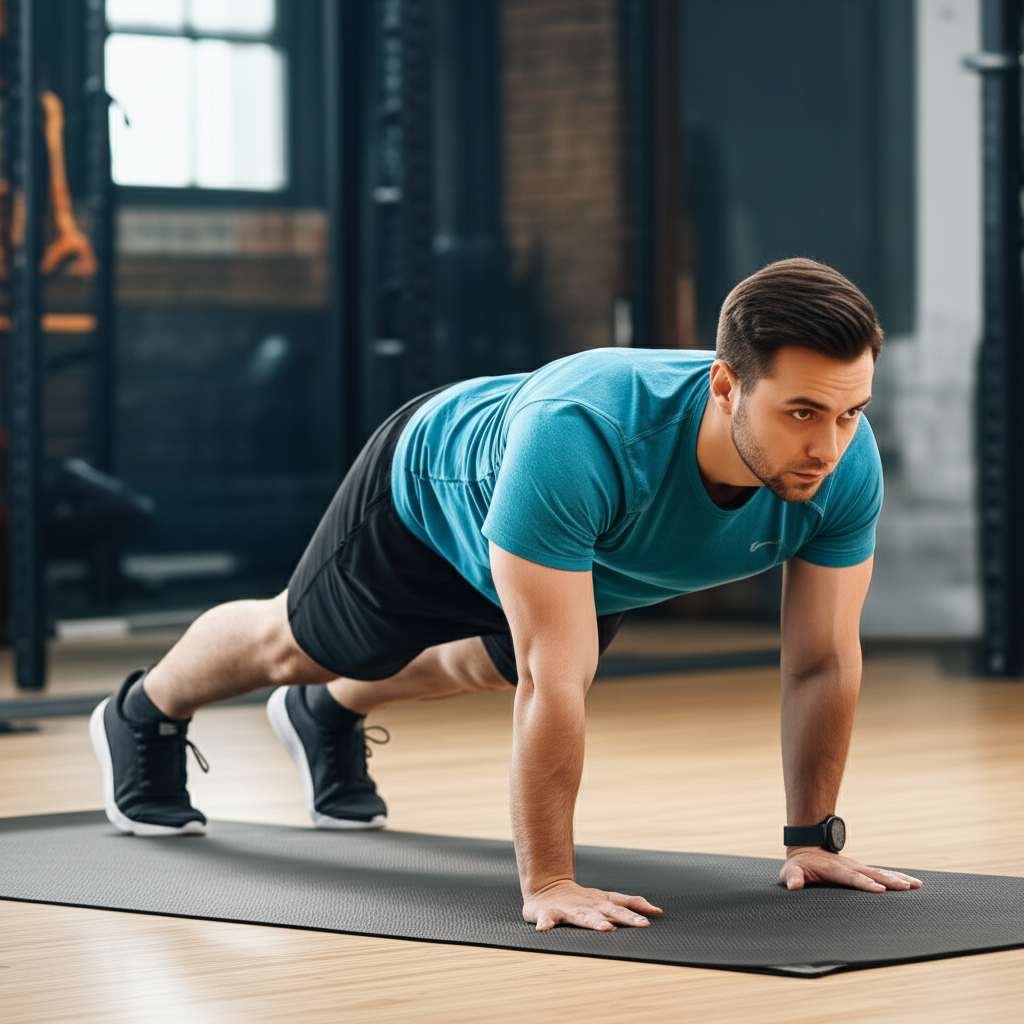
Want to lose belly fat? A consistent daily workout routine for men, focusing on simple exercises and healthy habits, can help. This guide offers a 20-day plan to kickstart your belly fat reduction journey with effortless, beginner-friendly steps.
Feeling frustrated by stubborn belly fat? You’re not alone. Many men find this area particularly tricky to slim down, and it can be confusing to know where to start.
The good news is, losing belly fat doesn’t require complicated gym routines or extreme diets. It’s about building simple, consistent habits that work for your body.
This guide is designed to be your friendly coach, breaking down everything you need to know into easy, actionable steps. We’ll explore effective daily workouts and smart lifestyle tips to help you achieve your goals.

Ready to feel more confident and energized? Let’s dive into a straightforward plan that makes losing belly fat feel effortless!
We’ll cover everything from the best exercises to build into your day to how nutrition plays a role, all explained in plain English.
Understanding Belly Fat and How to Tackle It
Belly fat, also known as visceral fat, is more than just a cosmetic concern. It’s linked to various health issues. Understanding why it accumulates and how to reduce it is the first step to a healthier you.
Visceral fat is stored deep within your abdominal cavity, surrounding your organs. Unlike subcutaneous fat (the pinchable kind under your skin), visceral fat is metabolically active and can release harmful substances that affect your health.
The good news is that consistent exercise and a balanced diet are incredibly effective at reducing this type of fat. It’s not about targeting your belly directly, but about creating an overall healthier body that naturally sheds excess fat from all areas, including your midsection.
We’ll focus on a holistic approach, combining physical activity with lifestyle adjustments for the best results. This means creating a sustainable plan that fits into your busy life.
Why a Daily Routine is Key for Belly Fat Loss
Consistency is king when it comes to losing belly fat. A daily workout routine helps build momentum and creates lasting habits. It ensures you’re constantly engaging your muscles and boosting your metabolism.
When you exercise regularly, your body becomes more efficient at burning calories. This steady calorie burn, combined with muscle building, is crucial for reducing overall body fat, including that stubborn belly fat.
Think of it like this: each day you commit to movement, you’re telling your body to become a better fat-burning machine. This consistent effort signals to your body that it’s time to shed the extra weight.
A daily routine also helps manage stress, which can be a hidden contributor to belly fat. By incorporating exercise, you’re also improving your mental well-being, which has a positive ripple effect on your physical health.
Your 20-Day Effortless Belly Fat Loss Workout Plan
This plan is designed for beginners and focuses on simple, effective exercises you can do almost anywhere. The goal is to build a sustainable habit, not to overwhelm you. Each day offers a mix of cardio, strength, and flexibility to target fat loss and build a stronger core.
Remember to listen to your body. If an exercise feels too difficult, modify it or take a short break. The most important thing is to keep moving!
Week 1: Building the Foundation
This week is all about getting your body used to moving daily. We’ll focus on fundamental exercises that are easy to learn and perform.
Day 1: Gentle Cardio & Core Activation
- Warm-up (5 minutes): Light jogging in place, arm circles, leg swings.
- Cardio (15 minutes): Brisk walking outdoors or on a treadmill. Focus on maintaining a pace where you can talk but not sing.
- Core Activation (5 minutes):
- Plank: Hold for 20-30 seconds, rest for 30 seconds. Repeat 3 times.
- Bird-Dog: 10 reps per side. Focus on controlled movements.
- Cool-down (5 minutes): Gentle stretching, focusing on legs and core.
Day 2: Full Body Strength (Bodyweight)
- Warm-up (5 minutes): Same as Day 1.
- Strength Circuit (Repeat 2 times):
- Squats: 10-12 reps. Focus on proper form: chest up, back straight, push through heels.
- Push-ups (on knees or toes): 8-10 reps. Keep core tight.
- Lunges: 8-10 reps per leg. Step forward, lower back knee towards the floor.
- Glute Bridges: 12-15 reps. Lie on back, lift hips off the floor, squeeze glutes.
- Cool-down (5 minutes): Full body stretch.
Day 3: Active Recovery & Light Core
- Activity (20 minutes): Light activity like yoga, stretching, or a leisurely walk. Focus on mobility and relaxation.
- Core Focus (5 minutes):
- Leg Raises: 10-12 reps. Lie on back, keep lower back pressed to the floor.
- Crunches: 15-20 reps. Focus on contracting abdominal muscles.
Day 4: Cardio Blast
- Warm-up (5 minutes).
- Cardio (20 minutes): Choose one:
- Cycling (stationary or outdoors) at a moderate pace.
- Jumping Jacks: 30 seconds on, 30 seconds rest. Repeat 10 times.
- High Knees: 30 seconds on, 30 seconds rest. Repeat 10 times.
- Cool-down (5 minutes).
Day 5: Strength & Stability
- Warm-up (5 minutes).
- Strength Circuit (Repeat 2 times):
- Plank: Hold for 30-45 seconds.
- Push-ups: 8-10 reps.
- Walking Lunges: 10 reps per leg.
- Superman: 10-12 reps. Lie on stomach, lift arms and legs simultaneously.
- Cool-down (5 minutes).
Day 6: Longer Walk or Light Jog
- Activity (30-40 minutes): Enjoy a longer walk, light jog, or bike ride. Focus on enjoying the movement and fresh air.
Day 7: Rest & Reflect
- Rest: Allow your body to recover. Light stretching is fine if you feel stiff. Reflect on how your body feels and any progress you’ve noticed.
Week 2: Increasing Intensity and Variety
This week, we’ll build on the foundation by slightly increasing the duration or intensity of exercises. We’ll also introduce a few new movements to keep things interesting.
Day 8: Interval Cardio & Core
- Warm-up (5 minutes).
- Interval Cardio (15 minutes):
- 30 seconds of high-intensity effort (e.g., sprinting in place, fast cycling)
- 60 seconds of moderate recovery (e.g., jogging in place, slow cycling)
- Repeat this cycle for 15 minutes.
- Core Focus (5 minutes):
- Bicycle Crunches: 15-20 reps per side.
- Russian Twists (feet on floor or slightly lifted): 15-20 reps total.
- Cool-down (5 minutes).
Day 9: Upper Body & Core Focus
- Warm-up (5 minutes).
- Strength Circuit (Repeat 2-3 times):
- Push-ups: As many reps as possible (AMRAP) with good form.
- Dumbbell Rows (if you have weights, otherwise use water bottles or resistance bands): 10-12 reps per arm.
- Plank with Shoulder Taps: 10-12 taps per side.
- Triceps Dips (using a sturdy chair or step): 10-12 reps.
- Cool-down (5 minutes).
Day 10: Active Recovery & Flexibility
- Activity (25 minutes): Focus on dynamic stretching, foam rolling, or a restorative yoga session.
Day 11: Full Body Endurance
- Warm-up (5 minutes).
- Circuit (Repeat 3 times):
- Squats: 15 reps.
- Jumping Jacks: 30 seconds.
- Push-ups: AMRAP.
- Walking Lunges: 10 reps per leg.
- Plank: 45-60 seconds.
- Rest for 60-90 seconds between circuits.
- Cool-down (5 minutes).
Day 12: Cardio Variety
- Warm-up (5 minutes).
- Cardio (25 minutes): Try a new activity:
- Dancing to your favorite music.
- Stair climbing (if accessible).
- Swimming or water aerobics.
- Cool-down (5 minutes).
Day 13: Core Strength Challenge
- Warm-up (5 minutes).
- Core Circuit (Repeat 3 times):
- Leg Raises: 15 reps.
- Bicycle Crunches: 20 reps per side.
- Plank Jacks: 15 reps.
- Side Plank: Hold 30 seconds per side.
- Cool-down (5 minutes).
Day 14: Longer Outdoor Activity
- Activity (45-60 minutes): Hike, long bike ride, or a nature walk. Enjoy the longer duration and scenic surroundings.
Week 3: Building Momentum and Consistency
You’re halfway there! This week focuses on increasing the challenge slightly and solidifying your daily movement habit. Consistency is key to seeing real changes.
Day 15: High-Intensity Interval Training (HIIT)
- Warm-up (5 minutes).
- HIIT Workout (15-20 minutes):
- Choose 4-5 exercises (e.g., burpees, high knees, jump squats, mountain climbers).
- Perform each exercise for 40 seconds with maximum effort.
- Rest for 20 seconds between exercises.
- Complete 3-4 rounds.
Note: HIIT is intense. If you’re new to it, start with shorter intervals or fewer rounds.
- Cool-down (5 minutes).
Day 16: Lower Body & Core Power
- Warm-up (5 minutes).
- Strength Circuit (Repeat 3 times):
- Jump Squats: 10-12 reps.
- Walking Lunges with a twist: 10 reps per leg.
- Glute Bridges with hold: 15 reps, hold at the top for 2 seconds.
- Plank with Hip Dips: 10-12 dips per side.
- Cool-down (5 minutes).
Day 17: Active Recovery & Mobility
- Activity (30 minutes): Focus on dynamic stretching, foam rolling, or a light session of your favorite sport.
Day 18: Full Body Strength Progression
- Warm-up (5 minutes).
- Strength Circuit (Repeat 3 times):
- Push-ups: Aim for 2-3 more reps than last time.
- Squats: 15-20 reps.
- Dumbbell Rows (or alternative): 12-15 reps per arm.
- Superman: 15 reps.
- Plank: Hold for 60 seconds.
- Rest 60 seconds between circuits.
- Cool-down (5 minutes).
Day 19: Cardio & Core Endurance
- Warm-up (5 minutes).
- Cardio (20 minutes): Steady-state cardio at a moderate intensity.
- Core Finisher (5 minutes):
- Crunches: 20 reps.
- Leg Raises: 15 reps.
- Bicycle Crunches: 20 reps per side.
- Cool-down (5 minutes).
Day 20: Long Activity & Reflection
- Activity (60+ minutes): Choose an activity you enjoy and spend a good amount of time doing it. This could be a long hike, bike ride, playing a sport, or a long walk.
- Reflection: Congratulate yourself! You’ve completed 20 days. Think about how your energy levels have changed and how your clothes fit.
Key Exercises Explained for Beginners
Understanding the proper form for each exercise is crucial to prevent injury and maximize results. Here’s a breakdown of some key movements in the plan:
1. Squats
How to do it: Stand with your feet shoulder-width apart. Lower your hips as if sitting back into a chair, keeping your chest up and back straight. Go as low as comfortable, ideally until your thighs are parallel to the floor. Push through your heels to return to the starting position.
Why it helps: Works major leg muscles (quads, hamstrings, glutes) and engages your core. Building leg muscle helps boost metabolism.
2. Push-ups
How to do it: Start in a plank position. Lower your chest towards the floor by bending your elbows, keeping your body in a straight line. Push back up to the starting position. Beginner modification: Perform on your knees.
Why it helps: Targets chest, shoulders, triceps, and core muscles. A great upper body builder.
3. Plank
How to do it: Position yourself on your forearms and toes, keeping your body in a straight line from head to heels. Engage your core and glutes to prevent your hips from sagging or lifting too high. Hold for the prescribed time.
Why it helps: Excellent for strengthening your entire core, including your abs, obliques, and lower back. It also improves posture.
4. Lunges
How to do it: Step forward with one leg, lowering your hips until both knees are bent at roughly a 90-degree angle. Ensure your front knee is directly above your ankle and your back knee hovers just above the floor. Push off your front foot to return to the start. Alternate legs.
Why it helps: Works quads, hamstrings, glutes, and improves balance. Great for building single-leg strength.
5. Glute Bridges
How to do it: Lie on your back with knees bent and feet flat on the floor, hip-width apart. Squeeze your glutes and lift your hips off the floor until your body forms a straight line from shoulders to knees. Hold briefly, then slowly lower back down.
Why it helps: Primarily targets the glutes and hamstrings, which are important for posture and can help counterbalance the effects of sitting. Also engages the lower back.
6. Bird-Dog
How to do it: Start on your hands and knees, with hands directly under shoulders and knees under hips. Extend your right arm forward and your left leg straight back simultaneously, keeping your core engaged and back flat. Hold for a moment, then return to the start. Repeat on the other side.
Why it helps: Improves core stability, balance, and coordination while strengthening the back and glutes. It’s a fantastic exercise for spinal health.
7. Bicycle Crunches
How to do it: Lie on your back with hands behind your head, knees bent. Bring your right elbow towards your left knee while extending your right leg straight. Alternate sides in a cycling motion, focusing on twisting your torso.
Why it helps: Targets the rectus abdominis and obliques, providing a dynamic workout for the entire abdominal area.
Incorporating Nutrition for Optimal Belly Fat Loss
While workouts are essential, nutrition plays a massive role in shedding belly fat. You can’t out-exercise a bad diet, but you can complement your efforts with smart eating choices.
Focus on whole, unprocessed foods. These provide essential nutrients without the excess calories and unhealthy fats often found in processed items. Think lean proteins, plenty of vegetables, fruits, and healthy fats.
Hydration is also key. Drinking enough water can help boost your metabolism and keep you feeling full, which can prevent overeating.
What to Eat More Of:
- Lean Proteins: Chicken breast, turkey, fish, beans, lentils, tofu. Proteins help you feel full and are essential for muscle repair and growth.
- Vegetables: Broccoli, spinach, kale, bell peppers, carrots – aim for a variety of colors. They are packed with vitamins, minerals, and fiber.
- Fruits: Berries, apples, bananas, oranges. Provide natural sweetness and important antioxidants.
- Whole Grains: Oats, brown rice, quinoa. Offer sustained energy and fiber.
- Healthy Fats: Avocado, nuts, seeds, olive oil. Important for hormone production and satiety.
What to Limit or Avoid:
- Sugary Drinks: Soda, fruit juices with added sugar, sweetened coffees/teas. These contribute empty calories and can lead to fat storage.
- Processed Snacks: Chips, cookies, pastries, candy. High in sugar, unhealthy fats, and sodium.
- Refined Grains: White bread, white pasta, white rice. Often stripped of fiber and nutrients.
- Excessive Saturated and Trans Fats: Found in fried foods, fatty meats, and many processed baked goods.
A helpful resource for understanding macronutrients and making informed food choices is the Dietary Guidelines for Americans from the USDA. It provides science-based advice for healthy eating patterns.
The Importance of Sleep and Stress Management
Don’t underestimate the power of sleep and stress management in your belly fat loss journey. These often-overlooked factors can significantly impact your hormones and appetite.
Lack of sleep can disrupt hormones like cortisol (the stress hormone) and ghrelin (the hunger hormone), leading to increased appetite and cravings for unhealthy foods, particularly around the abdominal area. Aim for 7-9 hours of quality sleep per night.
Chronic stress also elevates cortisol levels, which can promote fat storage in the belly. Incorporating stress-reducing activities like meditation, deep breathing exercises, spending time in nature, or engaging in hobbies can make a big difference.
The American Psychological Association offers great resources on stress management techniques that can be integrated into your daily life.
Tips for Staying Motivated
Sticking to a new routine can be tough, but here are some tips to keep you motivated:
- Set Realistic Goals: Don’t aim for perfection overnight. Celebrate small victories.
- Find a Workout Buddy: Accountability can be a powerful motivator.
- Track Your Progress: Note down your workouts, how you felt, and any physical changes. Seeing how far you’ve come is encouraging.
- Make it Enjoyable: Listen to music or podcasts, try new activities, or exercise outdoors.
- Reward Yourself: Set up non-food rewards for hitting milestones, like new workout gear or a massage.
Frequently Asked Questions (FAQ)
Q1: How quickly can I expect to see results from this routine?
Results vary depending on individual factors like starting weight, metabolism, diet, and consistency. You might notice increased energy levels and better sleep within the first week. Visible changes in body composition typically start becoming noticeable within 4-8 weeks of consistent effort.
Q2: Do I need any equipment for this workout plan?
No, this plan is designed to be primarily bodyweight-focused, meaning you don’t need any special equipment. You can perform all exercises at home. If you have access to dumbbells or resistance bands, they can be incorporated to increase difficulty, but they are not essential.
Q3: What if I miss a day of my workout routine?
Don’t worry! Life happens. If you miss a day, just pick up where you left off the next day or do a shorter, less intense version of the planned workout. The key is not to let one missed day derail your entire progress. Consistency over perfection is the goal.
Q4: Can I combine this routine with other exercises?
Absolutely! This routine is a great starting point. As you get fitter, you can definitely add other activities you enjoy, such as team sports, swimming, or longer cardio sessions. Just ensure you’re still getting enough rest and not overtraining.
Q5: Is it better to do cardio or strength training for belly fat loss?
Both are important! Cardio burns calories efficiently, which helps reduce overall body fat. Strength training builds muscle, which boosts your metabolism so you burn more calories even at rest. A combination of both, as included in this plan, is the most effective strategy for belly fat reduction.
Q6: How important is diet compared to exercise for losing belly fat?
Diet is extremely important, often considered more critical than exercise for weight loss. While exercise burns calories and builds muscle, you can consume more calories in a few minutes than you can burn in an hour of exercise. A healthy diet supports your workouts and is crucial for creating the calorie deficit needed for fat loss. Think of them as a powerful one-two punch!
Q7: Will doing crunches and ab exercises make my belly fat disappear?
Spot reduction (losing fat from one specific area) isn’t really possible. While ab exercises strengthen your abdominal muscles, they don’t directly burn the layer of fat covering them. Overall body fat reduction through consistent exercise and a healthy diet is what will eventually reveal your toned abs.
Conclusion: Your Journey to a Fitter You
Embarking on a daily workout routine for men focused on belly fat reduction is a powerful step towards a healthier, more confident you. This 20-day plan provides a solid, beginner-friendly framework, blending essential cardio, strength training, and core work.
Remember, consistency is your greatest ally. Even on days when motivation is low, a short, simple movement is better than none. Couple your workouts with mindful nutrition, adequate sleep, and effective stress management, and you’ll be well on your way to achieving your goals.
This plan is just the beginning. As you get stronger and more comfortable, feel free to gradually increase the intensity, duration, or introduce new exercises. The most effective routine is one you can stick with long-term.
Celebrate your progress, be patient with yourself, and trust the process. You’ve got this!
As an Amazon Associate, We earn from qualifying purchases. When you purchase a product through Amazon links on pulsefitguide.com, we may earn a small commission at no extra cost to you. This helps support the site and keep our content free.
