


Quick Summary:
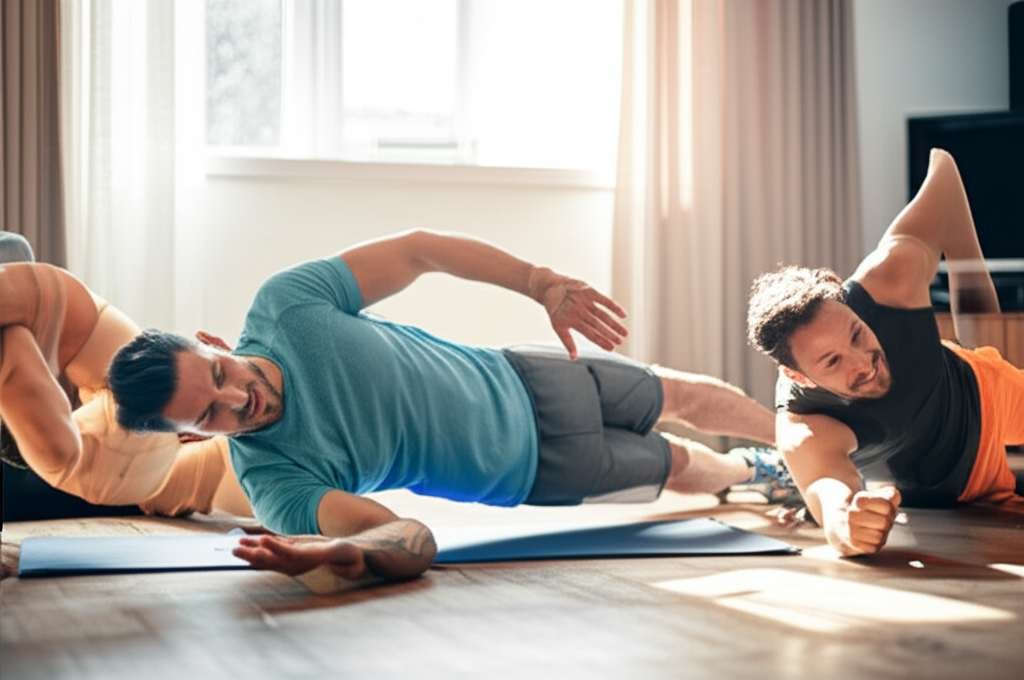
Burn belly fat effectively with a mix of cardio and strength exercises. Focus on consistency and proper form to maximize results. These 12 exercises are designed for beginners, making it easier to start and see progress without feeling overwhelmed.
Feeling like your belly fat just won’t budge? You’re not alone! Many of us struggle with stubborn abdominal fat, and it can feel confusing or even discouraging when you’re not seeing the results you want.
But here’s the good news: shedding belly fat doesn’t have to be complicated or require extreme measures. With the right approach, you can make significant progress right at home, even if you’re just starting out.
This guide will walk you through 12 of the best exercises to help you burn belly fat. We’ll break down each move into simple steps, so you can feel confident as you build a healthier you.
Understanding Belly Fat and How to Burn It
Before we dive into the exercises, let’s quickly touch on why belly fat is a common concern and the basic principles of burning it. Belly fat, also known as visceral fat, surrounds your organs and can be linked to health risks. Burning it involves a combination of diet, exercise, and lifestyle changes.
The key to burning belly fat is creating a calorie deficit – burning more calories than you consume. Exercise plays a huge role in this by increasing your calorie expenditure and boosting your metabolism. It’s not just about doing endless crunches; a well-rounded routine is much more effective.
We’ll focus on exercises that not only burn calories but also build muscle, which is crucial for a long-term metabolism boost. Think of it as building a more efficient engine for your body.
The Power of Compound Exercises
Many of the best exercises for burning belly fat are “compound” movements. This means they work multiple muscle groups at once. Why is this great for beginners trying to burn fat?
- More Calories Burned: Engaging more muscles means your body works harder and burns more calories during and after the workout.
- Time Efficiency: You get more bang for your buck, working several areas of your body in a single exercise.
- Functional Strength: These movements mimic everyday activities, making you stronger in daily life.
We’ll incorporate several of these powerful moves into our list. They are foundational for anyone looking to improve their fitness and reduce body fat.
12 Best Exercises to Burn Belly Fat Effortlessly
Here are 12 effective exercises that, when done consistently, can significantly contribute to burning belly fat. Remember, “effortlessly” here means effectively and sustainably, not without any effort at all! Consistency is your superpower.
1. Burpees
Burpees are a full-body exercise that gets your heart rate up quickly, making them fantastic for calorie burning. They combine a squat, a push-up, and a jump.
How to do it:
- Start standing with your feet hip-width apart.
- Drop into a squat, placing your hands on the floor in front of your feet.
- Jump your feet back into a plank position.
- Perform a push-up (optional for beginners – you can skip this part or do it on your knees).
- Jump your feet back towards your hands.
- Explode upwards into a jump, reaching your arms overhead.
- Land softly and immediately go into the next repetition.
Beginner Tip: Start with modified burpees. Instead of jumping back and forth, step your feet back one at a time and then step them forward. You can also skip the push-up and the final jump.
2. High Knees
This is a great cardiovascular exercise that mimics running in place, but with more intensity. It effectively elevates your heart rate and burns calories.
How to do it:
- Stand tall with your feet hip-width apart.
- Engage your core and begin to run in place, bringing one knee up towards your chest as high as you can.
- Simultaneously, pump your opposite arm forward.
- Quickly switch legs, bringing the other knee up towards your chest and pumping the opposite arm.
- Continue this motion as fast as you can, keeping your core tight.
Beginner Tip: Focus on bringing your knees up high rather than speed. If high-impact is an issue, you can perform this movement more slowly and deliberately, focusing on the leg lift and core engagement.
3. Jumping Jacks
A classic for a reason! Jumping jacks are a simple yet effective way to get your whole body moving and your heart pumping.
How to do it:
- Start standing with your feet together and your arms at your sides.
- Jump your feet out wider than hip-width while simultaneously raising your arms overhead.
- Jump your feet back together, returning your arms to your sides.
- Repeat the motion rhythmically.
Beginner Tip: If jumping is hard on your joints, try a “step-out” jack. Step one foot out to the side while raising your arms, then return to the start. Repeat on the other side, alternating.
4. Mountain Climbers
This exercise works your core, shoulders, and legs, and it’s a fantastic calorie burner that keeps your heart rate elevated.
How to do it:
- Start in a high plank position, with your hands directly under your shoulders and your body in a straight line from head to heels.
- Engage your core muscles.
- Bring your right knee towards your chest, as if you’re trying to run in place.
- Quickly switch legs, bringing your left knee towards your chest while extending your right leg back.
- Continue alternating legs in a rapid, controlled motion.
Beginner Tip: Slow down the movement. Focus on maintaining a stable plank position and controlled knee drives. You can also perform this on an incline by placing your hands on a stable elevated surface, like a couch or sturdy chair.
5. Squats
Squats are a fundamental strength exercise that works your quads, hamstrings, glutes, and core. Building muscle in these large areas helps boost your metabolism.
How to do it:
- Stand with your feet shoulder-width apart, toes pointing slightly outwards.
- Keep your chest up and your back straight.
- Lower your hips as if you’re sitting back into a chair, ensuring your knees track over your toes and don’t go past them.
- Go as low as you comfortably can, aiming for your thighs to be parallel to the floor or lower.
- Push through your heels to return to the starting position.
Beginner Tip: Use a chair for support. Stand in front of a chair and perform the squat, lightly tapping your glutes on the chair before standing back up. This helps you practice the motion and ensures you’re going low enough.
6. Lunges
Lunges are another excellent compound exercise that targets your legs and glutes while also engaging your core for stability.
How to do it:
- Stand with your feet hip-width apart.
- Step forward with one leg, lowering your hips until both knees are bent at approximately a 90-degree angle.
- Ensure your front knee is directly above your ankle and your back knee hovers just off the floor.
- Keep your torso upright and your core engaged.
- Push off your front foot to return to the starting position.
- Repeat on the other leg.
Beginner Tip: Start with smaller steps. Focus on balance and control. You can also hold onto a wall or sturdy piece of furniture for support as you get used to the movement.
7. Plank
The plank is a king of core exercises. While it doesn’t directly burn a massive amount of calories, it builds incredible strength in your entire core, which is essential for a flat stomach and good posture.
How to do it:
- Start in a push-up position, but rest on your forearms instead of your hands. Your elbows should be directly under your shoulders.
- Keep your body in a straight line from your head to your heels.
- Engage your core muscles tightly, squeezing your glutes.
- Avoid letting your hips sag or rise too high.
- Hold this position for as long as you can with good form.
Beginner Tip: Start with holding for 15-30 seconds and gradually increase the duration. If a full plank is too challenging, you can perform it on your knees.
8. Russian Twists
This exercise specifically targets your oblique muscles (the sides of your waist), helping to tone that area and contribute to a more defined waistline.
How to do it:
- Sit on the floor with your knees bent and feet flat on the ground.
- Lean back slightly, keeping your back straight and engaging your core.
- Lift your feet slightly off the floor (this is optional for beginners).
- Clasp your hands together in front of your chest.
- Twist your torso to the right, bringing your hands towards the floor on that side.
- Return to the center and then twist to the left.
- Continue alternating sides.
Beginner Tip: Keep your feet on the floor for more stability. You can also hold a light weight (like a water bottle or book) for added resistance as you get stronger.
9. Bicycle Crunches
These are a dynamic core exercise that works your rectus abdominis (your six-pack muscles) and your obliques.
How to do it:
- Lie on your back with your knees bent and your feet flat on the floor.
- Place your hands lightly behind your head, interlacing your fingers.
- Lift your shoulders off the floor and bring your knees towards your chest.
- As you lift, twist your torso to bring your right elbow towards your left knee, while simultaneously extending your right leg straight out.
- Switch sides, bringing your left elbow towards your right knee and extending your left leg.
- Continue alternating in a pedaling motion.
Beginner Tip: Focus on the slow, controlled movement and the twist. Don’t pull on your neck; let your core do the work. If extending the leg is too difficult, keep both knees bent and focus on the torso twist.
10. Glute Bridges
While primarily targeting your glutes and hamstrings, glute bridges also engage your core and help improve posture. A strong posterior chain can contribute to better overall body composition.
How to do it:
- Lie on your back with your knees bent and feet flat on the floor, hip-width apart.
- Keep your arms by your sides, palms down.
- Engage your core and squeeze your glutes.
- Lift your hips off the floor until your body forms a straight line from your shoulders to your knees.
- Hold for a second at the top, squeezing your glutes.
- Slowly lower your hips back down.
Beginner Tip: Focus on squeezing your glutes at the top of the movement. If you feel any strain in your lower back, ensure your core is engaged and try not to arch your back too much.
11. Jumping Squats
This is a plyometric variation of the regular squat, adding an explosive jump. It significantly increases the calorie burn and works on power and agility.
How to do it:
- Start in a standard squat position: feet shoulder-width apart, chest up, back straight.
- As you push up from the bottom of the squat, explosively jump upwards.
- Land softly back into the squat position, absorbing the impact through your legs.
- Immediately go into the next squat and jump.
Beginner Tip: Start with a small jump and focus on landing softly. If jumping is not suitable, stick with regular squats and focus on increasing the depth or repetitions. You can also perform “box jumps” onto a low, stable surface.
12. Walking
Don’t underestimate the power of walking! It’s a low-impact, accessible, and highly effective way to burn calories and improve your overall health. For belly fat, consistency is key.
How to do it:
- Start by walking at a comfortable pace for 20-30 minutes.
- As you get fitter, increase the duration, speed, or incorporate inclines (like hills).
- Aim for at least 150 minutes of moderate-intensity walking per week, as recommended by health organizations like the CDC.
Beginner Tip: Make it a habit. Walk during your lunch break, walk to local shops, or simply take a stroll around your neighborhood. The goal is to move more throughout the day.
Structuring Your Belly Fat Burning Workout
Simply knowing the exercises isn’t enough; how you put them together matters. For beginners, a balanced approach is best.
Cardio vs. Strength Training for Belly Fat
Both cardio and strength training are vital for burning belly fat. Cardio (like high knees, burpees, and walking) burns a lot of calories during the workout. Strength training (like squats, lunges, and planks) builds muscle, which increases your resting metabolism, meaning you burn more calories even when you’re not exercising.
A good strategy is to combine them. For example, you could do a circuit of strength exercises followed by a burst of cardio, or alternate days of cardio and strength training.
Sample Beginner Workout Plan
Here’s a sample plan you can adapt. Remember to warm up for 5-10 minutes before and cool down for 5-10 minutes after each workout.
| Exercise | Sets | Reps/Duration | Rest |
|---|---|---|---|
| Jumping Jacks | 3 | 30 seconds | 30 seconds |
| Squats | 3 | 10-12 reps | 45 seconds |
| Mountain Climbers | 3 | 30 seconds | 45 seconds |
| Lunges (alternating legs) | 3 | 10 reps per leg | 45 seconds |
| Plank | 3 | Hold for 30 seconds | 45 seconds |
| High Knees | 3 | 30 seconds | 30 seconds |
Workout Frequency: Aim for 3-4 times per week, with rest days in between. You can add walking on your “rest” days or on days you don’t do this circuit.
Importance of Proper Form
Always prioritize form over speed or number of repetitions. Incorrect form can lead to injuries and makes the exercise less effective. Watch videos, use a mirror if possible, and start slow to ensure you’re doing each movement correctly.
For instance, with squats, imagine you’re sitting back into a chair. For planks, keep your body rigid like a board, avoiding a saggy middle. Correct form ensures you’re targeting the right muscles and staying safe.
Beyond Exercise: Essential Factors for Burning Belly Fat
While these exercises are fantastic, they work best when supported by other healthy habits. Think of it as a team effort for your body!
Nutrition
You can’t out-exercise a bad diet. Focusing on whole, unprocessed foods is key. This includes lean proteins, plenty of fruits and vegetables, and healthy fats.
- Hydration: Drink plenty of water throughout the day. It aids digestion and can help you feel fuller.
- Portion Control: Be mindful of how much you’re eating.
- Limit Sugary Drinks and Processed Foods: These often contribute empty calories and can hinder fat loss.
For more on nutrition, consider resources like the Nutrition.gov, which offers guidance on healthy eating patterns.
Sleep
Getting enough quality sleep is crucial for hormone regulation, including hormones that affect appetite and fat storage. Aim for 7-9 hours of sleep per night.
Lack of sleep can increase cravings for unhealthy foods and make it harder for your body to recover from workouts. Prioritizing sleep is a powerful, often overlooked, fat-burning strategy.
Stress Management
Chronic stress can lead to elevated cortisol levels, a hormone that can promote belly fat storage. Finding healthy ways to manage stress, such as meditation, yoga, or spending time in nature, can be very beneficial.
Even simple deep breathing exercises can make a difference. Integrating stress-reducing activities into your routine can support your overall weight loss journey.
FAQ: Your Beginner Questions Answered
Q1: How often should I do these exercises to see results?
A1: Consistency is key! Aim to perform these exercises 3-4 times per week. Combine them with regular walking or other cardio on alternate days. Seeing results also depends on your diet and lifestyle, so focus on building sustainable habits.
Q2: Do I need any equipment for these exercises?
A2: Most of these exercises require no equipment at all! They are designed to be done anywhere, anytime. A comfortable mat can make floor exercises more pleasant, and a sturdy chair can be helpful for modifications.
Q3: I’m very overweight. Are these exercises safe for me?
A3: Yes, many of these exercises can be modified to be safe for beginners and individuals with higher body weight. Focus on the modifications suggested (like stepping instead of jumping, using support for balance, or doing planks on your knees). Always listen to your body and consider consulting with a doctor before starting any new fitness program.
Q4: Will doing crunches burn belly fat?
A4: While crunches strengthen abdominal muscles, they don’t directly burn the fat covering them. Belly fat is lost through a combination of overall calorie expenditure (from cardio and strength training) and a healthy diet. Exercises like bicycle crunches and Russian twists engage more of the core and can be part of a fat-burning routine.
Q5: How long will it take to see a difference?
A5: This varies greatly from person to person depending on genetics, diet, consistency, and intensity. You might start feeling stronger and notice increased energy within a few weeks. Visible changes in body composition typically take 4-12 weeks of consistent effort. Be patient and celebrate small victories along the way!
Q6: What if I get tired or sore?
A6: It’s normal to feel sore when you start a new exercise routine, especially in the muscles you’ve worked. This is called Delayed Onset Muscle Soreness (DOMS). Ensure you’re getting enough rest, staying hydrated, and eating well. If pain is sharp or persistent, stop the exercise and consult a healthcare professional. Rest days are crucial for muscle recovery and growth.
Conclusion
Burning belly fat is a journey, not a race. By incorporating these 12 effective exercises into your routine, focusing on proper form, and supporting your efforts with good nutrition, sleep, and stress management, you’re setting yourself up for success. Remember that consistency is your most powerful tool. Start slow, celebrate your progress, and enjoy the process of becoming a healthier, stronger you. You’ve got this!
As an Amazon Associate, We earn from qualifying purchases. When you purchase a product through Amazon links on pulsefitguide.com, we may earn a small commission at no extra cost to you. This helps support the site and keep our content free.
