


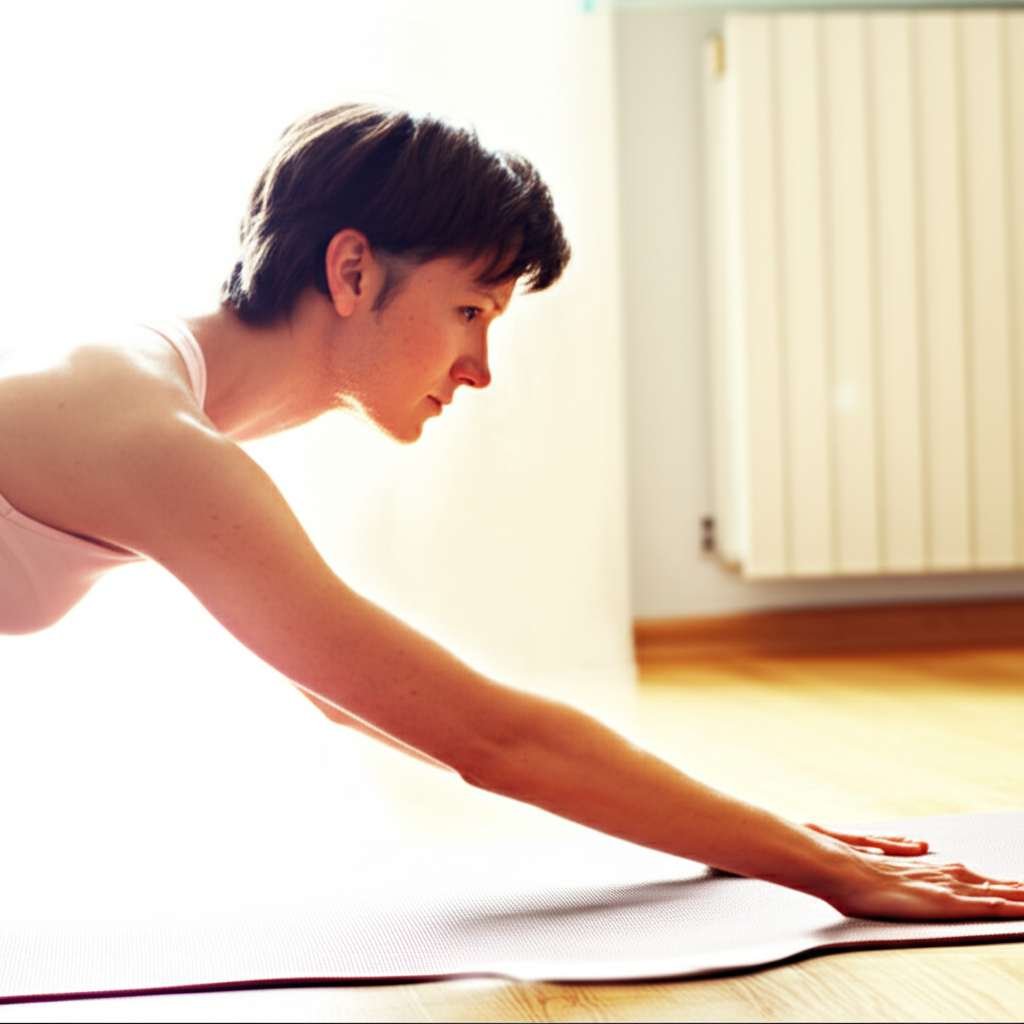
Effortless weight loss is achievable with 15 simple morning yoga routines designed to boost metabolism, build strength, and promote mindfulness. These beginner-friendly sequences can be easily integrated into your daily life to support your wellness goals without feeling overwhelming.
Waking up can be tough, especially when your weight loss goals feel miles away. Many of us struggle with finding the right approach, feeling confused by conflicting advice. It’s easy to get discouraged when the scale doesn’t budge.
But what if I told you there’s a gentle, effective way to kickstart your day and your weight loss journey? Yoga, especially in the morning, offers a beautiful blend of physical movement and mental clarity that can make a real difference.
This guide is here to show you exactly how. We’ll explore 15 simple morning yoga routines, perfect for beginners, that are designed to help you lose weight without the stress. Get ready to feel energized, stronger, and more in control of your health.
Why Morning Yoga for Weight Loss?
Starting your day with yoga is more than just a few stretches. It’s a powerful habit that can significantly impact your weight loss efforts in several key ways. It’s about setting a positive tone for your entire day, both physically and mentally.

The gentle yet effective movements of yoga can help to wake up your body and mind. This can boost your metabolism, meaning your body starts burning calories more efficiently right from the start of your day. It’s like giving your internal engine a gentle, energizing tune-up.
Beyond the physical, morning yoga cultivates mindfulness. This increased awareness can help you make healthier food choices throughout the day and reduce stress, which is a common trigger for unhealthy eating habits. It’s a holistic approach that supports your journey from the inside out.
Boosting Your Metabolism
When you practice yoga in the morning, you encourage blood flow and oxygen circulation throughout your body. This increased circulation helps to activate your muscles and organs, leading to a higher metabolic rate. Even after your yoga session ends, your metabolism can remain elevated for a period, helping you burn more calories.
A study published in the Journal of Strength and Conditioning Research found that certain yoga poses can indeed increase heart rate and energy expenditure, contributing to calorie burn. This means that your morning practice isn’t just about stretching; it’s about actively engaging your body in a way that supports fat loss.
Reducing Stress and Cortisol Levels
Stress is a major roadblock for many people trying to lose weight. When you’re stressed, your body releases cortisol, a hormone that can lead to increased appetite, cravings for unhealthy foods, and fat storage, particularly around the abdomen. Morning yoga is an excellent way to combat this.
The deep breathing and mindful movement inherent in yoga practices help to calm the nervous system. This reduction in stress can lower cortisol levels, making it easier to manage cravings and preventing the body from storing excess fat. It’s a powerful tool for emotional and physical well-being.
Building Lean Muscle Mass
While yoga might not feel like a traditional weightlifting session, many poses engage and strengthen your muscles. Building lean muscle mass is crucial for weight loss because muscle burns more calories at rest than fat does. Over time, a consistent yoga practice can contribute to a more toned physique.
The longer you hold poses, the more your muscles work to support your body. This isometric strength training helps to build endurance and definition. As you become stronger, you’ll find yourself able to hold poses for longer and move through sequences with more ease, further enhancing muscle engagement.
Getting Started with Morning Yoga for Weight Loss
Before diving into the routines, let’s cover some basics to ensure you have a smooth and enjoyable experience. Starting anything new can feel a little daunting, but with a few simple preparations, you’ll be flowing through your morning practice with confidence.
Make sure you have a comfortable space to practice. It doesn’t need to be fancy – a quiet corner of your room with enough space to move your arms and legs freely will do. A yoga mat is highly recommended for cushioning and grip.
Listen to your body. Yoga is about connecting with yourself, not pushing yourself to an extreme. If a pose doesn’t feel right, modify it or skip it. Consistency is more important than intensity, especially when you’re starting out.
What You’ll Need
A Yoga Mat: This provides cushioning for your joints and prevents slipping.
Comfortable Clothing: Wear loose-fitting clothes that allow for a full range of motion.
Water Bottle: Stay hydrated, especially after your practice.
An Open Mind: Be patient with yourself and enjoy the process!
When to Practice
The best time for morning yoga is shortly after waking up, before you’ve eaten breakfast. This allows your body to move more freely and can enhance the metabolic benefits. Aim for 15-30 minutes to start, and you can gradually increase the duration as you feel comfortable.
Breathing Techniques (Pranayama)
Breathing is fundamental to yoga and plays a significant role in its weight loss benefits. Deep, conscious breathing (Pranayama) helps to calm the mind, reduce stress, and increase oxygen supply to your body, which aids in energy production and detoxification.
Diaphragmatic Breathing (Belly Breathing): This is the most fundamental yoga breath.
1. Sit or lie down comfortably.
2. Place one hand on your chest and the other on your belly.
3. Inhale deeply through your nose, allowing your belly to expand like a balloon. Your chest should move very little.
4. Exhale slowly through your nose, allowing your belly to fall.
5. Repeat for 5-10 breaths.
This simple breathwork can be done before, during, or after your yoga poses to deepen your practice and enhance relaxation.
15 Morning Yoga Routines for Effortless Weight Loss
Here are 15 beginner-friendly morning yoga routines, each designed to target different aspects of weight loss and overall well-being. You can choose one routine per day or mix and match them to keep your practice fresh and engaging.
Routine 1: The Energizer Flow (5 Minutes)
This quick routine is perfect for those mornings when you’re short on time but still want to get your body moving and boost your energy.
1. Seated Cat-Cow: Start seated. Inhale, arch your back, and lift your chest (Cow). Exhale, round your spine, and tuck your chin (Cat). (5 breaths)
2. Thread the Needle: From hands and knees, inhale and reach your right arm up. Exhale, thread it under your left arm, resting your shoulder and head on the mat. (3 breaths per side)
3. Downward-Facing Dog: From hands and knees, lift your hips up and back. Pedal out your feet. (5 breaths)
4. Sun Salutation A (Modified): Inhale to Upward Salute, exhale to Forward Fold, inhale to Halfway Lift, exhale to step back to Plank, lower knees, chest, chin, inhale to Cobra, exhale to Downward-Facing Dog. Repeat twice.
5. Child’s Pose: Rest. (3 breaths)
Routine 2: The Core Strengthener (7 Minutes)
A strong core is essential for good posture and efficient movement, which can aid in weight loss.
1. Plank Pose: Hold for 30 seconds. Focus on keeping your body in a straight line from head to heels.
2. Forearm Plank: Hold for 30 seconds. This variation is gentler on the wrists.
3. Boat Pose (Navasana): Sit with knees bent, lift your feet off the floor, and extend your arms forward. Hold for 30 seconds. For a challenge, straighten your legs.
4. Cobra Pose (Bhujangasana): Lie on your belly, hands under shoulders. Inhale, lift your chest, keeping hips on the floor. Hold for 5 breaths.
5. Locust Pose (Salabhasana): Lie on your belly, arms by your sides. Inhale, lift your head, chest, arms, and legs. Hold for 5 breaths.
Routine 3: The Metabolism Booster (8 Minutes)
This routine incorporates poses that can help to increase your body’s calorie-burning potential.
1. Sun Salutation B (Modified): Begin with Mountain Pose, step back into Warrior I, transition through Chaturanga, Cobra, Downward Dog, step forward, Warrior I on the other side. (2 rounds)
2. Warrior II (Virabhadrasana II): Hold for 5 breaths per side. This pose builds leg strength and opens the hips.
3. Triangle Pose (Trikonasana): Hold for 5 breaths per side. Stretches the hamstrings and strengthens the legs.
4. Chair Pose (Utkatasana): Hold for 5 breaths. This powerfully engages your leg and core muscles.
Routine 4: The Full Body Stretch (10 Minutes)
Focus on flexibility and releasing tension, which can improve your body’s ability to move and burn calories.
1. Standing Forward Fold (Uttanasana): Hold for 5 breaths.
2. Wide-Legged Forward Fold (Prasarita Padottanasana): Hold for 5 breaths.
3. Low Lunge (Anjaneyasana): Hold for 5 breaths per side.
4. Pigeon Pose (Eka Pada Rajakapotasana) – Modified: Lie on your back, bring one knee towards your chest, then cross it over your body, keeping hips grounded. Hold for 5 breaths per side.
5. Supine Spinal Twist: Lie on your back, hug one knee to your chest, then let it fall across your body. Hold for 5 breaths per side.
Routine 5: The Hip Opener for Digestion (6 Minutes)
Opening the hips can release stored tension and may aid in improving digestion, a key factor in weight management.
1. Butterfly Pose (Baddha Konasana): Sit with soles of feet together, knees out. Hold for 10 breaths.
2. Pigeon Pose (Modified): As described in Routine 4. (5 breaths per side)
3. Supine Spinal Twist: As described in Routine 4. (5 breaths per side)
4. Happy Baby Pose: Lie on your back, draw knees towards your armpits, holding the outsides of your feet. Gently rock side to side. (5 breaths)
Routine 6: The Back Strengthener (7 Minutes)
A strong back supports your entire body and can help improve posture, making your midsection appear slimmer.
1. Sphinx Pose: Lie on your belly, forearms on the mat, elbows under shoulders. Inhale, lift your chest. Hold for 5 breaths.
2. Locust Pose (Salabhasana): As described in Routine 2. (Hold for 5 breaths)
3. Bridge Pose (Setu Bandhasana): Lie on your back, knees bent, feet flat. Lift your hips. Hold for 5 breaths.
4. Dolphin Pose: From Plank, lower to forearms, keeping hips high. Hold for 5 breaths.
Routine 7: The Calming Flow (9 Minutes)
This gentle flow focuses on breath and movement to reduce stress and promote a sense of well-being, which indirectly supports weight loss.
1. Seated Easy Pose (Sukhasana) with Gentle Twists: Sit comfortably. Inhale, lengthen spine. Exhale, twist to the right, hand on opposite knee. Hold for 3 breaths. Repeat on the left.
2. Cat-Cow: (5 breaths)
3. Child’s Pose: (5 breaths)
4. Thread the Needle: (3 breaths per side)
5. Corpse Pose (Savasana): Lie flat on your back, arms by your sides, palms up. Relax completely for 2 minutes.
Routine 8: The Leg Strength Builder (8 Minutes)
Strong legs contribute to a higher resting metabolism and better overall body composition.
1. Mountain Pose (Tadasana): Stand tall, feet hip-width apart. Engage your core. (5 breaths)
2. Chair Pose (Utkatasana): (5 breaths)
3. Warrior I (Virabhadrasana I): Step one foot back, front knee bent, hips square. Hold for 5 breaths per side.
4. Warrior II (Virabhadrasana II): From Warrior I, open hips to the side, front arm forward, back arm back. Hold for 5 breaths per side.
5. Standing Quad Stretch: Hold onto a wall for balance if needed. Grab one foot and gently pull towards your glutes. Hold for 5 breaths per side.
Routine 9: The Detoxifying Flow (10 Minutes)
Certain poses are believed to stimulate digestive organs and promote detoxification.
1. Seated Spinal Twist: Sit with legs extended. Bend your right knee, place your right foot outside your left thigh. Twist to the right. Hold for 5 breaths per side.
2. Bow Pose (Dhanurasana): Lie on your belly, bend your knees, reach back and grab your ankles. Inhale and lift your chest and thighs. Hold for 5 breaths.
3. Triangle Pose (Trikonasana): (5 breaths per side)
4. Downward-Facing Dog: (5 breaths)
5. Wind-Relieving Pose (Pawanmuktasana): Lie on your back, hug one or both knees to your chest. Hold for 5 breaths.
Routine 10: The Arm & Shoulder Toner (6 Minutes)
Stronger arms and shoulders can help with overall toning and improve posture.
1. Plank Pose: (30 seconds)
2. Chaturanga Dandasana (Four-Limbed Staff Pose): From Plank, lower halfway down, keeping elbows tucked in. Hold for 5 breaths. (If this is too challenging, skip and return to Plank or Knees-Chest-Chin).
3. Dolphin Pose: (5 breaths)
4. Reverse Plank Pose: Sit with legs extended, hands behind you, fingers pointing forward. Lift hips and chest. Hold for 5 breaths.
Routine 11: The Grounding Sequence (7 Minutes)
This routine focuses on poses that bring a sense of stability and connection, helping to reduce stress-related eating.
1. Mountain Pose (Tadasana): Feel your feet connected to the earth. (5 breaths)
2. Tree Pose (Vrksasana): Place one foot on your ankle, calf, or thigh (avoiding the knee). Bring hands to heart center. Hold for 5 breaths per side.
3. Warrior II (Virabhadrasana II): (5 breaths per side)
4. Child’s Pose: (5 breaths)
Routine 12: The Hip Flexor Release (8 Minutes)
Tight hip flexors can contribute to poor posture and lower back pain, indirectly affecting weight loss efforts.
1. Low Lunge (Anjaneyasana): Sink hips forward, keeping back knee on the floor. Hold for 5 breaths per side.
2. Pigeon Pose (Modified): (5 breaths per side)
3. Reclining Pigeon Pose: Lie on your back, cross one ankle over the opposite thigh, draw the bottom leg towards your chest. Hold for 5 breaths per side.
4. Butterfly Pose (Baddha Konasana): (10 breaths)
Routine 13: The Full Body Wake-Up (10 Minutes)
A dynamic flow to get every part of your body moving and ready for the day.
1. Sun Salutation A (Full): Perform 3 rounds.
2. Warrior II: Hold for 5 breaths per side.
3. Triangle Pose: Hold for 5 breaths per side.
4. Bridge Pose: Hold for 5 breaths.
5. Child’s Pose: (5 breaths)
Routine 14: The Core and Back Stabilizer (7 Minutes)
This routine focuses on building strength in the core and back to support a healthy posture and metabolism.
1. Plank Pose: Hold for 30 seconds.
2. Bird-Dog Pose: From hands and knees, extend opposite arm and leg. Keep core stable. Hold for 5 breaths per side.
3. Bridge Pose: Hold for 5 breaths.
4. Sphinx Pose: Hold for 5 breaths.
Routine 15: The Mindful Movement Flow (9 Minutes)
This routine emphasizes the connection between breath and movement, promoting stress reduction and mindful eating habits.
1. Seated Meditation with Deep Breathing: Sit comfortably. Focus on your breath for 2 minutes.
2. Gentle Spinal Rolls: Sit with knees bent, feet flat. Gently roll your spine down one vertebra at a time, then back up. (5 rolls)
3. Cat-Cow: (5 breaths)
4. Thread the Needle: (3 breaths per side)
5. Child’s Pose: (5 breaths)
Integrating Yoga into Your Daily Life
Consistency is key when it comes to seeing results from your morning yoga practice. Even a few minutes each day can make a significant difference over time. Here are some tips to help you build a sustainable habit.
Start small. If 15 minutes feels like too much, begin with 5 or 10 minutes. The goal is to create a habit you can stick with. Gradually increase the duration as you feel more comfortable and your body adapts.
Pair your yoga practice with another daily habit. For example, practice yoga right after you brush your teeth or before you have your morning coffee. This “habit stacking” can make it easier to remember and incorporate into your routine.
Tracking Your Progress
It’s motivating to see how far you’ve come! While the scale is one way to track progress, remember that weight loss is about more than just the number. Notice how you feel, how your clothes fit, and your energy levels.
You can keep a simple journal to note down:
How long you practiced each day.
Which routines you chose.
How you felt before and after your practice.
Any changes in your energy levels or mood.
Any shifts in your appetite or food cravings.
This personal record can highlight the non-scale victories and keep you motivated on your journey.
Frequently Asked Questions (FAQs)
Q1: How soon can I expect to see weight loss results from morning yoga?
A1: Weight loss is a journey, and results vary from person to person. While yoga can boost metabolism and build muscle, which aids in weight loss, it’s part of a larger picture. Many people notice improvements in energy, mood, and reduced stress within a few weeks. Visible changes in weight and body composition can take longer, often a few months of consistent practice combined with a healthy diet.
Q2: I’m not flexible. Can I still do yoga for weight loss?
A2: Absolutely! Yoga is for every body, regardless of flexibility. Beginners often start with limited flexibility. The poses are designed to be modified. As you practice regularly, your flexibility will naturally improve. The focus is on mindful movement and listening to your body, not on achieving a perfect pose.
Q3: Do I need to follow a strict diet along with morning yoga for weight loss?
A3: While yoga is a powerful tool, nutrition plays a crucial role in weight loss. A balanced diet that focuses on whole foods will significantly enhance your yoga efforts. Yoga can help build mindfulness, which often leads to healthier food choices naturally. Aim for a sustainable eating pattern rather than a restrictive diet. For guidance, the MyPlate program from the USDA offers excellent, easy-to-understand recommendations for balanced eating.
Q4: What if I miss a day of my morning yoga routine?
A4: Don’t worry! Missing a day is perfectly normal and part of building a sustainable habit. The most important thing is to get back on your mat the next day. Avoid the all-or-nothing mindset. A missed day doesn’t erase your progress; it’s just a small pause.
Q5: Can yoga help with belly fat specifically?
A5: Yoga can contribute to overall fat loss, including belly fat. While there’s no single pose that targets belly fat exclusively, routines that strengthen the core, reduce stress (which can lead to abdominal fat storage), and boost metabolism are beneficial. Poses like Plank, Boat Pose, and those that improve digestion can be particularly helpful.
Q6: How long should my morning yoga sessions be?
A6: For beginners, starting with 10-15 minutes is often ideal. This makes it manageable to fit into your morning routine consistently. As you build the habit and your stamina increases, you can gradually extend your sessions to 20-30 minutes or longer, depending on your preference and available time.
Q7: Are there specific yoga poses that burn more calories?
A7: Poses that require more strength and endurance, such as Sun Salutations, Warrior poses, Plank, and Chair pose, tend to burn more calories. Holding poses for longer durations also increases calorie expenditure. However, the overall benefit of yoga for weight loss comes from its combination of calorie burning, metabolism boosting, muscle building, and stress reduction.
Conclusion
Embarking on a weight loss journey can feel overwhelming, but integrating simple morning yoga routines into your life can make it feel much more manageable and even enjoyable. These 15 routines offer a starting point, designed to energize your body, calm your mind, and gently encourage your metabolism to work more efficiently.
Remember, consistency is your greatest ally. Even a few minutes each day dedicated to mindful movement can lead to significant long-term benefits for your physical and mental health. Listen to your body, celebrate small victories, and be patient with yourself.
By combining these morning yoga practices with mindful eating and a positive mindset, you’re setting yourself up for sustainable weight loss and a healthier, happier you. Your journey starts with this first mindful breath, this first gentle stretch. You’ve got this!
As an Amazon Associate, We earn from qualifying purchases. When you purchase a product through Amazon links on pulsefitguide.com, we may earn a small commission at no extra cost to you. This helps support the site and keep our content free.
