


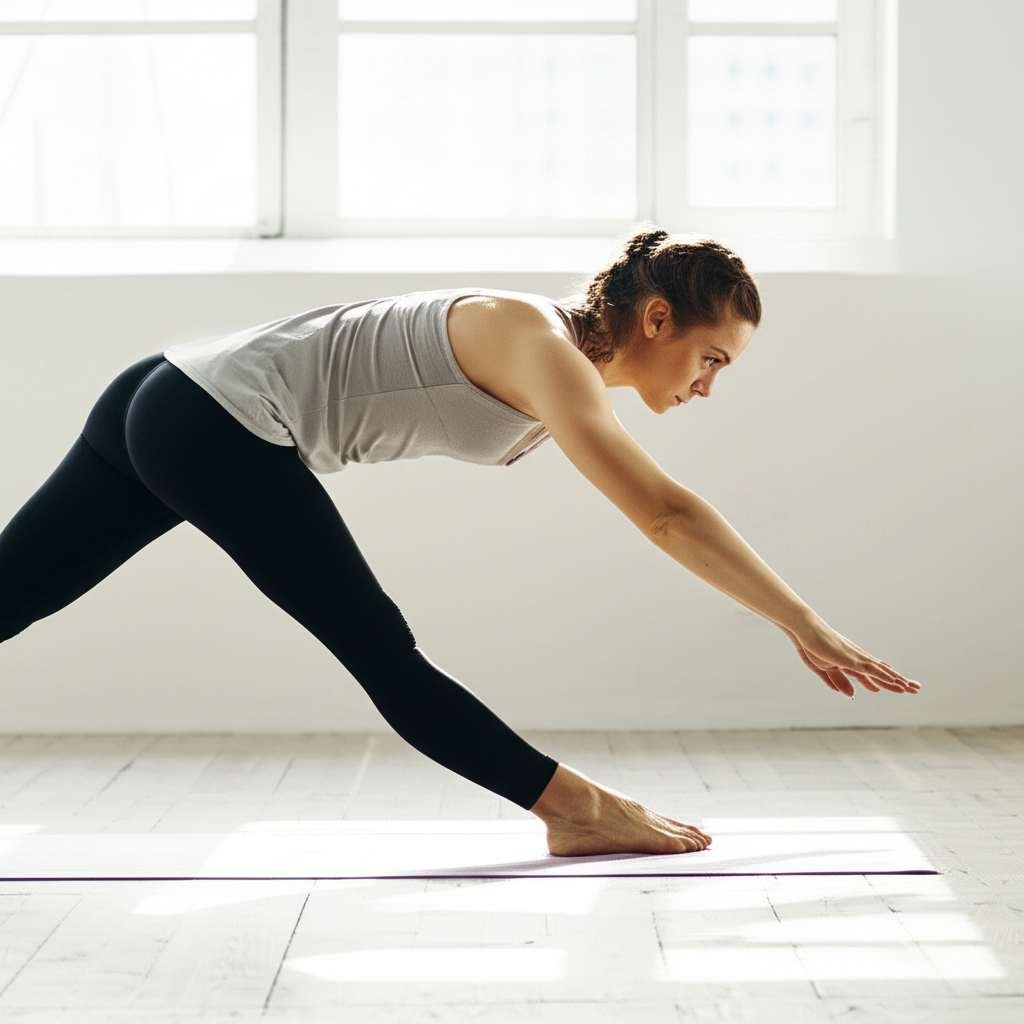
15 morning full body workouts for beginners can kickstart your metabolism, build lean muscle, and boost energy levels, making weight loss more achievable and sustainable. These simple, effective routines require no equipment and can be done right at home.
Feeling overwhelmed by the idea of starting a fitness routine? You’re not alone! Many beginners find the world of exercise confusing and a little intimidating.
It’s easy to get lost in complicated workout plans or feel like you need fancy gym equipment to see results. But the truth is, getting your body moving in the morning can make a huge difference, especially when you’re aiming for weight loss.
This guide is here to break it all down. We’ll explore simple, effective full-body workouts you can do first thing in the morning. These routines are designed for beginners, so you can build confidence and see progress without feeling discouraged.
Get ready to discover how easy and rewarding it can be to start your day with movement!
Why Morning Full Body Workouts Are Your Secret Weapon for Beginners
Starting your day with a full body workout might sound tough, but it’s actually one of the smartest moves you can make, especially if you’re new to exercise and looking to lose weight. It’s like giving your body a wake-up call that sets a positive tone for the rest of your day.
Kickstart Your Metabolism
Think of your metabolism as your body’s engine. When you exercise in the morning, you rev up that engine. This means your body starts burning more calories from the get-go, even after your workout is done. This is often referred to as the “afterburn effect,” and it’s a fantastic boost for weight loss. A higher metabolic rate helps your body use energy more efficiently, making it easier to shed those extra pounds.
Boost Energy Levels Naturally
Feeling sluggish in the morning? Instead of reaching for another cup of coffee, try a quick workout. Exercise increases blood flow and releases endorphins, those feel-good chemicals in your brain. This natural energy boost can make you feel more alert, focused, and ready to tackle your day, helping you avoid that mid-morning slump.
Build a Foundation of Strength
Full body workouts are excellent for beginners because they work multiple muscle groups at once. This helps you build a solid foundation of strength and endurance. As you get stronger, your body becomes more efficient at everyday tasks, and you’ll find it easier to progress to more challenging exercises later on. Building muscle is also key for weight loss, as muscle burns more calories at rest than fat does.
Consistency is Key: Making it a Habit
Mornings often offer a predictable time to exercise before the day’s distractions pile up. Making a morning workout a regular part of your routine helps build discipline and makes it more likely you’ll stick with it long-term. Even 15-20 minutes can make a significant difference when done consistently.
15 Essential Morning Full Body Workouts for Beginners
These workouts are designed to be simple, effective, and require no special equipment. They focus on compound movements that engage multiple muscle groups, giving you the most bang for your buck in a short amount of time.
1. The Classic Squat Series
Squats are a fundamental exercise that works your legs, glutes, and core.
Bodyweight Squats: Stand with your feet shoulder-width apart. Lower your hips as if sitting in a chair, keeping your chest up and back straight. Go as low as comfortable, then push back up through your heels.
Squat to Calf Raise: After performing a squat, stand up and immediately lift onto the balls of your feet, squeezing your calves. Lower back down.
Sumo Squats: Stand with your feet wider than shoulder-width apart, toes pointed slightly outwards. Perform a squat, keeping your chest up and back straight.
Aim for 3 sets of 10-15 repetitions for each variation.
2. The Lunging Combo
Lunges are great for targeting your legs and glutes individually and improving balance.
Forward Lunges: Step forward with one leg, lowering your hips until both knees are bent at about a 90-degree angle. Ensure your front knee stays behind your toes. Push off your back foot to return to the starting position.
Reverse Lunges: Step backward with one leg, lowering your hips until both knees are bent at about a 90-degree angle. Push off your front foot to return to the starting position. Reverse lunges can be easier on the knees for beginners.
Walking Lunges: Perform a forward lunge, but instead of returning to the start, step through with your back leg to perform the next lunge.
Perform 3 sets of 10-12 repetitions per leg.
3. The Push-Up Progression
Push-ups are a fantastic upper body exercise that works your chest, shoulders, triceps, and core.
Knee Push-Ups: Start on your hands and knees. Place your hands slightly wider than shoulder-width apart. Lower your chest towards the floor, keeping your back straight. Push back up.
Incline Push-Ups: Place your hands on an elevated surface like a sturdy table, chair, or wall. Lower your chest towards the surface, keeping your body in a straight line. Push back up. The higher the surface, the easier the push-up.
Standard Push-Ups: Once you’re comfortable with incline and knee push-ups, try them on the floor with your body in a straight line from head to heels.
Aim for 3 sets of as many repetitions as you can with good form.
4. The Plank Power
The plank is a core-strengthening exercise that engages your entire midsection.
Forearm Plank: Start on your forearms and knees, then extend your legs back so you are balanced on your forearms and toes. Keep your body in a straight line from head to heels, engaging your core and glutes.
High Plank (on hands): Similar to the forearm plank, but you’ll be on your hands with your arms straight.
Side Plank: Lie on your side, propped up on one forearm. Stack your feet or place one in front of the other. Lift your hips off the floor, creating a straight line from head to feet.
Hold each variation for 30-60 seconds, aiming for 3 sets.
5. The Glute Bridge Boost
This exercise targets your glutes and hamstrings, crucial for a strong posterior chain.
Standard Glute Bridge: Lie on your back with your knees bent and feet flat on the floor, hip-width apart. Squeeze your glutes and lift your hips off the floor until your body forms a straight line from your shoulders to your knees. Hold for a second, then slowly lower.
Single-Leg Glute Bridge: From the glute bridge position, lift one leg off the floor and extend it straight or keep it bent. Perform the glute bridge with the supporting leg.
Aim for 3 sets of 15-20 repetitions.
6. The Bird-Dog Balance
This exercise improves core stability, balance, and coordination.
Standard Bird-Dog: Start on your hands and knees, with your hands directly under your shoulders and knees under your hips. Keep your back flat and core engaged. Simultaneously extend your right arm forward and your left leg backward, keeping them parallel to the floor. Return to the starting position and repeat on the other side.
Perform 3 sets of 10-12 repetitions per side.
7. The Jumping Jacks Jolt
A simple, effective cardio move to get your heart rate up.
Standard Jumping Jacks: Start with your feet together and arms at your sides. Jump while spreading your feet wider than shoulder-width apart and bringing your arms overhead. Jump again to return to the starting position.
Aim for 3 sets of 30-60 seconds.
8. The High Knees Sprint
Another great cardio burst to warm up your body and burn calories.
High Knees: Stand with your feet hip-width apart. Quickly bring one knee up towards your chest, then immediately switch legs, bringing the other knee up. Continue alternating as fast as you can, pumping your arms.
Aim for 3 sets of 30-60 seconds.
9. The Butt Kicks Burn
This cardio exercise targets your hamstrings and gets your blood flowing.
Butt Kicks: Stand with your feet hip-width apart. While jogging in place, kick your heels up towards your glutes, alternating legs. Pump your arms to help with momentum.
Aim for 3 sets of 30-60 seconds.
10. The Mountain Climbers Mash-Up
A dynamic exercise that works your core, shoulders, and cardio system.
Standard Mountain Climbers: Start in a high plank position (on your hands). Bring one knee towards your chest, then quickly switch legs, bringing the other knee in. Continue to alternate, as if you’re running in place in a plank position.
Aim for 3 sets of 30-60 seconds.
11. The Triceps Dips (Chair or Bench)
This targets your triceps, the muscles at the back of your upper arms.
Chair Dips: Sit on the edge of a sturdy chair or bench with your hands gripping the edge next to your hips. Slide your hips forward off the chair. Lower your body by bending your elbows, keeping your back close to the chair. Push back up using your triceps. You can keep your legs bent for an easier version or straight for a harder one.
Aim for 3 sets of 10-15 repetitions.
12. The Arm Circles Agility
A simple movement to warm up your shoulder joints.
Forward and Backward Circles: Stand with your arms extended out to the sides. Make small circles, gradually increasing the size. Perform forward circles, then backward circles.
Aim for 3 sets of 20 circles in each direction.
13. The Torso Twists
This exercise helps to mobilize your spine and engage your obliques.
Standing Torso Twists: Stand with your feet shoulder-width apart, knees slightly bent, and hands clasped in front of your chest or on your hips. Gently twist your torso from side to side, keeping your hips relatively stable.
Aim for 3 sets of 15-20 twists per side.
14. The Superman Stretch
This exercise strengthens your lower back and glutes.
Standard Superman: Lie on your stomach with your arms and legs extended. Simultaneously lift your arms, chest, and legs off the floor, squeezing your glutes and lower back muscles. Hold for a second, then slowly lower.
Aim for 3 sets of 10-15 repetitions.
15. The Wall Sit Endurance
A great isometric exercise to build leg strength and endurance.
Wall Sit: Lean your back against a wall and slide down until your knees are bent at a 90-degree angle, as if sitting in an invisible chair. Ensure your knees are directly above your ankles. Keep your back pressed against the wall.
Hold for 30-60 seconds, aiming for 3 sets.
Putting It All Together: Sample Morning Routines
To make things even easier, here are a few sample routines you can follow. Remember, consistency is more important than intensity when you’re starting out.
Beginner Routine 1: The Quick Start (15 Minutes)
This routine focuses on getting your whole body moving and your heart rate up.
Jumping Jacks: 30 seconds
Bodyweight Squats: 12 reps
Knee Push-Ups: 10 reps
Reverse Lunges: 10 reps per leg
Glute Bridges: 15 reps
Plank (Forearm): 30 seconds
Rest for 30 seconds between exercises. Repeat the circuit 2-3 times.
Beginner Routine 2: The Strength Builder (20 Minutes)
This routine incorporates a bit more strength focus.
Warm-up: 2 minutes of light jogging in place and arm circles.
Bodyweight Squats: 3 sets of 15 reps
Incline Push-Ups: 3 sets of as many reps as possible (AMRAP)
Walking Lunges: 3 sets of 10 reps per leg
Plank (Forearm): 3 sets of 45 seconds
Superman Stretch: 3 sets of 12 reps
Cool-down: 2 minutes of stretching.
Beginner Routine 3: The Cardio & Core Focus (20 Minutes)
This routine is great for boosting your metabolism and strengthening your core.
Warm-up: 2 minutes of high knees and butt kicks.
Jumping Jacks: 3 sets of 60 seconds
Mountain Climbers: 3 sets of 45 seconds
High Knees: 3 sets of 45 seconds
Plank (High): 3 sets of 45 seconds
Side Plank: 3 sets of 30 seconds per side
Cool-down: 2 minutes of stretching.
Tips for Success for Beginner Morning Workouts
Starting is the hardest part, but with a few simple tips, you can make your morning workouts a sustainable habit.
Start Small: Don’t try to do too much too soon. Even 10-15 minutes is a great start. Gradually increase the duration and intensity as you get fitter.
Prepare the Night Before: Lay out your workout clothes, have your water bottle ready, and plan your breakfast. This removes barriers in the morning.
Listen to Your Body: It’s okay to modify exercises or take rest days. Pushing too hard too soon can lead to injury.
Stay Hydrated: Drink a glass of water before and after your workout.
Fuel Up Wisely: Have a light, healthy breakfast within an hour or two after your workout to refuel your body.
Find a Workout Buddy: If you struggle with motivation, exercising with a friend can help keep you accountable.
Track Your Progress: Note down your workouts, reps, and how you feel. Seeing your improvements can be incredibly motivating. You can use apps like MyFitnessPal to track your activity and nutrition.
* Make it Enjoyable: Put on some upbeat music or listen to a podcast while you exercise.
Understanding Your Body’s Response to Exercise
As you begin your morning workout journey, it’s helpful to understand a bit about what’s happening inside your body. This knowledge can help you stay motivated and make informed choices.
The Role of Muscles
When you do these exercises, you’re essentially creating tiny tears in your muscle fibers. Don’t worry, this is a good thing! Your body then repairs these fibers, making them stronger and a little bigger. This process is called muscle hypertrophy, and it’s how you build lean muscle mass. The more muscle you have, the higher your resting metabolic rate, meaning you burn more calories even when you’re not exercising.
Cardiovascular Health Benefits
Morning workouts get your heart pumping. Regular cardiovascular exercise strengthens your heart muscle, improves blood circulation, and can help lower blood pressure. This is crucial for overall health and can significantly aid in weight loss by improving your body’s efficiency in using energy. According to the American Heart Association, adults should aim for at least 150 minutes of moderate-intensity aerobic activity per week.
Hormonal Influences
Exercise, especially in the morning, can positively influence hormones related to appetite and stress. It can help regulate ghrelin (the hunger hormone) and leptin (the satiety hormone), potentially reducing cravings. Additionally, exercise is a great way to manage cortisol, the stress hormone, which can sometimes contribute to weight gain if levels are chronically high.
Common Beginner Questions About Morning Workouts
Here are some common questions beginners have about starting morning full-body workouts.
What is the best time of day to work out for weight loss?
While any time is better than none, exercising in the morning can offer a metabolism boost for the entire day and help establish a consistent routine. However, the most effective time is when you can be consistent and enjoy it.
How long should a beginner morning workout be?
For beginners, 15-30 minutes is a great starting point. Focus on completing the exercises with good form rather than the duration.
What if I don’t feel motivated in the morning?
Preparation is key! Lay out your clothes the night before, have your water ready, and try starting with just 5 minutes. Often, once you start moving, motivation follows.
Do I need to eat before a morning workout?
For lighter workouts (under 30-45 minutes), you can often work out on an empty stomach, especially if you drink water. If you feel lightheaded or weak, try a small, easily digestible snack like half a banana about 30 minutes before.
How often should I do these workouts?
Aim for 3-5 times per week to start. Allow rest days for your body to recover and rebuild muscle.
What if I have sore muscles the next day?
Muscle soreness (DOMS – Delayed Onset Muscle Soreness) is normal when starting a new routine. Gentle stretching, light activity like walking, and staying hydrated can help. If pain is severe or persistent, consult a healthcare professional.
Can I do these workouts without any equipment?
Yes! All the exercises listed are bodyweight exercises, meaning they require no equipment. You can do them anywhere, anytime.
Conclusion: Your Journey Starts Now!
Embarking on a fitness journey can feel like a big step, but it doesn’t have to be complicated or overwhelming. By incorporating these 15 beginner-friendly morning full-body workouts into your routine, you’re setting yourself up for success.
You’ll not only boost your metabolism and build strength but also gain energy and confidence to tackle your day. Remember, consistency is your best friend. Start small, listen to your body, and celebrate your progress along the way.
These simple, effective routines are your foundation. As you get stronger and more comfortable, you can explore new exercises and challenges. The most important thing is to keep moving and make healthy habits a natural part of your life. Your healthier, more energetic self is just a morning workout away!
As an Amazon Associate, We earn from qualifying purchases. When you purchase a product through Amazon links on pulsefitguide.com, we may earn a small commission at no extra cost to you. This helps support the site and keep our content free.
