



Get your day started right with 10 effective morning home workouts for men. Boost energy, build muscle, and burn fat without leaving your house. Simple, fast, and designed for beginners to kickstart their fitness journey and feel great all day.
Mornings can feel like a drag, especially when you’re trying to get fitter. It’s easy to hit snooze and tell yourself “later.” But what if you could supercharge your day with just a few minutes of movement right at home?
Many guys find starting a workout routine confusing. You might think you need a gym or fancy equipment, but that’s not true!
We’re here to show you how simple and effective morning workouts can be. You’ll feel more energized, focused, and ready to take on anything.
Let’s dive into 10 awesome workouts you can do without stepping outside.
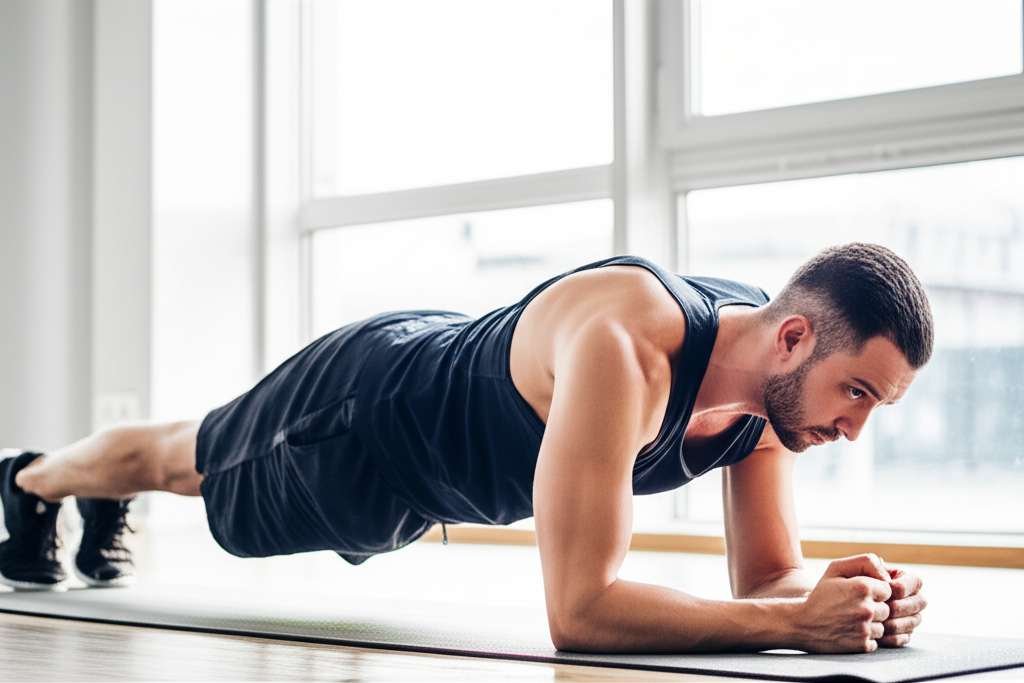
Why Morning Workouts Are a Game Changer for Men
Starting your day with exercise isn’t just about checking a box. It’s a powerful way to set a positive tone for everything that follows. For men, especially those new to fitness, a morning routine can be incredibly beneficial.
Think of it as a “power-up” button for your mind and body. You wake up feeling a bit sluggish, but a quick workout can shake off that grogginess. This boost can improve your mood, sharpen your focus, and even help you make healthier choices throughout the day.
Plus, getting your workout done early means you won’t have to worry about fitting it in later when work, family, or social plans get in the way. It’s a reliable way to ensure you stick to your fitness goals.
Boosted Metabolism
When you exercise in the morning, especially before you’ve eaten, your body can tap into stored fat for energy. This can help give your metabolism a kickstart for the rest of the day.
Enhanced Focus and Productivity
Physical activity increases blood flow to the brain. This can lead to sharper thinking, better concentration, and improved problem-solving skills. You’ll feel more alert and ready to tackle your tasks.
Stress Reduction
Morning workouts can help clear your head and reduce levels of stress hormones like cortisol. Starting your day feeling calm and in control makes a big difference.
Consistent Habits
By making morning workouts a part of your routine, you build discipline. This consistency is key to long-term fitness success and overall well-being.
10 Essential Morning Home Workouts for Men
Here are 10 fantastic workouts you can do at home to energize your mornings and kickstart your fitness journey. These require minimal or no equipment, making them perfect for beginners.
1. The “Wake-Up” Push-Up Circuit
Push-ups are a classic for a reason. They work your chest, shoulders, triceps, and core. This circuit is designed to get your heart rate up and muscles engaged.
How to do it:
Standard Push-Ups: Start on your hands and knees, then extend your legs back. Keep your body in a straight line from head to heels. Lower your chest towards the floor, then push back up.
Incline Push-Ups: Place your hands on an elevated surface like a sturdy chair or table. This makes the push-up easier, great for building strength.
Knee Push-Ups: If standard push-ups are too tough, drop to your knees. Keep your body straight from head to knees.
Workout:
10 Standard Push-Ups
10 Incline Push-Ups (using a table or counter)
10 Knee Push-Ups
Rest for 60 seconds.
Repeat this circuit 2-3 times.
2. Bodyweight Squat Power
Squats are fundamental for building lower body strength and are excellent for burning calories. They target your quads, hamstrings, glutes, and core.
How to do it:
Stand with your feet shoulder-width apart, toes pointing slightly outward.
Keep your chest up and your back straight.
Lower your hips as if you’re sitting back into a chair. Go as low as you comfortably can, aiming for your thighs to be parallel to the floor.
Push through your heels to return to the starting position.
Workout:
Perform 3 sets of 15-20 squats.
Focus on controlled movements and proper form.
3. Plank Progression
The plank is a fantastic exercise for strengthening your core muscles, including your abs, obliques, and lower back. A strong core is crucial for overall health and preventing injuries.
How to do it:
Start in a push-up position, but rest on your forearms instead of your hands.
Keep your body in a straight line from head to heels. Don’t let your hips sag or rise too high.
Engage your core by pulling your belly button towards your spine.
Workout:
Hold the plank for 30-60 seconds.
Rest for 30 seconds.
Repeat 3-4 times.
As you get stronger, you can try variations like side planks.
4. Lunges for Leg Strength
Lunges are brilliant for building leg strength and improving balance. They target your quadriceps, hamstrings, and glutes, and also engage your core.
How to do it:
Stand with your feet hip-width apart.
Take a large step forward with one leg.
Lower your body until both knees are bent at approximately a 90-degree angle. Your front knee should be directly above your ankle, and your back knee should hover just above the floor.
Push off your front foot to return to the starting position.
Repeat on the other leg.
Workout:
Perform 3 sets of 10-12 lunges per leg.
Ensure your front knee doesn’t go past your toes.
5. Jumping Jacks for Cardio Boost
Jumping jacks are a simple yet effective way to get your heart rate up quickly and burn calories. They’re a great way to warm up your entire body.
How to do it:
Stand with your feet together and your arms at your sides.
Jump, spreading your feet wider than shoulder-width apart and bringing your arms overhead.
Jump again, returning your feet to the starting position and bringing your arms back to your sides.
Workout:
Perform 3 sets of 30-60 seconds of jumping jacks.
Focus on keeping a steady pace.
6. The “Supermans” for Back Strength
This exercise is excellent for strengthening your lower back and improving posture. It targets the erector spinae muscles along your spine.
How to do it:
Lie face down on the floor with your arms and legs extended.
Simultaneously lift your arms, chest, and legs off the floor, squeezing your glutes and lower back muscles. Imagine you are flying like Superman.
Hold for a second or two, then slowly lower back down.
Workout:
Perform 3 sets of 12-15 repetitions.
Keep the movement controlled and avoid jerky motions.
7. Glute Bridges for Glute Activation
Glute bridges are fantastic for activating and strengthening your glutes and hamstrings. They’re also great for hip mobility.
How to do it:
Lie on your back with your knees bent and feet flat on the floor, hip-width apart. Your arms should be by your sides.
Engage your glutes and lift your hips off the floor until your body forms a straight line from your shoulders to your knees.
Squeeze your glutes at the top and hold for a moment.
Slowly lower your hips back down.
Workout:
Perform 3 sets of 15-20 repetitions.
8. High Knees for Intensity
High knees are a dynamic cardio exercise that gets your heart pumping and works your legs and core. It’s a great way to increase your heart rate quickly.
How to do it:
Stand with your feet hip-width apart.
Begin to run in place, bringing your knees up as high as possible towards your chest.
Pump your arms vigorously to help with momentum.
Workout:
Perform 3 sets of 30-45 seconds of high knees.
Focus on speed and lifting your knees high.
9. Mountain Climbers for Full Body Burn
Mountain climbers are a dynamic exercise that works your core, shoulders, arms, and legs. They also provide a good cardiovascular challenge.
How to do it:
Start in a high plank position (like the top of a push-up).
Bring one knee towards your chest, then quickly switch legs, as if you’re running in place.
Keep your core engaged and your hips as stable as possible.
Workout:
Perform 3 sets of 30-60 seconds.
Try to maintain a fast pace while keeping good form.
10. Burpees (Beginner Friendly)
Burpees are a full-body exercise that combines a squat, a plank, and a jump. They are a highly effective calorie burner and strength builder. We’ll do a beginner version.
How to do it (Beginner Version):
Start by standing with your feet shoulder-width apart.
Squat down and place your hands on the floor in front of you.
Step your feet back one at a time into a plank position.
Step your feet forward one at a time back into a squat.
Stand up. (No jump or push-up required for beginners).
Workout:
Perform 3 sets of 8-10 repetitions.
Focus on smooth transitions between each step.
Building Your Morning Routine: A Step-by-Step Guide
Now that you have a list of great exercises, let’s talk about how to actually make them a habit. Consistency is key, and a structured approach can help you stick with it.
Step 1: Start Small and Be Realistic
Don’t try to do all 10 workouts every single morning. That’s a recipe for burnout. Begin with just 2-3 exercises that appeal to you the most.
Example: Monday: Bodyweight Squats and Plank. Wednesday: Push-ups and Jumping Jacks. Friday: Lunges and Glute Bridges.
Step 2: Schedule It Like an Appointment
Block out time in your calendar for your morning workout. Treat it as seriously as any other important commitment. Even 15-20 minutes can make a huge difference.
Step 3: Prepare the Night Before
Lay out your workout clothes, fill your water bottle, and have your workout space ready. This removes any friction that might make you skip your morning session.
Step 4: Focus on Form Over Speed
Especially when you’re starting, it’s crucial to perform exercises correctly. Watching videos of proper form can be very helpful. A quick search on YouTube for “[exercise name] proper form” will give you many options. Prioritizing form helps prevent injuries and ensures you’re working the right muscles.
Step 5: Listen to Your Body
Some days you’ll feel more energetic than others. If you’re feeling sore or tired, it’s okay to do a lighter version of the workout or opt for something less intense, like stretching. Pushing too hard when your body needs rest can be counterproductive.
Step 6: Gradually Increase Intensity and Duration
As you get stronger and more comfortable, you can start adding more reps, more sets, or longer hold times. You can also introduce new exercises from the list or try more challenging variations.
Step 7: Track Your Progress
Keep a simple journal or use a fitness app to record your workouts. Note down the exercises you did, how many reps or sets, and how you felt. Seeing your progress can be incredibly motivating.
Essential Tools and Tips for Home Workouts
You don’t need a lot of fancy equipment to get a great workout at home. Here are some simple things that can enhance your experience.
Minimal Equipment Recommendations
Comfortable Workout Clothes: Essential for unrestricted movement.
Water Bottle: Stay hydrated before, during, and after your workout.
Yoga Mat: Provides cushioning for floor exercises like planks and bridges, and helps prevent slipping.
Timer or Stopwatch: Useful for timing sets, rests, and exercises like planks. Most smartphones have this built-in.
Sturdy Chair or Bench: For incline push-ups or step-ups. Ensure it’s stable.
Tips for Staying Motivated
Find a Workout Buddy (Virtually): Connect with a friend who is also working out at home. You can share progress and encourage each other.
Create a Playlist: Upbeat music can make a huge difference in energy levels and enjoyment.
Reward Yourself: Set small goals and celebrate when you reach them. This could be anything from a healthy treat to a relaxing evening.
Visualize Success: Imagine how good you’ll feel after your workout and the long-term benefits you’re building.
Sample Morning Workout Schedules
To give you a better idea, here are a couple of sample schedules. Remember, these are just examples, and you should adapt them to your own fitness level and preferences.
Sample Schedule 1: Full Body Focus (3 days/week)
Monday:
Warm-up: 5 minutes of light cardio (jumping jacks, high knees)
Workout:
Bodyweight Squats (3 sets of 15)
Standard Push-Ups (3 sets of as many as possible with good form)
Plank (3 sets, hold for 45 seconds)
Glute Bridges (3 sets of 20)
Cool-down: 5 minutes of stretching
Wednesday:
Warm-up: 5 minutes of light cardio
Workout:
Lunges (3 sets of 12 per leg)
Incline Push-Ups (3 sets of 15)
Supermans (3 sets of 15)
Mountain Climbers (3 sets, 45 seconds)
Cool-down: 5 minutes of stretching
Friday:
Warm-up: 5 minutes of light cardio
Workout:
Burpees (Beginner Version) (3 sets of 10)
Knee Push-Ups (3 sets of as many as possible)
Jumping Jacks (3 sets of 60 seconds)
Plank (3 sets, hold for 60 seconds)
Cool-down: 5 minutes of stretching
Sample Schedule 2: Quick Hitters (5 days/week)
This schedule focuses on shorter, more intense bursts of activity.
Monday: Push-up Circuit (2 rounds) + Plank (2 sets, 60 sec hold)
Tuesday: Bodyweight Squats (3 sets of 20) + Jumping Jacks (2 sets, 60 sec)
Wednesday: Lunges (3 sets of 15 per leg) + Glute Bridges (3 sets of 20)
Thursday: Mountain Climbers (2 sets, 60 sec) + Supermans (2 sets of 15)
Friday: Burpees (Beginner Version) (3 sets of 12) + Plank (2 sets, 60 sec hold)
Remember to listen to your body and adjust as needed!
Understanding the Science: Why These Workouts Are Effective
It’s great to know how to do exercises, but understanding why they work can be a huge motivator. These home workouts leverage fundamental principles of exercise science.
Progressive Overload
The idea here is simple: to get stronger, you need to challenge your muscles more over time. This can mean doing more repetitions, more sets, holding exercises longer, or performing more challenging variations. As you consistently do these exercises, your body adapts, and you’ll need to progressively increase the demand to keep seeing results. For example, if 10 push-ups become easy, aim for 12, or try a slightly harder variation. The National Strength and Conditioning Association (NSCA) emphasizes this principle for muscle growth and strength.
Compound Movements
Many of these exercises, like squats, lunges, push-ups, and burpees, are compound movements. This means they engage multiple muscle groups and joints simultaneously.
Benefit: Compound exercises are incredibly efficient. They burn more calories in less time and build functional strength that translates to everyday activities. For instance, a squat works your quads, hamstrings, glutes, and core all at once.
Cardiovascular Benefits
Exercises like jumping jacks, high knees, and mountain climbers elevate your heart rate. Regular cardiovascular exercise is crucial for heart health, improving endurance, and aiding in fat loss. The American Heart Association recommends regular aerobic activity for a healthy lifestyle.
Core Strength Importance
A strong core is the foundation of most movements. Exercises like planks and mountain climbers directly target these muscles. A strong core improves posture, reduces the risk of back pain, and enhances performance in other physical activities.
Muscle Building and Metabolism
When you perform resistance exercises like push-ups, squats, and lunges, you create micro-tears in your muscle fibers. Your body then repairs these tears, making the muscles stronger and slightly larger over time. This process also increases your resting metabolic rate, meaning you burn more calories even when you’re not exercising.
Frequently Asked Questions (FAQ)
Here are some common questions beginners have about morning home workouts.
How long should a morning workout be?
For beginners, 15-30 minutes is a great starting point. Focus on quality over quantity. As you get fitter, you can gradually increase the duration.
What if I’m not a morning person?
It takes time to build a habit! Try to go to bed a little earlier. Even a short, 5-10 minute routine can make a difference. Eventually, your body will adjust, and you might find yourself waking up with more energy.
Do I need to warm up and cool down?
Yes! A brief warm-up (5 minutes of light cardio like jogging in place or arm circles) prepares your body for exercise and reduces injury risk. A cool-down (5 minutes of stretching) helps your muscles recover.
How many days a week should I work out?
Aim for 3-5 days a week when you’re starting. Allow for rest days to let your muscles recover and rebuild. Consistency is more important than intensity when you’re beginning.
What if I feel pain during an exercise?
Listen to your body. If you feel sharp or persistent pain, stop the exercise immediately. It’s often a sign of incorrect form or overexertion. Consult a doctor or physical therapist if pain continues.
Can I lose weight just by doing these home workouts?
These workouts can definitely help with weight loss by burning calories and building muscle, which boosts your metabolism. However, for significant weight loss, combining exercise with a balanced, healthy diet is most effective. Nutrition plays a huge role in weight management.
What’s the difference between these and gym workouts?
Home workouts often rely on bodyweight or minimal equipment, making them accessible and affordable. Gyms offer a wider variety of machines and weights, which can be beneficial for advanced training. Both can be highly effective for reaching your fitness goals.
Conclusion: Your Morning Power-Up Awaits
Starting your day with a workout doesn’t have to be complicated or time-consuming. These 10 morning home workouts for men are designed to be effective, beginner-friendly, and easy to fit into your routine.
By incorporating these simple yet powerful exercises, you can boost your energy, improve your focus, build strength, and set a positive tone for your entire day. Remember to start small, focus on proper form, and be consistent.
The most important step is the first one. So, pick an exercise, get moving, and discover the incredible benefits of a morning workout. Your future, more energized self will thank you!
As an Amazon Associate, We earn from qualifying purchases. When you purchase a product through Amazon links on pulsefitguide.com, we may earn a small commission at no extra cost to you. This helps support the site and keep our content free.
