


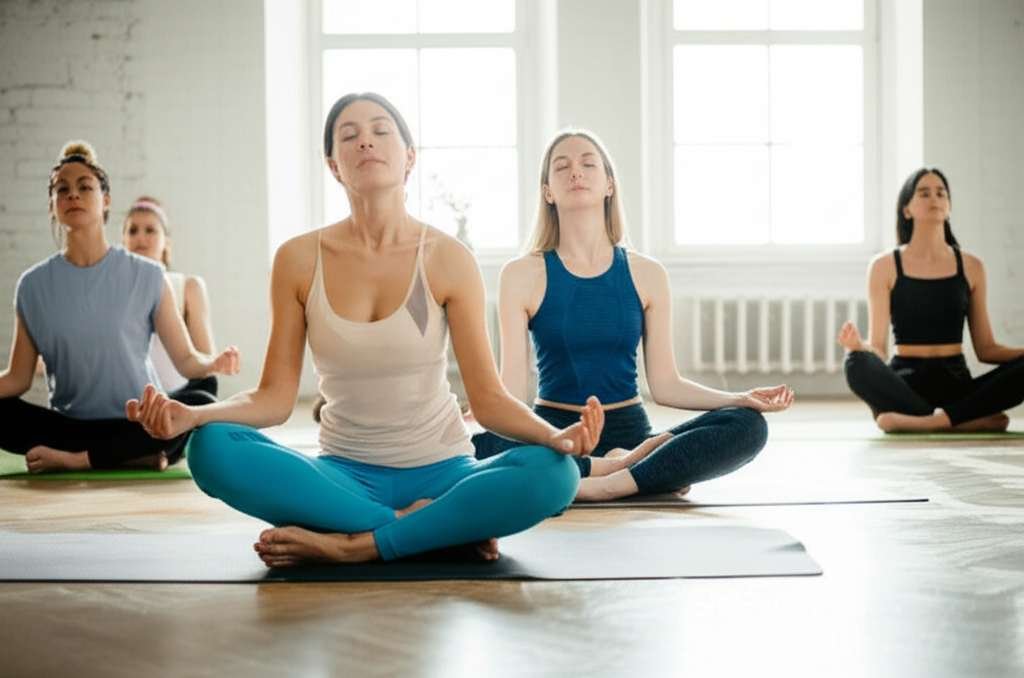
For women seeking an essential morning boost, 20 simple yoga workouts can help you feel energized, focused, and ready for the day. These beginner-friendly routines are designed to gently awaken your body and mind, promoting flexibility, strength, and a positive outlook. Discover accessible poses and short sequences to kickstart your mornings.
Waking up can feel like a struggle sometimes, can’t it? You might hit the snooze button a few times, feeling groggy and unmotivated. It’s totally normal to feel this way, especially when you’re juggling school, work, or just life’s daily demands.
The good news is, there’s a simple and effective way to change that morning feeling. Imagine starting your day feeling refreshed, clear-headed, and ready to tackle anything. This doesn’t require a lot of time or complicated routines.
We’re going to explore 20 morning yoga workouts specifically for women. These are designed to be super easy to follow, even if you’ve never done yoga before. Get ready to discover how a few simple poses can make a big difference in your day!
Why Morning Yoga is a Game-Changer for Women
Starting your day with yoga isn’t just about stretching. It’s a powerful way to set a positive tone for everything that follows. For women, this can be especially beneficial as it helps manage stress and build inner strength.
Think of your morning as a blank canvas. What you do first can paint the rest of your day. Gentle yoga movements can help clear away the cobwebs of sleep, awaken your muscles, and calm your mind.
This practice can improve your mood, boost your energy levels without caffeine jitters, and even enhance your focus. It’s a gentle yet effective way to invest in yourself right from the start.
Getting Started: What Beginners Need to Know
If you’re new to yoga, the idea of a “workout” might sound intimidating. But morning yoga is meant to be accessible and enjoyable. You don’t need fancy equipment or years of experience.
The most important thing is to listen to your body. Yoga is not about pushing yourself into uncomfortable positions. It’s about connecting with your breath and moving in a way that feels good.
We’ll cover simple poses and short sequences. The goal is to make you feel good, not to achieve a perfect pose. Let’s dive into how you can begin this wonderful practice.
Essential Tips for Your Morning Yoga Practice
Before we jump into the specific workouts, here are a few tips to make your morning yoga experience smooth and rewarding:
- Find a Quiet Space: Choose a spot in your home where you won’t be disturbed for a few minutes. This could be your bedroom, living room, or even a corner of your kitchen.
- Wear Comfortable Clothes: You’ll want to wear clothing that allows you to move freely. Stretchy pants or leggings and a comfortable top are perfect.
- Listen to Your Body: This is the golden rule of yoga. If something feels painful, ease out of the pose. It’s okay to modify poses or skip them if they don’t feel right for you.
- Focus on Your Breath: Your breath is your guide in yoga. Try to breathe deeply and smoothly through your nose. This helps calm your nervous system and deepen your stretches.
- Don’t Worry About Perfection: Yoga is a practice, not a performance. Every day is different, and every body is different. Just show up and do your best.
- Consistency is Key: Even 5-10 minutes of yoga each morning can make a significant difference over time. Try to make it a regular part of your routine.
The 20 Morning Yoga Workouts for Women
Here are 20 beginner-friendly yoga workouts designed to give you that essential morning boost. These range from single poses to short sequences you can combine or do individually.
Gentle Awakening Poses (5-10 Minutes)
These poses are perfect for easing into your day. They help to gently wake up your body and mind.
- Child’s Pose (Balasana): Kneel on the floor, sit back on your heels, and fold your torso forward, resting your forehead on the mat. Extend your arms forward or rest them alongside your body. This pose is incredibly calming and helps to gently stretch the back and hips.
- Cat-Cow Pose (Marjaryasana-Bitilasana): Start on your hands and knees. As you inhale, drop your belly, lift your chest and tailbone (Cow pose). As you exhale, round your spine, tuck your chin to your chest, and draw your navel in (Cat pose). Flow between these two poses with your breath.
- Thread the Needle Pose (Urdhva Mukha Pasasana variation): From hands and knees, inhale and reach your right arm up towards the ceiling. Exhale and thread your right arm under your left armpit, lowering your right shoulder and ear to the mat. You can keep your left hand planted or extend it forward. Repeat on the other side.
- Sphinx Pose (Salamba Bhujangasana): Lie on your stomach with your legs extended. Place your elbows directly under your shoulders and forearms parallel on the mat. Gently lift your chest, keeping your hips on the floor. This is a gentle backbend that helps open the chest.
- Supine Spinal Twist (Supta Matsyendrasana): Lie on your back with your knees bent and feet flat on the floor. Draw your knees into your chest. Drop both knees to the right side, keeping your shoulders on the mat. Extend your left arm out to the side and turn your head to the left. Repeat on the other side.
Energizing Sequences (10-15 Minutes)
These short sequences combine several poses to create a more dynamic morning flow.
- Sun Salutation A (Surya Namaskar A) – Modified:
- Mountain Pose (Tadasana): Stand tall with feet together.
- Upward Salute (Urdhva Hastasana): Inhale, sweep arms overhead.
- Forward Fold (Uttanasana): Exhale, hinge at hips, fold forward.
- Halfway Lift (Ardha Uttanasana): Inhale, lengthen spine, flat back.
- Plank Pose (Phalakasana): Exhale, step feet back to plank.
- Knees-Chest-Chin or Chaturanga: Lower to your mat (modified option is knees-chest-chin).
- Cobra Pose (Bhujangasana) or Upward-Facing Dog (Urdhva Mukha Svanasana): Inhale, lift chest.
- Downward-Facing Dog (Adho Mukha Svanasana): Exhale, push hips up and back.
- Step or hop feet forward: Inhale, step feet forward.
- Forward Fold: Exhale, fold.
- Upward Salute: Inhale, sweep arms up.
- Mountain Pose: Exhale, return to standing.
Repeat 3-5 times.
- Morning Flow for Mobility:
- Start in Child’s Pose.
- Move to Cat-Cow for 5 breaths.
- Transition to Downward-Facing Dog, pedal out your feet.
- Step your right foot forward for a low lunge, sweeping arms up.
- Return hands to mat, step back to Downward-Facing Dog.
- Step your left foot forward for a low lunge, sweeping arms up.
- Return hands to mat, step back to Downward-Facing Dog.
- Lower knees to mat and rest in Child’s Pose.
- Standing Energizer:
- Mountain Pose.
- Warrior II (Virabhadrasana II): Step feet wide, turn one foot out, bend front knee, extend arms parallel to floor. Hold for 5 breaths, then switch sides.
- Triangle Pose (Trikonasana): From Warrior II, straighten front leg, hinge at hip, reach forward, then lower top hand to shin or floor, and extend top arm up. Hold for 5 breaths, switch sides.
- Return to Mountain Pose.
- Seated Spinal Awakening:
- Easy Pose (Sukhasana): Sit cross-legged with a straight spine.
- Seated Cat-Cow: Place hands on knees. Inhale, arch spine, open chest. Exhale, round spine, draw chin to chest. Repeat 5 times.
- Seated Side Bend: Inhale, reach right arm up. Exhale, bend to the left. Hold for 3 breaths, switch sides.
- Gentle Seated Twist: Inhale, lengthen spine. Exhale, twist to the right, bringing left hand to right knee and right hand behind you. Hold for 3 breaths, switch sides.
- Hip Opener Sequence:
- Start in Downward-Facing Dog.
- Lift your right leg high (Three-Legged Dog).
- Step your right foot forward into Pigeon Pose (Eka Pada Rajakapotasana variation): Lower your left knee to the mat, bring your right shin forward, and rest your hips on the floor. You can stay upright or fold forward. Hold for 5 breaths.
- Return to Downward-Facing Dog. Repeat on the left side.
Poses for Focus and Clarity (5-10 Minutes)
These poses help to clear your mind and improve concentration.
- Tree Pose (Vrksasana): Stand in Mountain Pose. Shift weight to your left foot. Place the sole of your right foot on your inner ankle, calf, or thigh (avoid the knee joint). Bring your hands to heart center or extend them overhead. Hold for 5 breaths, switch sides. This pose improves balance and focus.
- Eagle Pose Arms (Garudasana Arms): While standing or seated, extend your arms forward. Cross your right arm over your left, bending your elbows. Wrap your forearms and try to bring the backs of your hands or palms together. Hold for 5 breaths, switch sides. This opens the upper back and shoulders.
- Extended Puppy Pose (Uttana Shishosana): Start on hands and knees. Walk your hands forward, keeping your hips stacked over your knees. Lower your forehead and chest towards the mat, keeping your arms extended. This gently stretches the spine and shoulders.
- Bridge Pose (Setu Bandhasana): Lie on your back with knees bent and feet flat on the floor, hip-width apart. Press into your feet and lift your hips off the floor. You can keep your arms alongside your body or interlace your fingers underneath you. Hold for 5 breaths. This opens the chest and strengthens the back.
- Legs-Up-The-Wall Pose (Viparita Karani): Lie on your back and extend your legs straight up against a wall. You can scoot your hips close to the wall for a deeper inversion. Rest your arms by your sides or on your belly. This is a restorative pose that calves the legs and calms the mind.
Short & Sweet Boosters (2-5 Minutes)
When you’re really short on time, these quick poses can still make a difference.
- Seated Forward Fold (Paschimottanasana) – Gentle: Sit with legs extended. Inhale to lengthen your spine, exhale to gently fold forward from your hips. Don’t worry about touching your toes; just reach towards them.
- Standing Forward Fold (Uttanasana) – Gentle: Stand with feet hip-width apart. Inhale to lengthen, exhale to hinge at the hips and fold forward. Let your head and arms hang loosely.
- Neck Rolls: Gently drop your chin to your chest. Slowly roll your right ear towards your right shoulder, then your left ear towards your left shoulder. Repeat 3-5 times in each direction.
- Shoulder Rolls: Roll your shoulders forward in a circular motion 5 times, then reverse and roll them backward 5 times.
- Deep Breathing (Pranayama): Sit or stand comfortably. Close your eyes and take 5-10 deep, slow breaths, inhaling through your nose and exhaling through your nose or mouth. Focus on the sensation of the breath.
Putting It All Together: Sample Morning Routines
Here are a few sample routines to help you get started. Feel free to mix and match based on how much time you have and how your body feels.
Routine 1: The 5-Minute Wake-Up Call
Perfect for those extra-sleepy mornings:
- Child’s Pose (1 minute)
- Cat-Cow Pose (2 minutes, flowing with breath)
- Thread the Needle Pose (1 minute per side)
- Deep Breathing (1 minute)
Routine 2: The 10-Minute Energizer
A great way to build momentum for your day:
- Mountain Pose to Upward Salute (30 seconds)
- Modified Sun Salutation A (3-4 rounds, approximately 4 minutes)
- Warrior II (1 minute per side)
- Tree Pose (1 minute per side)
- Deep Breathing (1 minute)
Routine 3: The 15-Minute Mind & Body Soother
For when you have a bit more time to invest:
- Gentle Awakening Poses: Child’s Pose, Cat-Cow, Sphinx Pose (5 minutes)
- Energizing Sequence: Standing Energizer (Warrior II, Triangle Pose) (5 minutes)
- Focus & Clarity: Bridge Pose, Legs-Up-The-Wall Pose (5 minutes)
Benefits of Consistent Morning Yoga
Making morning yoga a habit can lead to profound changes over time. It’s more than just a quick fix; it’s a lifestyle enhancement.
Regular practice can significantly improve your physical health. You might notice increased flexibility, better posture, and stronger muscles. Many women find relief from common aches and pains, like back discomfort or stiffness.
Mentally, the benefits are just as powerful. Yoga is known for its stress-reducing qualities. Consistent practice can lead to a calmer mind, improved mood, and greater emotional resilience. It can also enhance your ability to concentrate and stay present throughout the day.
Here’s a look at some of the key benefits:
| Benefit Category | Specific Advantages | How Yoga Contributes |
|---|---|---|
| Physical Health | Increased flexibility, improved balance, stronger muscles, better posture, pain relief. | Stretching and holding poses gently work muscles and joints, promoting alignment and stability. |
| Mental & Emotional Well-being | Reduced stress and anxiety, improved mood, enhanced focus and concentration, greater self-awareness. | Mindful breathing and movement techniques activate the parasympathetic nervous system, promoting relaxation. |
| Energy Levels | Natural energy boost, reduced fatigue. | Gentle movement and improved circulation can revitalize the body without the need for stimulants. |
| Sleep Quality | Deeper, more restful sleep. | By reducing stress and calming the mind, yoga can prepare the body for better sleep. |
Yoga for Different Needs
While these are general morning yoga workouts, they can be adapted to suit specific needs. For instance, if you have tight hips, you might spend more time in poses like Pigeon Pose or poses that open the hip flexors.
If you’re feeling particularly stiff, focus on dynamic movements like Cat-Cow and gentle twists. If you need to calm your mind before a busy day, incorporate more restorative poses like Child’s Pose or Legs-Up-The-Wall Pose.
The beauty of yoga is its adaptability. You can tailor your practice to what your body and mind require on any given day. Resources from organizations like the National Center for Complementary and Integrative Health (NCCIH) provide further insights into the wide-ranging benefits of yoga.
Frequently Asked Questions About Morning Yoga
Q1: How long should a beginner morning yoga session be?
As a beginner, even 5-10 minutes of yoga in the morning can be incredibly beneficial. The key is consistency. Start with a short duration that feels manageable, and you can gradually increase it as you feel more comfortable.
Q2: Do I need any special equipment for morning yoga?
No, you don’t need any special equipment to start. Comfortable clothing is essential. A yoga mat can provide cushioning and grip, but you can practice on a carpeted floor or even a soft rug initially.
Q3: What if I’m not flexible? Can I still do yoga?
Absolutely! Yoga is for every body, regardless of flexibility. The poses are designed to be modified. You should never force yourself into a position. Over time, with consistent practice, your flexibility will naturally improve.
Q4: Which yoga poses are best for energy?
Poses that involve gentle backbends, inversions, and standing postures tend to be energizing. Examples include Sun Salutations, Warrior poses, and even a gentle Forward Fold. Deep breathing exercises also play a crucial role in boosting energy.
Q5: I feel tired in the morning. How can yoga help?
Morning yoga can combat morning fatigue by gently waking up your muscles and improving circulation. Poses like Cat-Cow and gentle twists help to move energy through your body. Even a few minutes of mindful movement and deep breathing can make you feel more alert.
Q6: Is it okay to eat before morning yoga?
It’s generally best to practice yoga on an empty or relatively empty stomach. If you need to eat, opt for something light and easily digestible at least an hour before your practice. This prevents discomfort during your poses.
Q7: What’s the difference between morning yoga and other times of day?
Morning yoga is typically focused on waking up the body, clearing the mind, and setting a positive tone for the day. It’s often gentler and more energizing. Yoga practiced later in the day might focus more on relaxation or unwinding.
Conclusion: Embrace Your Morning Power
Starting your day with these 20 morning yoga workouts for women can truly be an essential boost. You don’t need to be an expert; you just need to be willing to try. By incorporating even a few minutes of mindful movement and breathwork into your morning routine, you’re investing in your physical and mental well-being.
Remember to listen to your body, be patient with yourself, and celebrate the small victories. You might find that your mornings become something you look forward to, filled with energy, clarity, and a sense of calm. This practice is a gift you give yourself, setting a positive foundation for a more balanced and fulfilling day ahead.
As an Amazon Associate, We earn from qualifying purchases. When you purchase a product through Amazon links on pulsefitguide.com, we may earn a small commission at no extra cost to you. This helps support the site and keep our content free.
