


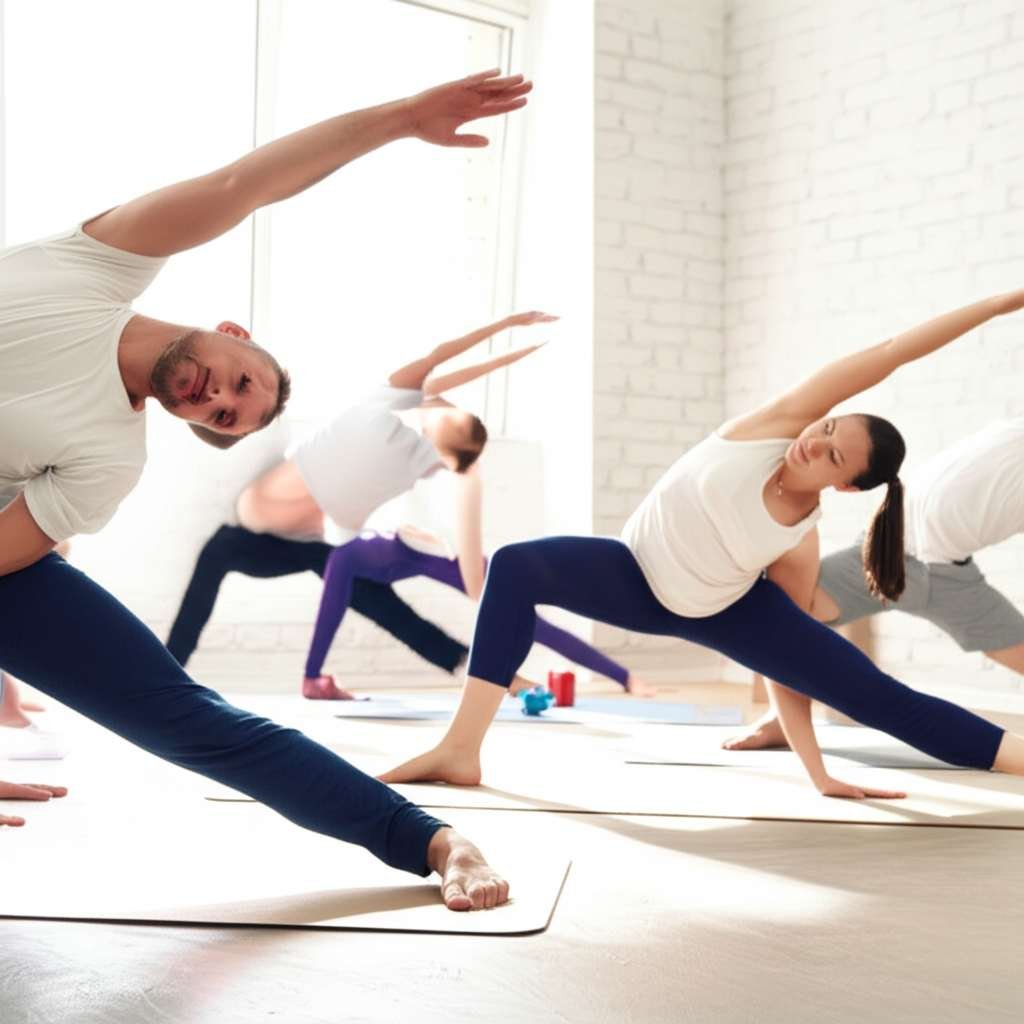
Yoga workouts for beginners offer a gentle, accessible way to improve flexibility, strength, and mindfulness without the intimidation. This guide breaks down 12 effective yoga routines perfect for anyone starting their yoga journey, making it simple to find a practice that fits your needs and helps you build confidence on the mat.
Starting a new fitness routine can feel overwhelming, especially when you’re unsure where to begin. Yoga is a fantastic option for many, but the sheer variety of poses and styles can make it seem complicated. You might wonder if you’re flexible enough or if you’ll even know what to do.
Don’t worry! This guide is designed to make yoga feel easy and approachable. We’ll walk through simple, effective yoga workouts that are perfect for beginners, whether you’re looking to de-stress, get a little stronger, or simply feel better in your body.
We’ll cover everything from foundational poses to short routines you can do at home. Get ready to discover how yoga can be a joyful and rewarding part of your life. Let’s unroll your mat and begin this amazing journey together!
Why Yoga is a Great Choice for Beginners
Yoga offers a unique blend of physical movement, breathwork, and mindfulness that can be incredibly beneficial for beginners. It’s not just about touching your toes; it’s about connecting your mind and body in a way that promotes overall well-being.
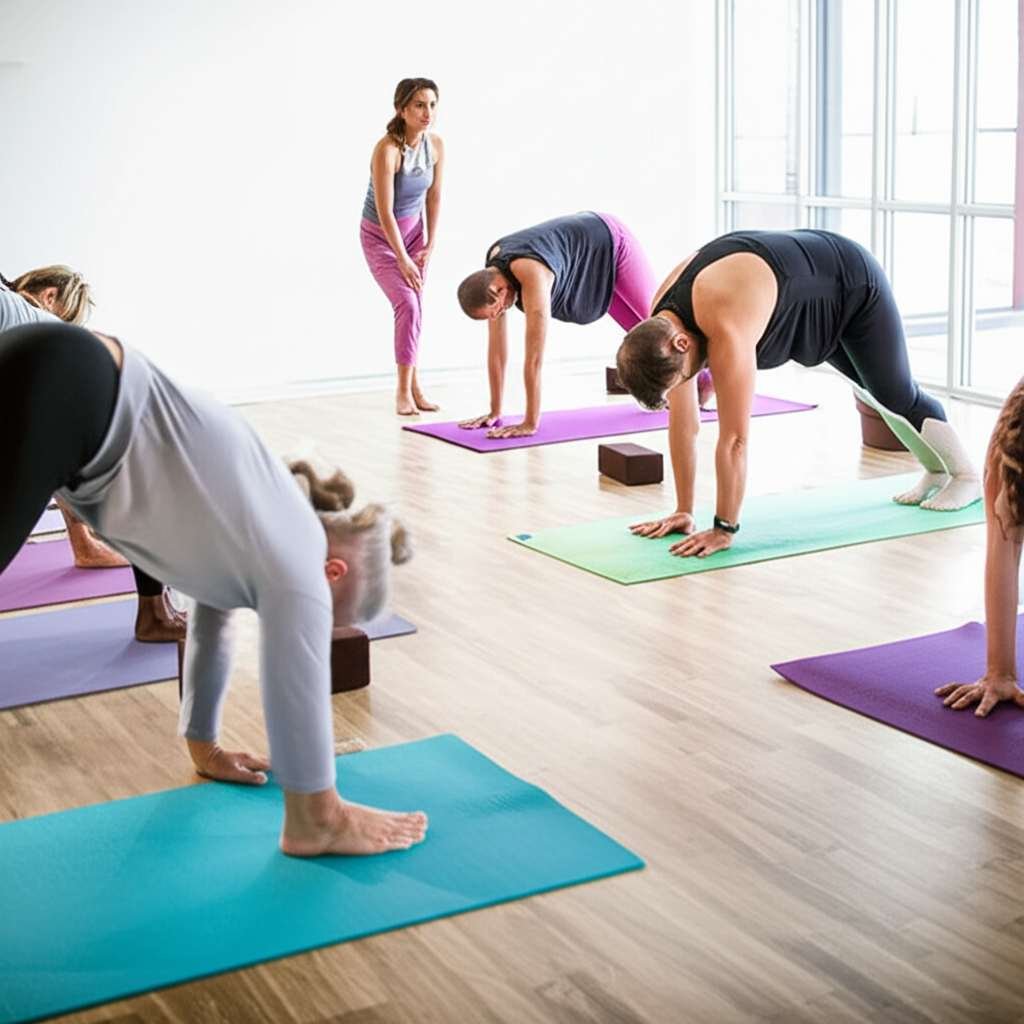
Unlike some high-impact exercises, yoga is typically low-impact, making it gentler on your joints. This means you can build strength and flexibility without putting excessive strain on your body, which is ideal when you’re just starting out.
Furthermore, yoga’s emphasis on breath control can help reduce stress and improve focus. Many people find that incorporating yoga into their routine helps them feel calmer and more centered throughout their day.
Building Confidence on the Mat
One of the biggest hurdles for beginners is feeling confident. You might see advanced yogis in complex poses and feel like you’ll never get there. The truth is, everyone starts somewhere, and yoga is a journey of progress, not perfection.
Each yoga session is an opportunity to learn more about your body and what it can do. As you practice regularly, you’ll notice improvements in your flexibility, balance, and strength, which will naturally boost your confidence.
The supportive nature of yoga, especially in beginner-focused classes or routines, means you’re encouraged to listen to your body and modify poses as needed. This self-awareness is a key part of the yoga experience and helps build a strong foundation.
Your Beginner’s Toolkit for Yoga
Before you dive into the 12 yoga workouts, having a few basic items can make your practice more comfortable and enjoyable. These aren’t strict requirements, but they can certainly enhance your experience.
Essential Gear
Yoga Mat: This is your most important piece of equipment. A good yoga mat provides cushioning for your joints and a non-slip surface to keep you stable in poses. Look for one that’s at least 1/4 inch thick for good support.
Comfortable Clothing: Wear clothing that allows for a full range of motion. Stretchy fabrics like cotton or spandex blends are ideal. Avoid anything too loose that might get in your way.
Helpful Props
Props aren’t just for advanced yogis! They are excellent tools for beginners to support their bodies, deepen stretches safely, and make poses more accessible.
Yoga Blocks: These are usually made of cork, foam, or wood and are used to bring the floor closer to you, support your body in certain poses, or deepen stretches. For example, placing blocks under your hands in a forward fold can make it easier if your hamstrings are tight.
Yoga Strap: A strap can help you extend your reach in poses where you might not be flexible enough to clasp your hands. It’s great for deepening hamstring stretches or shoulder openers.
Blanket or Cushion: A rolled-up blanket or cushion can provide extra padding for your knees in poses like tabletop or cat-cow, or it can be used to sit on to elevate your hips in seated poses.
12 Effortless Yoga Workouts for Beginners
These 12 yoga workouts are designed to be accessible, effective, and easy to follow. They range from quick routines for busy days to slightly longer sessions that build on fundamental poses. Remember to listen to your body and modify as needed.
1. The 5-Minute Morning Energizer
This quick routine is perfect for waking up your body and mind. It focuses on gentle movements to get your blood flowing.
Easy Pose (Sukhasana) with Deep Breathing: Start by sitting comfortably on your mat, cross-legged. Close your eyes and take 5-10 deep breaths, inhaling through your nose and exhaling through your mouth.
Cat-Cow Pose (Marjaryasana-Bitilasana): Come to your hands and knees. Inhale as you drop your belly, arch your back, and look up (Cow). Exhale as you round your spine, tuck your chin to your chest, and draw your navel in (Cat). Repeat 5-10 times.
Child’s Pose (Balasana): Sink your hips back to your heels, knees can be together or wide apart. Rest your forehead on the mat and extend your arms forward or rest them alongside your body. Hold for 5 deep breaths.
2. The 10-Minute Stress-Relief Flow
If you’re feeling tense, this short flow focuses on calming the nervous system and releasing tension.
Seated Forward Bend (Paschimottanasana) – Modified: Sit with legs extended. You can bend your knees generously. Inhale to lengthen your spine, exhale to gently fold forward from your hips. Rest your hands on your shins, ankles, or the floor. Hold for 5 breaths.
Supine Spinal Twist (Supta Matsyendrasana): Lie on your back. Hug your knees into your chest. Drop your knees to one side, keeping your shoulders on the mat. Extend the opposite arm out to the side. Hold for 5 breaths, then switch sides.
Legs-Up-the-Wall Pose (Viparita Karani): Sit with your side against a wall. Swing your legs up the wall as you lie back. Your hips can be on the floor or slightly away from the wall. Relax here for 2-3 minutes.
3. The 15-Minute Full Body Gentle Stretch
This sequence provides a gentle, all-over stretch to improve flexibility and ease stiffness.
Downward-Facing Dog (Adho Mukha Svanasana): Start on your hands and knees. Tuck your toes, lift your hips up and back, forming an inverted V-shape. Keep a generous bend in your knees if needed. Pedal your feet to stretch your calves. Hold for 5 breaths.
Warrior II (Virabhadrasana II): Step one foot forward, turning the back foot out. Align your front heel with the arch of your back foot. Bend your front knee over your ankle. Extend your arms parallel to the floor, gazing over your front fingertips. Hold for 5 breaths, then switch sides.
Triangle Pose (Trikonasana): From Warrior II, straighten your front leg. Hinge at your front hip, reaching your front arm forward. Lower your front hand to your shin, a block, or the floor. Extend your top arm towards the ceiling. Hold for 5 breaths, then switch sides.
4. The 20-Minute Strength Builder
This routine focuses on building foundational strength through a series of accessible poses.
Plank Pose (Phalakasana): From hands and knees, step your feet back so your body forms a straight line from head to heels. Engage your core. If this is too challenging, drop your knees to the floor. Hold for 30 seconds.
Cobra Pose (Bhujangasana): Lie on your stomach, hands under your shoulders. Press into your hands to lift your chest off the floor, keeping your hips on the ground. Engage your back muscles. Hold for 3 breaths, then lower. Repeat 3 times.
Bridge Pose (Setu Bandhasana): Lie on your back with knees bent, feet flat on the floor hip-width apart. Press into your feet and lift your hips off the floor. You can interlace your fingers underneath you for a deeper stretch. Hold for 5 breaths.
5. The 30-Minute Mindful Movement Practice
This longer session encourages a slower pace, allowing you to focus on breath and sensation, fostering mindfulness.
Sun Salutation A (Surya Namaskar A) – Modified: This is a flowing sequence. You can modify it by keeping your knees down in Plank and Cobra. Flow through poses like Mountain Pose, Forward Fold, Halfway Lift, Plank, Chaturanga (or knees-chest-chin), Cobra (or Upward-Facing Dog), Downward-Facing Dog, and step back to the beginning. Repeat 3-5 times.
Low Lunge (Anjaneyasana): From Downward-Facing Dog, step one foot forward between your hands. Lower your back knee to the mat. You can keep your hands on the floor or lift them overhead. Hold for 5 breaths, then switch sides.
Pigeon Pose (Eka Pada Rajakapotasana) – Modified: From Downward-Facing Dog, bring one knee forward behind your wrist, with your shin angled across the mat. Extend the back leg straight. You can stay upright or fold forward over your front leg. Use a block under your hip if needed. Hold for 5-8 breaths, then switch sides.
6. The Desk Warrior: 10-Minute Office Yoga
Designed for those who spend a lot of time sitting, these poses can be done at or near your desk to relieve stiffness.
Seated Spinal Twist: Sit tall in your chair. Inhale to lengthen your spine, exhale to twist gently to one side, using the chair for support. Hold for 3 breaths, then switch.
Seated Forward Fold: Sit forward in your chair, feet flat on the floor. Inhale to lengthen, exhale to fold forward over your legs. Let your arms hang. Hold for 5 breaths.
Shoulder Rolls and Neck Stretches: Gently roll your shoulders forward and backward. Slowly tilt your head to one side, bringing your ear towards your shoulder, then repeat on the other side.
7. The Bedtime Balm: 15-Minute Relaxation Yoga
Wind down your day with this gentle routine that promotes relaxation and prepares you for sleep.
Happy Baby Pose (Ananda Balasana): Lie on your back. Hug your knees to your chest, then open them wider than your torso. Grab the outsides of your feet, ankles, or shins. Gently rock side to side. Hold for 5 breaths.
Reclined Bound Angle Pose (Supta Baddha Konasana): Lie on your back. Bring the soles of your feet together and let your knees fall open to the sides. Place your hands on your belly or by your sides. Hold for 2-3 minutes, focusing on deep breaths.
Savasana (Corpse Pose): Lie flat on your back, arms by your sides, palms facing up. Let your legs extend and relax. Close your eyes and allow your body to completely relax. Stay here for at least 5 minutes.
8. The Standing Strength Sequence: 20 Minutes
This workout builds strength and stability using standing poses that are fundamental to many yoga practices.
Mountain Pose (Tadasana): Stand with feet together or hip-width apart. Ground down through your feet, lengthen your spine, and relax your shoulders. Feel strong and steady. Hold for 5 breaths.
Chair Pose (Utkatasana): From Mountain Pose, bend your knees as if sitting in a chair, lifting your arms overhead. Keep your chest lifted and core engaged. Hold for 5 breaths.
Warrior I (Virabhadrasana I): Step one foot back, angling the back foot slightly out. Bend the front knee. Keep the back leg straight. Square your hips forward as much as possible and raise your arms overhead. Hold for 5 breaths, then switch sides.
9. The Hip-Opening Hour: 30-Minute Flow
This practice is designed to release tension in the hips, which can often store stress and tightness.
Butterfly Pose (Baddha Konasana): Sit with the soles of your feet together, knees bent out to the sides. Hold your feet or ankles. Inhale to lengthen your spine, exhale to gently hinge forward from your hips. Hold for 5-8 breaths.
Half Lord of the Fishes Pose (Ardha Matsyendrasana) – Seated Twist: Sit with legs extended. Bend your right knee and place your right foot flat on the floor outside your left thigh. Hug your right knee with your left arm or hug your knee. Inhale to lengthen, exhale to twist to the right. Hold for 5 breaths, then switch sides.
Reclined Pigeon Pose (Supta Kapotasana): Lie on your back. Bend your knees and place your feet flat on the floor. Cross your right ankle over your left thigh. Flex your right foot. You can stay here, or lift your left foot off the floor and thread your right arm through the space between your legs to hold your left shin or thigh. Hold for 5-8 breaths, then switch sides.
10. The Core Connection: 15-Minute Ab Workout
This routine focuses on strengthening your core muscles, which is essential for stability and posture.
Boat Pose (Paripurna Navasana): Sit on your mat with knees bent. Lean back slightly, lifting your feet off the floor. You can keep your knees bent or straighten your legs for a greater challenge. Extend your arms forward. Hold for 5 breaths.
Forearm Plank: Come to a forearm plank. Elbows directly under shoulders, body in a straight line from head to heels. Engage your core. Hold for 30 seconds.
Side Plank (Vasisthasana) – Modified: From forearm plank, shift your weight to one hand (or forearm) and stack your feet or place the top foot in front of the bottom foot. Lift your hips and extend the opposite arm to the sky. Hold for 30 seconds per side.
11. The Flexibility Booster: 20-Minute Deep Stretch
This sequence targets areas where beginners often feel tight, like hamstrings, shoulders, and the spine.
Seated Forward Bend (Paschimottanasana): Sit with legs extended. Inhale to lengthen your spine, exhale to fold forward from your hips. Keep a bend in your knees if needed. Hold for 8 breaths.
Thread the Needle Pose (Urdhva Mukha Pasasana variation): Start on your hands and knees. Inhale, reach your right arm up. Exhale, thread your right arm under your left armpit, resting your right shoulder and ear on the mat. Keep your hips lifted. Hold for 5 breaths, then switch sides.
Supported Bridge Pose: Lie on your back with knees bent, feet flat. Place a block under your sacrum (the flat bone at the base of your spine). Allow your hips to rest on the block. Hold for 1-2 minutes, breathing deeply.
12. The Express Rejuvenation: 10-Minute All-Levels Reset
This is a versatile routine that can be adapted by anyone, focusing on breath and gentle movement to refresh your body and mind.
Seated Deep Breathing: Sit comfortably. Take 10 deep, slow breaths, focusing on the sensation of the breath.
Gentle Seated Side Bend: Sit tall. Inhale, reach one arm overhead, exhale, gently bend to the opposite side, feeling a stretch along your side body. Hold for 3 breaths, then switch.
Forward Fold with Ragdoll: Stand with feet hip-width apart. Hinge at your hips and let your torso hang heavy. You can grab opposite elbows and gently sway side to side. Keep a soft bend in your knees. Hold for 5 breaths.
Understanding Yoga Poses: A Beginner’s Glossary
As you explore these workouts, you’ll encounter various yoga poses. Here’s a simple breakdown of some common ones to help you feel more confident.
| Pose Name | Sanskrit Name | Description | Benefits for Beginners |
| :———————- | :———————- | :——————————————————————————————————— | :———————————————————————————— |
| Mountain Pose | Tadasana | Standing tall, feet hip-width apart, arms by your sides. A foundational pose for grounding and posture. | Improves posture, body awareness, and stability. |
| Downward-Facing Dog | Adho Mukha Svanasana | Inverted V-shape with hands and feet on the mat, hips lifted. Stretches the hamstrings, calves, and shoulders. | Lengthens the spine, strengthens arms and legs, can relieve mild back pain. |
| Child’s Pose | Balasana | Resting pose where you kneel, sit back on your heels, and fold your torso forward. Calming and restorative. | Relieves stress, gently stretches the hips, back, and thighs. |
| Cat-Cow Pose | Marjaryasana-Bitilasana | Moving between arching and rounding the spine on hands and knees. Great for spinal mobility. | Warms up the spine, improves flexibility, coordinates breath with movement. |
| Warrior II | Virabhadrasana II | A strong standing pose with legs apart, front knee bent, arms extended. Builds strength and stamina. | Strengthens legs and ankles, opens hips and chest, improves focus. |
| Plank Pose | Phalakasana | Holding a straight line from head to heels, on hands or forearms. Excellent core strengthener. | Builds core strength, strengthens arms, shoulders, and wrists. |
| Cobra Pose | Bhujangasana | Lying on your stomach and lifting your chest with your hands. Gentle backbend. | Strengthens the spine, opens the chest, can relieve back pain. |
| Bridge Pose | Setu Bandhasana | Lying on your back, lifting hips off the floor. A mild backbend and chest opener. | Strengthens back muscles, glutes, and hamstrings; opens chest and shoulders. |
| Seated Forward Bend | Paschimottanasana | Sitting with legs extended and folding forward. Stretches the hamstrings and spine. | Calms the mind, stretches hamstrings, spine, and shoulders. |
| Supine Spinal Twist | Supta Matsyendrasana | Lying on your back and twisting your torso by dropping knees to one side. Releases tension in the back. | Releases tension in the spine and hips, massages abdominal organs. |
Making Yoga a Sustainable Habit
Consistency is key to experiencing the full benefits of yoga. Here are some tips to help you integrate yoga into your life long-term.
Start Small and Be Realistic
Don’t feel pressured to do long sessions every day. Even 10-15 minutes of yoga a few times a week can make a significant difference. Celebrate small victories, like holding a pose a little longer or feeling more flexible.
Find What You Love
There are many styles of yoga. If a certain type or instructor doesn’t resonate with you, try another! Explore different beginner classes online or in person to find a style and pace that feels right for your body and mind.
Listen to Your Body
This is perhaps the most important principle in yoga. Your body will tell you what it needs. Some days you might need a gentle flow, other days a more challenging practice. Never push yourself into pain. Modifications are always an option.
Create a Dedicated Space
Having a quiet, dedicated space for your practice can help you get into the right mindset. It doesn’t have to be large – just a corner where you can unroll your mat and feel at ease.
Practice Mindfulness Off the Mat
The benefits of yoga extend beyond the physical poses. Try to bring the awareness and calm you cultivate on the mat into your daily life. Notice your breath when you feel stressed, or take a moment to stretch when you feel stiff.
Frequently Asked Questions About Beginner Yoga
Here are answers to some common questions beginners have about starting yoga.
Q1: How often should I practice yoga as a beginner?
A1: As a beginner, aim for 2-3 times a week. Even short 15-20 minute sessions are beneficial. Consistency is more important than duration when you’re starting out.
Q2: What if I’m not flexible? Can I still do yoga?
A2: Absolutely! Yoga is for everyone, regardless of flexibility. The poses are designed to gradually improve your flexibility. Use props like blocks and straps to make poses accessible and safe for your body.
Q3: What’s the difference between Hatha, Vinyasa, and Yin yoga?
A3:
Hatha yoga is a general term for physical yoga, often taught at a slower pace, making it great for beginners to learn basic poses.
Vinyasa yoga involves flowing from one pose to the next, synchronized with breath. It can be more dynamic.
Yin yoga involves holding poses for longer periods (3-5 minutes) to target deep connective tissues, promoting flexibility and relaxation.
Q4: Do I need special shoes for yoga?
A4: No, most yoga is practiced barefoot. This allows for better grip and connection to the mat. If you have a medical reason to wear shoes, consult with your instructor.
Q5: How long does it take to see results from yoga?
A5: You’ll likely feel some benefits, like reduced stress and improved mood, after your first few sessions. Physical changes like increased flexibility and strength typically become noticeable within 4-8 weeks of consistent practice.
Q6: What if I feel awkward or embarrassed in a class?
A6: It’s completely normal to feel a little shy at first! Remember that everyone in the class was a beginner once. Focus on your own practice and your instructor is there to help. Many studios offer beginner-specific classes where everyone is learning together.
Q7: Can yoga help with weight loss?
A7: Yoga can contribute to weight loss by building muscle (which burns more calories), improving metabolism, and reducing stress-related eating. While not always a high-calorie burner like intense cardio, its holistic benefits support a healthier lifestyle that aids weight management.
Conclusion
Embarking on a yoga journey is an exciting step towards a healthier, more balanced you. You’ve seen that with these 12 effortless yoga workouts, getting started is simpler than you might think. From quick morning energizers to relaxing bedtime flows, there’s a practice here for every moment and every mood.
Remember, yoga isn’t about perfection; it’s about progress and connecting with your body. Use the tools, listen to your body, and most importantly, enjoy the process. Each pose you explore, each breath you deepen, is a victory.
So unroll your mat, take a deep breath, and step onto your path of yoga. You have the knowledge and the tools to begin. Your journey to increased flexibility, strength, and peace of mind starts now. Namaste.
As an Amazon Associate, We earn from qualifying purchases. When you purchase a product through Amazon links on pulsefitguide.com, we may earn a small commission at no extra cost to you. This helps support the site and keep our content free.
