


Want a flatter stomach from home? This guide breaks down 12 beginner-friendly yoga poses that strengthen your core, boost metabolism, and improve digestion. Learn simple, effective moves you can do anywhere to build core strength and achieve your flat stomach goals with confidence and consistency.
Feeling a little frustrated with your midsection? You’re definitely not alone! Many of us find it tough to get that toned, flat stomach we’re aiming for.
It can feel confusing when you’re trying to figure out the best way to get results, especially when you’re just starting out.
But what if I told you that a strong, flat stomach is more achievable than you think, and you can do it right from your living room?
This guide is designed to make it super simple. We’ll walk through 12 effective yoga poses, perfect for beginners, that target your core and help you feel amazing.
Let’s dive into how these simple poses can make a big difference!
Why Yoga for a Flat Stomach?
Yoga isn’t just about flexibility; it’s a powerful tool for building a strong core, which is key to a flatter-looking stomach. When you engage your abdominal muscles consistently, you strengthen them, which can help to flatten your appearance and improve your posture.
Regular practice also helps with digestion and can reduce bloating. Plus, yoga encourages mindful movement and stress reduction, which can indirectly support weight management.
Understanding Core Strength
Your core isn’t just your “six-pack” abs. It’s a complex group of muscles that wrap around your torso, including your abdominals, back muscles, obliques (side muscles), and even your pelvic floor.
A strong core acts like a natural corset, supporting your spine and improving your overall stability. When these muscles are weak, your belly might appear to protrude more, even if you aren’t carrying excess weight.
Yoga Poses for a Flat Stomach: Your Home Guide
Here are 12 yoga poses that are excellent for targeting your core and working towards a flatter stomach. Remember to listen to your body and modify poses as needed. Consistency is more important than perfection!
1. Plank Pose (Phalakasana)
Plank pose is a foundational pose that engages your entire core. It’s like a full-body workout in one simple position.
How to do it:
1. Start on your hands and knees.
2. Extend your legs back, so your body forms a straight line from your head to your heels.
3. Your hands should be directly under your shoulders.
4. Engage your core by drawing your navel towards your spine.
5. Keep your body in a straight line, avoiding dropping your hips or raising your bottom too high.
6. Hold for 30 seconds to 1 minute, or as long as you can maintain good form.
Benefits: Strengthens abs, obliques, back, arms, and legs. Improves posture.
2. Boat Pose (Paripurna Navasana)
Boat pose is fantastic for strengthening the deep abdominal muscles. It requires balance and core control.
How to do it:
1. Sit on the floor with your knees bent and feet flat on the ground.
2. Lean back slightly, keeping your spine straight.
3. Lift your feet off the floor, bringing your shins parallel to the ground.
4. Extend your arms forward, parallel to the floor, palms facing each other.
5. Engage your core to maintain balance.
6. For a challenge, straighten your legs to form a “V” shape with your body.
7. Hold for 20-30 seconds, breathing steadily.
Benefits: Targets the rectus abdominis (the “six-pack” muscles) and hip flexors.
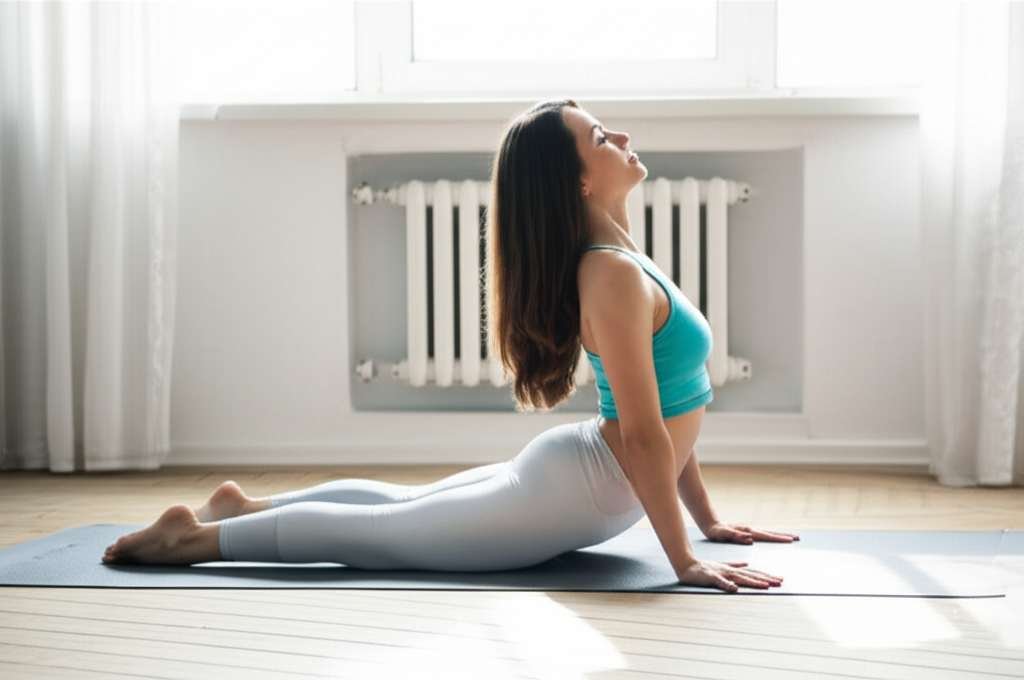
3. Cobra Pose (Bhujangasana)
While often seen as a backbend, Cobra pose also engages your abdominal muscles to support the lift. It can help improve posture and strengthen the back.
How to do it:
1. Lie flat on your stomach with your legs extended and the tops of your feet on the floor.
2. Place your hands under your shoulders, with your elbows tucked in close to your body.
3. Inhale and press your pubic bone into the mat.
4. Engage your core and slowly lift your chest off the floor using the strength in your back and core, not just your hands.
5. Keep your neck long and gaze slightly forward.
6. Hold for 15-30 seconds, then exhale and slowly lower back down.
Benefits: Strengthens the spine and back muscles, gently engages abdominals.
4. Warrior III (Virabhadrasana III)
This balancing pose is excellent for building core stability and strength. It requires focus and engagement of multiple muscle groups.
How to do it:
1. Start standing in Mountain Pose (Tadasana).
2. Shift your weight onto your left foot.
3. Inhale and lift your right leg straight back, keeping it parallel to the floor.
4. Simultaneously, hinge forward at your hips, bringing your torso parallel to the floor.
5. Extend your arms forward, to the sides, or keep them alongside your body.
6. Your body should form a “T” shape. Engage your core to maintain balance.
7. Hold for 20-30 seconds, then gently return to standing. Repeat on the other side.
Benefits: Builds core strength, balance, and stability. Strengthens legs and ankles.
5. Bow Pose (Dhanurasana)
Bow pose is a deep backbend that also intensely works your abdominal muscles as they lift and support your body.
How to do it:
1. Lie on your stomach with your knees bent and feet hip-width apart.
2. Reach back and grasp your ankles or feet.
3. Inhale and lift your chest and thighs off the floor, arching your back.
4. Pull your ankles with your hands to deepen the stretch and lift.
5. Keep your neck long and gaze forward.
6. Hold for 15-30 seconds, breathing deeply.
7. Exhale and gently release.
Benefits: Strengthens abdominal muscles, back, chest, and thighs. Improves posture.
6. Bicycle Crunches (in Yoga Style)
While not a traditional yoga pose, this movement is often incorporated into yoga flows for its core-activating benefits. It specifically targets the obliques.
How to do it:
1. Lie on your back with your knees bent and feet flat on the floor.
2. Place your hands lightly behind your head, elbows out.
3. Lift your shoulders and head slightly off the floor.
4. Bring your right elbow towards your left knee as you straighten your right leg.
5. Twist your torso so your upper body moves towards the bent knee.
6. Switch sides, bringing your left elbow towards your right knee as you straighten your left leg.
7. Continue alternating in a fluid, cycling motion for 30-60 seconds.
Benefits: Targets obliques and rectus abdominis, excellent for a flatter midsection.
7. Side Plank Pose (Vasisthasana)
This pose is brilliant for strengthening your obliques, the muscles on the sides of your waist, which are crucial for a toned midsection.
How to do it:
1. Start in Plank Pose.
2. Shift your weight onto your right hand and the outer edge of your right foot.
3. Stack your left foot directly on top of your right, or place it slightly in front for more stability.
4. Lift your left arm straight up towards the ceiling, opening your chest.
5. Keep your body in a straight line from head to heels.
6. Engage your core.
7. Hold for 20-30 seconds, then switch sides.
Benefits: Strengthens obliques, arms, wrists, and shoulders. Improves balance.
8. Cat-Cow Pose (Marjaryasana-Bitilasana)
This gentle flow is wonderful for spinal mobility and can help stimulate digestion, which contributes to a less bloated and flatter stomach. It also subtly engages the core.
How to do it:
1. Start on your hands and knees in a tabletop position. Your wrists should be under your shoulders, and your knees under your hips.
2. Cow Pose: As you inhale, drop your belly towards the floor, arch your back, and lift your head and tailbone towards the ceiling.
3. Cat Pose: As you exhale, round your spine towards the ceiling, tuck your chin to your chest, and draw your navel towards your spine.
4. Flow between these two poses for 5-10 breaths.
Benefits: Improves spinal flexibility, gently massages abdominal organs, and can relieve bloating.
9. Locust Pose (Salabhasana)
Locust pose is a powerful backbend that also engages your core to lift and hold your body. It strengthens the entire back body and core.
How to do it:
1. Lie on your stomach with your legs extended and close together. Your arms can be alongside your body, palms down, or interlocked behind your back.
2. Inhale and lift your head, chest, arms, and legs off the floor.
3. Engage your glutes and back muscles to lift.
4. Keep your neck long, looking slightly forward.
5. Hold for 15-30 seconds, breathing deeply.
6. Exhale and gently lower back down.
Benefits: Strengthens the entire back body, glutes, and core. Improves posture.
10. Child’s Pose (Balasana) with Core Engagement
While a resting pose, Child’s Pose can be modified to gently engage your core. It’s also excellent for relaxation and digestion.
How to do it:
1. Kneel on the floor. Bring your big toes to touch and widen your knees to hip-width apart.
2. Exhale and lay your torso down between your thighs. Rest your forehead on the mat.
3. Extend your arms forward, or bring them back alongside your body.
4. For a gentle core engagement: As you inhale, gently draw your navel towards your spine. As you exhale, release. Do this a few times.
Benefits: Restorative, aids digestion, gently stretches the back and hips.
11. Upward-Facing Dog (Urdhva Mukha Svanasana)
This invigorating pose strengthens the arms, wrists, and shoulders, while also engaging the core to lift the body off the mat. It’s a great counterpose to forward folds.
How to do it:
1. Start lying on your stomach, similar to Cobra Pose, with hands under shoulders.
2. Inhale and press into your hands and the tops of your feet.
3. Lift your chest and thighs off the floor.
4. Keep your arms straight but not locked. Your thighs and hips should be lifted off the mat.
5. Engage your core to support your torso.
6. Hold for 15-30 seconds, breathing deeply.
Benefits: Strengthens arms, wrists, shoulders, and core. Opens the chest.
12. Supine Spinal Twist (Supta Matsyendrasana)
This pose is wonderful for aiding digestion and releasing tension in the spine. A healthy digestive system is key to reducing bloating and achieving a flatter stomach.
How to do it:
1. Lie on your back with your knees bent and feet flat on the floor.
2. Extend your arms out to the sides in a “T” shape.
3. Inhale, and as you exhale, gently drop both knees to the right side.
4. Turn your head to the left, if comfortable.
5. Try to keep both shoulders on the mat.
6. Hold for 30 seconds to 1 minute, breathing deeply.
7. Inhale to bring your knees back to center, and exhale to drop them to the left.
Benefits: Aids digestion, relieves back pain, calms the mind, and gently stretches the spine.
Putting It All Together: A Sample Routine
To get the most out of these poses, try incorporating them into a regular routine. Here’s a simple sequence you can do at home:
1. Warm-up: Start with 5-10 rounds of Cat-Cow Pose to warm up your spine.
2. Core Engagement: Hold Plank Pose for 30 seconds, followed by Boat Pose for 20 seconds.
3. Strengthening: Move into Warrior III for 20 seconds on each side.
4. Back and Core: Practice Cobra Pose, then transition to Locust Pose.
5. Obliques: Hold Side Plank for 20-30 seconds on each side.
6. Flow: Incorporate Bicycle Crunches for 30 seconds.
7. Deeper Poses: Try Bow Pose for 15-30 seconds.
8. Rest and Digestion: End with a few breaths in Child’s Pose and finish with Supine Spinal Twists.
Remember to breathe deeply throughout your practice. This not only helps with stamina but also aids in mindful movement and relaxation.
Tips for Beginners
Start Slow: Don’t try to do everything at once. Begin with a few poses and gradually add more as you feel comfortable.
Listen to Your Body: Yoga is not about pushing yourself into pain. If a pose feels wrong, ease out of it or modify it.
Use Props: Blocks, straps, or even a rolled-up blanket can help you achieve poses safely and effectively.
Consistency is Key: Aim for 3-4 yoga sessions per week. Even short, consistent practices yield better results than sporadic, long ones.
Focus on Breath: Your breath is your guide. Deep, conscious breathing will enhance your practice and its benefits.
Beyond Poses: Lifestyle Factors for a Flat Stomach
While these yoga poses are powerful, remember that a truly flat stomach is also influenced by other lifestyle factors.
Nutrition: Focus on a balanced diet rich in whole foods, lean protein, and plenty of fiber. Limiting processed foods, sugary drinks, and excessive sodium can significantly reduce bloating. For more on nutrition, explore resources like the Harvard T.H. Chan School of Public Health.
Hydration: Drinking enough water is crucial for digestion and can help flush out toxins that contribute to bloating.
Stress Management: Chronic stress can lead to weight gain, especially around the midsection. Yoga itself is a great stress reliever, but consider other practices like meditation or deep breathing exercises.
* Sleep: Adequate sleep is vital for hormone regulation, including those that control appetite and metabolism.
Frequently Asked Questions (FAQ)
Can yoga alone give me a flat stomach?
Yoga is incredibly effective for strengthening your core and improving muscle tone, which contributes to a flatter appearance. However, for significant fat loss, it’s best combined with a healthy diet and potentially other forms of exercise. Think of yoga as a powerful tool in your flat stomach toolkit!
How often should I do these yoga poses?
For best results, aim to practice these poses 3-5 times per week. Consistency is more important than intensity. Even a 20-30 minute session a few times a week can make a difference.
I’m a complete beginner. Are these poses too hard?
These poses are chosen for their beginner-friendliness. Modifications are always possible! For instance, you can do Plank Pose on your knees, or use blocks for support in balancing poses. The goal is to build strength safely.
Will yoga help with bloating?
Yes, absolutely! Poses like Cat-Cow and Supine Spinal Twist are excellent for stimulating digestion and releasing trapped gas, which can significantly reduce bloating and make your stomach appear flatter.
How long until I see results?
Results vary from person to person based on consistency, diet, and individual body composition. You might notice improved posture and reduced bloating within a few weeks. Visible changes in muscle tone and a flatter appearance typically take a few months of dedicated practice and healthy habits.
What if I can’t hold a pose for the suggested time?
That’s perfectly okay! Start with whatever duration you can comfortably hold with good form. Even holding a pose for 10 seconds is a great start. Gradually increase the hold time as your strength and endurance improve.
Conclusion
Achieving a flatter stomach is a journey, and yoga offers a wonderfully holistic approach. By incorporating these 12 poses into your routine, you’re not just working towards a toned midsection; you’re also building core strength, improving posture, enhancing digestion, and fostering a deeper connection with your body.
Remember that patience and consistency are your greatest allies. Celebrate each small victory along the way, whether it’s holding a pose a little longer or feeling less bloated after a meal.
This guide provides the steps, but the real magic happens when you step onto your mat and commit to yourself. You’ve got this!
This journey is about feeling strong, healthy, and confident from the inside out. Keep practicing, keep breathing, and enjoy the process of becoming your best self.
As an Amazon Associate, We earn from qualifying purchases. When you purchase a product through Amazon links on pulsefitguide.com, we may earn a small commission at no extra cost to you. This helps support the site and keep our content free.
