


To get 30 grams of protein, you’ll need approximately 4 large eggs. This is a great, affordable way to boost your protein intake for muscle building and feeling full. We’ll break down exactly why and how!
Navigating protein goals can feel like a puzzle, especially when you’re just starting. You might wonder about simple, everyday foods and how they fit into your plan. Eggs are a fantastic choice – they’re packed with protein and super versatile. But figuring out exactly how many you need for a specific protein target, like 30 grams, can be confusing. Don’t worry! We’re going to make it super clear, step-by-step, so you can confidently add eggs to your meals and reach your protein goals without the guesswork. Let’s unlock the protein power of eggs together!
Understanding Protein and Your Goals
Before we dive into eggs, let’s quickly chat about protein. Protein is like the building blocks for your body. It helps build and repair muscles, keeps you feeling full, and plays a role in many other body functions. For weight loss and building muscle, getting enough protein is key!
Why 30 Grams of Protein is a Common Target
Thirty grams of protein is a popular target for a few reasons:
Satiety: It’s a good amount to help you feel full and satisfied after a meal, which can prevent overeating.
Muscle Support: For many people, especially those who are active, 30 grams of protein per meal can help support muscle growth and repair.
Metabolism: Protein can slightly boost your metabolism, meaning your body burns more calories to digest it.
Affordability: As we’ll see, eggs are an economical way to hit this target.
Protein Needs Vary
It’s important to remember that everyone’s protein needs are different. Factors like your age, activity level, and overall health goals play a big role. If you’re unsure about your specific needs, it’s always a good idea to chat with a doctor or a registered dietitian. For the purpose of this guide, we’re focusing on hitting that 30-gram mark.
The Protein Power of Eggs: What You Need to Know
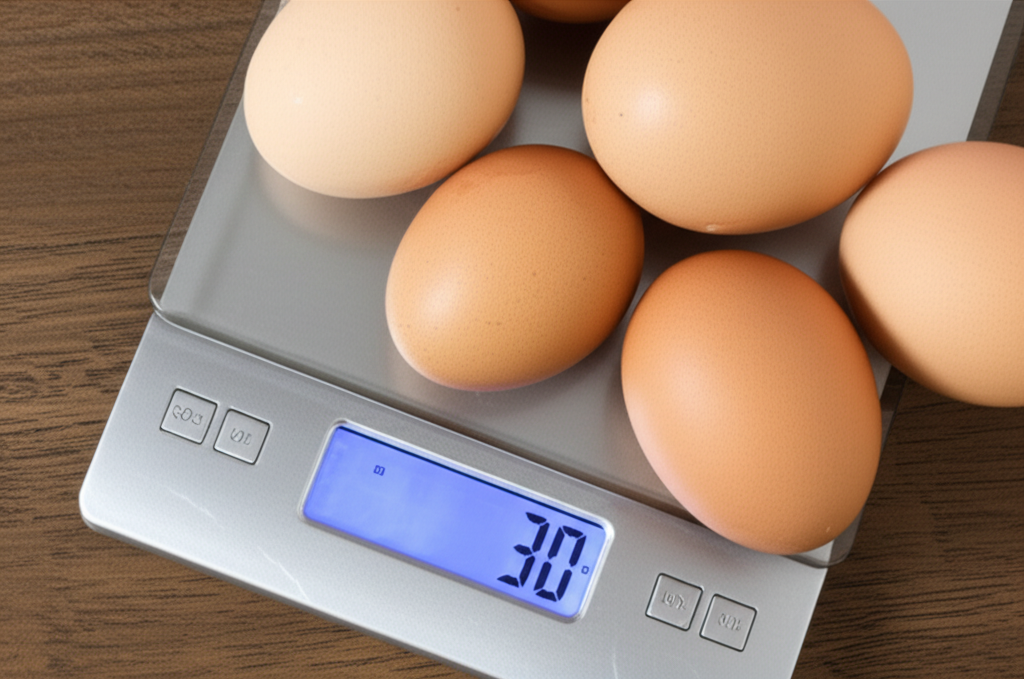
Eggs are nutritional superstars! They’re a complete protein, meaning they contain all nine essential amino acids your body needs. Plus, they’re loaded with vitamins and minerals like vitamin D, B vitamins, and choline.
How Much Protein is in One Egg?
A standard large egg (about 50 grams) contains roughly 6 grams of protein. This is a great starting point for our calculations!
Calculating Eggs for 30 Grams of Protein
So, if one large egg has about 6 grams of protein, how do we get to 30 grams? It’s simple math!
Divide your target protein by the protein per egg:
30 grams (target) / 6 grams (per egg) = 5 eggs
Wait, did I say 4 eggs at the start? Let’s refine this. While 5 eggs gets you exactly 30 grams, many people find that eating 4 large eggs is a more practical and satisfying portion, getting you very close to your goal.
Let’s look at the numbers:
4 large eggs x 6 grams of protein/egg = 24 grams of protein
5 large eggs x 6 grams of protein/egg = 30 grams of protein
So, for exactly 30 grams of protein, you’d aim for 5 large eggs. However, 4 large eggs is a very common and effective portion that gets you to 24 grams, which is often close enough and easier to manage in a meal.
What About Different Egg Sizes?
Egg sizes can vary, which affects the protein content slightly. Here’s a quick look:
| Egg Size | Approximate Weight (grams) | Approximate Protein (grams) |
| :———- | :————————- | :————————– |
| Jumbo | 63+ | 7+ |
| Extra Large | 56-63 | 6.5-7 |
| Large | 50-56 | 6 |
| Medium | 44-50 | 5.5 |
| Small | 38-44 | 5 |
As you can see, using large eggs is the standard for most nutritional information. If you use medium eggs, you’d need about 6 of them to reach 30 grams (30g / 5g per egg = 6 eggs). If you use extra-large or jumbo eggs, you might need slightly fewer than 5.
Practical Ways to Get 30 Grams of Protein with Eggs
Now that we know the numbers, let’s talk about how to actually eat them! Getting 30 grams of protein from eggs is totally doable and can be delicious.
Option 1: The Classic Scramble or Omelet
This is probably the most straightforward way.
For 5 large eggs: You’ll have 30 grams of protein right there.
For 4 large eggs: You’ll get 24 grams.
To boost the protein even further with 4 eggs, you can add other protein-rich ingredients:
Cheese: A sprinkle of cheese (like cheddar or mozzarella) can add another 5-7 grams of protein.
Veggies: While they don’t add much protein, adding spinach, mushrooms, or peppers makes your meal more nutrient-dense and filling.
Lean Meat: A small amount of cooked chicken, turkey, or ham can add a few extra grams.
Example Meal (aiming for 30g+):
4 large eggs scrambled with 1/4 cup of shredded cheddar cheese and a handful of spinach. This could bring your total protein to around 24g (eggs) + 7g (cheese) = 31 grams!
Option 2: Hard-Boiled Eggs
Hard-boiled eggs are perfect for meal prep or a quick snack.
5 hard-boiled large eggs will give you 30 grams of protein.
4 hard-boiled large eggs will give you 24 grams.
If you’re aiming for 30 grams and eating 4 hard-boiled eggs, you could pair them with:
A Greek Yogurt Cup: About 15-20 grams of protein.
A Small Protein Shake: Another 20-30 grams.
A Handful of Nuts: Adds healthy fats and a little extra protein.
Example Snack Combo (aiming for 30g+):
4 hard-boiled large eggs (24g protein) paired with a small can of tuna (about 20-25g protein).
Option 3: Egg Whites vs. Whole Eggs
Egg whites are almost pure protein! A large egg white contains about 3.6 grams of protein and very little fat or calories. Whole eggs contain the yolk, which has healthy fats, vitamins, minerals, and about 2.7 grams of protein.
To get 30 grams of protein from egg whites only: You would need approximately 8-9 large egg whites (30g / ~3.6g per egg white ≈ 8.3).
To get 30 grams of protein from whole eggs: You need about 5 large eggs.
Why choose whole eggs? The yolk provides valuable nutrients and healthy fats that contribute to satiety and overall health. For most people, a mix of whole eggs and egg whites, or just whole eggs, is a great way to go.
Example Meal (focusing on egg whites):
Omelet made with 8 large egg whites and lots of non-starchy vegetables. This gives you about 29 grams of protein. You could add a tiny bit of cheese or a side of lean protein to reach your 30g target.
Beyond the Eggs: Complementary Foods
While eggs are fantastic, sometimes you might want to mix things up or add variety to your meals. Here are other great, affordable protein sources that pair well with eggs or can help you reach your 30-gram goal:
Lean Meats and Poultry
Chicken Breast: About 25-30 grams of protein per 3-4 ounces (cooked).
Turkey Breast: Similar protein content to chicken.
Lean Ground Beef: Around 20-25 grams of protein per 3-4 ounces.
Fish and Seafood
Tuna: A 3-ounce can of tuna in water has about 20-25 grams of protein.
Salmon: About 20-25 grams of protein per 3-4 ounces.
Shrimp: Around 20 grams of protein per 3 ounces.
Dairy
Greek Yogurt: A 6-ounce container can have 15-20 grams of protein.
Cottage Cheese: About 25 grams of protein per cup.
Milk: Around 8 grams of protein per cup.
Plant-Based Proteins
Lentils: About 18 grams of protein per cooked cup.
Beans (Black beans, Kidney beans, etc.): Around 15 grams of protein per cooked cup.
Tofu: Varies by type, but firm tofu can have 10-20 grams per half-cup.
Edamame: About 17 grams of protein per cooked cup.
Protein Powders
* Whey, Casein, Soy, or Plant-Based Protein Powders: Typically provide 20-30 grams of protein per scoop, making them a quick and easy supplement. The U.S. Department of Agriculture (USDA) provides extensive data on the nutritional content of various foods, including protein. You can explore their database for more details.
Putting it into Practice: Meal Ideas
Here are some simple meal ideas incorporating eggs and other protein sources to hit your 30-gram target:
Breakfast Ideas
1. Protein-Packed Scramble: 4 large eggs scrambled with 1/4 cup black beans and a sprinkle of salsa. (Approx. 24g from eggs + 4g from beans = 28g. Add a small amount of cheese for extra protein.)
2. Egg and Greek Yogurt Parfait: 2 hard-boiled eggs (12g protein) with a 6-ounce container of plain Greek yogurt (15-20g protein). Total: 27-32g.
3. Oatmeal with a Boost: Cook oatmeal as usual. Stir in 2 egg whites during the last minute of cooking for added protein (about 7g). Top with a scoop of protein powder (20-25g) and berries. Total: ~27-32g.
Lunch Ideas
1. Tuna and Egg Salad: Mix one can of tuna (20-25g protein) with 2 hard-boiled eggs (12g protein) and a bit of light mayo or Greek yogurt. Serve on lettuce wraps or whole-wheat bread. Total: 32-37g.
2. Chicken and Veggie Omelet: A large omelet made with 3 large eggs (18g protein) and 3 ounces of diced cooked chicken breast (20-25g protein), packed with vegetables. Total: 38-43g.
3. Lentil Soup with a Side Egg: A hearty bowl of lentil soup (around 15-18g protein) with one hard-boiled egg on the side (6g protein). You might need to add another egg or a small side of cottage cheese to reach 30g.
Dinner Ideas
1. Salmon with Asparagus and a Side Egg: A 3-4 ounce portion of salmon (20-25g protein) with steamed asparagus and one hard-boiled egg (6g protein). Total: 26-31g.
2. Lean Ground Turkey Stir-fry: 3-4 ounces of lean ground turkey (20-25g protein) stir-fried with your favorite vegetables and a light soy-ginger sauce. Serve with a side of 1-2 hard-boiled eggs (6-12g protein) if you want to boost it higher. Total: 26-37g.
Frequently Asked Questions (FAQs)
Q1: How many large eggs equal 30 grams of protein?
A1: Approximately 5 large eggs provide 30 grams of protein, as each large egg contains about 6 grams of protein.
Q2: Can I get 30 grams of protein from just egg whites?
A2: Yes, but you’d need more egg whites than whole eggs. About 8 to 9 large egg whites are needed to reach 30 grams of protein.
Q3: Is it healthy to eat 5 eggs a day?
A3: For most healthy adults, eating 5 eggs a day is generally considered safe and healthy, especially if you are active and aiming for higher protein intake. Eggs are nutrient-dense. However, individuals with specific health conditions, like high cholesterol or heart disease, should consult their doctor.
Q4: How can I make my eggs more filling and add protein?
A4: You can add vegetables like spinach or mushrooms, a small amount of cheese, or pair your eggs with other protein sources like Greek yogurt, cottage cheese, or a small portion of lean meat.
Q5: What’s the difference in protein between whole eggs and egg whites?
A5: A large whole egg has about 6 grams of protein. A large egg white has about 3.6 grams of protein, while the yolk contains the remaining protein plus healthy fats and nutrients.
Q6: Are eggs a good source of protein for weight loss?
A6: Yes! Eggs are excellent for weight loss because they are high in protein, which helps you feel full and satisfied, reducing overall calorie intake. They are also nutrient-dense and relatively low in calories for their protein content.
Q7: If I eat 4 eggs, how much protein do I get?
A7: Four large eggs provide approximately 24 grams of protein (4 eggs x 6 grams/egg). This is a good amount and can be combined with other foods to reach your 30-gram goal.
Conclusion: Your Protein Powerhouse
Reaching your protein goals doesn’t have to be complicated! As we’ve seen, eggs are a fantastic, affordable, and versatile way to get a significant amount of protein. For precisely 30 grams, aim for about 5 large eggs. If 4 eggs (24 grams) fit better into your meal or appetite, you’re still getting a great protein boost and can easily add a little more from other sources like cheese or Greek yogurt.
Remember, consistency is key. Incorporating protein-rich foods like eggs into your daily meals can help you feel fuller, support your body’s needs, and make progress towards your health and weight management goals. Experiment with different ways to prepare eggs and find what you enjoy most. You’ve got this!
As an Amazon Associate, We earn from qualifying purchases. When you purchase a product through Amazon links on pulsefitguide.com, we may earn a small commission at no extra cost to you. This helps support the site and keep our content free.
