


To create balanced meals that fuel your body and keep you satisfied, focus on including the right mix of protein, fiber, and healthy fats. These nutrients work together to support energy, digestion, and overall health. Planning balanced meals is simpler than you think; it’s about choosing nutrient-rich foods and combining them thoughtfully. For a quick fix, aim for a meal that includes lean proteins like chicken or beans, plenty of colorful vegetables for fiber, and healthy fats from sources like avocados or nuts. This ensures you get sustained energy and feel full longer. The key is variety and moderation, mixing different nutrient sources throughout the day for optimal health. Whether cooking at home or grabbing a quick bite, balanced meals can be easy, delicious, and beneficial for your well-being.
To plan balanced meals, incorporate a good source of protein, fiber-rich vegetables or grains, and healthy fats into each meal. Keep portions reasonable and vary your choices to cover different nutrients, making it easy to maintain a healthy diet without feeling overwhelmed.
Eating balanced meals can seem complicated, but with a simple approach, it becomes second nature. Start by including lean proteins like fish, poultry, or plant-based options such as lentils or tofu. Add fiber-rich foods like whole grains, vegetables, and fruits to aid digestion and keep you full. Finally, sprinkle in healthy fats from nuts, seeds, avocados, or olive oil to support brain health and hormone production. Planning ahead and creating colorful plates with these ingredients ensures you’re nourishing your body properly while enjoying your meals. With a little planning, you can make balanced eating enjoyable, sustainable, and perfectly tailored to your lifestyle.

How to plan balanced meals with protein, fiber, and healthy fats
Creating balanced meals is key to staying healthy and energized throughout the day. Including the right amount of protein, fiber, and healthy fats helps your body function properly. Knowing how to combine these nutrients ensures your meals are both nutritious and satisfying.
Understanding the importance of each nutrient
Why is protein essential?
Protein helps build and repair tissues, supports immune function, and keeps you feeling full longer. It is a vital nutrient for growth, especially in children and teens. Including enough protein in your meals boosts energy levels and promotes muscle health.
Role of fiber in your diet
Fiber improves digestion, keeps your gut healthy, and helps control blood sugar levels. It also promotes feelings of fullness, which can prevent overeating. Consuming enough fiber can lower the risk of heart disease and help maintain a healthy weight.
Healthy fats contribute to overall wellness
Healthy fats support brain health, reduce inflammation, and help absorb essential vitamins. They are vital for hormone production and cell structure. Incorporate sources of healthy fats like nuts, seeds, and olive oil into your meals.
Choosing the right sources of protein
Animal-based options
- Lean meats such as chicken and turkey
- Eggs and dairy products like yogurt and cheese
- Seafood including fish and shellfish
Plant-based options
- Legumes such as beans and lentils
- Tofu and tempeh
- Nuts and seeds, including almonds and chia seeds
Including a variety of these sources ensures a balanced intake of amino acids and other nutrients crucial for health.
Boosting fiber intake through food choices
Whole grains
- Brown rice, oats, quinoa, and whole wheat bread
- Barley and bulgur
Fruits and vegetables
- Apples, berries, oranges, and pears
- Broccoli, carrots, spinach, and sweet potatoes
Legumes and pulses
- Lentils, chickpeas, black beans, and kidney beans
Incorporating fiber-rich foods into meals
Start your day with oatmeal topped with fruits and seeds. Add beans or lentils to soups and salads. Choose whole-grain bread or pasta for lunch and dinner to maximize fiber intake.
Including healthy fats in your meals
Sources of healthy fats
- Nuts and seeds like walnuts and flaxseeds
- Olive, avocado, and coconut oils
- Fatty fish such as salmon and mackerel
Ways to add healthy fats
Use olive oil as a salad dressing or for cooking. Snack on a handful of nuts or add seeds to yogurt and salads. Incorporate fish into your weekly meal plan for omega-3 fatty acids.
Balancing your plate for optimal nutrition
Visualize your meal with the plate method
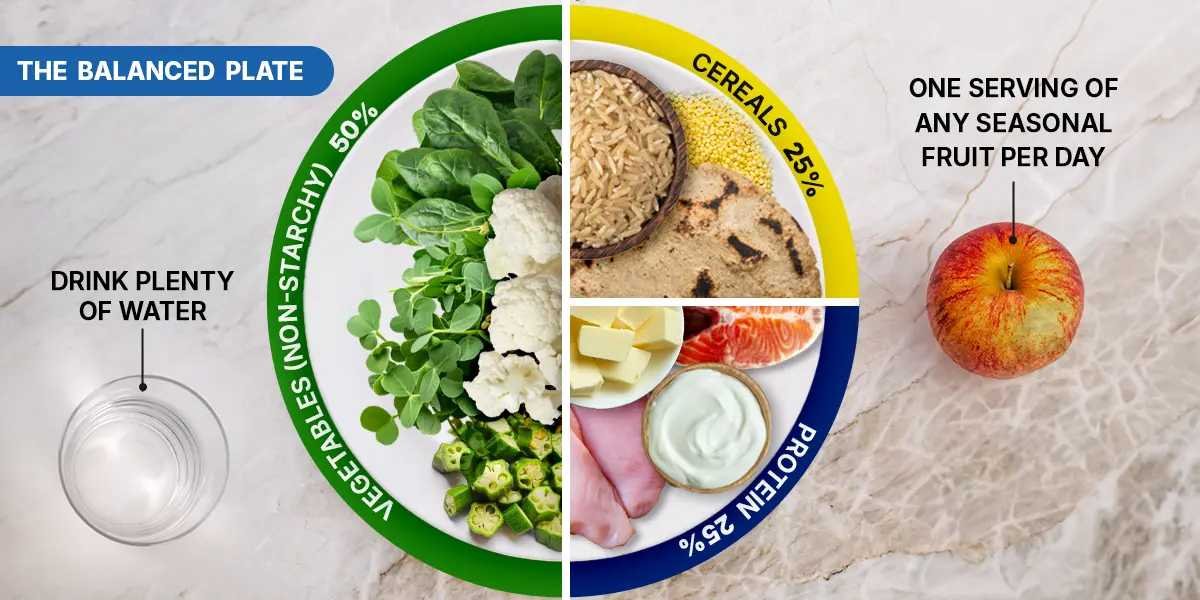
Fill half of your plate with vegetables and fruits. Allocate a quarter to lean proteins and the remaining quarter to whole grains or starchy vegetables. Include a small portion of healthy fats such as avocado or nuts.
Meal planning tips
- Plan meals ahead to ensure a good balance of nutrients.
- Use a variety of colorful fruits and vegetables for diverse nutrients.
- Incorporate different protein sources to prevent dietary monotony.
- Choose whole grains over refined grains for added fiber and nutrients.
Sample meal ideas for balanced nutrition
Breakfast
- Oatmeal topped with almonds, chia seeds, and berries
- Scrambled eggs with spinach and whole wheat toast
Lunch
- Grilled chicken salad with mixed greens, avocado, and vinaigrette
- Quinoa bowl with roasted vegetables, chickpeas, and tahini dressing
Dinner
- Salmon fillet with brown rice and steamed broccoli
- Stir-fried tofu with mixed vegetables and whole grain noodles
Snacks
- Greek yogurt with nuts and honey
- Sliced apple with almond butter
Additional tips for successful meal planning
- Meal prep on weekends to save time during busy weekdays.
- Keep healthy snacks readily available to avoid unhealthy choices.
- Read food labels to understand nutrient content and choose wisely.
- Stay hydrated and include water with every meal to support digestion.
Considering special dietary needs
Vegetarian and vegan options
Replace animal proteins with plant-based sources like beans, lentils, tofu, and tempeh. Use plant oils and nut butters to add healthy fats. Ensure adequate intake of nutrients like iron and vitamin B12 from fortified foods or supplements.
Managing food allergies and intolerances
- Identify and exclude trigger foods from your diet.
- Opt for alternative sources of nutrients, such as dairy-free milks enriched with calcium.
- Plan meals carefully to ensure balanced nutrition without common allergens.
Monitoring and adjusting your meal plan
Track your food intake to ensure you’re meeting your nutritional goals. Adjust portions and food choices based on activity levels and health status. Consulting a healthcare professional or dietitian can provide personalized guidance.
By thoughtfully combining proteins, fibers, and healthy fats in your meals, you can create a meal plan that supports overall health. Remember to include variety, balance, and enjoyment to maintain a sustainable and nourishing eating pattern.
What I Eat In A Day | How I Get 130 grams of protein for healthy weight loss.
Frequently Asked Questions
What are some examples of foods that provide a good balance of protein, fiber, and healthy fats?
Foods like salmon, which offers protein and healthy omega-3 fats, combined with fiber-rich vegetables such as broccoli and spinach, create a balanced meal. Nuts and seeds like almonds and chia seeds also contain healthy fats and fiber, while beans and lentils are excellent sources of protein and fiber. Incorporating a variety of these foods helps ensure your meals contain the right mix of nutrients.
How can I incorporate more plant-based proteins into my meals while maintaining balanced nutrients?
You can include plant-based proteins such as lentils, chickpeas, and tofu in your dishes. Pair these with fiber-rich vegetables like sweet potatoes or carrots and add sources of healthy fats like avocado or olive oil. Combining these ingredients in salads, stews, or bowls helps create nutritious, well-rounded meals that satisfy your dietary needs.
What are some practical meal ideas for ensuring each meal has enough fiber, protein, and healthy fats?
Prepare meals like grilled chicken or fish with a side of roasted vegetables and a drizzle of olive oil, complemented by a serving of quinoa or brown rice for added fiber. You might also enjoy a Greek yogurt parfait layered with berries and nuts, offering a balance of protein, fiber, and healthy fats. Planning meals with a variety of whole foods guarantees intake of these essential nutrients.
How can portion control help in balancing these nutrients across my meals?
Using appropriate portion sizes for each food group ensures you receive adequate amounts of protein, fiber, and healthy fats without overeating. For example, filling half your plate with vegetables, a quarter with lean proteins, and the remaining quarter with healthy fats and grains provides a balanced approach. Keeping track of portion sizes supports consistent nutrient intake throughout the day.
What strategies can I use to make my meals more nutrient-dense without increasing calorie intake?
Focus on including nutrient-rich ingredients like leafy greens, nuts, seeds, and lean proteins while reducing processed foods. Adding healthy fats such as olive oil or avocado enhances nutrient absorption and satiety. Incorporate spices and herbs to flavor dishes without extra calories, and choose whole foods over refined options to maximize nutrient density in your meals.
Final Thoughts
Planning balanced meals with protein, fiber, and healthy fats ensures overall well-being. Incorporate lean meats, legumes, and dairy for protein. Add vegetables, fruits, and whole grains to boost fiber intake. Include sources like nuts, seeds, and avocados for healthy fats. Focus on variety and portion control to maintain energy levels. Being mindful of these elements helps create nutritious and satisfying meals.
As an Amazon Associate, We earn from qualifying purchases. When you purchase a product through Amazon links on pulsefitguide.com, we may earn a small commission at no extra cost to you. This helps support the site and keep our content free.
