


For optimal health and fitness, aiming for about 150 minutes of moderate-intensity cardio or 75 minutes of vigorous activity weekly is ideal. This translates to roughly 30 minutes a day, five days a week, striking the perfect balance between staying active and avoiding burnout. But how much cardio should you really do in a week? The answer varies depending on your goals, schedule, and fitness level. To stay healthy, incorporating consistent cardio can boost your heart health, improve mood, and help manage weight. Whether you’re training for a race or just trying to stay energized, finding the right amount is key. Keep reading to discover how to tailor your cardio routine for maximum benefits without overdoing it.

How Much Cardio in a Week: A Complete Guide to Your Fitness Goals
Understanding Cardio and Its Benefits
Cardio exercises are activities that increase your heart rate and help burn calories. They include walking, running, cycling, swimming, and dancing. Regular cardio improves heart health, boosts endurance, and helps control weight.
How Much Cardio Do You Need Weekly?
The general recommendation is at least 150 minutes of moderate-intensity cardio or 75 minutes of vigorous activity each week. This can be split into sessions of 30 minutes, five days a week, for optimal health benefits.
Why Balance Matters in Cardio Routine
Doing too much cardio can lead to fatigue or injury, while too little might not support your goals. Finding a good balance ensures you stay motivated and avoid burnout. Incorporate diverse activities to keep your routine exciting.
Moderate vs. Vigorous Cardio: What’s the Difference?
Moderate cardio includes brisk walking or light cycling, where you’re breathing faster but can still talk. Vigorous exercise involves running or intense swimming, making talking difficult. Your choice depends on your fitness level and goals.
Examples of Moderate Cardio:
- Walking briskly for 30 minutes
- Leisurely cycling around the neighborhood
- Water aerobics
Examples of Vigorous Cardio:
- Running or sprinting
- Jumping rope intensely
- High-intensity interval training (HIIT)
How to Structure Your Weekly Cardio Routine
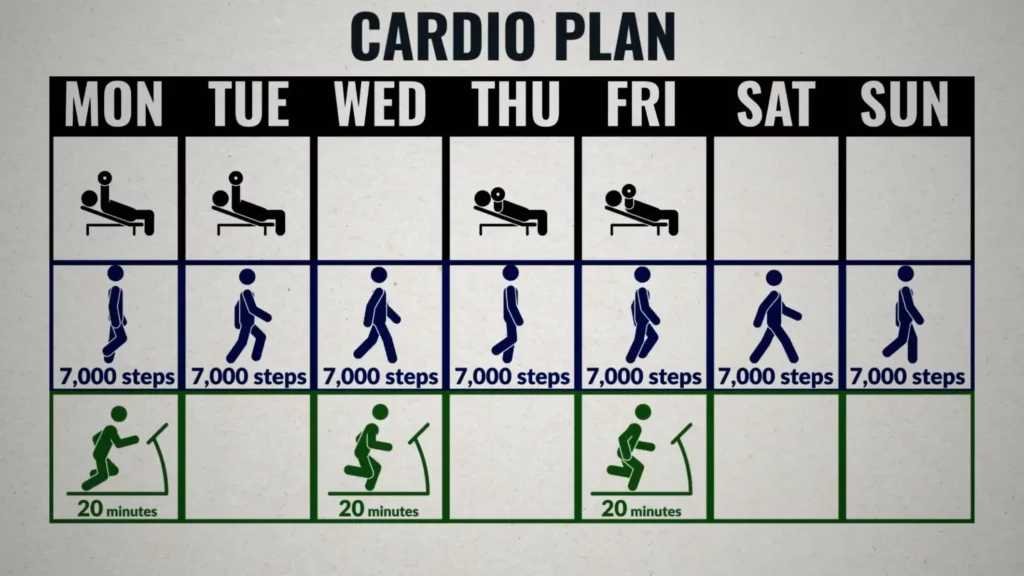
Start with manageable goals, such as 3 to 4 sessions per week. Each session should last around 30 minutes, combining moderate and vigorous workouts for variety. Gradually increase duration and intensity as your fitness improves.
Sample Weekly Cardio Schedule:
- Monday: 30 minutes brisk walking
- Wednesday: 20 minutes running, 10 minutes cycling
- Friday: 30 minutes swimming
- Sunday: 30 minutes of dancing or low-impact activity
Incorporating Variety for Better Results
Mix different types of cardio to prevent boredom and work different muscle groups. For example, alternate between running, cycling, and swimming. This variety also helps reduce the risk of overuse injuries.
Listening to Your Body and Adjusting
Pay attention to how you feel after sessions. If you experience pain or excessive fatigue, scale back and rest more. Adapt your routine based on progress, comfort, and health status.
The Role of Rest Days in Cardio Training
Rest days allow your body to recover and prevent overtraining. Incorporate at least one or two days per week with lighter activities or complete rest. Active recovery like gentle walking or stretching can also be beneficial.
Special Populations and Modified Cardio Goals
People with certain health conditions or beginners should start slower and consult with a healthcare professional. Adjust intensity and duration to suit individual needs, aiming for gradual improvement.
Tracking Progress and Staying Motivated
Use fitness apps, journals, or wearable devices to monitor your workouts. Setting small goals and celebrating milestones can keep motivation high. Remember, consistency matters more than intensity initially.
Related Topics to Consider
- How to incorporate strength training with cardio
- Best cardio exercises for weight loss
- Tips for staying motivated to exercise regularly
- How to avoid common cardio injuries
- The importance of warm-up and cool-down routines
Additional Tips for Effective Cardio Workouts
Stay hydrated before, during, and after exercise. Wear appropriate footwear to prevent injuries. Choose music or podcasts to make workouts more enjoyable.
Finding the right amount of cardio each week depends on your personal goals, fitness level, and preferences. A balanced routine typically includes 150 minutes of moderate activity or 75 minutes of vigorous exercise. By varying your workouts, listening to your body, and making gradual progress, you can achieve better health and fitness results. Always remember to rest and recover, and consult professionals when needed, to maintain a sustainable and enjoyable cardio habit.
Frequently Asked Questions
How much cardio should I aim for if I want to improve my overall health?
For optimal health benefits, aim to engage in at least 150 minutes of moderate-intensity cardio activity each week. This can include brisk walking, cycling, or swimming. Splitting this time into sessions of at least 30 minutes, five days a week, provides consistent cardiovascular stimulation and supports heart health, weight management, and improved stamina.
Is it beneficial to do more than the recommended amount of cardio weekly?
Engaging in more than the standard 150 minutes of moderate-intensity cardio can offer additional health benefits, especially if your fitness goals include weight loss or improving endurance. However, listen to your body and avoid overtraining, which can lead to injuries or fatigue. Incorporate rest days and vary your workouts to maintain consistency and prevent burnout.
How should I modify my cardio routine if I have a busy schedule?
If time is limited, focus on high-intensity interval training (HIIT) or shorter, more intense sessions that can be completed within 20-30 minutes. Even brief bouts of activity, like brisk walking during breaks or cycling for 10-minute intervals, contribute to your weekly goals. Consistency matters more than duration, so find ways to stay active regularly within your busy schedule.
Can I combine different types of cardio during the week?
Yes, mixing various cardio activities like running, swimming, cycling, and rowing keeps your routine interesting and targets different muscle groups. This variety can prevent plateaus and reduce the risk of overuse injuries. Aim to include both moderate and vigorous-intensity sessions to maximize cardiovascular health and overall fitness.
Final Thoughts
How much cardio in a week depends on individual goals and fitness levels. Generally, adults should aim for at least 150 minutes of moderate-intensity or 75 minutes of vigorous-intensity exercise. Incorporating cardio sessions a few times a week boosts cardiovascular health and energy levels.
Keep your routine balanced and consistent to see the best results. Remember, listening to your body is key to avoiding overtraining. In conclusion, determining how much cardio in a week is essential for maintaining health and fitness.
As an Amazon Associate, We earn from qualifying purchases. When you purchase a product through Amazon links on pulsefitguide.com, we may earn a small commission at no extra cost to you. This helps support the site and keep our content free.
