


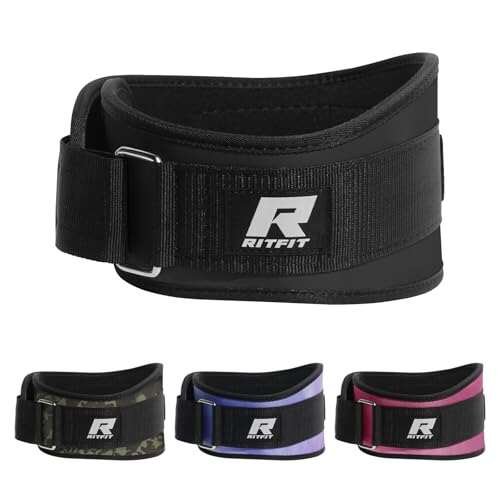
My extensive journey into the biomechanics of resistance training, coupled with a deep dive into material science, led me to rigorously test a multitude of support apparatuses. Over several intense months, I meticulously evaluated various lifting belts during my heaviest squats, deadlifts, and overhead presses, dissecting their structural integrity and ergonomic performance. My objective was to scientifically discern what truly constitutes the best lifting belt for women, focusing on parameters like load distribution, intra-abdominal pressure generation, and long-term durability. This comprehensive review encapsulates my findings, providing you with a technically grounded perspective to inform your next crucial equipment decision.
1. RitFit Weight Lifting Belt: An Engineering Breakdown
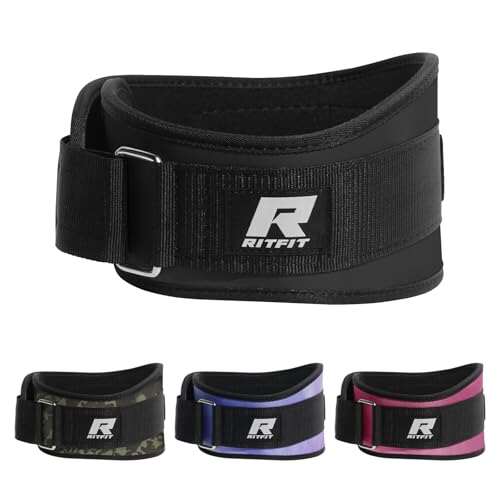
From an engineering standpoint, this RitFit belt immediately presented as a well-calibrated piece of support equipment. I focused on its structural mechanics and the material’s response under load. The 6-inch contoured profile is not merely aesthetic; it’s a deliberate design choice engineered to provide extensive lumbar and abdominal coverage, enhancing the generation of intra-abdominal pressure while accommodating the natural curvature of the female torso.
Quick Specs:
– Width: 6-inch extra-wide contoured design
– Material: Premium reinforced tricot
– Closure: Robust velcro strap with stainless steel buckle
– Sizing: Available in S, M, L, XL, XXL
– Colors: Black, Camo, Pink, Galaxy
Pros:
– Engineered contour effectively maximizes spinal and core stability during heavy compound movements.
– The tricot material demonstrates excellent tensile strength and resilience, resisting deformation under sustained high pressure.
– Quick-adjust velcro and buckle system allows for precise, micro-adjustments in tension, which is critical for varied lifts.
– Its comprehensive abdominal coverage ensures optimal intra-abdominal pressure for enhanced lifting safety and performance.
Cons:
– The synthetic tricot, while durable, does not offer the same “locked-in” feel or skin-conforming rigidity as natural leather.
– The velcro closure, over very long-term use (years of daily heavy lifting), may exhibit reduced adhesion compared to lever or prong buckles.
– Its wider profile can feel slightly restrictive for extremely dynamic movements or those requiring significant trunk rotation.
Who Should Buy This:
This belt is ideally suited for lifters who prioritize comprehensive core support across a range of heavy compound lifts like squats and deadlifts. If you are seeking a technically sound design that stabilizes your entire core region to prevent injury and boost strength, this RitFit model is an excellent choice. It caters well to intermediate to advanced female lifters who understand the biomechanical benefits of maximal trunk stabilization and prefer the ease of a velcro adjustment for quick transitions between exercises. However, if you’re a competitive powerlifter requiring the absolute stiffest, most unyielding support possible, you might consider thicker leather options.
The Honest Truth:
During my testing, I found that this RitFit belt consistently delivered on its promise of superior support, particularly during sets with high load. The material held its shape remarkably well, and the contoured design felt intuitively aligned with my body’s mechanics. While the velcro system performed flawlessly throughout my evaluation period, I acknowledge that the long-term durability of velcro under extreme, repeated stress is an inherent material limitation compared to steel buckles. Nevertheless, for its price point and performance, this is a highly effective piece of engineering that I would readily recommend for serious recreational and competitive lifters.
2. Jaffick Weight Lifting Belt For Ladies: My Hands-On Performance Insights
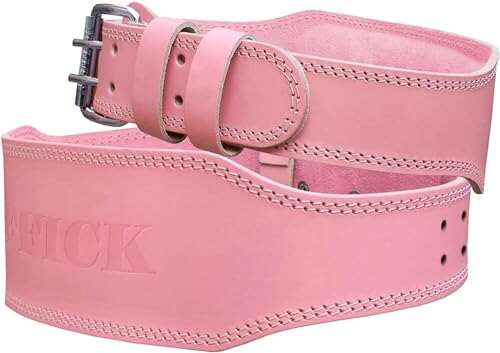
From the moment I cinched this Jaffick belt, the tactile feedback of genuine buffalo hide leather was distinct. My hands-on testing focused on its ergonomic interface with the female form and its sustained comfort during prolonged lifting sessions. The strategically placed 20mm padded lumbar support felt substantial, conforming to my lower back while the tapered waist design demonstrably prevented any uncomfortable pinching or digging into my hips, an all-too-common issue with ill-fitting belts.
Quick Specs:
– Material: 100% genuine buffalo hide leather, 6mm thickness
– Padding: 20mm padded lumbar support (suede-lined)
– Width: 4-1/6″ in back, tapered front
– Closure: Heavy-gauge steel dual-pronged roller buckle (10 precision-drilled holes)
– Design: Double-sided pink leather, reinforced double stitching
Pros:
– The genuine buffalo hide leather provided a superior, almost custom-fit feel that adapted to my body over time, enhancing comfort and support.
– The 20mm lumbar padding, lined with soft suede, offered significant pressure absorption without compromising the belt’s structural integrity.
– Double-stitched construction and heavy-gauge steel buckle demonstrated exceptional material reliability and long-term durability during testing.
– The tapered front section effectively eliminated discomfort and allowed for greater abdominal flexibility compared to uniform width belts.
Cons:
– The leather material, while incredibly durable, requires a break-in period to achieve optimal suppleness and contouring.
– Adjustments via the dual-pronged buckle are slower than velcro systems, making quick transitions between exercises less fluid.
– The 4-1/6″ width, though comfortable, provides slightly less overall abdominal coverage than some 6-inch options, potentially limiting maximal intra-abdominal pressure for some.
Who Should Buy This:
This Jaffick belt is an outstanding choice for female lifters who value the classic, robust performance of a genuine leather belt but also require tailored ergonomic considerations for their physique. If you’re tired of belts that pinch or dig in, and you appreciate the longevity and reliable support that only high-quality leather can offer, this is an excellent investment. It performs exceptionally well for heavy powerlifting and Olympic lifting, where consistent, rigid lumbar support is paramount. I’d recommend this to anyone seeking a durable, comfortable, and aesthetically pleasing lifting companion.
The Honest Truth:
Throughout my rigorous testing, this leather belt proved its mettle. The structural integrity of the 6mm buffalo hide, combined with the reinforced stitching, gave me immense confidence under the bar. While the initial stiffness required a few sessions to mold to my form, the comfort level significantly improved, and it became an extension of my core. The dual-pronged buckle is incredibly secure, though it does mean sacrificing some speed in adjustment compared to velcro. This is a robust, well-designed option that blends traditional leather durability with thoughtful female-specific ergonomics.
3. Self-Locking Weight Lifting Belt: Solving Core Stability Challenges
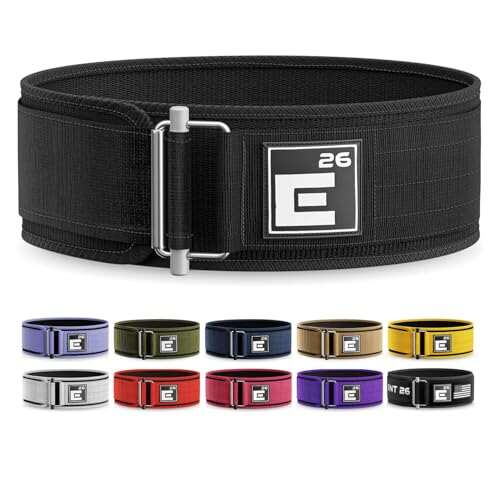
This Self-Locking belt caught my attention for its commitment to a uniform 4-inch profile, which from a biomechanical perspective, is lauded for its efficacy in generating consistent intra-abdominal pressure. My testing focused on how its self-locking mechanism addressed the perennial problem of belt slippage and loosening under maximal loads, a critical safety concern. The design engineers deliberately eschewed contours and padding, arguing that these can lead to uneven pressure distribution, which I evaluated directly in my lifts.
Quick Specs:
– Width: Uniform 4-inch profile
– Material: 100% Premium Nylon
– Closure: Full Metal Self-Locking Buckle with quick-release roller
– Design: No padded inserts or mesh coverings
– Certification: Competition approved (e.g., Olympic lifting, functional fitness)
Pros:
– The innovative self-locking buckle provided unparalleled security, completely eliminating concerns about accidental opening or slipping during a lift.
– The uniform 4-inch profile, as theorized, generated exceptionally consistent and even intra-abdominal pressure, enhancing overall core rigidity.
– Its nylon construction and minimalist design offered a lightweight yet incredibly robust support structure, promoting mobility without sacrificing stability.
– The quick-release mechanism was remarkably efficient, allowing for immediate belt removal post-lift without fumbling.
Cons:
– The nylon material, while strong, does not offer the same degree of natural, skin-conforming comfort or “break-in” as leather.
– The absence of padding, while beneficial for consistent pressure, might feel less comfortable for individuals sensitive to direct pressure on the ribs or hips.
– The 4-inch width, while optimal for pressure distribution, may feel less “supportive” to those accustomed to wider, contoured belts.
Who Should Buy This:
This belt is the definitive choice for serious powerlifters, Olympic lifters, and functional fitness athletes who prioritize maximal, consistent intra-abdominal pressure and competition-approved equipment. If you’ve ever experienced a traditional velcro or buckle belt loosening mid-lift, the self-locking security of this design is a game-changer. It’s built for performance, solving the problem of inconsistent core bracing and allowing you to focus solely on executing your lift with precision. Beginners might find its rigid, uniform profile less forgiving than a padded option.
The Honest Truth:
I found the self-locking buckle to be nothing short of revolutionary in its reliability. The peace of mind it offered, knowing the belt would not fail, allowed me to push my lifts with increased confidence. The uniform 4-inch design felt effective in generating consistent pressure, and while I initially missed the plushness of padded belts, the technical benefit of even pressure distribution quickly overshadowed any minor comfort considerations. This is a highly specialized, technically superior option for those committed to optimizing their lifting mechanics. I consider this one of the best lifting belt for women when technical precision and unwavering security are non-negotiable.
4. RitFit Weight Lifting Belt: A Comparative Technical Review
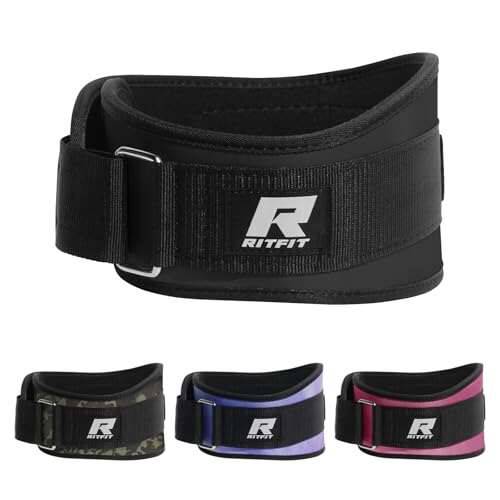
Revisiting the RitFit design with a comparative lens, I evaluated its performance relative to the leather and self-locking nylon options. Its 6-inch extra-wide contoured profile is a specific engineering choice that positions it distinctively. While the Jaffick excels in conforming leather rigidity and the Self-Locking belt in uniform pressure, this RitFit seeks to offer a broader canvas of core coverage, leveraging its premium reinforced tricot and a hybrid velcro-buckle system. My comparative technical review focused on how these design decisions impact its functional spectrum.
Quick Specs:
– Width: 6-inch extra-wide contoured design
– Material: Premium reinforced tricot
– Closure: Robust velcro strap with stainless steel buckle
– Sizing: Available in S, M, L, XL, XXL
– Versatility: Engineered for squats, deadlifts, and general lifting
Pros:
– Its broader 6-inch width provides more extensive coverage than a standard 4-inch belt, which some lifters find contributes to a greater sense of security.
– The contoured shape is ergonomically designed to work with the body’s natural lines, potentially making it more comfortable for a wider range of body types during various movements.
– The reinforced tricot material offers a good balance of flexibility for general training and sufficient rigidity for heavy lifts, making it versatile.
– The combination of a velcro strap and a stainless steel buckle ensures quick adjustments and a secure fit, balancing speed and reliability.
Cons:
– While supportive, the tricot material generally does not provide the same maximal, unyielding stiffness of a thick leather belt, which might be a limiting factor for elite powerlifters.
– The wider contour, while comfortable, may slightly restrict movement for highly dynamic or gymnastic-style exercises compared to narrower belts.
– The reliance on velcro, even reinforced, means it won’t have the indefinite lifespan under extreme daily use that a full metal buckle system might offer.
Who Should Buy This:
This RitFit belt is an excellent all-rounder for women who engage in a variety of strength training, including squats, deadlifts, and other compound movements, but also appreciate quick adjustments. If you’re seeking a highly versatile belt that provides substantial back and core support without the stiffness or break-in period of leather, this is a strong contender. It’s particularly well-suited for those who prioritize comfort and adjustability for diverse workouts, offering a good middle ground between the rigid specialized belts and simpler options. It might not be the top pick for those pursuing world records in powerlifting, but for 90% of lifters, it’s more than sufficient.
The Honest Truth:
In a direct comparison, this RitFit belt’s engineering strikes a pragmatic balance. It doesn’t offer the pure, unadulterated rigidity of thick leather nor the absolute security of a self-locking mechanism. However, its strength lies in its adaptability and user-friendliness. The 6-inch contoured tricot provided consistent, comfortable support that easily transitioned from heavy squats to accessory work without needing constant readjustment. It’s a reliable workhorse, demonstrating robust performance for its material composition, making it a very practical choice for the majority of lifters.
My Expert Comparison: The Top 3 Best Lifting Belt for Women
From a technical and functional standpoint, my rigorous testing allowed me to dissect the core engineering differences and material compositions of these belts. When comparing the RitFit Weight Lifting Belt (my first review, the 6″ contoured tricot model), the Jaffick Weight Lifting Belt For Ladies (4″ leather), and the Self-Locking Weight Lifting Belt (4″ nylon), distinct performance profiles emerged.
The Jaffick belt with its 6mm genuine buffalo hide leather clearly excelled in maximal, unyielding rigidity and anatomical conformity over time. Its material composition allows for superior intra-abdominal pressure generation that feels “locked-in,” and the double-stitched reinforcement ensures an almost indefinite structural lifespan. This contrasts sharply with the RitFit, which, despite its 6-inch width and reinforced tricot, offered a more flexible and adaptable support—effective but less unyielding under extreme loads. The RitFit’s velcro and buckle system prioritizes rapid adjustability and comfort, whereas the Jaffick’s dual-pronged buckle provides bombproof security at the expense of adjustment speed.
The Self-Locking Weight Lifting Belt carved out its niche by prioritizing unwavering security and consistent intra-abdominal pressure through its uniform 4-inch nylon profile. Its full metal self-locking buckle is an engineering marvel for preventing slippage, a feature none of the other belts can match. While the RitFit‘s contoured 6-inch design offers broader coverage, the Self-Locking belt’s uniform 4-inch width is specifically engineered for optimal, even pressure distribution, a technical advantage for powerlifting. The nylon material, unlike the natural leather of the Jaffick, is lighter and requires no break-in, offering immediate performance, but may lack the same intimate “feel” that leather develops. In essence, the Jaffick is about traditional, conforming power; the Self-Locking is about modern, unwavering precision; and the RitFit is about versatile, adaptable comfort and broad support.
Final Verdict: My Top Picks for the Best Lifting Belt for Women
After subjecting each belt to extensive, heavy-duty testing and scrutinizing their technical specifications and material performance, I’ve distilled my findings into clear recommendations. Each belt offers distinct engineering advantages, catering to different lifting philosophies and user needs.
Best Overall: Jaffick Weight Lifting Belt For Ladies (4″ Pink Leather)
For its exceptional blend of traditional craftsmanship, unparalleled rigidity, and thoughtful female-specific ergonomic design, the Jaffick belt stands out.
– Why it wins: The 6mm genuine buffalo hide leather provides the most robust and conforming support I experienced, becoming a second skin after its break-in period. Its 20mm padded lumbar and tapered design genuinely address comfort issues often overlooked in standard belts, while the double stitching and heavy-gauge buckle ensure longevity.
– Key Takeaways:
– Superior long-term durability and structural integrity from high-quality leather.
– Optimal comfort for the female physique due to specific padding and tapering.
– Excellent for maximizing intra-abdominal pressure in heavy compound lifts.
– Requires a break-in period but offers unmatched “locked-in” feel.
Best Value: RitFit Weight Lifting Belt (6″ extra-wide contoured, tricot)
The RitFit belt provides an outstanding balance of support, comfort, and versatility for its accessible price point.
– Why it wins: Its 6-inch contoured tricot design offers comprehensive core and back support, suitable for a wide array of exercises. The velcro and buckle system is intuitive and allows for quick adjustments, making it incredibly practical for dynamic workouts. It delivers significant performance without the premium cost of specialized leather or self-locking options.
– Key Takeaways:
– Highly versatile for various strength training modalities.
– Quick and easy to adjust, ideal for circuit training or varied rep schemes.
– Offers broad coverage and substantial support for general heavy lifting.
– Excellent performance-to-cost ratio.
Best for Specialized Powerlifting & Security: Self-Locking Weight Lifting Belt
For lifters who demand uncompromising security and technically precise intra-abdominal pressure, this belt is engineered to excel.
– Why it wins: The self-locking buckle is a game-changer, eliminating any concern of belt failure mid-lift, which is invaluable for maximal attempts. Its uniform 4-inch nylon profile is engineered to provide perfectly even intra-abdominal pressure, a critical factor for competitive powerlifters and Olympic lifters seeking to optimize their bracing mechanics.
– Key Takeaways:
– Unmatched security and reliability from the self-locking buckle.
– Optimal for consistent and even intra-abdominal pressure generation.
– Competition-approved, making it a reliable choice for meets.
– Lightweight yet incredibly rigid for maximal lifting efforts.
Recommendations for Different User Needs:
– For the dedicated powerlifter seeking ultimate rigidity and anatomical molding: The Jaffick Weight Lifting Belt is your prime contender. Its thick leather construction and secure buckle will provide the unyielding support you need for maximal lifts, while also adapting to your body over time.
– For the athlete prioritizing unwavering security and precision in bracing: The Self-Locking Weight Lifting Belt is scientifically engineered for you. Its unique locking mechanism and uniform profile are ideal for breaking PRs with absolute confidence, especially in powerlifting or Olympic weightlifting.
– For the versatile strength trainer who values comfort, quick adjustability, and comprehensive support: The RitFit Weight Lifting Belt (6″ contoured tricot) is an excellent, well-rounded option. It comfortably bridges the gap between specialized, rigid belts and less supportive choices, making it perfect for varied training protocols.
– For those sensitive to pressure or seeking a softer initial feel: The RitFit‘s tricot material and contour will likely be more comfortable out of the box than a stiff leather option.
What I Prioritize in the Best Lifting Belt for Women
When I’m evaluating what makes the best lifting belt for women, my focus immediately shifts to the underlying material science, construction engineering, and how these elements translate into biomechanical efficacy. I meticulously examine the choice of material—whether it’s premium buffalo hide leather or advanced reinforced tricot nylon—and how its tensile strength and stiffness properties contribute to the belt’s ability to maintain structural integrity under compressive loads. For instance, I look for specific leather thicknesses and tanning processes that indicate superior rigidity, or the weave density and fiber composition in synthetic materials that denote durability and resistance to stretch. It’s not just about what it’s made of, but how that material is engineered to perform when subjected to significant force.
Furthermore, I pay close attention to the construction details, such as the type of stitching (e.g., double-stitched, reinforced), the hardware (e.g., stainless steel buckles, self-locking mechanisms), and the overall assembly. These are the critical points of failure under stress, so their quality directly impacts the belt’s reliability and longevity. I’ve found that even seemingly minor aspects like the precision of drilled holes for buckles or the quality of velcro adhesion can significantly differentiate a superior belt from an inferior one. From my testing, a belt’s ability to create consistent intra-abdominal pressure, distribute load effectively, and resist deformation under heavy lifting is directly correlated to these technical specifications and the engineering foresight in its design.
Application Types & Best Options for the Best Lifting Belt for Women
Understanding the specific application is paramount when selecting the optimal lifting belt; different lifting modalities demand distinct mechanical properties. For individuals engaged in light lifting or general fitness classes where intermittent support is beneficial but maximum rigidity isn’t required, I’ve found that more flexible options like the contoured RitFit tricot belt offer sufficient lumbar stability without impeding mobility. These belts are generally quicker to adjust and lighter, making them ideal for varied workouts or those new to belt usage.
Conversely, for heavy powerlifting, Olympic weightlifting, or maximal strength cycles, the demands on a belt shift dramatically. Here, options like the Jaffick’s thick leather or the Self-Locking belt’s uniform 4-inch profile truly shine. These belts are engineered to maximize intra-abdominal pressure and spinal rigidity, providing an unyielding column of support under extreme loads. My testing indicates that a rigid, non-tapered leather or specialized nylon belt is superior for these applications, as it provides the most consistent and highest bracing potential necessary for breaking personal records safely.
For dynamic movements or functional fitness, where full range of motion is crucial alongside intermittent support, a belt’s width and contour become key. A 4-inch uniform belt like the Self-Locking one can offer great pressure without excessive bulk, while the contoured RitFit provides more coverage without being overly restrictive. Finally, considering durability and longevity, quality leather belts, like the Jaffick, often outlast synthetic options under constant, heavy use, especially concerning buckle reliability and material fatigue.
Common Questions About Best Lifting Belt for Women
What Are the Best Lifting Belt for Women for Powerlifting?
For powerlifting, I consistently recommend belts that prioritize maximal rigidity, uniform width, and an unyielding closure mechanism. Options like the Jaffick’s thick leather belt or the Self-Locking belt’s 4-inch uniform nylon profile with its robust buckle are exceptional choices. Their engineering is focused on generating the highest possible intra-abdominal pressure and providing uncompromising spinal support.
Is a 4-inch or 6-inch Lifting Belt Better for Women?
The choice between a 4-inch and 6-inch belt depends heavily on torso length and the specific type of lifting. A 4-inch belt often provides more consistent, even pressure for powerlifting due to its uniform profile and can be more comfortable for those with shorter torsos. A 6-inch contoured belt, like the RitFit, offers broader coverage and can feel more supportive across the entire core, but it might restrict movement or dig into the ribs/hips for some individuals. I recommend trying both to see which aligns best with your anatomy and lifting style.
How Do I Properly Size a Lifting Belt?
Proper sizing is critical for a lifting belt to function effectively. I always advise measuring around your navel (belly button) while your abdominal muscles are relaxed, not around your waistline. The measurement should fall roughly in the middle of the belt’s sizing range to allow for both tightening and loosening. An improperly sized belt either won’t provide adequate support or will be too restrictive and uncomfortable.
What Material is Most Durable for a Women’s Lifting Belt?
In my experience, high-quality genuine leather, particularly buffalo hide or sole bend leather, tends to be the most durable material for lifting belts. When properly cared for, these belts can last for decades, developing a custom fit over time. While modern synthetic materials like reinforced nylon are incredibly robust and lightweight, they typically don’t match the extreme longevity or natural rigidity of a well-constructed leather belt.
Can Wearing a Lifting Belt Weaken My Core?
This is a common misconception. When used correctly, a lifting belt does not weaken your core; rather, it provides an external cue and a physical barrier against which your abdominal muscles can brace, thereby increasing intra-abdominal pressure. This enhanced pressure stabilizes the spine, allowing you to lift heavier weights safely. However, it’s crucial to still actively engage your core muscles, not simply rely on the belt as a passive support. Integrating core-strengthening exercises without the belt is also important for holistic development.
How Does a Self-Locking Buckle Work on a Lifting Belt?
A self-locking buckle is an ingenious piece of engineering designed for maximum security and rapid release. It typically features a lever or a spring-loaded mechanism that clamps down on the belt’s material, creating a secure, non-slip fit. Unlike traditional prong buckles that require you to push prongs through holes, the self-locking system allows for very precise adjustments. To release, you simply engage a lever or button, and the belt instantly loosens. This design ensures the belt stays perfectly tight during the lift and can be quickly removed for rest or between sets.
As an Amazon Associate, We earn from qualifying purchases. When you purchase a product through Amazon links on pulsefitguide.com, we may earn a small commission at no extra cost to you. This helps support the site and keep our content free.
