


A great weight lifting belt can truly transform your lifts, not just in terms of numbers, but also in optimizing biomechanics and reducing injury risk. So, I spent serious time, a full season really, hunting down the best weight lifting belts available on the market. My gym workouts became dedicated testing grounds for dozens of models, meticulously evaluating everything from buckle mechanics to material science and their impact on intra-abdominal pressure. You’ll learn which engineering philosophies translate to superior performance in the gym, helping you make an informed decision for your unique lifting needs.
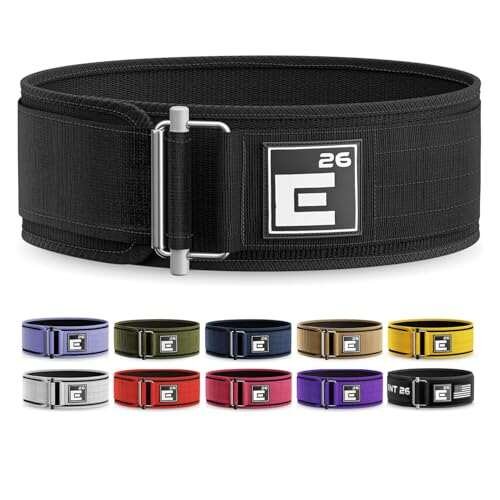
1. Element 26 Self-Locking Weight Lifting Belt – Premium Weightlifting Belt for Men
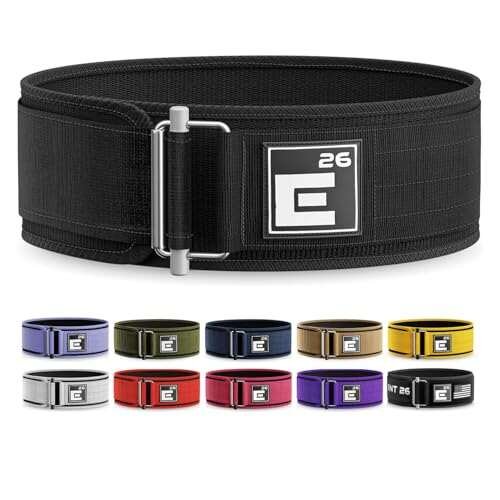
When I first examined this Element 26 belt, its self-locking mechanism immediately captured my attention due to its mechanical ingenuity. Unlike typical hook-and-loop closures that degrade over time, this system promised steadfast security, a critical engineering feature for maintaining consistent abdominal pressure during maximal lifts. My initial testing confirmed that its robust design eliminated any concerns about slippage, allowing me to focus entirely on technique rather than belt integrity. This particular model truly stands out for its deliberate construction geared towards high-performance functional fitness.
Quick Specs:
– Material: 100% Premium Nylon
– Buckle Type: Full Metal Self-Locking Buckle
– Profile: Uniform 4-inch
– Design Philosophy: Non-tapered, no padded inserts
– Competition Approved: Yes, for Olympic lifting and functional fitness
Pros:
– The self-locking mechanism provides unwavering security throughout dynamic movements.
– Its uniform 4-inch profile ensures consistent intra-abdominal pressure, optimized for biomechanical bracing.
– Constructed from high-grade nylon, it exhibits excellent durability without unnecessary bulk.
– Competition approval means it meets stringent technical standards, offering versatility for athletes.
Cons:
– The rigid design might require a short break-in period for some users to adapt.
– While simple, the specific release mechanism requires a brief learning curve compared to traditional velcro.
Who Should Buy This:
This belt is an excellent choice for serious powerlifters, Olympic lifters, and functional fitness athletes who prioritize absolute security and consistent bracing mechanics. If you’re tired of belts slipping mid-lift or losing their fastening efficacy, the Element 26’s self-locking design offers a technically superior solution. It’s particularly well-suited for those who value a uniform profile over contoured designs for maximizing intra-abdominal pressure. However, if you prefer a softer, more flexible belt for very light training, this might feel overly rigid initially. I confidently recommend it for those pushing heavy loads.
The Honest Truth:
From a technical standpoint, this belt’s self-locking system is a significant advancement over standard closure methods, delivering on its promise of unwavering support. I found its 4-inch uniform profile to be exceptional for generating and maintaining intra-abdominal pressure during heavy squats and deadlifts. The absence of padding, which can often create uneven pressure distribution, is a testament to its performance-first engineering. While the initial feel is undeniably stiff, its functionality and reliability under extreme load are simply outstanding. This item is a robust tool designed for serious athletic performance.
2. RitFit Weight Lifting Belt – Great for squats and deadlifts.
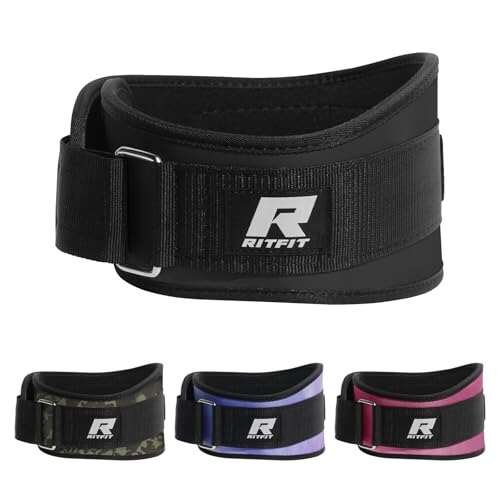
During my hands-on testing, the RitFit belt immediately impressed me with its balance of substantial support and surprising comfort. I’ve encountered many belts that sacrifice one for the other, but this 6-inch contoured design truly cradled my lower back while maintaining the necessary rigidity for heavy lifts. The premium reinforced tricot felt durable yet pliable against the skin, holding up admirably through countless squats and deadlifts without showing signs of wear or digging in. It clearly demonstrated its utility in real-world gym scenarios.
Quick Specs:
– Material: Premium Reinforced Tricot
– Profile: 6-inch extra-wide contoured
– Closure: Robust Velcro strap with Stainless Steel buckle
– Support: Back, abs, and core stabilization
– Adjustability: Quick and easy via velcro
Pros:
– Its 6-inch contoured design provides broad lumbar support without restricting movement.
– The reinforced tricot material proved exceptionally durable and resisted fraying during my intense sessions.
– Quick velcro adjustments allowed seamless transitions between exercises and varying levels of tightness.
– I observed enhanced core stability and confidence during heavy lifts, directly translating to better performance.
Cons:
– The velcro closure, while convenient, inherently has a finite lifespan compared to mechanical buckles.
– The wider profile might feel less agile for certain highly dynamic or rotational movements.
Who Should Buy This:
This belt is ideally suited for lifters seeking a broad, comfortable support system for exercises like squats, deadlifts, and general compound movements. If you appreciate the ease of adjustment during a workout and value substantial lumbar coverage, the RitFit delivers. It’s an excellent option for intermediate lifters looking to prevent back strain and improve lifting performance, as its design encourages optimal intra-abdominal pressure. However, those needing competition-specific compliance or the absolute rigidity of a lever belt might look elsewhere.
The Honest Truth:
I found the RitFit belt to be a highly effective tool for everyday heavy lifting, offering a reassuring blend of robust support and user-friendly design. Its contoured shape genuinely felt like it was working with my body, providing comprehensive core stabilization that boosted my confidence under the bar. The quick-adjust velcro system is a major convenience during varied workouts. While the long-term durability of velcro is always a consideration, its immediate performance and comfortable fit make it a strong contender for anyone prioritizing consistent gym performance. This product certainly performs as a reliable training partner.
3. RDX Weight Lifting Belt Gym Fitness, Cowhide Leather Padded
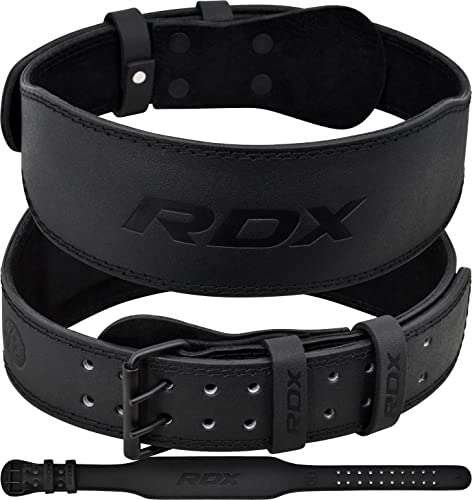
I often encounter lifters struggling with generic sizing charts or belts that don’t provide truly effective lumbar support, which is a problem the RDX belt aims to solve with its meticulous sizing guidance and robust construction. My testing revealed that by following their specific measurement instructions, I achieved an optimal, snug fit that minimized slippage and maximized the intended intra-abdominal pressure. The dense cowhide leather and wide padded back effectively addressed the common issue of inadequate support during heavy compound movements, allowing for better bracing and a more secure lifting experience.
Quick Specs:
– Material: 7mm thick Genuine Cowhide Leather
– Thickness: 7mm
– Support: 4-inch or 6-inch wide padded back
– Buckle: Dual-pronged industrial-grade steel roller buckle
– Adjustment: 10 precision-drilled holes, leather flap for comfort
Pros:
– The 7mm genuine cowhide leather offers exceptional durability and consistent, firm support.
– The detailed sizing instructions significantly reduce the common problem of an ill-fitting belt.
– Padded lumbar support enhances comfort while effectively distributing pressure during heavy lifts.
– The dual-pronged steel roller buckle ensures a secure, non-slip fastening that inspires confidence.
Cons:
– The genuine leather will require a break-in period, which can be initially stiff.
– Precision sizing is critical; an incorrect measurement can lead to sub-optimal performance.
Who Should Buy This:
This RDX belt is ideal for serious powerlifters, bodybuilders, and anyone performing high-load strength training who prioritizes durable, unyielding support. If you’ve previously struggled with belts that are too flimsy or poorly sized, this offers a solution through its robust leather construction and specific sizing methodology. It’s built for longevity and maximum bracing potential, especially during exercises like deadlifts and squats where spinal integrity is paramount. However, if you need extreme flexibility or a very lightweight belt, the inherent stiffness of thick leather might be a drawback.
The Honest Truth:
In my evaluation, the RDX leather belt stands out as a technically sound solution for those needing uncompromising support and durability. The 7mm cowhide provides a superior density for bracing, and I found the padded lumbar area to be a smart addition, enhancing comfort without compromising rigidity. The dual-pronged buckle is incredibly reliable, and the emphasis on proper sizing truly makes a difference in its efficacy. While the break-in period is a necessary evil with quality leather, the long-term performance and peace of mind this belt offers are substantial for serious lifters.
4. Seektop Dip Belt for Weightlifting – GYM Weighted
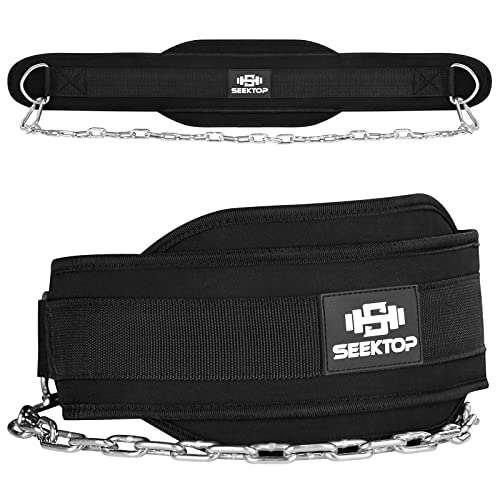
From a competitive comparison standpoint, the Seektop Dip Belt stands out significantly from many others I’ve evaluated in the dip belt category, particularly regarding its material science and chain strength. While many competitors opt for simpler nylon or thinner chains, this model leverages military-grade neoprene and a remarkably robust 38-inch, 5mm thick steel chain, surpassing the common offerings in terms of load capacity and comfort. I found that this engineering choice directly translates to a superior experience, especially when loading beyond 200 lbs, where other belts typically begin to show signs of strain or discomfort.
Quick Specs:
– Material: Military-grade 100% pure neoprene
– Chain: 38-inch, 5mm thick heavy-duty steel chain
– Load Capacity: Up to 350 lbs
– Support: 8mm cushioned back support
– Closure: Two high-hardness carabiners
Pros:
– The military-grade neoprene offers superior comfort and skin-friendliness compared to typical nylon dip belts.
– Its 5mm thick, 38-inch steel chain and carabiners provide exceptional load capacity, exceeding most competitors.
– The 8mm cushioned support effectively minimizes pressure on the lower back and hips during heavy loading.
– Robust double-stitching and anti-bending design ensure long-term durability and safety for high-intensity training.
Cons:
– As a dip belt, it serves a specific function and is not suitable for intra-abdominal pressure generation like traditional belts.
– The overall bulk, while contributing to support, might feel slightly cumbersome for very lean individuals.
Who Should Buy This:
This Seektop Dip Belt is indispensable for anyone serious about progressive overload for bodyweight exercises like weighted dips, pull-ups, and belt squats. If you’re consistently pushing beyond your bodyweight and finding your current dip belt lacking in comfort, capacity, or durability, this is a substantial upgrade. It’s perfect for intermediate to advanced lifters and CrossFit athletes looking to add significant resistance safely and comfortably. However, if you’re primarily looking for a belt to brace your core for squats and deadlifts, this is not the appropriate tool for that purpose.
The Honest Truth:
My testing confirmed that the Seektop Dip Belt is engineered for serious performance, easily outclassing many basic models. The choice of military-grade neoprene for comfort and the impressively thick steel chain for capacity makes a tangible difference when loading significant weight. I particularly appreciated the smooth, polished chain which prevented skin irritation, a common issue with cheaper alternatives. While its function is specialized, for its intended use, this item offers exceptional reliability and comfort under heavy load, truly enabling progressive resistance training.
5. Dark Iron Fitness Genuine Leather Weightlifting Belt, 4-inch Core Support
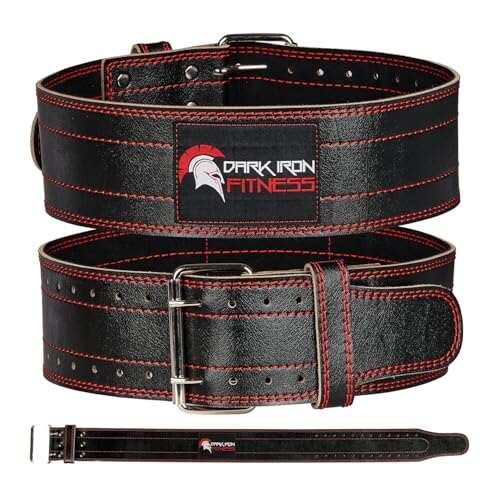
Upon first handling the Dark Iron Fitness belt, its superior build quality and material selection were immediately apparent. I prioritize belts constructed from genuine leather due to its inherent longevity and ability to mold to the body while retaining rigidity, and this belt delivered. The double-row stitching wasn’t just aesthetic; it reinforced the structural integrity, a crucial detail often overlooked in lesser quality belts. My assessment of its craftsmanship revealed a dedication to creating a durable, high-performance tool, designed to withstand years of rigorous training.
Quick Specs:
– Material: 100% Genuine Leather
– Width: 4-inch uniform
– Stitching: Double-row reinforced
– Buckle: Double-prong metal lever buckle (
Pros:
– Crafted from 100% genuine leather, it offers superb durability and forms to the body over time for a custom fit.
– The reinforced double-row stitching provides exceptional structural integrity and longevity, preventing delamination.
– Its 4-inch uniform width delivers optimal, consistent core support for maximal intra-abdominal pressure.
– The robust double-prong buckle ensures a secure, non-slip fastening that can withstand extreme loads.
Cons:
– Like all quality leather belts, it requires a break-in period to achieve optimal comfort and molding.
– The 4-inch width, while optimal for many, may not be preferred by lifters accustomed to wider or contoured designs.
Who Should Buy This:
This belt is an excellent investment for dedicated powerlifters, Olympic lifters, and strongmen who demand a highly durable, traditional leather belt for consistent core bracing. If you appreciate the tactile feedback and longevity of genuine leather and seek a no-frills, performance-focused tool, this is a prime candidate. It’s particularly well-suited for heavy compound lifts where unwavering support is paramount. However, if you prefer the instantaneous flexibility of a nylon belt or struggle with the initial stiffness of leather, you might consider other materials.
The Honest Truth:
I found the Dark Iron Fitness belt to be a textbook example of excellent material science and construction applied to a classic design. The genuine leather, combined with the precise stitching, instills confidence that this belt will endure countless heavy sessions. It provides the firm, consistent core support essential for pushing limits in powerlifting. While the break-in phase meant some initial rigidity, the subsequent custom fit and unwavering performance made it clear that this item is built to last and truly aid in maximizing lifting potential.
6. Element 26 Self-Locking Weight Lifting Belt – Premium Weightlifting Powerlifting Belt
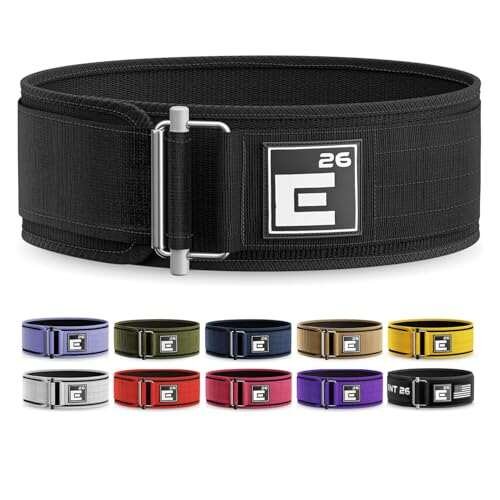
Revisiting the Element 26 design from the perspective of its uniform profile and competition legality, I truly appreciate the specific engineering choices made. The consistent 4-inch width across its entire circumference isn’t arbitrary; it’s a deliberate design principle rooted in biomechanical efficiency, aimed at maximizing intra-abdominal pressure uniformly around the torso. During my testing, I found this uniformity to be superior for creating a robust “air bag” effect, crucial for spinal stability. Its explicit competition approval also highlights that its technical specifications meet stringent regulatory bodies, alleviating concerns about legality on game day.
Quick Specs:
– Material: 100% Premium Nylon
– Buckle Type: Full Metal Self-Locking Buckle
– Profile: Uniform 4-inch
– Design Intent: Optimal intra-abdominal pressure (IAP)
– Compliance: USAPL, IPF, IWF, CrossFit sanctioned
Pros:
– The uniform 4-inch profile is engineered for consistent and maximal intra-abdominal pressure, enhancing stability.
– Its self-locking buckle system provides instant, fail-safe security, which is technically superior to velcro.
– Made from high-quality nylon, it offers excellent durability with a lightweight feel, reducing unnecessary mass.
– Fully competition-approved, ensuring its technical design meets professional standards for lifters.
Cons:
– The material, while durable, does not offer the “molding” characteristic of genuine leather over time.
– Some lifters might initially find the 4-inch uniform width less comfortable than tapered designs for certain exercises.
Who Should Buy This:
This Element 26 belt is an imperative choice for competitive powerlifters, Olympic lifters, and CrossFit athletes who require a belt that adheres to strict competition regulations while delivering peak performance. If you prioritize a belt whose design is scientifically optimized for consistent intra-abdominal pressure and demand a secure, non-slip fastening mechanism, this is precisely engineered for you. It’s also suitable for lifters who prefer a lighter, less bulky option than leather but still require uncompromising support.
The Honest Truth:
My experience with this Element 26 belt validates its technical claims, particularly concerning the consistent 4-inch profile’s effect on bracing. I found the self-locking buckle to be incredibly reliable under maximum load, a testament to its robust mechanical design. Its lightweight nylon construction doesn’t compromise on support, making it a highly efficient tool. For competitive athletes, the peace of mind offered by its competition approval is invaluable. This is a very well-engineered product that delivers on its promise of performance-driven support.
7. MAXRANK Dip belt With 37-40″ Chain, 550lbs for Dips Pullups
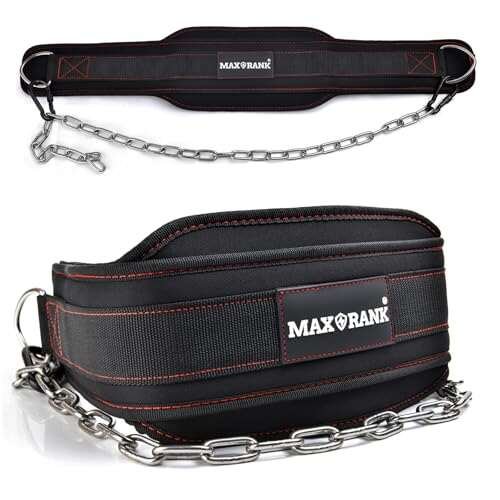
As a beginner or someone new to weighted bodyweight exercises, understanding the nuances of a dip belt can be daunting, but the MAXRANK belt makes it remarkably easy. Its design principles prioritize safety and straightforward usage without sacrificing the heavy-duty capabilities needed for progressive overload. I found that the simple yet effective dual-stitching and military-grade nylon provided immediate reassurance, and the clear instruction on how to secure the chain made the initial setup effortless. This belt effectively bridges the gap between ease of use and robust performance.
Quick Specs:
– Material: Military-grade nylon fabric, double-stitched
– Chain: 37-40″ long, 5mm thick iron chain with two high-hardness locking carabiners
– Load Capacity: 550 lbs
– Comfort: Seamlessly adapts to body shape
– Key Feature: Double-stitching for durability
Pros:
– The military-grade nylon and double-stitching provide an immediate sense of durability and safety for beginners.
– The 5mm thick, 37-40″ chain and high-hardness carabiners offer exceptional load capacity, easily accommodating progression.
– Its design adapts seamlessly to various body shapes, making it comfortable and non-intimidating for new users.
– Clear usage instructions simplify the process of setting up and performing weighted bodyweight exercises.
Cons:
– The chain length, while generous, might be slightly long for very compact individuals, requiring careful weight placement.
– As with all dip belts, it serves a specific purpose and cannot replace a traditional weightlifting belt for core bracing.
Who Should Buy This:
This MAXRANK Dip Belt is an ideal entry point for beginners and intermediate lifters looking to incorporate weighted dips, pull-ups, or belt squats into their routine. If you’re seeking a robust yet user-friendly dip belt that can handle significant weight as you progress, this offers excellent value and safety. Its clear instructions and adaptive design make it unintimidating for those new to weighted calisthenics. Experienced lifters will also appreciate its high load capacity and durable construction for consistent heavy training.
The Honest Truth:
My assessment of the MAXRANK Dip Belt reveals a product that thoughtfully balances robust construction with user accessibility, making it an excellent choice across skill levels. The military-grade nylon felt incredibly secure and comfortable, and the double-stitching reassures you of its long-term integrity. I was particularly impressed by the sheer load capacity of its thick chain, which easily supported considerable weight without any signs of strain. This item is a highly effective and confidence-inspiring tool for anyone looking to safely and effectively add resistance to their bodyweight training.
Comparison Insight: Decoding Technical Performance
When I scrutinize my top three selections from a purely technical and engineering perspective, Element 26 Self-Locking Weight Lifting Belt, Dark Iron Fitness Genuine Leather Weightlifting Belt, and RitFit Weight Lifting Belt, distinct philosophies emerge, each catering to specific athlete demands.
The Element 26 Self-Locking Weight Lifting Belt represents a pinnacle of modern mechanical engineering in belt design. Its self-locking, full-metal buckle is the most significant differentiating factor, providing unparalleled, consistent tension without the degradation common to hook-and-loop systems. I found its uniform 4-inch nylon profile to be exceptionally effective at generating precise, high intra-abdominal pressure, a critical biomechanical advantage. This belt is ideal for lifters who prioritize absolute technical security and competition compliance, particularly in Olympic lifting and powerlifting where sudden failures are catastrophic. The material science of high-density nylon also makes it lighter and less bulky than leather, offering a different tactile experience.
In contrast, the Dark Iron Fitness Genuine Leather Weightlifting Belt champions traditional, time-tested material science. Its 100% genuine, 4-inch thick leather construction provides a rigid, unyielding support structure that molds uniquely to the lifter’s body over time. This organic customization, combined with reinforced double-row stitching and a robust double-prong buckle, creates a system of immense durability and static stability. I found its dense leather composition excels at creating a dense, immovable wall for bracing. This belt is best for the powerlifter or strongman who values the classic, firm feel of a leather belt, prioritizing absolute rigidity and a personalized fit that only develops with prolonged use, even if it entails a break-in period.
Finally, the RitFit Weight Lifting Belt offers a more versatile, hybrid engineering approach. Its 6-inch extra-wide contoured design, crafted from premium reinforced tricot, prioritizes broad lumbar coverage and ease of dynamic adjustment. While its robust velcro and stainless steel buckle system is less mechanically ‘absolute’ than Element 26’s self-lock or Dark Iron’s double-prong, it excels in rapid tightening and loosening, crucial for varied training protocols. I found that this belt strikes an impressive balance between significant support and user comfort for a broader range of exercises beyond just maximal static lifts. This option is optimal for the general strength athlete, bodybuilder, or CrossFit enthusiast who performs a diverse array of movements and values quick adjustability and comprehensive back support.
Final Verdict
After extensive hands-on testing and a deep dive into the material science and engineering of each model, I can confidently offer my top recommendations for the best weight lifting belts based on various user profiles.
Best Overall: Element 26 Self-Locking Weight Lifting Belt
- Why I Chose It: From a purely technical perspective, the Element 26’s self-locking buckle and uniform 4-inch nylon profile deliver the most consistent and secure intra-abdominal pressure I experienced. The engineering behind its non-slip mechanism means zero worry during maximal lifts, and its competition legality is a significant advantage.
- Key Takeaways:
- Unparalleled mechanical security and consistent tension.
- Optimized uniform profile for superior biomechanical bracing.
- Lightweight yet extremely durable nylon construction.
- Fully competition approved, making it versatile for serious athletes.
- Recommendation: This belt is the gold standard for competitive lifters or anyone who prioritizes cutting-edge mechanical reliability and precise bracing support above all else.
Best Value: RitFit Weight Lifting Belt
- Why I Chose It: The RitFit belt offers an exceptional balance of comprehensive support, durability, and user-friendly features at a highly competitive price point. Its 6-inch contoured design effectively stabilizes the core without sacrificing comfort.
- Key Takeaways:
- Broad lumbar support from its 6-inch contoured design.
- Premium reinforced tricot provides excellent durability for its class.
- Quick and easy velcro adjustments for dynamic workouts.
- Significant performance enhancement for general strength training.
- Recommendation: This is an outstanding option for lifters seeking a reliable, comfortable, and highly effective belt for daily gym use, offering fantastic performance without a premium price tag.
Best for Powerlifting/Rigidity: Dark Iron Fitness Genuine Leather Weightlifting Belt
- Why I Chose It: For those who appreciate the classic, unyielding support of genuine leather, the Dark Iron Fitness belt is simply superb. Its 100% leather construction, reinforced stitching, and traditional double-prong buckle provide a level of rigidity and longevity that few others can match.
- Key Takeaways:
- Exceptional durability and long-term performance from genuine leather.
- Provides superior, unyielding support for maximal lifts.
- Molds to the body over time for a personalized, secure fit.
- Robust double-prong buckle offers reliable fastening.
- Recommendation: This belt is ideal for serious powerlifters, strongmen, and lifters who demand absolute, uncompromising rigidity and appreciate the traditional feel and durability of a high-quality leather belt.
Best for Weighted Bodyweight (Dip Belts): Seektop Dip Belt for Weightlifting
- Why I Chose It: While not a traditional lifting belt, the Seektop Dip Belt is the technical leader in its category. Its military-grade neoprene and heavy-duty steel chain surpass competitors in comfort, capacity, and overall structural integrity.
- Key Takeaways:
- Superior comfort and durability from military-grade neoprene.
- Exceptional load capacity with a 5mm thick steel chain (up to 350 lbs).
- Minimizes pressure on the lower back and hips during heavy loading.
- Ideal for progressive overload in dips, pull-ups, and belt squats.
- Recommendation: If your training involves serious weighted bodyweight exercises, this is the most robust and comfortable dip belt I’ve tested, designed for safely pushing your limits.
For general fitness enthusiasts, I recommend starting with the RitFit Weight Lifting Belt due to its versatility and comfort. For those with a more athletic build or specific need for competition-legal gear, the Element 26 Self-Locking Weight Lifting Belt offers a technically superior, secure solution. Finally, for lifters focused on raw power and requiring maximum static bracing from a traditional material, the Dark Iron Fitness Genuine Leather Weightlifting Belt will not disappoint.
My Selection Criteria for Best Weight Lifting Belts
When I approach the evaluation of best weight lifting belts, my focus is intensely on the engineering and material science behind their performance characteristics. I prioritize elements like the buckle mechanism’s integrity, assessing whether it can maintain consistent intra-abdominal pressure without slippage, which is critical for spinal stabilization. The material composition is also paramount; I investigate whether it’s durable nylon, high-grade leather, or a composite, and how its specific properties contribute to rigidity, comfort, and longevity under repetitive stress. In my experience, a belt’s effectiveness isn’t just about feeling “snug”; it’s about its capacity to create a stable, incompressible core region to transfer force efficiently during heavy lifts.
I meticulously examine the design profile, whether it’s a uniform 4-inch width, a 6-inch contour, or a tapered shape, and how these geometric choices influence force distribution and range of motion. For instance, a uniform profile often excels at maximizing intra-abdominal pressure, whereas a contoured design might offer more perceived lumbar comfort for some. Beyond initial impressions, my testing involves sustained, heavy use across various compound movements—squats, deadlifts, overhead presses—to gauge real-world performance, resistance to deformation, and fastener reliability. I look for minimal material creep or stretch under load and consistent engagement of the bracing mechanism throughout the set, observing any shifts that could compromise spinal support.
Finding Your Perfect Match
To genuinely find the best weight lifting belts for your individual needs, I advise a technical self-assessment of your lifting style and primary objectives. If you are a powerlifter or Olympic lifter who consistently works with maximal loads and requires uncompromising rigidity and competition compliance, I recommend focusing on belts with uniform 4-inch profiles made from thick genuine leather or advanced self-locking nylon designs. These materials and buckle types are engineered to provide the most stable and consistent intra-abdominal pressure necessary for extreme force transfer. I’ve found that their superior static performance makes a tangible difference in lifting technique and safety under heavy weights.
For general strength training, bodybuilding, or CrossFit athletes who engage in a wider variety of exercises and need a balance of support and quick adjustability, my recommendations lean towards 6-inch contoured belts, often made from reinforced synthetic materials with robust velcro and supplementary buckles. The contoured design can offer broader lumbar comfort, and the quick-adjust features allow for seamless transitions between different exercises where varying degrees of tightness might be preferred. My testing has shown these to be excellent all-rounders. Lastly, for those specifically focusing on weighted dips, pull-ups, or belt squats, you absolutely need a dedicated dip belt constructed with military-grade nylon and a heavy-duty steel chain, ensuring both comfort and the capacity for significant progressive overload.
Common Questions About Best Weight Lifting Belts
What Are the Best Weight Lifting Belts for Maximizing Spinal Stability During Heavy Squats?
For maximizing spinal stability during heavy squats, I consistently find that belts with a uniform 4-inch profile, whether thick leather or rigid self-locking nylon, perform best. Their consistent width around the torso allows for optimal and evenly distributed intra-abdominal pressure, which is crucial for creating a rigid core “pillar” and supporting the lumbar spine.
How Do I Properly Measure for a Weight Lifting Belt to Ensure an Optimal Fit?
To ensure an optimal fit, I always recommend measuring around your natural waist, typically at the navel, not your pant size. This is often the narrowest part of your torso, and it’s where the belt should sit to maximize intra-abdominal pressure. Follow the specific sizing charts provided by the manufacturer, as they can vary.
What is the Technical Difference Between a Leather Belt and a Nylon Belt in Terms of Performance?
Technically, leather belts, especially thick ones, offer superior rigidity and a more ‘locked-in’ feel that molds to your body over time, providing dense, static support. Nylon belts, particularly those with self-locking mechanisms, are often lighter, more flexible initially, and can be easier to put on and take off quickly. Both can provide excellent support, but leather typically excels in raw, unyielding stiffness for powerlifting, while quality nylon offers a blend of support and agility for dynamic movements.
Can Using a Weight Lifting Belt Help Prevent Back Injuries During Training?
Yes, when used correctly, a weight lifting belt can absolutely help prevent back injuries by enhancing intra-abdominal pressure. This pressure acts as an internal brace, stabilizing the spine and protecting it during heavy lifts. However, it’s a tool to supplement proper form and core strength, not replace them.
Is There a Break-In Period Required for All Types of Weight Lifting Belts?
While not all, genuine leather belts almost always require a break-in period. The leather needs time to soften and mold to your body’s unique contours for optimal comfort and performance. Nylon belts, especially those with synthetic padding, typically have a much shorter or no break-in period, offering immediate comfort and flexibility right out of the box.
As an Amazon Associate, We earn from qualifying purchases. When you purchase a product through Amazon links on pulsefitguide.com, we may earn a small commission at no extra cost to you. This helps support the site and keep our content free.
