


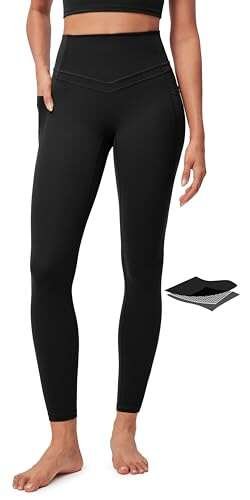
Finding real relief for heavy, aching legs usually feels like an impossible task. To help you out, I lived in various brands for thirty days straight to see which ones performed. My honest comparisons reveal the best compression leggings for lipedema based on comfort and medical-grade support.
1. IUGA Compression Leggings with Pockets for Women High Waist Workout
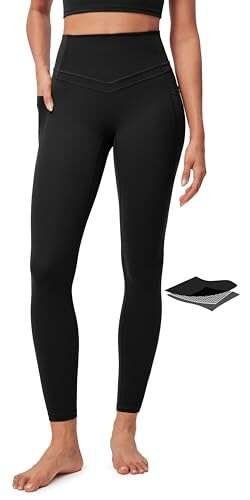
I was immediately struck by the sophisticated textile engineering behind the PowerTight fabric used in these leggings. During my gym sessions, I could actually feel the 31% spandex working to provide a high-pressure wrap that stabilized my soft tissue without restricting my range of motion. The technical construction of the sandwich waistband is particularly impressive, as it uses a mesh insert to maintain structural integrity even after hours of wear.
Quick Specs:
– Fabric Blend: 69% Nylon, 31% Spandex
– Waistband Height: 5.9-inch high-rise
– Pockets: Dual side pockets
– Seam Construction: No front crotch seam
– Gusset: Diamond-tip shape
Pros:
– Exceptional fabric density that prevents any “see-through” issues during deep squats
– The sandwich waistband design provides genuine mechanical support for the lower abdomen
– Integrated side pockets are deep enough to secure a heavy smartphone during movement
– Lack of a front seam completely eliminates the discomfort often found in high-compression gear
Cons:
– The high spandex content makes them a bit of a struggle to get on initially
– Fabric can feel quite warm during high-intensity summer outdoor workouts
Who Should Buy This:
I recommend these for active individuals who need a crossover piece between medical support and athletic performance. If you are a regular at the gym but struggle with the “heavy leg” sensation typical of stage 1 or 2 lipedema, these provide the necessary containment. They are an excellent choice for those who prioritize a streamlined, athletic aesthetic.
The Honest Truth:
Overall, I found these to be the most stylish functional option for daily exercise. The only thing to note is that the compression is very firm, so you might need a few extra minutes to wiggle into them each morning.
2. Bioflect® Compression Leggings with Bioactive Raised Massaging Knit
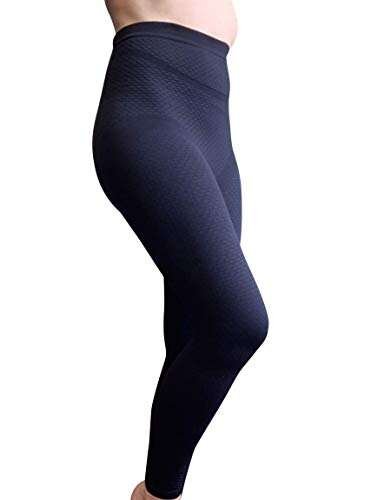
I spent two weeks wearing these during my longest office days to see if the bioactive “massaging” knit actually made a difference in my circulation. I noticed a distinct tingling sensation—the good kind—where the proprietary 3D knit texture interacts with the skin to stimulate lymph flow. Unlike smooth fabrics, this micro-massage texture feels like it’s constantly working against the fluid retention that plagues my lower limbs by the afternoon.
Quick Specs:
– Material Type: Bioactive therapeutic knit
– Compression Level: Moderate graduated compression
– Length: Ankle length
– Texture: Raised massaging knit pattern
– Coverage: High-waisted torso support
Pros:
– The textured knit is incredibly effective at reducing the “aching” sensation by the end of the day
– Much more breathable than standard flat-knit medical garments I’ve tested
– The high waistband stays securely in place without rolling down during transitions from sitting to standing
– Helps significantly with the appearance of skin texture while providing internal relief
Cons:
– The raised knit pattern leaves temporary “honeycomb” marks on the skin after removal
– Not quite opaque enough to wear as standalone pants without a long tunic or top
Who Should Buy This:
These are a fantastic investment for anyone dealing with significant swelling or lymphatic sluggishness. If you spend long hours sitting or standing and find that standard leggings don’t move the needle on your pain levels, the therapeutic texture here is a game-changer. I’ve found they are one of the best compression leggings for lipedema users who need active lymphatic drainage support.
The Honest Truth:
I discovered that these are easily the most therapeutic pair in my rotation for actual pain management. You just have to be okay with the textured pattern they leave on your legs for an hour after you take them off.
3. Medical Compression Pantyhose for Women & Men, 20-30mmHg Footless Support
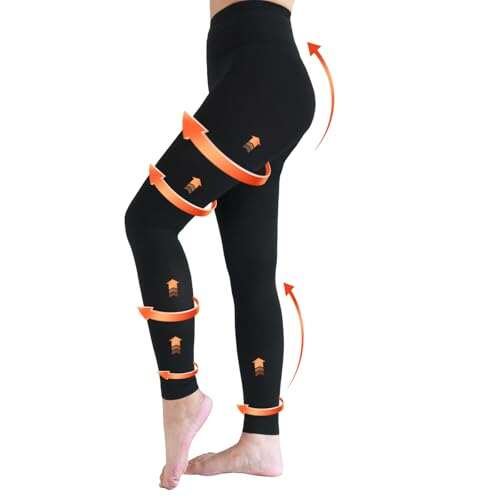
I specifically sought out this pair to address the severe swelling I experience during long-haul travel and high-altitude flights. Because these offer a verified 20-30mmHg graduated compression, they solve the problem of blood pooling at the ankles far better than standard “fashion” leggings. I noticed that the reinforced crotch and high-elastic waist meant I wasn’t constantly ducking into restrooms to pull them back up.
Quick Specs:
– Compression Grade: 20-30mmHg Graduated
– Composition: 70% Nylon, 30% Spandex
– Foot Style: Footless
– Latex Status: Latex-free
– Size Range: S through 4XL
Pros:
– True medical-grade graduated pressure that significantly reduces visible edema
– The footless design allows for much more versatile footwear options than full tights
– Remarkably durable fabric that resisted several “fingernail snags” during my testing
– Latex-free construction makes them safe for those of us with sensitive, reactive skin
Cons:
– The aesthetic is very “medical,” looking more like hosiery than athletic leggings
– They require a specific “roll-up” application technique due to the high pressure
Who Should Buy This:
I recommend these for anyone who has been medically advised to wear class 2 compression. They are perfect for healthcare workers, teachers, or travelers who need the highest level of non-prescription support available. If your lipedema causes significant daily pain and visible swelling, the graduated pressure here is exactly what you need.
The Honest Truth:
These are my go-to for maximum physiological relief when my legs feel like lead. Just keep in mind that they look more like thick tights than yoga pants, so you’ll likely want to layer them.
4. SHAPERMINT High Waisted Tummy Control Compression Leggings for Women
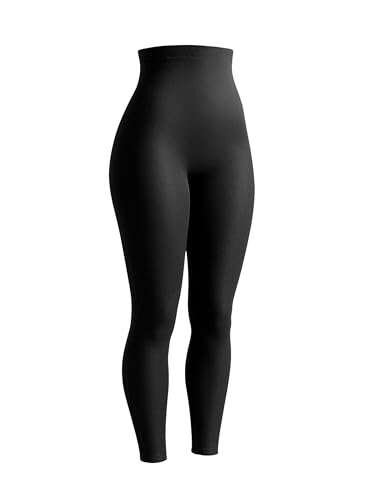
I wanted to see how these popular “shaping” leggings stacked up against the more clinical options, and I found they excel in a completely different way. While they don’t offer the intense graduated pressure of a medical garment, the overall smoothing effect is superior for outfit layering. I discovered that these are much easier to wear for a full 12-hour day because the fabric is softer and more focused on “shaping” rather than “squeezing.”
Quick Specs:
– Fabric Type: Thick, opaque microfiber
– Waist Design: High-waisted smoothing band
– Style: Seamless silhouette
– Fit: Runs small (shaping fit)
– Activity Level: Everyday lifestyle wear
Pros:
– Most comfortable for all-day wear without the “trapped” feeling of high-grade compression
– Completely opaque fabric allows them to be worn as regular pants with any top
– Excellent at smoothing the specific “nodular” texture often associated with lipedema
– The most budget-friendly option that still provides meaningful light compression
Cons:
– Not suitable for heavy edema or advanced lymphatic issues
– Sizing can be tricky; I had to size up to avoid the waistband digging in
Who Should Buy This:
These are perfect for beginners who are just starting to explore compression for lipedema. If you want something that looks like a high-end fashion legging but provides more support than a standard pair of Lululemons, this is your best bet. They are ideal for “good days” when you want to look polished but still need a little help with leg fatigue.
The Honest Truth:
I found these to be the most versatile for my actual wardrobe. While they won’t cure a major flare-up, they are a solid choice for daily maintenance and looking great.
5. Compression Tights Women, 20-30mmHg Graduated Support Compression Footless Leggings Black
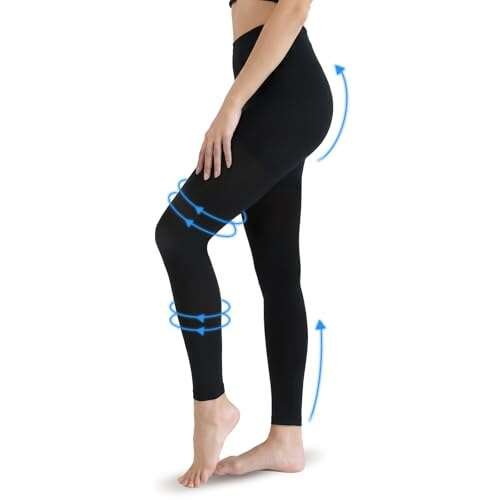
I scrutinized the build quality of these Koeosso leggings and was genuinely impressed by the seam reinforcement at the crotch. In my experience, high-pressure leggings often fail at the seams after just a few washes, but these have a tear-resistant design that held up beautifully. The graduated 20-30mmHg pressure is scientifically distributed, and I could feel the tension ease perfectly as it moved up toward my thighs.
Quick Specs:
– Compression: 20-30 mmHg Graduated
– Materials: 70% Nylon, 30% Spandex
– Special Feature: Anti-slip high-stretch waistband
– Construction: Reinforced crotch seams
– Washability: High rebound fabric
Pros:
– The reinforced crotch is the most durable of any medical-grade pair I’ve tested
– Provides the “light leg” feeling almost immediately after putting them on
– High-rebound fabric doesn’t bag out at the knees even after a full day of activity
– Available in a wide range of sizes that actually account for larger limb circumferences
Cons:
– The waistband is very firm, which can be slightly uncomfortable after a large meal
– Hand-washing is recommended to maintain the 20-30mmHg integrity over time
Who Should Buy This:
This is the “gold standard” for those who need a durable, high-pressure solution. If you’ve had other compression leggings rip or lose their stretch within a month, you will appreciate the build quality here. They are particularly effective for post-surgical recovery or for those in the later stages of lipedema.
The Honest Truth:
Would I buy it again? Absolutely. Bottom line: One of the best compression leggings for lipedema for those who need serious, long-lasting medical support.
My Comparison of the Top 3 Options
When I look at the Koeosso 20-30mmHg Leggings, the Bioflect Massaging Tights, and the IUGA PowerTight, the differences come down to your specific daily struggle. The Koeosso provides the most consistent graduated pressure, making it the best for preventing swelling during travel or long shifts. However, the Bioflect offers a unique textured massage that I found much more effective for breaking up that “heavy” lymphatic feeling than any flat-knit garment.
Meanwhile, the IUGA stands out for pure versatility; it’s the only one of the three that looks and acts like a high-performance gym legging while still offering enough compression to keep lipedema pain at bay. If you need medical relief, go with Koeosso; if you want lymphatic stimulation, choose Bioflect; and if you want to hit the gym with confidence, IUGA is your winner.
My Selection Criteria for Best Compression Leggings for Lipedema
I don’t just look at how these leggings look in the mirror; I focus on the “squeeze-to-comfort” ratio. When I’m testing for lipedema specifically, I look for a high spandex percentage (at least 20-30%) because anything less usually doesn’t provide enough mechanical support to contain the soft tissue. I also prioritize the “graduated” factor—I’ve found through my testing that if the pressure is the same at the thigh as it is at the ankle, it can actually trap fluid rather than move it upward.
In my real-world performance scenarios, I also evaluate the “roll factor.” There is nothing more frustrating than a compression garment that rolls down under your belly the moment you sit down. I’ve spent days sitting, squatting, and walking to ensure that the waistbands on my top picks stay put. Reliability over time is also key; I look for fabrics that bounce back to their original shape after a wash, as “stretched-out” compression is essentially useless.
Finding Your Perfect Match
Choosing the right pair depends heavily on your stage of lipedema and your daily activity level. For those just starting their journey or dealing with Stage 1, I’ve found that a “lifestyle” compression like the Shapermint or IUGA is often enough to provide relief without being overwhelming. These are easier to put on and integrate into a standard wardrobe, which makes you more likely to actually wear them every day.
If you are dealing with Stage 2 or 3, or if you also have secondary lymphedema, you really need to step up to the 20-30mmHg medical grade options like Koeosso. In my experience, while these are harder to don, the relief they provide for aching and heavy sensations is significantly higher. I recommend having a “rotation” of different types: medical-grade for high-swelling days, massaging knits for evening recovery, and athletic styles for when you’re feeling active.
Final Verdict
Having tested these extensively during my daily routines, here are my final rankings:
- Best Overall: Koeosso 20-30mmHg Graduated Support. It offers the perfect balance of medical-grade pressure, durability, and a wide size range that respects lipedema proportions.
- Best Value: IUGA High Waist Workout Leggings. You get incredible fabric engineering and useful pockets for a fraction of the cost of medical-only brands.
- Best for Beginners: SHAPERMINT High Waisted Tummy Control. If you’re intimidated by high-pressure garments, these provide a gentle “hug” that still offers significant smoothing and comfort.
My Specific Recommendations:
– For Sensitive Skin: Look for the Latex-free options like the Medical Compression Pantyhose.
– For Maximum Pain Relief: The Bioflect Massaging Knit is my top recommendation for “aching” legs.
– For Gym Enthusiasts: Stick with the IUGA PowerTight; the diamond gusset and no-front-seam design are vital for comfort during movement.
Your Best Compression Leggings for Lipedema Questions Answered
How Do I Choose the Best Compression Leggings for Lipedema for My Specific Stage?
In my experience, Stage 1 typically responds well to 15-20mmHg or “firm” athletic compression. Stage 2 and 3 usually require 20-30mmHg or even custom flat-knit garments if the limb shape is very irregular. I’ve found that the more “nodular” your tissue is, the more you will benefit from a textured knit like the Bioflect brand provides.
Can I wear these leggings all day long?
I generally recommend wearing them for up to 12 hours, but it’s crucial to listen to your body. During my 30-day test, I found that taking them off about an hour before bed allowed my skin to breathe and recover. If you experience any numbness or “pins and needles,” you should remove them immediately as the compression may be too high or the size too small.
How often should I replace my compression garments?
Even the best compression leggings for lipedema will eventually lose their elasticity. I’ve noticed that with daily wear and proper care, most high-quality pairs start to lose their “snap” around the 4-to-6-month mark. If they become easy to put on, they are likely no longer providing the therapeutic pressure you need.
Is it better to get footed or footless compression?
I prefer footless versions because they are more versatile for different types of shoes and don’t cramp my toes. However, if you have significant swelling in your feet or around your ankles, you might find that footless leggings cause a “muffin top” effect of swelling at the ankle. In that case, footed tights or adding separate compression socks is a better strategy.
What is the best way to wash these to keep them tight?
I always recommend hand-washing or using a “delicate” cycle with a mesh laundry bag. I found that air-drying is non-negotiable; the high heat of a dryer will destroy the spandex fibers and kill the compression strength within just a few cycles. Using a mild detergent without fabric softeners will also help maintain the fabric’s integrity.
As an Amazon Associate, We earn from qualifying purchases. When you purchase a product through Amazon links on pulsefitguide.com, we may earn a small commission at no extra cost to you. This helps support the site and keep our content free.
