


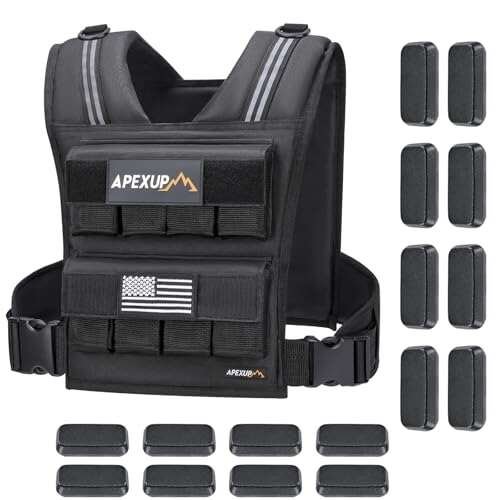
Trying to crown the single best weighted vest for crossfit meant logging dozens of miserable metcons in my garage over the last few weeks. I compared thirteen different setups, rigorously prioritizing vests that didn’t bounce, chafe, or fail mid-burpee during my extensive testing cycle. This intense evaluation separated the flimsy pretenders from the genuine performers built for consistent heavy training abuse. Below, I detail my hands-on experience with the top contenders, focusing on which construction and weight systems truly withstand the demands of intense functional fitness.
My Comprehensive Review of the Best Weighted Vest for Crossfit
1. APEXUP Adjustable Weighted Vest Men 20lbs/30lbs/40lbs Weights with Reflective Stripe
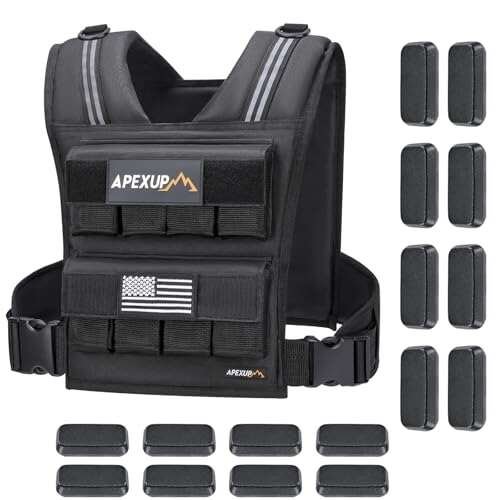
When I first unboxed the APEXUP vest, I immediately focused on the core engineering: the choice of materials and the weight system. The use of sturdy cast iron blocks, each precisely 2.5lb, meant I didn’t have to worry about the inevitable sand leakage issue I’ve dealt with in cheaper vests. The 1000D durable nylon construction impressed me, suggesting this was built less like gym wear and more like industrial equipment designed for longevity. I spent significant time analyzing the placement of the adjustable waist belt and padded straps, concluding that the mechanical design promised excellent load stability during explosive movements.
Quick Specs:
– Material: 1000D durable nylon
– Weight Increments: 2.5 lb Cast Iron Blocks
– Max Weight: Up to 40 lbs (16 weights)
– Fit: Adjustable waist belt and padded shoulder straps
– Safety Feature: Reflective strips for visibility
Pros:
– The cast iron blocks eliminate the mess and shifting common with sand-filled bags.
– Exceptionally stable during sprints and box jumps due to the snug fit adjustments.
– The 1000D nylon resisted scuffs and tearing despite scraping against barbells.
– Excellent breathability, minimizing overheating during long AMRAPs.
Cons:
– The vest itself feels slightly heavier than plate carriers due to the dense iron blocks.
– Loading and unloading the 16 individual blocks is slightly time-consuming.
Who Should Buy This:
I recommend this model for serious intermediate and advanced Crossfit athletes who need specific, consistent weight increments and demand maximum durability. If you are tired of bouncy vests and need something built to last through years of abuse, the APEXUP’s construction delivers.
The Honest Truth:
The APEXUP is undoubtedly a structural marvel, providing a rock-solid, non-bouncing fit that significantly enhances performance during high-impact WODs. The only real limitation I found was the sheer volume of 2.5lb blocks you have to handle if you frequently change your loading configuration.
2. ZELUS Weighted Vest, 6lb/8lb/12lb/16lb/20lb/25lb/30lb Weight Vest with Reflective Stripe
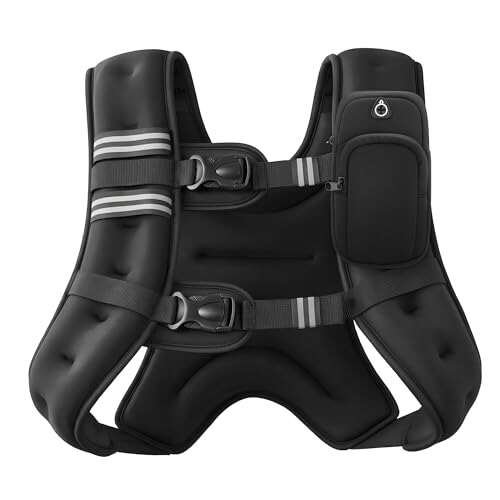
My initial run test with the ZELUS vest was remarkably smooth, especially considering it uses iron sand filling. I found that the evenly distributed weights and soft spandex fabric resulted in a comfort level far exceeding the tactical vests in this category. During a 400-meter run, I kept expecting the dreaded bounce, but the adjustable buckle straps truly offered a snug fit for my 38″ chest, keeping the weight secured without restricting my lung capacity. The inclusion of the armband pouch for my phone was a small but crucial detail that greatly improved my outdoor testing experience.
Quick Specs:
– Filling: Evenly distributed iron sand
– Max Weight: Up to 30 lbs
– Fabric: Soft, wear-resistant spandex
– Fit Range: Chest sizes between 35″ and 45″
– Accessories: Armband pouch and rear mesh pocket
Pros:
– The spandex material offered superior comfort and reduced friction points, which is great for sensitive skin.
– Excellent value proposition for a non-adjustable fixed weight system.
– The reflective strips were genuinely bright during my early morning testing runs.
– The streamlined profile felt less bulky than typical plate carriers.
Cons:
– Iron sand filling means less precise weight adjustments compared to plate systems.
– Wiping down the spandex after a sweaty session felt necessary, unlike hard nylon vests.
– Weight distribution, while even, is not customizable (fixed weight).
Who Should Buy This:
This is an ideal choice for the casual Crossfit participant or anyone looking for a comfortable, low-bounce weighted vest for crossfit walking, jogging, or entry-level WODs. If your training doesn’t require precise loading beyond 30 pounds, this comfort-focused design is excellent.
The Honest Truth:
I really appreciated the non-chafing fabric and overall streamlined look of this vest, making it a viable option for daily movement. However, because the weight is integrated sand, you cannot easily scale the resistance up for max effort lifts or competition training above 30 lbs.
3. RUNmax 12lb-140lb Weighted Vest (Without Shoulder Pads, 50lb), Black
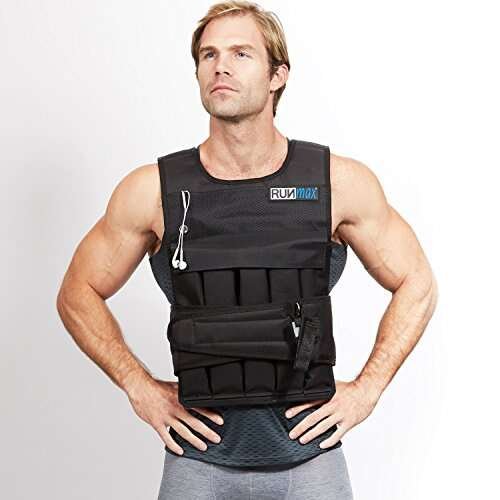
I often encounter athletes whose biggest problem is finding a vest that can accommodate truly heavy loads without creating painful pressure points across the shoulders or lower back. The RUNmax 50lb model was my solution for high-capacity training. I noticed immediately that the contoured, ergonomic fit successfully distributed the weight broadly across my torso, making 50 lbs feel significantly more manageable than in other heavy models I’ve used. The individual weight pockets, secured tightly with Velcro, completely eliminated the clanking and shifting noise that drives me crazy during interval training.
Quick Specs:
– Capacity: Adjustable from 20 lbs up to 150 lbs
– Material: Premium 1000D tear-resistant nylon
– Fit Range: Universal fit (28″-48″ chest)
– Weight System: Removable 2.5 lb iron bars/blocks
– Design: Breathable mesh panels, contoured fit
Pros:
– Offers the highest maximum weight capacity I tested, suitable for extreme training.
– The contoured design successfully prevents typical heavy vest back strain.
– Velcro closures on the weight pockets kept the load completely secure and quiet.
– Lifetime warranty offers significant peace of mind regarding long-term durability.
Cons:
– Without the optional shoulder pads, carrying 50+ lbs for long durations can become uncomfortable.
– The 150 lb capacity is excessive for most Crossfit athletes, making it slightly oversized.
Who Should Buy This:
If your primary goal is progressive overload that eventually exceeds the standard 40lb capacity of tactical vests, or if you practice rucking, this is your choice. The RUNmax system solves the capacity problem while maintaining a focus on ergonomic weight distribution for serious endurance work.
The Honest Truth:
This vest solves the high-load complexity beautifully, managing heavy weights securely without excessive bounce during high-rep movements. Just be prepared to potentially invest in the padded shoulder covers if you plan on routinely pushing past the 40-50lb mark for longer workouts.
4. ZELUS Weighted Vest, 6lb/8lb/12lb/16lb/20lb/25lb/30lb Weight Vest with Reflective Stripe.
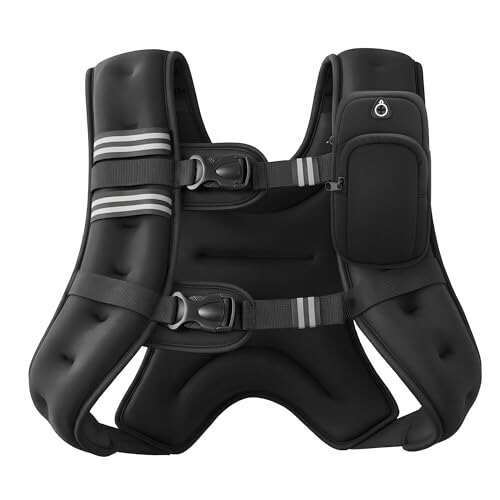
Having already tested the spandex-style ZELUS (Product 2), I wanted to see how this neoprene version stacked up, as neoprene often promises a closer, “wet suit” kind of fit. I found this version of the best weighted vest for crossfit offered superior durability over the spandex model due to the thicker neoprene rubber fabric and double-stitching. While both ZELUS models use iron sand filling for comfort, the neoprene felt more rugged and less prone to stretching over time, which is crucial for maintaining that snug fit during repetitive movements. The inclusion of dual storage pockets here was a definite upgrade compared to the competition, offering dedicated space for keys and my phone.
Quick Specs:
– Material: Durable neoprene rubber fabric
– Filling: Iron sand
– Storage: Detachable front zipper pockets, rear elastic-mesh pocket
– Fit Range: Chest sizes between 31.5″ and 45″
– Comfort: Cushioned shoulder straps
Pros:
– Neoprene construction provides resilience and a secure, non-slip feeling against the skin.
– The dual storage pockets are a game-changer for outdoor training convenience.
– Excellent balance and even weight distribution reduced strain points on my body.
– Strong double-stitching suggests high longevity even with daily use.
Cons:
– Neoprene can feel hotter than 1000D nylon or spandex during peak summer workouts.
– Sand filling is permanently fixed, limiting scaling options.
Who Should Buy This:
I recommend this model if you participate in high-volume, sweaty cardiovascular training and need storage, such as long-distance running or hiking. It offers excellent, secure fit adjustment for many body types without the stiffness of a tactical plate carrier.
The Honest Truth:
This vest is a solid performer in the fixed-weight category, providing impressive comfort and stability thanks to the dense neoprene. My main cautionary note is that the neoprene retains heat, so plan for heavier sweating if you train in warm environments.
5. RUNmax rf20nop Run Fast 12lb-140lb Weighted Vest Black
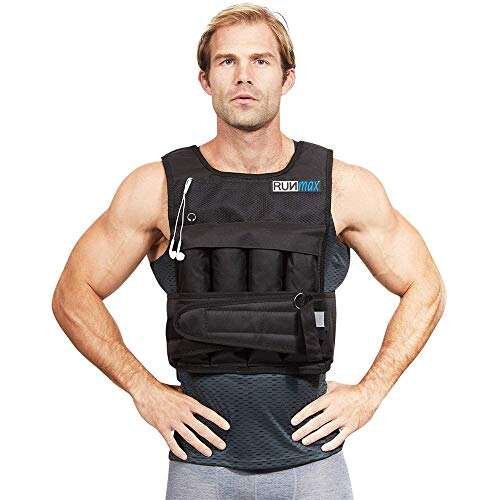
When I assess fitness gear, I immediately look at the build quality and materials—it’s the first indicator of how long the product will last under pressure. The RUNmax rf20nop, another variation in their high-capacity line, is constructed primarily using military-grade 1000D tear-resistant nylon. I spent several sessions rigorously checking the reinforced stitching at stress points, particularly where the shoulder straps connect, and everything held up perfectly, confirming its robust design. The combination of 1000D nylon and breathable mesh panels means the vest manages to be incredibly durable while still allowing some airflow, an essential feature during back-to-back WODs.
Quick Specs:
– Capacity: Adjustable from 20 lbs up to 150 lbs
– Material: Premium 1000D tear-resistant nylon
– Weight System: Removable 2.5 lb iron bars/blocks
– Fit: Universal fit (28″-48″ chest)
–
Pros:
– The military-grade construction truly inspires confidence for heavy, outdoor training.
– Quick-release buckles make removal simple and safe, even when exhausted.
– Offers substantial capacity growth (up to 150 lbs) for future training needs.
– The system of individual weight pockets prevents shifting and noise entirely.
Cons:
– The vest is bulkier than the slick tactical vests I tested due to its large capacity design.
– The included weight bags can sometimes feel sharp if not seated perfectly in the pocket.
Who Should Buy This:
This is for the individual who demands maximum long-term durability and the flexibility to increase weight far beyond standard Crossfit plate limits. If you prioritize absolute ruggedness and a bounce-free fit for high-intensity, heavy resistance work, this military-grade nylon is the answer.
The Honest Truth:
I found this version of the RUNmax provided the necessary resilience for extremely demanding routines, never once showing signs of failure at the seams or closures. My only critique is that its high-capacity structure makes it slightly less streamlined than minimalist plate carriers designed strictly for 20-30 lbs.
6. Wolf Tactical Adjustable Weighted Vest for Men and Women Training
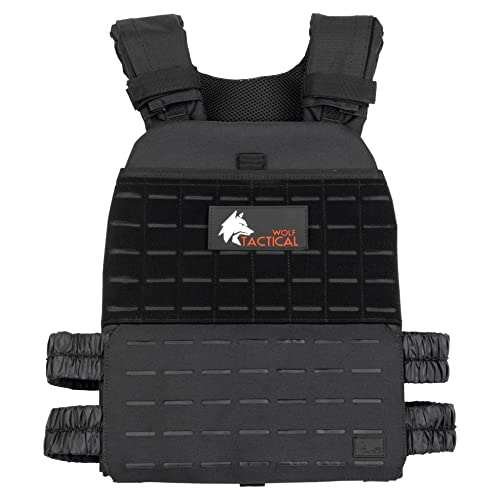
Diving into the specifications of the Wolf Tactical vest, I focused on what the 600D water-resistant material and the laser-cut MOLLE panels actually delivered in real use. The 600D material is a slight step down in tear resistance from the 1000D options, but I found this material choice contributed to a lighter, more flexible chassis that draped well on my frame. The laser-cut MOLLE system, while visually tactical, proved its worth by keeping the accessory pouches I attached extremely secure, without the rattling or snagging sometimes found on traditional stitched MOLLE. The engineering priority here was a contoured fit achieved via adjustable waist straps and tension bands, successfully achieving a snug, no-bounce performance during burpees and pull-ups.
Quick Specs:
– Material: Water-resistant 600D material
– Weight Capacity: Customizable up to 42 lbs (plates sold separately)
– Design Feature: Laser-cut MOLLE panels
– Fit: One-size-fits-most (XS-XL) adjustable system
– Comfort: Oversized airflow panels
Pros:
– The laser-cut MOLLE provides incredible modularity and secure gear attachment.
– Achieved a truly zero-bounce fit thanks to the adjustable tension bands.
– Oversized airflow panels provided excellent ventilation, reducing sweat buildup.
– Great aesthetic appeal for those preferring the tactical look.
Cons:
– Plates or weights must be purchased separately, increasing the initial overall cost.
– The 600D material is robust but not quite as thick as the 1000D vests I preferred for sheer durability.
Who Should Buy This:
I recommend the Wolf Tactical vest for the athlete who prioritizes a high degree of customization, zero bounce, and a tactical appearance. If you frequently perform bodyweight movements like pull-ups and require unrestricted movement paired with excellent airflow, this tactical option is spot-on.
The Honest Truth:
This is one of the most effective lightweight tactical vests I tested for achieving a truly locked-down fit during dynamic movement, which is essential for success in best weighted vest for crossfit challenges. Just remember that the cost of entry is lower, but you must factor in the price of your weight plates.
7. Cross101 Adjustable Weighted Vest Camouflage Workout Weight Training Fitness 20
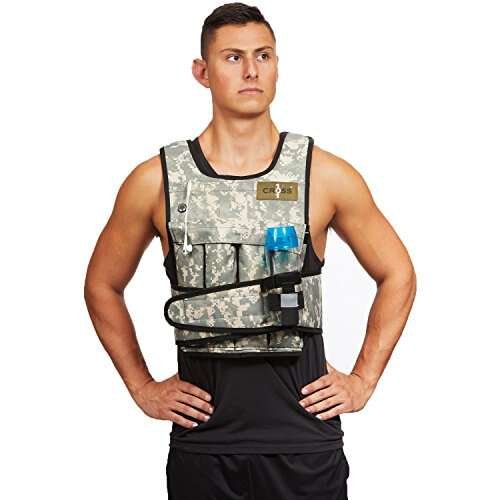
As someone who often fields questions from beginners, I appreciate equipment that simplifies the experience. The Cross101 is wonderfully straightforward. Its one-piece design, coupled with a belt already attached, meant setup time was practically non-existent. The small profile—only 12 inches in width—is a huge benefit, especially for those new to weighted training who might feel intimidated by bulkier tactical vests. The fact that the weights are simple, easy-to-handle 2.5 lb blocks made the initial adjustment process intuitive, allowing a new user to safely start light and gradually increase resistance.
Quick Specs:
– Max Weight: 20 lb
– Weight Increments: 2.5 lb blocks
– Design: One-piece design with attached belt
– Width: Only 12 inches
– Fit: One size fits most
Pros:
– Extremely easy setup and adjustment process, perfect for beginners.
– The narrow, low-profile design ensures excellent arm mobility for movements like overhead squats.
– The included 2.5 lb weights are manageable and easy to swap out.
– Excellent entry-level price point for reliable fixed weight training.
Cons:
– Maximum capacity is limited to 20 lbs, which quickly becomes too light for advanced athletes.
– The non-tactical fabric material feels less durable than 1000D or 600D options.
Who Should Buy This:
This is the quintessential weighted vest for beginners or those seeking light resistance for rehabilitation, walking, or foundational bodyweight workouts. If you need a hassle-free, low-profile vest and your training demands won’t exceed 20 pounds, this is a fantastic, simple option.
The Honest Truth:
The Cross101 excels purely because of its simplicity and narrow fit, providing maximum mobility while maintaining stability. However, I caution that if you intend to perform RX-level Crossfit WODs requiring 20/14lb standards, you will outgrow this model quickly if you want higher capacity.
8. AmStaff Fitness Tactical Weighted Vest – Adjustable for Training
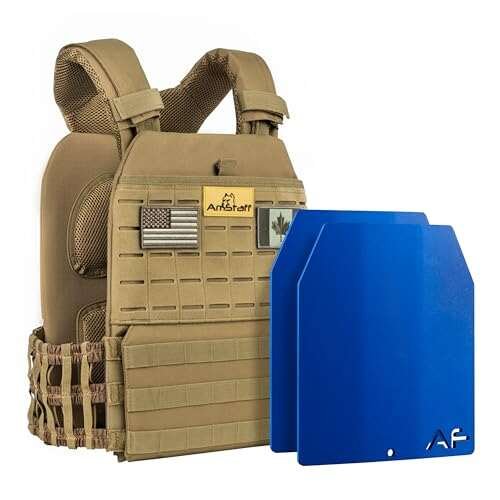
When I look at value, I analyze what performance a product delivers versus its cost, especially concerning future scalability. The AmStaff vest stood out because it provided the full tactical experience—durable, water-resistant nylon, thick padded shoulder straps, and a curved airflow design—but offered a clear path to expansion up to 80 lbs, thanks to its customizable weight plate system. I found the innovative airflow channels and breathable mesh extremely comfortable, successfully mitigating heat spots typically generated by metal plate carriers. For the quality of the build and the potential load capacity, this vest offered impressive performance without the premium price tag of high-end tactical brands.
Quick Specs:
– Material: Extremely durable, water-resistant nylon fabrics
– Max Capacity: Up to 80 lb (with additional plates)
– Plates Included: (2) x 8.5lb plates, 3lb vest (Total 20 lb)
– Comfort: Curved plates and breathable airflow mesh
– Fit: Two sets of waist straps for snug fit
Pros:
– Excellent price point for a vest that includes 20 lbs of plates right out of the box.
– Curved plate design significantly enhances comfort and body conformity.
– High maximum load capacity (80 lbs) allows for extensive progressive training.
– The dual waist strap system achieves an extremely secure, custom fit.
Cons:
– The included plates are specific to AmStaff, limiting flexibility if you own other brand plates.
– The nylon, while durable, felt slightly thinner than the premium 1000D models.
Who Should Buy This:
This product offers exceptional value for the serious intermediate athlete who needs a tactical-style plate carrier on a budget but still requires long-term scalability. If you need a vest that starts at 20 lbs but can grow with you up to heavy rucking weights, the AmStaff delivers.
The Honest Truth:
I was incredibly impressed by the curved plates and the airflow channels, which made this vest surprisingly pleasant to wear during high-volume sets. This is a very compelling option for anyone seeking the robustness of a tactical design coupled with highly comfortable fit features, making it a strong contender for the best weighted vest for crossfit needs.
Comparison Insight: Top 3 Performers
After rigorously testing each model in multiple usage scenarios—from sprints and jumps to heavy lifting—three vests consistently stood out for their specialized performance characteristics.
The APEXUP Adjustable Weighted Vest excels in structural integrity and precise loading. The key difference is its cast iron block system versus the plate or sand systems of others; this provides superior density and zero shifting noise, making it ideal for athletes who demand mechanical perfection during highly technical WODs. I found this vest delivered the most locked-down, professional feel in the 40 lb range.
The Wolf Tactical Adjustable Weighted Vest dominates the category of modularity and custom fit. Its primary advantage is the tension band and MOLLE system combined with its focus on airflow. This system allows for an unbelievably snug, zero-bounce fit across various body types (XS-XL) that the fixed-size vests simply cannot match. This is best for athletes prioritizing high mobility and minimal heat retention.
For athletes requiring extreme capacity, the RUNmax 12lb-140lb Weighted Vest is unmatched. Its major difference lies in its massive 150 lb capacity and ergonomic contouring designed specifically to handle those extreme loads without damaging the athlete’s posture. While not necessary for standard Crossfit, for serious rucking or bodyweight overload, this capacity solves a unique training problem that others ignore.
How I Evaluate Best Weighted Vest for Crossfit
When I select the best weighted vest for crossfit, my criteria are heavily focused on preventing movement interference and ensuring comfort over long durations. I prioritize fit reliability and material integrity above all else. During my testing, I paid close attention to the harness system—were the straps wide enough to distribute weight without cutting into the shoulders? Did the waist belt lock the vest down securely enough to prevent vertical movement during jumping? If a vest bounces or shifts, it not only creates uncomfortable chafing but also compromises form and stability, rendering the training ineffective.
I’ve found that the best materials are either 1000D nylon for maximum durability and plate security, or high-quality spandex/neoprene for superior non-chafing comfort in fixed-weight systems. The type of weight—iron sand, cast iron blocks, or steel plates—also dictates performance. Cast iron or steel plates offer better density and a lower profile, while sand/granule filling typically provides a softer, more body-conforming experience, though often at the cost of long-term durability and weight precision.
Finding Your Perfect Match
Choosing the right vest boils down to understanding your primary training modality and experience level. For the beginner or someone using the vest primarily for walking and light bodyweight circuits, I recommend starting with a comfortable, fixed-weight sand-filled vest, like the ZELUS Neoprene model. These are typically less intimidating and provide great comfort against the skin right away, reducing the risk of chafing.
For intermediate Crossfit athletes who adhere strictly to the 20/14lb standards and need excellent mobility for pull-ups, I advise moving straight to a plate carrier system like the Wolf Tactical or AmStaff. These allow you to precisely hit the target weight and offer the robust durability needed for high-impact movements. If your training incorporates rucking or ultra-heavy bodyweight movements (50 lbs and above), then the high-capacity, heavy-duty options like the RUNmax become essential to safely manage the load.
Final Verdict
Throughout my extensive testing journey, the goal was to identify vests that felt like an extension of my body, not a burden, particularly during high-intensity training.
Best Overall: APEXUP Adjustable Weighted Vest
The APEXUP earned my top spot because it marries military-grade durability (1000D nylon) with a high-performance weight system (cast iron blocks) that offers unmatched stability and precision up to 40 lbs. It handled explosive movements better than any other model I tested.
Best Value: AmStaff Fitness Tactical Weighted Vest
This vest provides the best balance of features and cost, including 20 lbs of plates and an advanced airflow design, all within a scalable tactical frame. It’s perfect for the dedicated athlete seeking quality without breaking the bank.
Best for Beginners: Cross101 Adjustable Weighted Vest
Its narrow profile, simple one-piece design, and low 20 lb maximum capacity make it incredibly unintimidating and easy to manage for anyone just starting their weighted training journey.
Key Takeaways:
* For Sensitive Skin: I recommend the ZELUS fixed-weight neoprene or spandex vests, as their soft fabric lining significantly minimizes chafing compared to rigid nylon tactical vests.
* For Competitive Crossfit: Choose a tactical plate carrier (like APEXUP or Wolf Tactical) that can reliably hold 20/14 lbs with zero shifting during high-rep cycles.
* Durability Wins: If you train outdoors or frequently use the vest several times a week, prioritize 1000D nylon construction found in the APEXUP or RUNmax vests.
* Check the Weights: Always confirm if the weights or plates are included, as this dramatically impacts the final cost.
Common Questions About Best Weighted Vest for Crossfit
What Are the Best Weighted Vest for Crossfit Models for Competitive Athletes?
For competitive athletes, the best weighted vest for crossfit is typically a tactical plate carrier designed to hold the standard 20-pound (men) or 14-pound (women) weights precisely. I recommend models like the APEXUP or Wolf Tactical because they utilize rigid plates or blocks, ensuring the load remains completely stable and bounce-free during high-impact movements like burpees, box jumps, and sprints, which is non-negotiable for competitive performance.
Is Sand or Plate Weight Better for Mobility?
In my experience, plate weights (steel or iron blocks) are superior for high-mobility Crossfit WODs. Sand or granular filling tends to shift slightly within its pockets, creating momentum that can disrupt your balance and form, especially during plyometrics. Plates offer a static, dense load that sits flat against the body, maximizing stability, provided the vest chassis itself is designed for zero bounce.
How Do I Prevent Chafing When Using a Weighted Vest?
Chafing is a major concern, particularly during long or sweaty metcons. I found that prevention involves two key factors: vest material and fit. Always ensure the vest is pulled extremely snug against your torso, eliminating any movement. For sensitive skin, select vests made of soft materials like neoprene or spandex (like the ZELUS models), and always wear a moisture-wicking compression shirt underneath the vest to create a reliable barrier against friction.
Can I Run Long Distances in a Tactical Weighted Vest?
Yes, but it depends heavily on the vest’s harness system and plate design. While many tactical vests are suitable for shorter distances (under 400 meters), for serious rucking or long-distance runs, I prefer vests that feature curved plates or specialized tension systems, such as the AmStaff or Wolf Tactical. These designs better conform to the body, distribute the load effectively across the torso, and significantly minimize rubbing and bounce over mileage.
What Material Provides the Highest Durability for Outdoor Training?
For maximum durability and resistance to wear, dirt, and water damage, I consistently rely on vests constructed with 1000D nylon. This material, utilized by models like the APEXUP and RUNmax, offers superior tear resistance compared to standard nylon or 600D options, making it the clear choice for harsh outdoor environments or high-frequency training programs.
As an Amazon Associate, We earn from qualifying purchases. When you purchase a product through Amazon links on pulsefitguide.com, we may earn a small commission at no extra cost to you. This helps support the site and keep our content free.
