
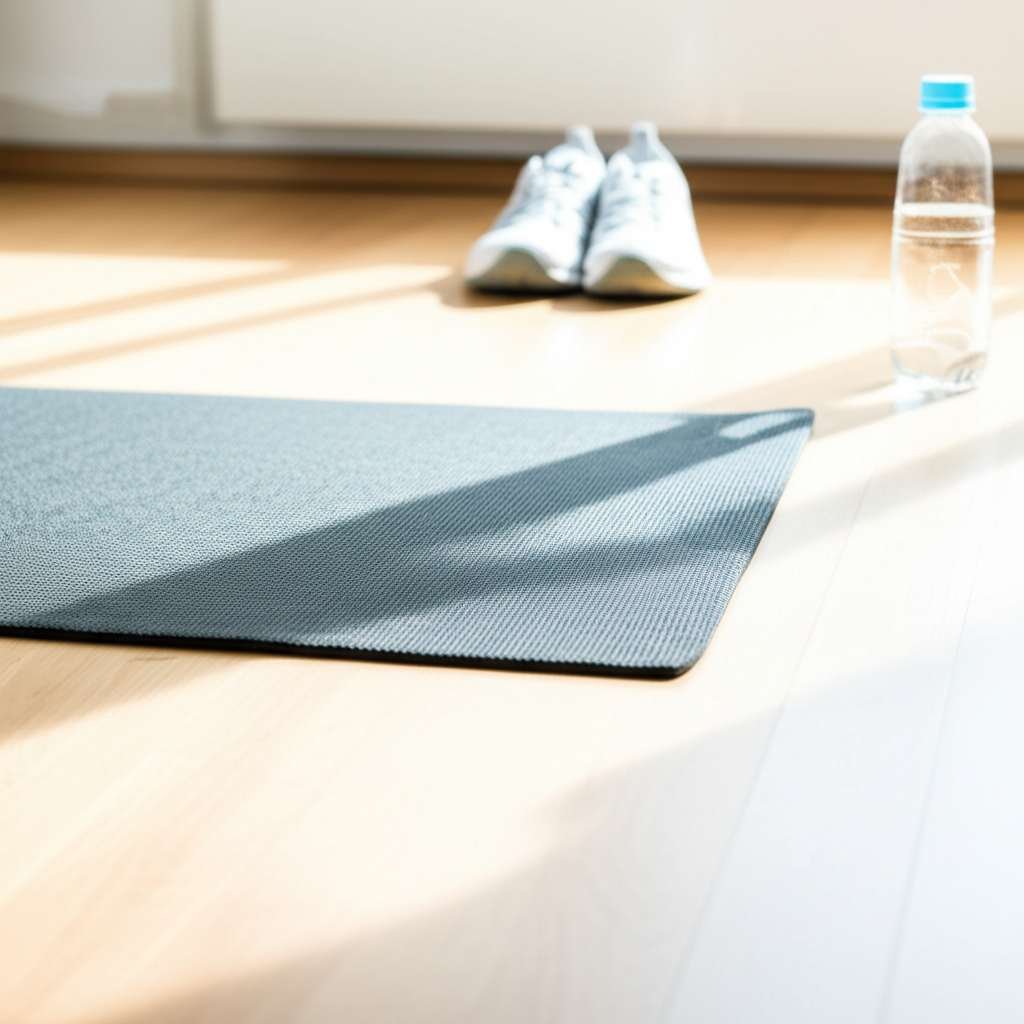
Get fit at home with 7 easy workouts designed for beginners! This guide offers clear, step-by-step instructions and practical tips to build a consistent fitness routine without special equipment, making exercise accessible and enjoyable for everyone starting their fitness journey.
Feeling overwhelmed by fitness goals? You’re not alone. Many beginners find it tough to know where to start, especially when life gets busy or gym memberships seem expensive. It’s easy to get lost in confusing advice and feel discouraged.
But here’s the good news: getting healthier doesn’t have to be complicated or costly. You can build strength and boost your energy right from your living room. This guide is here to break down fitness into simple, manageable steps.
We’ll walk through seven effective home workouts that require minimal or no equipment. You’ll learn how to do each exercise correctly and how to build them into a routine that fits your life. Let’s get started on your journey to a healthier you!

This guide will introduce you to fundamental exercises that target different parts of your body. You’ll find clear instructions, tips for modifications, and advice on how to stay motivated. Get ready to discover how simple and rewarding home workouts can be!
Why Home Workouts Are Perfect for Beginners
Starting a fitness routine can feel like a big leap, but home workouts offer a fantastic entry point. They remove many common barriers that prevent beginners from getting active. Think about it: no travel time, no need to feel self-conscious in a crowded gym, and the flexibility to exercise whenever it suits you best.
This approach allows you to build confidence at your own pace. You can focus on mastering the basics without pressure. Plus, it’s incredibly cost-effective. You don’t need fancy equipment to get a great workout.
The key is consistency and finding activities you enjoy. Home workouts make it easier to create sustainable habits. Let’s explore some simple yet effective routines you can start today.
Your Essential Toolkit: What You Really Need
The beauty of these beginner home workouts is that you likely have most of what you need already. The goal is to make fitness accessible, not to add to your expenses. For many of these exercises, your own body weight is the primary tool.
However, a few simple items can enhance your comfort and effectiveness. Having these on hand can make your workout experience much more enjoyable and help prevent minor discomforts.
Here’s a quick rundown of helpful, but not always essential, items:
- Comfortable Clothing: Wear something that allows you to move freely without restriction.
- Supportive Shoes: Especially for exercises involving jumping or standing for extended periods.
- Water Bottle: Staying hydrated is crucial during any physical activity.
- Yoga Mat or Soft Surface: This provides cushioning for floor exercises like planks or crunches, protecting your joints and back.
- Optional: Resistance Bands: These are inexpensive and versatile for adding challenge to many exercises as you progress.
7 Simple Home Workouts for Beginners
These seven workouts are designed to be foundational. They focus on building strength, improving flexibility, and boosting cardiovascular health. Each workout targets different muscle groups or fitness components, offering a well-rounded approach to getting started.
Remember to listen to your body. If an exercise feels painful, stop or modify it. The goal is progress, not perfection. We’ll cover how to do each exercise, how many repetitions or how long to hold, and how to make them easier or harder.
1. The Almighty Squat: Building Lower Body Strength
Squats are a powerhouse exercise for your legs and glutes. They mimic everyday movements like sitting down and standing up, making them incredibly functional. Mastering the squat is a fundamental step in building lower body strength.
How to do it:
- Stand with your feet shoulder-width apart, toes pointing slightly outward.
- Keep your chest up and your back straight.
- Lower your hips back and down as if you’re sitting into a chair.
- Aim to get your thighs parallel to the floor, or as low as comfortable without compromising your form.
- Push through your heels to return to the starting position.
For Beginners: Start with a chair squat. Stand in front of a chair and squat down until your glutes lightly touch the seat, then stand back up. This helps you control depth and balance.
As You Progress: Hold dumbbells or a kettlebell for added resistance. Try variations like jump squats for a cardiovascular challenge.
Sets and Reps: Aim for 3 sets of 10-12 repetitions.
2. The Classic Push-Up: Upper Body Powerhouse
Push-ups are fantastic for strengthening your chest, shoulders, and triceps. They also engage your core muscles for stability. While they can seem challenging, there are ways for beginners to build up to a standard push-up.
How to do it:
- Start in a plank position with your hands slightly wider than shoulder-width apart, fingers pointing forward.
- Your body should form a straight line from head to heels.
- Lower your chest towards the floor by bending your elbows, keeping them relatively close to your body.
- Push back up to the starting position.
For Beginners: Perform push-ups on your knees. This significantly reduces the amount of body weight you need to lift, making it more manageable.
As You Progress: Once knee push-ups feel easy, try incline push-ups against a sturdy counter or wall. Gradually move to standard push-ups.
Sets and Reps: Aim for 3 sets of as many repetitions as you can do with good form (AMRAP). Start with 5-8 reps if on your knees and build up.
3. The Plank: Core Strength Essential
The plank is a miracle exercise for your core. It strengthens your abdominal muscles, back, and shoulders, all while improving your posture and stability. A strong core is the foundation for almost every movement you make.
How to do it:
- Get into a position on your forearms and toes.
- Your elbows should be directly beneath your shoulders, and your forearms parallel.
- Keep your body in a straight line from head to heels, engaging your abs and glutes.
- Avoid letting your hips sag or rise too high.
For Beginners: Start with shorter holds, perhaps 15-20 seconds. You can also perform a knee plank, resting your knees on the floor while maintaining a straight line from head to knees.
As You Progress: Increase the duration of your holds. Aim for 30 seconds, then 45, then 60 seconds. You can also try variations like side planks or planks with leg lifts.
Sets and Reps: Aim for 3 sets, holding for as long as you can maintain good form. Start with 20-30 seconds per set.
4. The Glute Bridge: Activating Your Posterior Chain
Glute bridges are excellent for targeting your glutes and hamstrings, muscles that often become weak from prolonged sitting. Activating these muscles can help improve posture and reduce lower back pain.
How to do it:
- Lie on your back with your knees bent and feet flat on the floor, hip-width apart.
- Your arms should be by your sides, palms down.
- Engage your glutes and lift your hips off the floor until your body forms a straight line from your shoulders to your knees.
- Squeeze your glutes at the top.
- Slowly lower your hips back down.
For Beginners: Focus on the mind-muscle connection. Ensure you feel the glutes working at the top of the movement. You can start with smaller lifts if needed.
As You Progress: Hold the top position for a few seconds. Try single-leg glute bridges or place a light weight across your hips for added resistance.
Sets and Reps: Aim for 3 sets of 12-15 repetitions.
5. Lunges: Improving Balance and Leg Strength
Lunges are a fantastic unilateral exercise, meaning they work one leg at a time. This helps to identify and correct muscle imbalances, improve balance, and build strength in your quads, hamstrings, and glutes.
How to do it:
- Stand tall with your feet hip-width apart.
- Step forward with one leg, lowering your hips until both knees are bent at approximately 90-degree angles.
- Ensure your front knee is directly above your ankle, and your back knee hovers just above the floor.
- Push off your front foot to return to the starting position.
- Repeat with the other leg.
For Beginners: Start with smaller steps or static lunges (stepping forward and staying there for a few reps before returning to standing). Focus on maintaining balance and ensuring your front knee doesn’t go past your toes.
As You Progress: Try walking lunges (stepping forward and then bringing your back leg forward to step into the next lunge). Hold dumbbells for added weight.
Sets and Reps: Aim for 3 sets of 8-10 repetitions per leg.
6. Bird-Dog: Enhancing Core Stability and Balance
The Bird-Dog exercise is excellent for improving core stability, balance, and coordination. It also helps to strengthen your back and glutes while promoting a neutral spine.
How to do it:
- Start on your hands and knees in a tabletop position.
- Ensure your wrists are under your shoulders and your knees are under your hips.
- Keep your back flat and your core engaged.
- Simultaneously extend your right arm forward and your left leg straight back.
- Keep your hips level and avoid arching your back.
- Return to the starting position and repeat with the opposite arm and leg.
For Beginners: Focus on slow, controlled movements. If extending the arm and leg fully is too challenging, start by just extending the leg or the arm.
As You Progress: Increase the duration of the hold at the extended position. Try to extend your arm and leg further while maintaining stability.
Sets and Reps: Aim for 3 sets of 10-12 repetitions per side.
7. Jumping Jacks: A Quick Cardio Boost
Jumping jacks are a classic cardio exercise that gets your heart rate up quickly. They are a simple way to improve cardiovascular health and burn calories. They also work your entire body, including your legs, arms, and core.
How to do it:
- Start standing with your feet together and your arms at your sides.
- Simultaneously jump your feet out wider than shoulder-width apart while raising your arms overhead.
- Jump back to the starting position with your feet together and arms at your sides.
For Beginners: Perform a “step-out” jack. Instead of jumping, step one foot out to the side while raising your arms, then return to center and repeat on the other side. This is a lower-impact version.
As You Progress: Increase the speed and duration of your jumping jacks. You can also try variations like star jumps.
Sets and Reps: Aim for 3 sets of 30-60 seconds of continuous jumping, or a set number of repetitions like 20-30.
Structuring Your Home Workout Routine
Now that you know the exercises, how do you put them together? The key to success is creating a routine that is realistic and sustainable for you. Don’t try to do everything at once. Start small and build gradually.
Here’s a sample weekly structure for beginners. This plan focuses on giving your muscles rest days, which are crucial for recovery and growth. According to the Harvard Health Publishing, rest is when your body repairs itself, making you stronger.
Sample Beginner Weekly Schedule
This schedule aims for 3-4 workout days per week, allowing for rest and recovery.
| Day | Focus | Workout Examples |
|---|---|---|
| Monday | Full Body Strength | Squats, Push-ups (on knees), Glute Bridges, Plank |
| Tuesday | Rest or Light Activity | Gentle walk, stretching |
| Wednesday | Full Body Strength | Lunges, Bird-Dog, Squats, Plank |
| Thursday | Rest or Light Activity | Yoga, leisurely walk |
| Friday | Cardio & Core | Jumping Jacks (or step-outs), Plank, Glute Bridges |
| Saturday | Active Recovery or Rest | Longer walk, light stretching, or complete rest |
| Sunday | Rest | Full rest day |
How to use this schedule:
- Warm-up: Always start with 5-10 minutes of light cardio (like jogging in place, arm circles) and dynamic stretching.
- Workout: Perform the exercises listed for each day. Focus on proper form over speed or quantity.
- Cool-down: Finish with 5-10 minutes of static stretching (holding stretches for 20-30 seconds) to improve flexibility and aid recovery.
- Progression: As exercises become easier, gradually increase repetitions, sets, hold times, or introduce more challenging variations.
Making Home Workouts Effective
Consistency is king when it comes to seeing results. Even short workouts done regularly are more beneficial than sporadic, intense sessions. Aim to make movement a habit, not a chore.
Here are some tips to keep you on track:
- Schedule It: Treat your workout time like any other important appointment. Put it in your calendar.
- Find Your Why: Remind yourself why you started. Is it for more energy, better health, or to feel stronger?
- Track Your Progress: Jot down your workouts, reps, and how you felt. Seeing how far you’ve come is incredibly motivating.
- Celebrate Small Wins: Acknowledge every step forward, whether it’s doing an extra rep or sticking to your schedule for a week.
- Make it Enjoyable: Listen to music or podcasts, or even do a workout video with a trainer you like.
Remember, the goal is to build a sustainable habit. Don’t aim for perfection, aim for consistency. The U.S. Department of Health and Human Services recommends at least 150 minutes of moderate-intensity aerobic activity or 75 minutes of vigorous-intensity aerobic activity per week, along with muscle-strengthening activities at least two days a week. Home workouts can help you achieve this.
Frequently Asked Questions (FAQ)
Q1: How long should my beginner home workout be?
A1: For beginners, starting with 20-30 minutes per session, 3-4 times a week, is a great goal. Focus on quality of movement and consistency rather than duration.
Q2: Do I need any special equipment for these workouts?
A2: No, these workouts are designed to be done with minimal to no equipment. Your body weight is your primary tool. A yoga mat is helpful for comfort on hard floors.
Q3: How do I know if I’m doing the exercises correctly?
A3: Focus on slow, controlled movements and proper form. Watch videos of the exercises, mirror yourself, or even record yourself to check your technique. If you feel pain, stop or modify the exercise.
Q4: What if I can’t do a full push-up or squat?
A4: That’s perfectly normal! Modify the exercises. For push-ups, do them on your knees or against a wall. For squats, use a chair for support and to control your depth.
Q5: How often should I rest between sets and exercises?
A5: For beginners, 30-60 seconds of rest between sets and 1-2 minutes between different exercises is usually sufficient. Listen to your body; if you need a little more rest, take it.
Q6: How long will it take to see results?
A6: Results vary, but you’ll likely start feeling stronger and more energetic within a few weeks. Visible changes might take a few months. Consistency is key to long-term success.
Q7: What if I miss a workout? Should I give up?
A7: Absolutely not! Life happens. If you miss a workout, just get back on track with your next scheduled session. Don’t let one missed day derail your progress. It’s about getting back up and continuing.
Conclusion: Your Fitness Journey Starts Now
Embarking on a fitness journey can feel daunting, but it doesn’t have to be. By incorporating these 7 simple home workouts into your routine, you’re taking a powerful step towards a healthier, stronger you. You’ve learned effective exercises that build strength, improve balance, and boost your cardiovascular health, all from the comfort of your home and without needing fancy equipment.
Remember, consistency is more important than intensity when you’re starting out. Focus on mastering the form, listening to your body, and celebrating your progress, no matter how small it may seem. Every workout you complete is a victory. Use the sample schedule as a guide, but feel free to adjust it to fit your lifestyle and energy levels. The most important thing is to keep moving and keep showing up for yourself.
This guide is your foundation. As you get stronger and more confident, you can explore new exercises and challenges. But for now, master these basics. You have the tools, the knowledge, and the capability within you to make real, sustainable changes. So, put on your comfortable clothes, grab your water bottle, and get ready to feel amazing. Your fitness journey truly begins today!
As an Amazon Associate, We earn from qualifying purchases. When you purchase a product through Amazon links on pulsefitguide.com, we may earn a small commission at no extra cost to you. This helps support the site and keep our content free.