
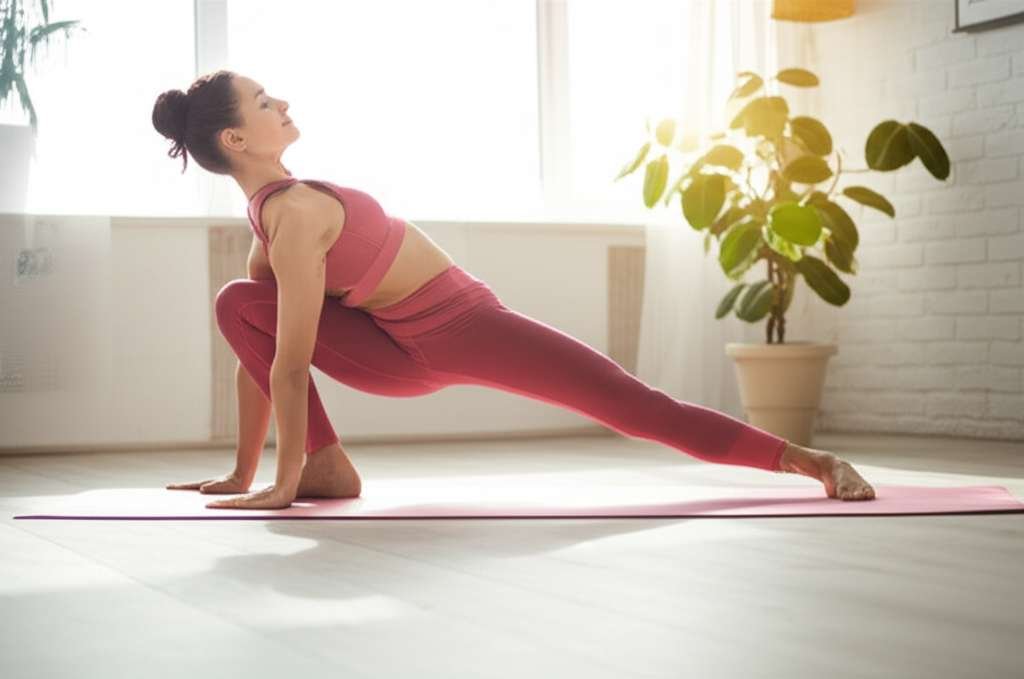
Yes, you can achieve amazing weight loss with 7 easy yoga home workouts! This guide offers simple, beginner-friendly poses and routines you can do at home to boost metabolism, build lean muscle, and burn fat effectively. Get ready for a fun, sustainable path to a healthier you.
Feeling a little stuck on your weight loss journey? You’re not alone! Many people find it confusing to figure out what really works. You might be looking for something gentle yet effective, something you can do without a gym, and something that doesn’t feel like a chore. The good news is, yoga can be a fantastic tool for weight loss, and it’s more accessible than you think.
Imagine building strength, increasing flexibility, and shedding unwanted pounds, all from the comfort of your own living room. This guide is designed to break down exactly how to do that with simple yoga practices. We’ll walk through easy workouts step-by-step, making it simple for anyone to start.
Ready to discover how yoga can transform your body and mind? Let’s dive into some simple routines that can make a real difference.
Why Yoga for Weight Loss? It’s More Than Just Stretching!
You might think of yoga as just gentle stretching, but it’s actually a powerful practice for weight loss. When done consistently, yoga can help you lose weight in several key ways. It’s not just about burning calories in the moment; it’s about building a healthier body and mind that supports long-term weight management.

Yoga helps boost your metabolism, which is your body’s natural ability to burn calories. Certain poses and sequences can increase your heart rate, similar to a light cardio workout, helping to burn more fat. Plus, yoga builds lean muscle. The more muscle you have, the more calories your body burns, even when you’re resting.
Beyond the physical, yoga also helps reduce stress. High stress levels can lead to weight gain, especially around the belly. By calming your mind, yoga can help manage stress hormones like cortisol, which plays a big role in weight. It also encourages mindfulness, helping you become more aware of your hunger cues and make healthier food choices.
Getting Started: Your Beginner’s Yoga Toolkit
Before we jump into the workouts, let’s make sure you have a few things ready. You don’t need fancy equipment to start practicing yoga at home. Simplicity is key, especially when you’re just beginning.
Here’s what you’ll need:
A Yoga Mat: This provides cushioning for your joints and grip so you don’t slip. Any comfortable mat will do.
Comfortable Clothing: Wear something that allows you to move freely. Stretchy pants and a t-shirt are perfect.
A Quiet Space: Find a corner in your home where you won’t be interrupted. Even a small area is fine.
An Open Mind: Be patient with yourself! Yoga is a practice, and progress takes time.
Remember, the goal is to feel good and build healthy habits. Don’t worry about being perfect. Just showing up and doing your best is what matters most.
7 Easy Yoga Home Workouts for Weight Loss
These seven yoga workouts are designed for beginners and focus on movements that help with weight loss. Each workout can be done individually or combined for a more comprehensive routine. Aim to practice these at least 3-4 times a week for the best results.
1. The Morning Energizer Flow
This short, gentle flow is perfect for waking up your body and kickstarting your metabolism. It’s designed to get your blood moving and your energy levels up for the day ahead.
Mountain Pose (Tadasana): Stand tall with your feet together or hip-width apart. Ground your feet, engage your core, and lengthen your spine. Breathe deeply. Hold for 5 breaths.
Standing Forward Fold (Uttanasana): From Mountain Pose, exhale and hinge at your hips, letting your torso fold forward. Keep a slight bend in your knees if needed. Let your head hang. Hold for 5 breaths.
Low Lunge (Anjaneyasana): Step your right foot forward and lower your left knee to the mat. Keep your front knee stacked over your ankle. You can keep your hands on the mat or bring them to your front thigh. Feel the stretch in your hip flexor. Hold for 5 breaths, then switch sides.
Cat-Cow Pose (Marjaryasana-Bitilasana): Come to your hands and knees. Inhale as you drop your belly, lift your chest, and look up (Cow). Exhale as you round your spine, tuck your chin, and press the mat away (Cat). Repeat 5-10 times, flowing with your breath.
Child’s Pose (Balasana): Kneel on the floor, bring your big toes to touch, and sit on your heels. Separate your knees hip-width apart. Exhale and fold your torso down between your thighs, resting your forehead on the mat. Extend your arms forward or rest them alongside your body. Hold for 5-10 breaths.
This sequence can be repeated once or twice. It’s a simple way to start your day feeling more connected to your body.
2. The Core Strength Builder
A strong core is essential for overall health and can significantly help with weight loss by improving posture and metabolism. This workout focuses on poses that engage your abdominal muscles.
Plank Pose (Phalakasana): Start in a push-up position, ensuring your hands are directly under your shoulders and your body forms a straight line from head to heels. Engage your core and glutes. Avoid letting your hips sag or rise too high. Hold for 30-60 seconds.
Boat Pose (Paripurna Navasana): Sit on your mat with your knees bent and feet flat on the floor. Lean back slightly, lifting your feet off the floor. Extend your arms forward, parallel to the floor. You can keep your knees bent or straighten your legs for a more challenging pose. Engage your core to keep your back straight. Hold for 20-30 seconds.
Dolphin Plank: From Plank Pose, lower your forearms to the mat, keeping your elbows directly under your shoulders. Your body should remain in a straight line. This pose is a great shoulder and core strengthener. Hold for 30-60 seconds.
Cobra Pose (Bhujangasana): Lie on your stomach with your legs extended and the tops of your feet on the mat. Place your hands flat on the mat under your shoulders. Inhale and lift your chest off the floor, keeping your hips on the mat. Engage your back muscles. Hold for 30 seconds.
Repeat this sequence 2-3 times. Remember to breathe deeply throughout each pose.
3. The Fat-Burning Flow
This dynamic sequence incorporates poses that elevate your heart rate and burn calories effectively. It’s a bit more vigorous, aiming to get you moving and sweating.
Sun Salutation A (Surya Namaskar A): This is a foundational yoga sequence. It typically includes poses like Mountain Pose, Standing Forward Fold, Halfway Lift, Plank, Chaturanga, Upward-Facing Dog, Downward-Facing Dog, and stepping back to the front. Perform 3-5 rounds. A breakdown of Surya Namaskar A can be found on reputable yoga sites like Yoga Journal.
Warrior II (Virabhadrasana II): Step your feet wide apart. Turn your right foot out 90 degrees and your left foot slightly in. Bend your right knee over your ankle, keeping your thigh parallel to the floor. Extend your arms out to the sides, parallel to the floor, and gaze over your front fingertips. Hold for 30 seconds, then switch sides.
Triangle Pose (Trikonasana): From Warrior II, straighten your front leg. Hinge at your front hip and extend your torso forward, then lower your front hand to your shin, ankle, or a block. Extend your top arm towards the ceiling. Gaze up at your top hand. Hold for 30 seconds, then switch sides.
This flow is great for building stamina and burning fat. Focus on smooth transitions between poses.
4. The Hip Opener and Stress Reliever
Stress can be a major roadblock to weight loss. This sequence helps release tension in the hips and calm the nervous system, which can aid in managing stress-related eating.
Pigeon Pose (Eka Pada Rajakapotasana): Start on your hands and knees. Bring your right knee forward towards your right wrist, and extend your left leg straight back. Your right shin can be parallel to the front of your mat, or angled more towards your groin if that’s more comfortable. Keep your hips square. You can stay upright or fold forward over your front leg. Hold for 1 minute, then switch sides.
Butterfly Pose (Baddha Konasana): Sit on your mat with the soles of your feet pressed together and your knees falling out to the sides. You can hold onto your feet or ankles. Sit up tall, or if comfortable, hinge forward from your hips. Hold for 1 minute.
Supine Spinal Twist (Supta Matsyendrasana): Lie on your back. Draw your right knee into your chest, then cross it over your body to the left side. Extend your right arm out to the side and gaze towards your right hand. Keep both shoulders on the mat. Hold for 1 minute, then switch sides.
This sequence is excellent for promoting relaxation and releasing stored tension.
5. The Full Body Toning Flow
This workout targets major muscle groups to help build lean muscle mass, which is crucial for boosting your metabolism and achieving a toned physique.
Downward-Facing Dog (Adho Mukha Svanasana): Start on your hands and knees. Tuck your toes, lift your hips up and back, forming an inverted V-shape. Press through your hands, spread your fingers, and let your head hang between your arms. You can pedal your feet to stretch your hamstrings. Hold for 5-10 breaths.
Warrior I (Virabhadrasana I): Step your right foot forward between your hands. Pivot your left heel down so your back foot is at a 45-degree angle. Rise up, bringing your torso upright and your arms overhead. Keep your hips facing forward as much as possible. Hold for 30 seconds, then switch sides.
Chair Pose (Utkatasana): Stand with your feet together or hip-width apart. Inhale and sweep your arms overhead. Exhale and bend your knees as if sitting back into a chair. Keep your chest lifted and your core engaged. Hold for 30 seconds.
Bridge Pose (Setu Bandhasana): Lie on your back with your knees bent and feet flat on the floor, hip-width apart, and close to your glutes. Inhale and lift your hips off the floor. You can clasp your hands underneath your body or keep them by your sides. Hold for 30 seconds.
This flow engages many large muscle groups, contributing to overall toning and calorie burn.
6. The Mindful Eating & Digestion Booster
Yoga can also positively impact your digestion and relationship with food, which indirectly supports weight loss. This gentle flow focuses on poses that stimulate abdominal organs and promote a sense of calm.
Seated Forward Fold (Paschimottanasana): Sit on the floor with your legs extended straight out in front of you. Inhale and lengthen your spine. Exhale and hinge at your hips, folding your torso forward over your legs. Keep your back as straight as possible. Hold for 1 minute.
Supine Twists (as described in workout 4): These help to gently massage internal organs.
Reclining Bound Angle Pose (Supta Baddha Konasana): Lie on your back and bring the soles of your feet together, letting your knees fall open to the sides. Place your arms by your sides or place one hand on your heart and the other on your belly. Relax and breathe deeply. Hold for 2-5 minutes.
This sequence is about calming the digestive system and encouraging mindful eating habits.
7. The Evening Wind-Down and Stretch
While not directly a fat-burning workout, this relaxing sequence is vital for recovery, reducing stress, and preparing your body for restful sleep, all of which are crucial for weight loss success.
Legs-Up-the-Wall Pose (Viparita Karani): Sit on the floor with one hip close to a wall. Swing your legs up the wall, letting your back rest on the floor. Your body should form an L-shape. Relax your arms by your sides. Hold for 5-10 minutes.
Happy Baby Pose (Ananda Balasana): Lie on your back. Draw your knees into your chest. Open your knees wider than your torso and bring them towards your armpits. Grab the outsides of your feet with your hands. Keep your lower back on the mat. Gently rock side to side if it feels good. Hold for 1 minute.
Corpse Pose (Savasana): Lie flat on your back with your legs extended and arms resting by your sides, palms facing up. Close your eyes and allow your body to completely relax. Focus on your breath. Hold for 5-10 minutes.
This gentle stretching and relaxation sequence aids in muscle recovery and promotes overall well-being.
Understanding the Science: How Yoga Supports Weight Loss
It’s helpful to understand why these yoga practices work. Science backs up the benefits of yoga for weight management, showing it’s more than just a trend.
One of the primary mechanisms is through its impact on metabolism. While not as intense as high-intensity interval training (HIIT), yoga, especially more dynamic flows like the Fat-Burning Flow, can elevate your heart rate and increase your oxygen consumption, leading to a higher calorie burn during and after your practice. This is known as the afterburn effect.
Furthermore, consistent yoga practice can increase lean muscle mass. Poses that require you to support your own body weight, such as Plank, Warrior poses, and inversions, build strength and tone muscles. Muscle tissue is metabolically active, meaning it burns more calories at rest than fat tissue. According to the National Institute of Diabetes and Digestive and Kidney Diseases (NIDDK), building muscle is a key component of long-term weight management.
Yoga’s significant contribution to stress reduction is also critical. Chronic stress leads to elevated levels of cortisol, a hormone that can promote fat storage, particularly in the abdominal area, and increase appetite for high-calorie foods. Practices like meditation, deep breathing (pranayama), and restorative poses found in the Evening Wind-Down sequence can effectively lower cortisol levels, helping to curb stress-related eating and fat accumulation.
Finally, yoga fosters mindfulness. This increased awareness helps individuals become more attuned to their body’s signals, such as hunger and fullness. By practicing mindfulness, you’re more likely to recognize when you’re truly hungry and stop eating when you’re satisfied, leading to more conscious and healthier eating choices. This mindful approach is a cornerstone of sustainable weight loss.
Sample Weekly Yoga Schedule for Weight Loss
To help you get started, here’s a sample schedule incorporating these workouts. Feel free to adjust it based on your energy levels and preferences.
| Day | Workout Focus | Duration | Notes |
| :——– | :——————————– | :——— | :———————————— |
| Monday | Morning Energizer Flow | 15-20 min | Start the week right! |
| Tuesday | Core Strength Builder | 20-25 min | Focus on abdominal engagement. |
| Wednesday | Fat-Burning Flow | 25-30 min | Get your heart rate up! |
| Thursday | Hip Opener & Stress Reliever | 20-25 min | Release tension. |
| Friday | Full Body Toning Flow | 25-30 min | Build lean muscle. |
| Saturday | Morning Energizer + Mindful Digestion | 30-35 min | Gentle movement and digestive focus. |
| Sunday | Evening Wind-Down & Stretch | 20-30 min | Crucial for recovery and relaxation. |
This schedule is a guideline. Listen to your body. If you need an extra rest day, take it! Consistency is more important than intensity.
Tips for Maximizing Your Yoga Weight Loss Results
Beyond the poses themselves, a few extra tips can amplify your weight loss efforts through yoga.
Consistency is Key: Aim to practice regularly, even if it’s just for 15-20 minutes on busy days.
Focus on Your Breath: Deep, conscious breathing (pranayama) enhances the physical benefits and calms the mind.
Listen to Your Body: Never push yourself into pain. Modify poses as needed. Yoga is about progress, not perfection.
Stay Hydrated: Drink plenty of water throughout the day, especially before and after your practice.
Combine with Healthy Eating: While yoga burns calories, sustainable weight loss also relies on a balanced diet. Focus on whole foods and mindful eating.
* Be Patient: Weight loss is a journey. Celebrate small victories and trust the process.
It’s also important to note that while yoga is beneficial, for significant weight loss, combining it with a balanced, calorie-controlled diet is essential. The U.S. Department of Health and Human Services offers resources on healthy eating and weight management.
Frequently Asked Questions About Yoga for Weight Loss
Q1: How often should I practice yoga for weight loss?
A1: Aim for at least 3-4 times a week. Even short, consistent practices can yield great results over time.
Q2: Can yoga alone help me lose weight?
A2: Yoga is a powerful tool that can contribute significantly to weight loss by building muscle, boosting metabolism, and reducing stress. However, for optimal results, it’s best combined with a healthy, balanced diet.
Q3: What if I’m not flexible? Can I still do yoga for weight loss?
A3: Absolutely! Yoga is for everyone, regardless of flexibility. The poses are designed to be modified. Don’t worry about how you look; focus on how you feel and your breath.
Q4: Which yoga poses are best for burning fat?
A4: Poses that get your heart rate up and engage large muscle groups are most effective. Think Sun Salutations, Warrior poses, and Plank variations.
Q5: How long will it take to see results?
A5: Results vary depending on individual factors like diet, consistency, and metabolism. You might start feeling stronger and more energetic within a few weeks, with visible changes often appearing over a few months.
Q6: Can yoga help with belly fat specifically?
A6: While you can’t spot-reduce fat, yoga’s ability to build core strength, reduce stress (which is linked to belly fat), and improve overall metabolism can contribute to a leaner physique, including the abdominal area.
Q7: Do I need to do advanced yoga poses to lose weight?
A7: Not at all! The beginner-friendly workouts provided are effective. As you get stronger, you can explore more challenging variations, but the fundamentals are where the magic begins.
Conclusion: Your Yoga Journey to a Healthier You
Embarking on a yoga journey for weight loss is an empowering step towards a healthier, happier you. These 7 easy yoga home workouts offer a gentle yet effective way to build strength, boost your metabolism, manage stress, and foster a mindful connection with your body. Remember, consistency, patience, and self-compassion are your greatest allies.
By integrating these simple practices into your routine, you’re not just working towards weight loss; you’re cultivating sustainable habits that benefit your entire well-being. So, roll out your mat, take a deep breath, and enjoy the transformative power of yoga. You’ve got this!
As an Amazon Associate, We earn from qualifying purchases. When you purchase a product through Amazon links on pulsefitguide.com, we may earn a small commission at no extra cost to you. This helps support the site and keep our content free.