
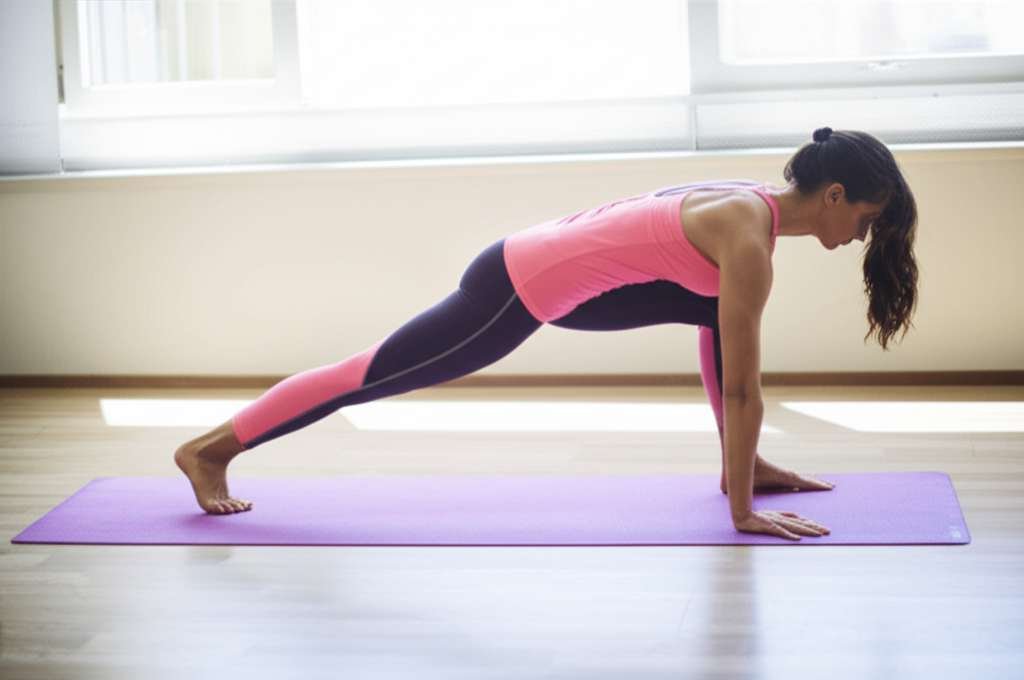
Need to get fit but short on time and equipment? You can achieve effective workouts right at home with just your bodyweight! These 5 essential moves require no gear and are perfect for beginners, helping you build strength and boost your health without leaving your living room.
Feeling overwhelmed by complicated workout routines or expensive gym memberships? You’re not alone! Many people find it tough to start a fitness journey because it seems like you need a lot of fancy equipment or a ton of free time. It can be confusing trying to figure out what actually works.
But here’s some good news: you can get a fantastic workout without any equipment at all! Your own body is an amazing tool, and with just a few simple, effective exercises, you can start feeling stronger and healthier right away.
We’re going to walk through five easy home workouts that require zero equipment. These are beginner-friendly moves designed to give you the most bang for your buck. Let’s get started on building a healthier you, one simple step at a time!

Your Bodyweight Workout Toolkit: 5 Easy Moves to Start Today
Welcome to your new fitness routine! We’ve put together five fundamental bodyweight exercises that will help you build a solid foundation. These moves target different major muscle groups, giving you a well-rounded workout. They are easy to learn and perform, making them perfect for anyone just starting out.
The best part? You can do these anywhere, anytime. No gym needed, no special gear required. Just you, your motivation, and these essential exercises. Let’s break them down so you can feel confident performing each one.
1. Squats: The Foundation of Lower Body Strength
Squats are a powerhouse exercise that works your legs and glutes. They mimic a natural movement, like sitting down, making them intuitive. Mastering the squat is key to building lower body strength and improving overall mobility.
Think of squats as the building blocks for many other lower body movements. When done correctly, they engage your quads, hamstrings, glutes, and even your core. They are fantastic for improving balance and coordination too.
How to Perform a Squat:
- Stand with your feet shoulder-width apart, toes pointing slightly outward.
- Keep your chest up, back straight, and core engaged.
- Lower your hips as if you’re sitting back into a chair. Aim to get your thighs parallel to the floor, or as low as you comfortably can.
- Ensure your knees track over your toes and don’t collapse inward.
- Push through your heels to return to the starting position.
Beginner Tip: If going all the way down is challenging, start by just lowering yourself a few inches. You can also use a chair behind you to tap your glutes on, ensuring you reach a safe depth. Focus on form over how low you go!
2. Push-Ups: Building Upper Body Power
Push-ups are a classic exercise that effectively targets your chest, shoulders, and triceps. They also engage your core to keep your body stable. It’s a fantastic way to build upper body strength and endurance.
Don’t worry if you can’t do a full push-up right away. There are modifications that make this exercise accessible to everyone. The goal is to build strength progressively.
How to Perform a Push-Up (Modified for Beginners):
- Start on your hands and knees, with your hands slightly wider than shoulder-width apart.
- Your wrists should be directly under your shoulders.
- Keep your back straight and your core tight. Imagine a straight line from your head to your knees.
- Lower your chest towards the floor by bending your elbows. Keep your elbows tucked slightly towards your body, not flaring out wide.
- Push back up to the starting position.
Progression to Full Push-Ups: Once you feel comfortable with knee push-ups, you can progress to standard push-ups. Start with a few standard push-ups and incorporate them into your routine, gradually increasing the number.
For more detailed guidance on push-up progressions, the Mayo Clinic offers excellent resources on strength training basics.
3. Lunges: Enhancing Leg Strength and Balance
Lunges are another excellent lower body exercise that targets your quads, hamstrings, and glutes. They are particularly great for improving balance and coordination because you work one leg at a time.
By alternating legs, lunges help identify and address any strength imbalances between your left and right sides. This makes them a vital addition to your workout routine.
How to Perform a Lunge:
- Stand with your feet hip-width apart.
- Step forward with one leg, lowering your hips until both knees are bent at roughly a 90-degree angle.
- Ensure your front knee is directly above your ankle, and your back knee hovers just above the floor.
- Keep your torso upright and your core engaged.
- Push off your front foot to return to the starting position.
- Repeat on the other leg.
Beginner Tip: Start with smaller steps if a full lunge feels too challenging. Focus on maintaining an upright posture. You can also hold onto a wall or chair for balance as you get used to the movement.
4. Plank: Core Strength Essential
The plank is a fantastic isometric exercise that builds incredible core strength. A strong core is crucial for good posture, stability, and preventing back pain. It’s often called a “superfood” for your midsection!
Unlike exercises that involve movement, the plank challenges your muscles to hold a static position. This builds endurance in your abdominal muscles, obliques, and lower back, creating a solid foundation for all your other movements.
How to Perform a Plank:
- Start on your forearms and toes, with your elbows directly under your shoulders.
- Your body should form a straight line from your head to your heels.
- Engage your core by drawing your belly button towards your spine.
- Don’t let your hips sag or pike up too high.
- Hold this position for as long as you can maintain good form.
Beginner Tip: If a full plank is too difficult, you can perform a modified plank on your knees. Keep your back straight and core engaged, just like in a full plank, but with your knees on the floor.
To understand the importance of core strength, explore resources from the Johns Hopkins Medicine on why a strong core matters.
5. Glute Bridges: Activating Your Posterior Chain
Glute bridges are excellent for targeting your glutes and hamstrings, often referred to as the “posterior chain.” These muscles are vital for everyday movements like walking, running, and lifting.
This exercise is great because it directly engages your glute muscles, which can sometimes be underactive in people who sit for long periods. Activating them properly can help improve posture and reduce lower back strain.
How to Perform a Glute Bridge:
- Lie on your back with your knees bent and feet flat on the floor, hip-width apart.
- Keep your arms by your sides, palms down.
- Engage your glutes and lift your hips off the floor until your body forms a straight line from your shoulders to your knees.
- Squeeze your glutes at the top of the movement.
- Hold for a moment, then slowly lower your hips back down.
Beginner Tip: Focus on squeezing your glutes at the top. If you find it hard to lift high, start with a smaller range of motion. You can also try placing a small cushion under your lower back if it feels uncomfortable.
Putting It All Together: A Sample Workout Routine
Now that you know the essential moves, let’s put them into a simple workout routine. Consistency is key, so aim to do this routine 2-3 times per week, with a rest day in between.
Remember, it’s better to do a few repetitions with perfect form than many with poor form. Listen to your body and adjust as needed. You’ve got this!
Sample Beginner Workout Plan
Perform each exercise for the suggested repetitions and rest for 30-60 seconds between exercises. After completing all five exercises, rest for 1-2 minutes and repeat the circuit 1-2 more times.
| Exercise | Sets | Repetitions | Focus |
|---|---|---|---|
| Squats | 3 | 10-15 | Form, depth |
| Knee Push-Ups (or standard) | 3 | As many as possible (AMRAP) with good form | Controlled movement |
| Lunges (alternating legs) | 3 | 10-12 per leg | Balance, knee alignment |
| Plank (or knee plank) | 3 | Hold for 20-30 seconds | Straight line, core engagement |
| Glute Bridges | 3 | 15-20 | Glute squeeze, controlled descent |
Warm-up: Before starting, spend 5 minutes doing light cardio like marching in place, arm circles, and leg swings to prepare your muscles. A good warm-up helps prevent injuries.
Cool-down: After your workout, take 5 minutes to stretch the major muscles you worked: quads, hamstrings, glutes, chest, and shoulders. Hold each stretch for 20-30 seconds.
Making Progress: Listening to Your Body and Evolving
As you get stronger, you’ll notice these exercises becoming easier. That’s a sign you’re progressing! To keep challenging yourself, you can gradually increase the number of repetitions, add more sets, or try to hold planks for longer.
For example, if 15 squats feel easy, try for 20. If you can hold a plank for 30 seconds easily, aim for 45 seconds or even a minute. You can also start working towards full push-ups if you’ve been doing knee push-ups.
When to Increase Difficulty:
- When you can comfortably complete the highest number of repetitions for all sets with good form.
- When the exercise no longer feels challenging.
- When you’re ready to try a more advanced variation (like moving from knee push-ups to standard push-ups).
It’s also important to listen to your body. If you feel pain (not just muscle fatigue), stop the exercise. Rest is just as important as the workout itself for muscle recovery and growth. Make sure you’re getting enough sleep and staying hydrated.
For those looking to deepen their understanding of exercise science and how the body adapts, resources like the National Institutes of Health (NIH) offer research on exercise physiology.
Frequently Asked Questions (FAQ)
Here are some common questions beginners have about home workouts without equipment:
Q1: How often should I do these workouts?
A1: For beginners, aiming for 2-3 times per week with at least one rest day in between is a great starting point. This allows your muscles time to recover and rebuild.
Q2: How long will it take to see results?
A2: Results vary for everyone, but you can start to feel stronger and more energetic within a few weeks. Visible changes might take a bit longer, typically 4-8 weeks, depending on consistency and other lifestyle factors like diet.
Q3: What if I can’t do a full push-up or squat?
A3: That’s perfectly normal! Use the beginner modifications we discussed (knee push-ups, partial squats). Focus on good form. Your strength will improve over time, and you can gradually progress to the full versions.
Q4: Do I need any special shoes or clothing?
A4: While not strictly necessary, wearing comfortable athletic clothing that allows for free movement is recommended. Supportive shoes can be helpful, especially for lunges and squats, but you can also do these barefoot on a comfortable surface like a yoga mat.
Q5: How can I stay motivated?
A5: Set realistic goals, track your progress, and celebrate small victories. Find a workout buddy (even virtually!), create a workout playlist you love, and remind yourself why you started. Consistency is more important than intensity when you’re beginning.
Q6: Can I lose weight with just these exercises?
A6: Bodyweight exercises are excellent for building muscle and improving fitness, which contributes to weight management. However, weight loss is most effectively achieved through a combination of exercise and a balanced, calorie-controlled diet. These workouts are a fantastic part of a healthy lifestyle that supports weight loss.
Q7: What if I feel sore after a workout?
A7: Muscle soreness (Delayed Onset Muscle Soreness or DOMS) is normal, especially when you’re starting a new routine. It usually peaks 24-72 hours after exercise. Gentle stretching, light activity like walking, staying hydrated, and getting enough rest can help alleviate soreness.
Conclusion: Your Journey Starts Now
Embarking on a fitness journey doesn’t require a gym membership or a closet full of equipment. You have the power within you, and right in your own home, to build a stronger, healthier body. The five essential bodyweight exercises – squats, push-ups, lunges, planks, and glute bridges – are your foundation.
Remember to start slow, focus on proper form, and listen to your body. Consistency is your greatest ally. By integrating these simple, effective moves into your routine a few times a week, you’ll build strength, improve your endurance, and boost your confidence.
This is just the beginning! As you get stronger, you can explore more advanced bodyweight exercises or variations. But for now, celebrate the fact that you’re taking these steps towards a healthier lifestyle. You’ve got the knowledge, you’ve got the motivation, and you’ve got everything you need to succeed. Keep moving forward, and enjoy the incredible benefits that come with a consistent, no-equipment workout routine!
As an Amazon Associate, We earn from qualifying purchases. When you purchase a product through Amazon links on pulsefitguide.com, we may earn a small commission at no extra cost to you. This helps support the site and keep our content free.