
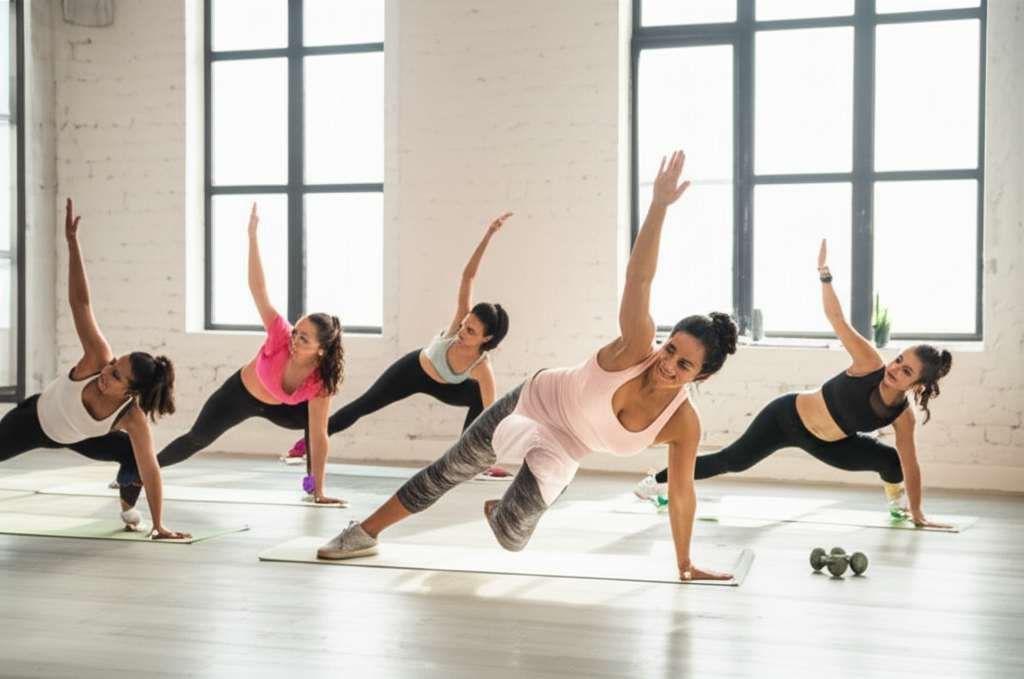
Quick Summary:
Get started with 5 effective beginner home workouts for women designed for simplicity and results. These easy-to-follow exercises require no special equipment, perfect for building strength, boosting metabolism, and gaining confidence right from your living room.
Starting a fitness journey can feel a bit overwhelming, especially when you’re just beginning. You might wonder where to start, what exercises are best, and if you even have the time or equipment to make a difference.
It’s totally normal to feel this way! Many people find the world of fitness confusing, with so much information out there. But the good news is, getting started with effective workouts at home is simpler than you think.
This guide is designed to cut through the noise and give you clear, easy steps. We’ll focus on five fundamental workouts that are perfect for beginners, requiring minimal to no equipment.

By the end of this guide, you’ll have a solid plan to start moving your body and feeling stronger, healthier, and more confident. Let’s dive into how you can transform your home into your personal fitness studio!
Why Home Workouts Are Great for Beginners
Home workouts offer a fantastic starting point for women new to exercise. They provide a private, comfortable space where you can learn and grow without feeling self-conscious. This environment allows you to focus entirely on your form and how your body feels.
The convenience is another major perk. No need to commute to a gym or worry about fitting in travel time. You can squeeze in a workout whenever it suits your schedule, whether it’s early morning, during a lunch break, or in the evening.
Plus, many effective exercises require no equipment at all, making them incredibly budget-friendly. You can build a solid fitness foundation using just your body weight and a little space. This accessibility makes starting much less daunting.
Your Essential Toolkit: What You’ll Need (Spoiler: Not Much!)
The beauty of beginner home workouts is that they are incredibly accessible. You don’t need a fancy gym membership or a closet full of specialized gear to get started and see results.
For these 5 essential workouts, here’s a simple list of what can enhance your experience, though most are optional:
- Comfortable Clothing: Wear something that allows you to move freely without restriction.
- Water Bottle: Staying hydrated is crucial during any physical activity.
- A Yoga Mat or Soft Surface: This provides cushioning for floor exercises, protecting your joints and making movements more comfortable. It’s not strictly necessary, but highly recommended for exercises like planks and push-ups.
- Optional: A Timer or Stopwatch: Useful for timing intervals in certain exercises. Most smartphones have this built-in.
- Optional: A Sturdy Chair: For modifications or specific exercises like triceps dips.
That’s it! You’re already equipped to begin. The most important tool is your willingness to start and your commitment to yourself.
5 Beginner Home Workouts for Women: Your Step-by-Step Guide
These five workouts are designed to be foundational, targeting major muscle groups and building essential strength and endurance. Each exercise is explained simply, with an emphasis on proper form to prevent injury and maximize effectiveness. Remember to listen to your body and modify as needed.
1. Squats: The Foundation of Lower Body Strength
Squats are a compound exercise, meaning they work multiple muscle groups at once, primarily your glutes, quads, and hamstrings. They are fundamental for building lower body strength and improving overall functional fitness.
How to Perform a Basic Squat:
- Starting Position: Stand with your feet shoulder-width apart, toes pointing slightly outward. Keep your chest up and your core engaged.
- The Descent: Imagine you are sitting back into a chair. Hinge at your hips and bend your knees, lowering your body as if you are going to sit down. Ensure your back stays straight and your knees track over your toes (don’t let them collapse inward).
- Depth: Aim to lower yourself until your thighs are parallel to the floor, or as low as you comfortably can while maintaining good form.
- The Ascent: Push through your heels to stand back up to the starting position, squeezing your glutes at the top.
Tips for Beginners:
- Form Over Depth: It’s more important to do a shallow squat with perfect form than a deep squat with poor form.
- Use a Chair for Support: If you’re struggling with balance, place a chair behind you and lightly tap it with your glutes as you descend.
- Focus on Core Engagement: Tightening your abdominal muscles helps support your spine.
How Many?
Start with 3 sets of 10-12 repetitions. Rest for 30-60 seconds between sets.
2. Push-Ups: Building Upper Body and Core Power
Push-ups are a fantastic full-body exercise that targets your chest, shoulders, triceps, and core. While they can be challenging, there are accessible modifications for beginners.
How to Perform a Modified (Knee) Push-Up:
- Starting Position: Get down on your hands and knees. Place your hands slightly wider than shoulder-width apart, fingers pointing forward. Your knees should be on the floor, and your back should be straight, forming a line from your head to your knees.
- The Descent: Keeping your core tight, slowly lower your chest towards the floor by bending your elbows. Keep your elbows tucked slightly towards your body, not flaring straight out to the sides.
- Depth: Lower until your chest is close to the floor.
- The Ascent: Push back up to the starting position, extending your arms fully.
Tips for Beginners:
- Engage Your Core: Imagine pulling your belly button towards your spine to keep your midsection stable.
- Control Your Movement: Focus on a slow, controlled descent and ascent rather than rushing.
- Progress Gradually: As you get stronger, you can progress to full push-ups on your toes. You can also try elevating your hands on a sturdy surface (like a counter or table) to make them easier.
How Many?
Aim for 3 sets of as many repetitions as you can with good form. If you can do 10-12, great! If it’s fewer, that’s okay too. Rest for 30-60 seconds between sets.
3. Lunges: Enhancing Balance and Leg Strength
Lunges are excellent for working your quadriceps, hamstrings, and glutes, and they also significantly improve balance and coordination. They are a unilateral exercise, meaning they work one leg at a time, which helps identify and correct muscle imbalances.
How to Perform a Basic Forward Lunge:
- Starting Position: Stand with your feet hip-width apart, hands on your hips or by your sides.
- The Step: Take a large step forward with one leg.
- The Descent: Lower your body until both knees are bent at approximately a 90-degree angle. Your front knee should be directly over your ankle, and your back knee should hover just above the floor. Keep your torso upright and your core engaged.
- The Ascent: Push off with your front foot to return to the starting position.
- Alternate Legs: Repeat the lunge with the other leg.
Tips for Beginners:
- Step Size Matters: If your step is too small, your front knee will go past your toes. If it’s too big, you’ll struggle to get back up. Find a comfortable, challenging step length.
- Watch Your Knee: Ensure your front knee doesn’t collapse inward and stays aligned with your front foot.
- Maintain Balance: Focus on keeping your torso upright and your core engaged to help with stability.
How Many?
Perform 3 sets of 8-10 repetitions per leg. Rest for 30-60 seconds between sets.
4. Plank: The Ultimate Core Stabilizer
The plank is a powerhouse exercise for building core strength and stability, which is vital for overall health, posture, and injury prevention. It engages your entire core, including your abs, obliques, and lower back.
How to Perform a Forearm Plank:
- Starting Position: Lie face down on your mat. Place your forearms on the floor, with your elbows directly beneath your shoulders and your hands clasped or flat on the floor. Your legs should be extended behind you.
- The Lift: Engage your core and glutes, then lift your body off the floor. Your body should form a straight line from your head to your heels.
- Hold: Maintain this position, focusing on keeping your hips from sagging or rising too high. Your neck should be in a neutral position, looking down at the floor.
Tips for Beginners:
- Don’t Hold Your Breath: Breathe steadily throughout the hold.
- Imagine a Straight Line: Visualize a ruler placed on your back to ensure your body is perfectly straight.
- Modify if Needed: If a full plank is too challenging, you can drop to your knees while maintaining the straight-line principle from head to knees.
How Many?
Hold for 3 sets of 20-30 seconds. Rest for 30-60 seconds between sets. Gradually increase the hold time as you get stronger.
5. Glute Bridges: Activating Your Posterior Chain
Glute bridges are excellent for strengthening your glutes, hamstrings, and lower back. They are a great way to activate these muscles, especially if you spend a lot of time sitting, which can lead to inactive glutes.
How to Perform a Glute Bridge:
- Starting Position: Lie on your back with your knees bent and feet flat on the floor, hip-width apart. Your arms should be resting by your sides, palms down.
- The Lift: Engage your glutes and core, then lift your hips off the floor until your body forms a straight line from your shoulders to your knees. Squeeze your glutes at the top of the movement.
- Hold: Pause for a second at the top, focusing on the glute contraction.
- The Descent: Slowly lower your hips back down to the starting position.
Tips for Beginners:
- Focus on Glute Squeeze: The primary movement should come from your glutes, not your lower back.
- Avoid Arching Your Back: Keep your core engaged to prevent excessive arching in your lower back.
- Control the Movement: Avoid using momentum to lift your hips; focus on a controlled contraction and release.
How Many?
Perform 3 sets of 12-15 repetitions. Rest for 30-60 seconds between sets.
Structuring Your Workouts: Putting It All Together
Now that you have your 5 essential beginner home workouts, the next step is to organize them into a routine. Consistency is key to seeing results and building sustainable habits. Here’s a simple way to structure your week.
Sample Weekly Schedule
You don’t need to work out every single day. Allowing your body rest and recovery is crucial for muscle repair and growth. Aim for a balance of activity and rest.
Here’s a sample schedule that incorporates these 5 workouts:
| Day | Workout Focus | Notes |
|---|---|---|
| Monday | Lower Body & Core | Squats, Lunges, Plank, Glute Bridges |
| Tuesday | Rest or Active Recovery | Light walk, stretching |
| Wednesday | Upper Body & Core | Push-Ups (modified), Plank, Glute Bridges |
| Thursday | Rest or Active Recovery | Light walk, stretching |
| Friday | Full Body Circuit | Perform one set of each of the 5 exercises back-to-back with minimal rest. Rest for 2-3 minutes, then repeat the circuit 2-3 times. |
| Saturday | Rest or Light Activity | Enjoy a leisurely walk or some gentle yoga. |
| Sunday | Rest | Complete rest day. |
Progression: How to Keep Improving
As you get stronger, you’ll want to challenge yourself to continue making progress. This is known as progressive overload, a fundamental principle in fitness.
- Increase Repetitions: Once you can comfortably complete the upper end of the suggested rep range (e.g., 12 squats), aim for 13 or 14 in the next workout.
- Increase Sets: If you’re consistently hitting your rep goals, consider adding an extra set.
- Decrease Rest Time: Gradually shorten the rest periods between sets to increase workout intensity.
- Increase Hold Time (for Plank): Aim to hold your plank for longer durations.
- Improve Form and Depth: Focus on making your movements even more controlled and potentially increasing the range of motion (e.g., deeper squats).
- Introduce Variations: Once you’ve mastered the basic moves, you can explore variations like sumo squats, decline push-ups (hands on a higher surface), or side planks. For more information on exercise variations and proper form, resources like the Mayo Clinic’s exercise guides offer excellent, science-backed advice.
Remember, progress isn’t always linear. Some days will feel easier than others. Celebrate your consistency and the small wins along the way!
Listen to Your Body: The Golden Rule
This is perhaps the most important advice for any beginner. Your body is your best guide, and pushing too hard too soon can lead to injury or burnout. Learning to distinguish between discomfort (muscle fatigue) and pain (sharp, sudden, or persistent) is a crucial skill.
Discomfort: This is the burning sensation you might feel in your muscles as they work. It’s a sign that you’re challenging them. This is generally okay and expected. If it feels like an ache or strain, stop.
Pain: Sharp, stabbing, or sudden pain is a warning sign. Never push through pain. Stop the exercise immediately. If the pain persists, it’s wise to consult a healthcare professional.
Rest and Recovery: Your muscles don’t grow stronger during the workout; they grow stronger during rest. Ensure you’re getting adequate sleep and allowing your body time to recover between workouts. This is when the real progress happens!
Hydration and Nutrition: Proper hydration and a balanced diet are essential partners to your exercise routine. They fuel your workouts and support your body’s recovery processes. For science-backed nutrition tips, consider resources from the Centers for Disease Control and Prevention (CDC), which provide valuable insights into healthy eating habits.
Frequently Asked Questions (FAQs)
Q1: How often should I do these beginner home workouts?
For beginners, aiming for 3-4 times per week is a great starting point. This allows for sufficient rest and recovery between sessions, which is crucial for muscle building and preventing fatigue.
Q2: How long will it take to see results?
Results vary from person to person and depend on factors like consistency, diet, and individual metabolism. However, many people start noticing improvements in strength and endurance within 4-8 weeks. Visible changes may take longer, but feeling stronger and more energetic can happen sooner!
Q3: What if I can’t do a full push-up or a deep squat?
That’s perfectly okay! These workouts are designed with modifications. For push-ups, start on your knees. For squats, don’t go lower than what feels comfortable and safe for your knees and hips. Focus on perfect form, even if it’s a smaller range of motion.
Q4: Do I need to warm up and cool down?
Yes, absolutely! A warm-up prepares your body for exercise, increasing blood flow and reducing injury risk. Dynamic stretches like arm circles and leg swings are great. A cool-down helps your heart rate return to normal and can improve flexibility. Static stretches, holding a stretch for 20-30 seconds, are ideal for the cool-down.
Q5: What if I have joint pain?
If you experience joint pain, it’s important to listen to your body. Avoid exercises that aggravate the pain. Focus on exercises that are low-impact and consult with a healthcare professional or physical therapist. They can provide personalized advice and modifications. Remember, the goal is to build strength safely.
Q6: Can these workouts help with weight loss?
Yes, these workouts can definitely contribute to weight loss! When combined with a healthy diet, they help build muscle, which boosts your metabolism (the rate at which your body burns calories). Increased physical activity also burns calories directly. For a comprehensive understanding of weight management, the National Institute of Diabetes and Digestive and Kidney Diseases (NIDDK) offers valuable information on healthy weight loss strategies.
Conclusion: Your Fitness Journey Starts Now
Embarking on a fitness journey at home can be one of the most empowering steps you take for your health and well-being. These 5 beginner home workouts for women provide a solid, accessible foundation to build strength, improve your overall fitness, and boost your confidence.
Remember to start slow, focus on proper form, and listen to your body. Consistency is more important than intensity when you’re just beginning. Even a few workouts a week, done consistently, will lead to significant improvements over time.
Don’t be discouraged if you don’t see drastic changes overnight. Celebrate each small victory – a few more reps, a slightly longer plank hold, or simply sticking to your schedule. These small wins are the building blocks of lasting healthy habits.
You have the tools, the knowledge, and the power within you to create positive change. So, put on your comfortable clothes, find your space, and let’s get moving. Your stronger, healthier self is waiting!
As an Amazon Associate, We earn from qualifying purchases. When you purchase a product through Amazon links on pulsefitguide.com, we may earn a small commission at no extra cost to you. This helps support the site and keep our content free.