
Unlock a stronger core and kickstart your fat loss journey with these 15 essential yoga poses, designed for beginners. This guide offers simple, effective yoga sequences to build core strength, boost metabolism, and support your weight loss goals.
Feeling like your weight loss efforts aren’t quite hitting the mark? You’re not alone. Many people find it confusing to understand why losing weight can be so tough. Sometimes, the missing piece isn’t about drastic diets or endless cardio, but about building a strong foundation.
A strong core is like the powerhouse of your body. It helps with everything from good posture to efficient movement, and yes, it plays a big role in burning calories. But don’t worry if you’ve never done yoga before!
This guide breaks down 15 beginner-friendly yoga poses that specifically target your core. We’ll go through each one step-by-step, making it easy to follow and build confidence. Get ready to discover how yoga can be a powerful, yet gentle, tool for your fat loss goals.
Why Core Strength Matters for Fat Loss
Think of your core as the central support system for your entire body. It’s not just your abs; it includes muscles in your abdomen, back, hips, and pelvis. When these muscles are strong and work together efficiently, they help your body move better and burn more energy.

A strong core stabilizes your spine and pelvis, which is crucial for almost every movement you make, from walking to lifting weights. This increased efficiency in movement means you burn more calories throughout the day, even when you’re not actively exercising.
Furthermore, a well-engaged core helps improve your posture. Better posture can make you appear slimmer and more toned. It also allows your other muscles to work more effectively, enhancing your overall fitness and metabolism. The connection between core strength and fat loss is clear: a stronger core leads to a more efficient, calorie-burning body.
The Beginner’s Guide to Yoga for Core Strength and Fat Loss
Yoga is a fantastic way to build core strength because it often involves holding poses that challenge these deep stabilizing muscles. Unlike high-impact exercises, yoga is generally low-impact, making it accessible for most beginners. Plus, the focus on breath and mindful movement can help reduce stress, which is often linked to weight gain.
We’ll cover poses that work your abdominal muscles, obliques (sides of your waist), and lower back. Each pose is explained in simple terms, with tips to help you get into the position safely and effectively. Remember, consistency is key!
Understanding Core Engagement in Yoga
Before we dive into the poses, let’s quickly talk about what “core engagement” means in yoga. It’s about actively drawing your belly button towards your spine. This isn’t about sucking in your stomach; it’s a gentle, internal tightening that supports your lower back and helps you find stability in poses.
When you engage your core, you’re activating those deep abdominal muscles that are essential for posture and movement. This engagement also helps to build heat in your body, which can contribute to calorie burning. It’s a subtle but powerful technique that makes a big difference in your practice and your results.
15 Essential Yoga Poses for Core Strength & Fat Loss
Here are 15 yoga poses that are excellent for building core strength and supporting your fat loss goals. We’ll start with simpler poses and move to slightly more challenging ones. Focus on proper form and breathing rather than speed.
1. Cat-Cow Pose (Marjaryasana-Bitilasana)
This gentle flow is a wonderful warm-up for your spine and core. It helps to improve flexibility and awaken your abdominal muscles. It’s a foundational pose that prepares you for deeper core work.
How to do it:
- Start on your hands and knees, with your wrists directly under your shoulders and your knees directly under your hips.
- Inhale as you drop your belly towards the floor, arch your back, and look up towards the ceiling (Cow Pose).
- Exhale as you round your spine towards the ceiling, tuck your chin to your chest, and draw your belly button in (Cat Pose).
- Repeat this flow for 5-10 breaths, coordinating your movement with your breath.
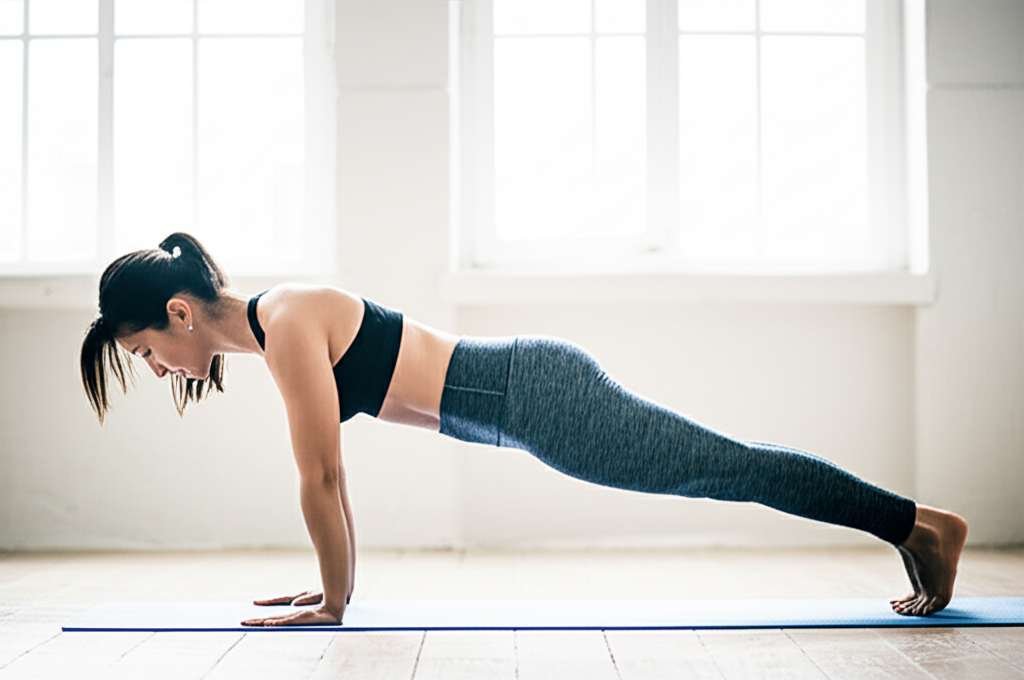
2. Plank Pose (Phalakasana)
Plank pose is a classic for a reason! It’s a full-body strengthener, with a huge emphasis on the core. It builds endurance and stability throughout your entire midsection.
How to do it:
- From hands and knees, step your feet back one at a time so you are in a straight line from your head to your heels.
- Keep your hands directly under your shoulders.
- Engage your core by drawing your belly button towards your spine.
- Don’t let your hips sag or lift too high.
- Hold for 30-60 seconds, breathing deeply. If this is too challenging, you can drop to your knees.
3. Forearm Plank Pose (Makara Adho Mukha Svanasana)
Similar to plank, but with your forearms on the ground, this variation can be slightly easier on the wrists and puts a different kind of challenge on your core muscles.
How to do it:
- Begin in a standard plank pose.
- Lower your forearms to the mat, keeping your elbows directly under your shoulders.
- Your forearms should be parallel to each other, or your hands can be clasped.
- Keep your body in a straight line from head to heels, engaging your core.
- Hold for 30-60 seconds.
4. Downward-Facing Dog (Adho Mukha Svanasana)
While often seen as a stretching pose, Downward-Facing Dog is a powerful core strengthener. It requires you to lift your hips and engage your abdominal muscles to maintain the inverted V-shape.
How to do it:
- Start on your hands and knees.
- Tuck your toes and lift your hips up and back, forming an inverted V-shape.
- Press through your hands, spreading your fingers wide.
- Allow your head to hang naturally between your arms.
- Gently engage your core to help lift your hips higher.
- Hold for 5-10 breaths.
5. Cobra Pose (Bhujangasana)
Cobra pose strengthens the muscles of your back and engages your core to lift your chest off the floor. It helps to counter the effects of sitting all day and builds strength in your posterior chain.
How to do it:
- Lie on your stomach with your legs extended and the tops of your feet on the floor.
- Place your hands flat on the mat under your shoulders.
- Inhale and press your hips and thighs into the mat.
- Lift your head and chest off the floor using the strength of your back and core, keeping your elbows slightly bent and close to your body.
- Don’t push up too high; focus on engaging your back muscles.
- Hold for a few breaths, then exhale to lower back down.
6. Locust Pose (Salabhasana)
Locust pose is a more intense backbend than Cobra and is excellent for strengthening the entire back body, including the lower back and glutes, which are crucial parts of your core.
How to do it:
- Lie on your stomach with your legs extended and your arms alongside your body, palms facing down.
- Inhale and lift your head, chest, arms, and legs off the floor simultaneously.
- Keep your neck long and gaze slightly forward.
- Engage your glutes and back muscles to hold yourself up.
- Hold for 5 breaths, then exhale to release.
- You can modify by lifting just your legs or just your upper body if a full pose is too much.
7. Boat Pose (Paripurna Navasana)
Boat pose is a classic ab-toning pose that directly targets your rectus abdominis (the “six-pack” muscles) and your deep transverse abdominis. It requires significant core strength to maintain.
How to do it:
- Sit on the floor with your knees bent and feet flat on the ground.
- Lean back slightly, keeping your spine straight.
- Lift your feet off the floor, bringing your shins parallel to the ground.
- Extend your arms forward, parallel to the floor, or keep your hands on the floor for support.
- Engage your core to keep your body in a V-shape.
- Hold for 15-30 seconds, breathing deeply.
- To make it harder, straighten your legs.
8. Side Plank Pose (Vasisthasana)
This pose specifically targets your obliques, the muscles on the sides of your waist, which are vital for a strong and stable core. It also improves balance.
How to do it:
- Start in a Plank Pose.
- Shift your weight to your right hand, stacking your feet.
- Lift your left arm towards the ceiling, opening your chest to the side.
- Your body should form a straight line from head to heels.
- Engage your core to prevent your hips from dropping.
- Hold for 15-30 seconds, then repeat on the other side.
- Modification: Drop your bottom knee to the floor for support.
9. Warrior III Pose (Virabhadrasana III)
Warrior III is a challenging balancing pose that requires significant engagement from your core to keep you stable. It also strengthens your legs and ankles.
How to do it:
- Start standing in Mountain Pose.
- Step your left foot back and place it on the mat at an angle.
- Inhale and sweep your arms overhead.
- Exhale and hinge forward at your hips, lifting your left leg straight back behind you.
- Your torso and lifted leg should form a straight line parallel to the floor.
- Extend your arms forward, or keep them by your sides for balance.
- Engage your core to keep your body steady.
- Hold for 5 breaths, then return to standing. Repeat on the other side.
10. Bridge Pose (Setu Bandhasana)
Bridge pose strengthens your glutes and hamstrings, which are part of your core complex, and also opens your chest. It’s a great way to build strength in the posterior chain.
How to do it:
- Lie on your back with your knees bent and feet flat on the floor, hip-width apart.
- Your arms should be alongside your body, palms facing down.
- Inhale and press through your feet to lift your hips off the floor.
- Keep your thighs parallel and engage your glutes.
- You can interlace your fingers underneath your back for a deeper stretch, or keep your arms flat on the floor.
- Hold for 5-10 breaths, then exhale to slowly lower back down.
11. Revolved Chair Pose (Parivrtta Utkatasana)
This twisting pose targets your obliques and strengthens your legs and core. Twists are excellent for stimulating digestion and detoxification, which can aid fat loss.
How to do it:
- Stand with your feet together or hip-width apart.
- Inhale and bend your knees as if sitting into a chair, bringing your hips back and down.
- As you exhale, bring your hands together at your chest.
- Twist your torso to the right, bringing your left elbow to the outside of your right knee.
- Press your elbow into your knee and your knee into your elbow to deepen the twist.
- Keep your hips level and gaze over your right shoulder.
- Hold for 3-5 breaths, then return to center and repeat on the other side.
12. Half Lord of the Fishes Pose (Ardha Matsyendrasana)
This seated twist is another excellent pose for engaging the obliques and promoting detoxification. It also helps to improve spinal mobility.
How to do it:
- Sit on the floor with your legs extended.
- Bend your right knee and place your right foot flat on the floor outside your left thigh.
- Bend your left knee and tuck your left foot in towards your right hip (or keep it extended if that’s more comfortable).
- Inhale and lengthen your spine.
- Exhale and twist your torso to the right, bringing your left elbow to the outside of your right knee, or hugging your right knee with your left arm.
- Place your right hand on the floor behind you for support.
- Look over your right shoulder.
- Hold for 5 breaths, then gently unwind and repeat on the other side.
13. Dolphin Plank Pose
This is a more advanced variation that combines elements of Dolphin Pose and Plank. It builds significant upper body and core strength.
How to do it:
- Start in Forearm Plank Pose.
- Keeping your forearms on the ground, press your hips up and back as if you were moving into Downward-Facing Dog, but with your forearms still on the mat.
- Your body will form an inverted V shape, with your elbows and forearms on the ground.
- Engage your core to keep your hips from sagging.
- Hold for 5-10 breaths.
14. Bird-Dog Pose
Bird-Dog is a fantastic pose for building stability and engaging the deep core muscles. It’s excellent for improving balance and coordinating opposite limbs.
How to do it:
- Start on your hands and knees, with your wrists under your shoulders and knees under your hips.
- Engage your core to keep your spine neutral.
- Inhale and extend your right arm straight forward and your left leg straight back, keeping your hips level.
- Imagine you are balancing a glass of water on your lower back.
- Keep your neck long and gaze down.
- Hold for a few breaths, then exhale to return to the starting position.
- Repeat on the other side (left arm forward, right leg back).
- Do 5-10 repetitions on each side.
15. Supine Spinal Twist (Supta Matsyendrasana)
This gentle twist is a great way to release tension in your back and abdomen. While it’s restorative, it still encourages core engagement to control the movement and hold the pose.
How to do it:
- Lie on your back with your knees bent and feet flat on the floor.
- Extend your arms out to the sides in a T-shape, palms facing down.
- Inhale and draw your knees into your chest.
- Exhale and gently let your knees fall to the right side, keeping your shoulders on the floor.
- Turn your head to the left if comfortable.
- Engage your core slightly to control the descent of your knees and maintain stability.
- Hold for 5-10 breaths, then inhale to bring your knees back to center.
- Repeat on the other side.
Creating Your Core-Strengthening Yoga Routine
To get the most out of these poses for fat loss, consistency is key. Aim to practice these poses at least 3-4 times a week. You don’t need to do all 15 poses every time; you can create a routine that works for you.
Here’s a sample beginner routine you can try:
Sample Beginner Core Yoga Routine (30 Minutes)
Warm-up (5 minutes):
- Cat-Cow Pose: 5-10 breaths
- Downward-Facing Dog: 5 breaths
Core Strengthening Sequence (20 minutes):
- Plank Pose: Hold for 30 seconds, repeat 2 times
- Forearm Plank Pose: Hold for 30 seconds, repeat 2 times
- Bird-Dog Pose: 8 repetitions per side
- Boat Pose: Hold for 15 seconds, repeat 3 times
- Side Plank Pose: Hold for 20 seconds per side, repeat 1 time on each side
- Cobra Pose: Hold for 3 breaths, repeat 3 times
- Bridge Pose: Hold for 5 breaths, repeat 2 times
Cool-down (5 minutes):
- Supine Spinal Twist: Hold for 30 seconds per side
- Rest in Savasana (Corpse Pose) for 1-2 minutes
Progression and Modifications
As you get stronger, you can increase the hold times for each pose, add more repetitions, or try more challenging variations. For example, in Plank Pose, you can try lifting one leg off the ground. In Boat Pose, try straightening your legs further.
Always listen to your body. If a pose feels too difficult or causes pain, don’t push it. Use the modifications provided, or take a break. Yoga is about mindful movement and self-awareness, not about forcing yourself into a position.
How Yoga Contributes to Fat Loss Beyond Core Strength
While core strength is a direct benefit, yoga’s impact on fat loss goes deeper. The mind-body connection cultivated through yoga can influence your eating habits and stress levels, both of which are critical for sustainable weight management.
1. Metabolism Boost: Building muscle, including core muscles, increases your resting metabolic rate. This means you burn more calories even when you’re not exercising. Yoga poses that engage multiple muscle groups, like Plank and Boat Pose, contribute significantly to this.
2. Stress Reduction: Chronic stress can lead to increased cortisol levels, which are linked to storing abdominal fat. Yoga’s emphasis on deep breathing and mindfulness helps to calm the nervous system and reduce stress, indirectly supporting fat loss efforts.
3. Improved Body Awareness: Yoga encourages you to pay attention to your body’s signals. This heightened awareness can translate to making healthier food choices and recognizing hunger and fullness cues more accurately.
4. Enhanced Digestion: Twisting poses, in particular, can stimulate digestive organs, promoting better digestion and nutrient absorption. Efficient digestion is a component of overall metabolic health.
5. Mindful Eating: The practice of mindfulness in yoga can extend to your eating habits. This means being more present during meals, savoring your food, and avoiding mindless snacking. According to research from the National Institutes of Health (NIH), mindfulness-based interventions can be effective in managing weight.
Integrating Yoga with Other Fat Loss Strategies
Yoga is a powerful tool, but for optimal fat loss, it’s best integrated with other healthy habits. Think of it as a well-rounded approach.
Nutrition: Focus on a balanced diet rich in whole foods, lean proteins, healthy fats, and plenty of fruits and vegetables. Portion control is also essential. While yoga helps build muscle and burn calories, proper nutrition fuels your body and supports fat loss.
Cardiovascular Exercise: While yoga builds strength and flexibility, incorporating some cardio like brisk walking, jogging, swimming, or cycling can further enhance calorie expenditure and cardiovascular health. Aim for at least 150 minutes of moderate-intensity cardio per week, as recommended by the Centers for Disease Control and Prevention (CDC).
Sleep: Adequate sleep is crucial for hormone regulation, including those that control appetite. Aim for 7-9 hours of quality sleep per night. Lack of sleep can hinder fat loss and increase cravings for unhealthy foods.
Hydration: Drinking enough water throughout the day supports metabolism, aids in digestion, and can help you feel fuller. Make water your primary beverage.
Frequently Asked Questions About Yoga for Core Strength and Fat Loss
Q1: How quickly can I expect to see results from doing yoga for core strength and fat loss?
A1: Results vary, but many beginners notice improved core stability and a sense of feeling stronger within a few weeks of consistent practice. Visible changes in fat loss will depend on the frequency and intensity of your practice, combined with your diet and other lifestyle factors. Focus on the feeling of strength and well-being first!
Q2: Do I need to be flexible to do yoga?
A2: Absolutely not! Yoga is for everyone, regardless of flexibility. The poses are designed to improve flexibility over time. Modifications are always available, and the focus is on what feels right for your body, not on achieving a certain look.
Q3: Can yoga replace cardio for fat loss?
A3: While yoga can burn calories and build muscle, which aids fat loss, it’s generally not as intense as traditional cardio for pure calorie expenditure. For optimal fat loss, it’s best to combine yoga with some form of cardiovascular exercise and a healthy diet.
Q4: How many calories can I expect to burn in a yoga class?
A4: The number of calories burned varies greatly depending on the style of yoga, your intensity, and your body weight. A gentle Hatha yoga class might burn around 150-200 calories per hour, while a more vigorous Vinyasa or Ashtanga class could burn 300-500 calories per hour. The poses mentioned here, when held with engagement, contribute to calorie burn and muscle building.
Q5: Is it okay to do yoga every day?
A5: Yes, practicing yoga daily can be beneficial, especially if you vary the intensity and style. Listen to your body. If you’re doing more intense core work, it’s good to have rest days or practice gentler poses on alternate days to allow your muscles to recover and rebuild.
Q6: What are the best times of day to practice yoga for fat loss?
A6: The best time is when you can be consistent! Some people find morning yoga energizes them and boosts their metabolism for the day. Others prefer evening yoga to de-stress and improve sleep. Experiment to see what fits your schedule and energy levels best.
Conclusion
Building a strong core is a foundational step toward not only better posture and less back pain but also effective fat loss. The 15 yoga poses we’ve explored offer a beginner-friendly pathway to strengthening your entire midsection. Remember, yoga is a journey, not a race.
By incorporating these poses into a regular practice, you’re investing in your overall health and well-being. You’re building lean muscle, improving your metabolism, reducing stress, and cultivating a deeper connection with your body. Be patient with yourself, celebrate small victories, and enjoy the process of becoming stronger and healthier, one pose at a time.
Combine your yoga practice with balanced nutrition and other healthy lifestyle choices, and you’ll be well on your way to achieving your fat loss goals in a sustainable and empowering way. Keep breathing, keep moving, and embrace the positive changes!
As an Amazon Associate, We earn from qualifying purchases. When you purchase a product through Amazon links on pulsefitguide.com, we may earn a small commission at no extra cost to you. This helps support the site and keep our content free.