
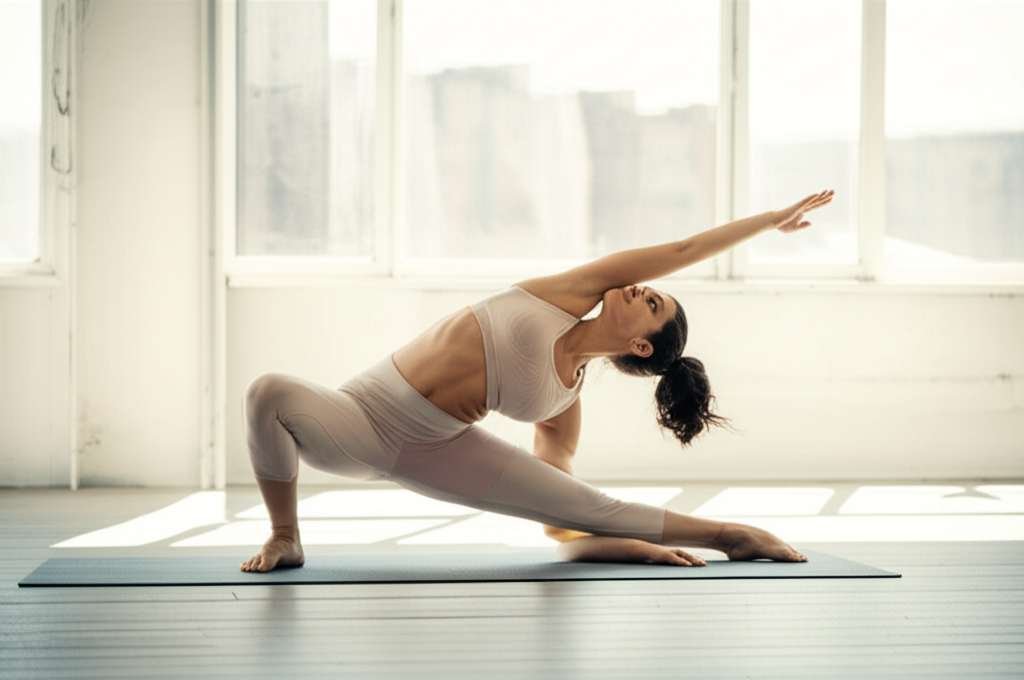
15 Morning Yoga Workouts for Weight Loss: Your Essential Beginner’s Guide
Start your day with invigorating morning yoga routines designed to boost metabolism, build strength, and support sustainable weight loss. This guide offers 15 beginner-friendly poses and sequences to kickstart your journey to a healthier you.
Waking up can be tough, especially when you’re trying to shed a few pounds. It’s easy to feel overwhelmed by all the advice out there, making the whole process seem confusing and frustrating.
But what if I told you that a simple, calming practice could actually help you reach your weight loss goals? Yoga, especially when done in the morning, can be a powerful tool.
It’s not about complicated poses or hours of sweat. It’s about gentle movement, mindful breathing, and building a consistent habit that makes you feel good.

In this guide, we’ll explore 15 morning yoga workouts perfect for beginners. We’ll break down how each pose helps and how to put them together into a routine that works for you.
Let’s get started on making your mornings a little brighter and a lot more effective for your health!
Why Morning Yoga for Weight Loss?
Starting your day with yoga can be a game-changer for weight loss. It’s not just about burning calories; it’s about setting a positive tone for the entire day.
Morning yoga helps to wake up your body and mind, increasing your metabolism right from the start. This means your body burns more calories throughout the day, even when you’re not actively exercising. Plus, it can reduce stress, which often leads to emotional eating.
Consistency is key to any weight loss plan. By making yoga a part of your morning routine, you build a healthy habit that’s sustainable. This can lead to better food choices and a more active lifestyle overall.
How Yoga Supports Weight Loss
Yoga offers a unique, holistic approach to weight loss that goes beyond just physical exertion. It addresses multiple factors that contribute to a healthy body weight.
Boosting Metabolism
Certain yoga poses, especially those that involve twisting or engaging core muscles, can help stimulate your digestive system and boost your metabolic rate. A higher metabolism means your body burns more calories at rest.
Building Muscle Strength
Many yoga poses require you to support your own body weight. Holding these poses, like Plank or Warrior poses, builds lean muscle mass. Muscle tissue burns more calories than fat tissue, even when you’re not exercising.
Reducing Stress and Cortisol Levels
Stress is a major player in weight gain, particularly around the belly. Chronic stress leads to higher levels of cortisol, a hormone that can increase appetite and encourage fat storage. Yoga’s emphasis on deep breathing and mindfulness helps to calm the nervous system and lower cortisol levels.
Improving Mindful Eating Habits
The mindfulness cultivated through yoga can extend to your eating habits. By becoming more aware of your body’s signals, you’re more likely to recognize hunger and fullness cues, preventing overeating.
Enhancing Sleep Quality
Regular yoga practice can improve sleep quality. When you sleep well, your body is better able to regulate hormones that control appetite and metabolism, such as ghrelin and leptin.
Getting Started: Essential Tips for Beginners
Starting a new yoga practice can feel a bit daunting, but with a few simple tips, you can make it a smooth and enjoyable experience.
1. Find a Comfortable Space
You don’t need a fancy studio. A quiet corner in your bedroom or living room will do. Make sure you have enough space to move your arms and legs freely.
2. Get the Right Gear
A yoga mat is essential for grip and cushioning. Wear comfortable clothing that allows you to move easily. You might also want a water bottle to stay hydrated.
3. Start Slow and Listen to Your Body
Don’t push yourself too hard, especially when you’re new. If a pose feels uncomfortable or painful, ease out of it. Yoga is about progress, not perfection.
4. Focus on Your Breath
Your breath is your guide in yoga. Try to breathe deeply and evenly through your nose. This helps to calm your mind and deepen your stretches.
5. Consistency Over Intensity
It’s better to practice for 15-20 minutes every day than for an hour once a week. Building a consistent habit is crucial for seeing results and making yoga a lasting part of your lifestyle.
6. Stay Hydrated
Drink a glass of water before and after your yoga session. Proper hydration is vital for metabolism and overall health. You can learn more about the importance of hydration from the Centers for Disease Control and Prevention (CDC).
15 Morning Yoga Workouts for Weight Loss
Here are 15 beginner-friendly yoga poses and sequences that you can incorporate into your morning routine for weight loss. Aim to hold each pose for 5-10 breaths unless otherwise noted.
1. Cat-Cow Pose (Marjaryasana-Bitilasana)
This gentle flow warms up the spine and stimulates abdominal organs. It’s a fantastic way to wake up your core and improve flexibility.
- Start on your hands and knees, wrists under shoulders, knees under hips.
- Inhale: Drop your belly, arch your back, and lift your head and tailbone (Cow pose).
- Exhale: Round your spine, tuck your chin to your chest, and draw your navel towards your spine (Cat pose).
- Flow between these two poses for 5-10 breaths.
2. Downward-Facing Dog (Adho Mukha Svanasana)
This classic pose stretches the entire body, builds upper body strength, and can boost your metabolism. It’s also a mild inversion, which can help calm the mind.
- From hands and knees, tuck your toes and lift your hips up and back, forming an inverted V-shape.
- Keep your hands shoulder-width apart and feet hip-width apart.
- Press your palms into the mat, lengthen your spine, and gently pedal your feet if your hamstrings are tight.
- Let your head hang freely.
3. Plank Pose (Phalakasana)
A powerhouse pose for building core strength, which is essential for a strong metabolism and supporting your spine. It also engages your arms, shoulders, and legs.
- From Downward-Facing Dog, shift your weight forward so your shoulders are over your wrists and your body forms a straight line from head to heels.
- Engage your core by drawing your navel towards your spine.
- Keep your neck long and gaze slightly forward.
- Hold for 30-60 seconds. If this is too challenging, you can drop to your knees.
4. Cobra Pose (Bhujangasana)
This gentle backbend opens the chest and shoulders, counteracting the effects of sitting or slouching. It also stimulates the abdominal organs.
- Lie on your stomach with your legs extended and the tops of your feet on the mat.
- Place your hands flat on the mat under your shoulders.
- Inhale: Press into your hands and lift your head and chest off the floor, keeping your hips on the mat.
- Keep your elbows close to your body and draw your shoulder blades down your back.
- Only lift as high as comfortable.
5. Warrior II Pose (Virabhadrasana II)
This strengthening pose builds stamina and tones the legs, hips, and core. It also opens the chest and shoulders, promoting good posture.
- Step your feet wide apart, about 3-4 feet.
- Turn your right foot out 90 degrees and your left foot in slightly.
- Align your right heel with the arch of your left foot.
- Inhale: Raise your arms parallel to the floor, reaching them out to the sides.
- Exhale: Bend your right knee over your right ankle, keeping your thigh parallel to the floor if possible.
- Gaze over your right fingertips.
- Hold for 5-10 breaths, then switch sides.
6. Triangle Pose (Trikonasana)
A great pose for stretching the legs, hips, and spine, while also opening the chest and shoulders. It can help improve digestion and relieve stress.
- From a standing position (can be done from Warrior II), straighten your front leg.
- Hinge at your hips, reaching your right hand forward as far as possible.
- Then, lower your right hand to your shin, ankle, or a block, and extend your left arm straight up towards the ceiling.
- Keep both legs engaged and your chest open.
- Gaze up at your top hand or straight ahead if that’s more comfortable for your neck.
- Hold for 5-10 breaths, then switch sides.
7. Chair Pose (Utkatasana)
This pose is excellent for building heat and strengthening the legs, ankles, and core. It’s like a mini squat that ignites your metabolism.
- Stand with your feet together or hip-width apart.
- Inhale: Raise your arms overhead.
- Exhale: Bend your knees as if sitting back into a chair, keeping your chest lifted.
- Ensure your knees do not go past your toes.
- Engage your core and thighs.
- Hold for 5-10 breaths.
8. Boat Pose (Paripurna Navasana)
A challenging but rewarding pose for strengthening the core, hip flexors, and spine. A strong core is vital for stability and metabolic function.
- Sit on the floor with your knees bent and feet flat.
- Lean back slightly, keeping your spine straight.
- Lift your feet off the floor, bringing your shins parallel to the ground.
- Extend your arms forward, parallel to the floor.
- Engage your abdominal muscles.
- Hold for 5-10 breaths. For a modification, keep your toes lightly touching the floor.
9. Half Lord of the Fishes Pose (Ardha Matsyendrasana)
This seated twist is fantastic for detoxifying the body, improving digestion, and increasing spinal mobility. Twists can help “wring out” tension and toxins.
- Sit with your legs extended.
- Bend your right knee and place your right foot outside your left thigh.
- Keep your left leg extended or bend it, tucking your left foot near your right hip.
- Inhale: Lengthen your spine.
- Exhale: Twist your torso to the right, bringing your left elbow to the outside of your right knee, or hugging your knee.
- Look over your right shoulder.
- Hold for 5-10 breaths, then switch sides.
10. Bridge Pose (Setu Bandha Sarvangasana)
This gentle backbend opens the chest and shoulders, strengthens the glutes and hamstrings, and can help to calm the mind. It also stimulates metabolism.
- Lie on your back with your knees bent and feet flat on the floor, hip-width apart, close to your hips.
- Inhale: Press into your feet and lift your hips off the floor.
- Keep your thighs parallel and engage your glutes.
- You can keep your arms by your sides, palms down, or interlace your fingers underneath your back for a deeper stretch.
- Hold for 5-10 breaths.
11. Bow Pose (Dhanurasana)
A more intense backbend that opens the chest and shoulders, strengthens the back muscles, and stimulates abdominal organs. This pose can significantly boost energy.
- Lie on your stomach with your knees bent and heels towards your glutes.
- Reach back and grab your ankles or feet.
- Inhale: Lift your chest, thighs, and head off the floor, drawing your feet away from you.
- Keep your hips grounded.
- Hold for 3-5 breaths.
12. Extended Side Angle Pose (Utthita Parsvakonasana)
This pose stretches the sides of the body, legs, and hips, while opening the chest and shoulders. It’s a great pose for building stamina and toning the body.
- From Warrior II, with your front knee bent, bring your front forearm to rest on your front thigh.
- Extend your top arm overhead, reaching past your ear, creating a long line from your back heel to your fingertips.
- Alternatively, you can bring your front hand to the floor outside your front foot or to a block.
- Keep your chest open and gaze upward.
- Hold for 5-10 breaths, then switch sides.
13. Revolved Chair Pose (Parivrtta Utkatasana)
This twist in a chair pose engages the core deeply and detoxifies the abdominal organs. It’s a challenging pose that builds heat and strengthens the legs.
- Start in Chair Pose (Utkatasana).
- Bring your hands to prayer position at your chest.
- Exhale: Twist your torso to one side, bringing the opposite elbow to the outside of your bent knee.
- Keep your hips level and press your palms together to deepen the twist.
- Hold for 5 breaths, then switch sides.
14. Sun Salutation A (Surya Namaskar A) – Modified for Beginners
Sun Salutations are a flowing sequence that warms the body, builds heat, and can be a great cardio workout. Here’s a simplified version.
- Mountain Pose (Tadasana): Stand tall.
- Inhale: Reach arms overhead.
- Exhale: Forward Fold (Uttanasana).
- Inhale: Halfway Lift (Ardha Uttanasana) – flat back.
- Exhale: Step back to Plank Pose.
- Lower knees, chest, and chin (or Chaturanga if you’re ready).
- Inhale: Cobra Pose (Bhujangasana).
- Exhale: Downward-Facing Dog (Adho Mukha Svanasana).
- Hold Downward Dog for 5 breaths.
- Inhale: Step or hop feet to the front of the mat for Halfway Lift.
- Exhale: Forward Fold.
- Inhale: Rise up, reaching arms overhead.
- Exhale: Hands to prayer at your chest (Mountain Pose).
- Repeat 3-5 times.
15. Corpse Pose (Savasana)
Though it looks like rest, Savasana is crucial. It allows your body to integrate the benefits of the practice and helps to reduce stress. This is essential for weight management as stress can hinder progress.
- Lie flat on your back.
- Let your legs fall open naturally, and let your arms rest by your sides, palms facing up.
- Close your eyes and allow your body to completely relax.
- Stay here for 5-10 minutes.
Sample Morning Yoga Routines for Weight Loss
Here are a few sample routines you can try, combining the poses above. Remember to adjust them to your comfort level.
Routine 1: Gentle Wake-Up (15-20 minutes)
Focus: Gentle movement, spine flexibility, and breath awareness.
- Cat-Cow Pose (5-10 breaths)
- Downward-Facing Dog (5 breaths)
- Plank Pose (hold 30 seconds)
- Cobra Pose (5 breaths)
- Bridge Pose (5 breaths)
- Seated Twist (Ardha Matsyendrasana) (5 breaths each side)
- Corpse Pose (5 minutes)
Routine 2: Energizing Flow (20-25 minutes)
Focus: Building heat, strength, and core engagement.
- Sun Salutation A (Modified) (3-5 rounds)
- Chair Pose (5 breaths)
- Warrior II (5 breaths each side)
- Triangle Pose (5 breaths each side)
- Boat Pose (hold 5 breaths)
- Plank Pose (hold 1 minute)
- Corpse Pose (5 minutes)
Routine 3: Full Body Tone (30 minutes)
Focus: A comprehensive workout targeting strength and flexibility.
- Cat-Cow Pose (5 breaths)
- Downward-Facing Dog (5 breaths)
- Sun Salutation A (Modified) (3 rounds)
- Chair Pose (5 breaths)
- Warrior II (5 breaths each side)
- Extended Side Angle Pose (5 breaths each side)
- Revolved Chair Pose (5 breaths each side)
- Boat Pose (hold 10 breaths)
- Bridge Pose (10 breaths)
- Bow Pose (3 breaths)
- Corpse Pose (7-10 minutes)
Yoga for Weight Loss: What to Expect
When you start a morning yoga practice for weight loss, it’s important to have realistic expectations. Yoga is a powerful tool, but it works best when combined with a balanced diet and a healthy lifestyle.
You might not see dramatic changes overnight, and that’s perfectly normal. The benefits of yoga for weight loss are often gradual but incredibly sustainable. You’ll likely notice improvements in your energy levels, mood, and overall sense of well-being fairly quickly.
Physically, you might start to feel stronger and more toned as you build muscle. Your flexibility will improve, and you might find that everyday movements become easier. Over time, with consistent practice and mindful eating, you can expect to see a gradual and healthy reduction in body weight.
Remember that weight loss is just one aspect of health. Yoga also contributes to mental clarity, stress reduction, and a deeper connection with your body, all of which are invaluable for long-term health and happiness. You can find more information on healthy weight management from resources like the National Heart, Lung, and Blood Institute (NHLBI).
Frequently Asked Questions (FAQ)
Q1: How long should I practice morning yoga for weight loss?
A1: For beginners, starting with 15-20 minutes most mornings is a great goal. As you get more comfortable, you can gradually increase the duration to 30 minutes or more.
Q2: Do I need to be flexible to do yoga for weight loss?
A2: Absolutely not! Yoga is for every body, regardless of flexibility. The practice itself helps you build flexibility over time. Focus on moving with your breath and listening to your body.
Q3: Can yoga alone help me lose weight?
A3: Yoga is a fantastic component of a weight loss plan. It helps build muscle, boost metabolism, and reduce stress. However, for optimal results, it’s best combined with a balanced, nutritious diet and other forms of physical activity.
Q4: What if I can’t do some of the poses?
A4: That’s completely fine! Modifications are always available. For example, you can use blocks to bring the floor closer in Triangle Pose or keep your knees on the floor in Plank Pose. The goal is to practice safely and mindfully.
Q5: How soon will I see results?
A5: Results vary for everyone. You might feel more energetic within days. Physical changes like weight loss or toning usually take several weeks to months of consistent practice and healthy habits.
Q6: Should I eat before or after my morning yoga practice?
A6: It’s generally best to practice yoga on an empty stomach. If you need something, a light snack like a banana or a few nuts about an hour before is usually fine. Drink water after your practice.
Conclusion
Embarking on a weight loss journey can feel overwhelming, but integrating 15 morning yoga workouts into your routine offers a gentle, effective, and empowering path forward. By focusing on breath, mindful movement, and consistency, you’re not just working towards a physical transformation; you’re cultivating a deeper connection with yourself and building sustainable healthy habits.
These poses and sequences are designed to be accessible for beginners, helping to boost your metabolism, build strength, reduce stress, and set a positive tone for your entire day. Remember to listen to your body, be patient with yourself, and celebrate every step of progress. Your morning yoga practice is a powerful investment in your health and well-being, leading you towards a more vibrant and balanced life.
As an Amazon Associate, We earn from qualifying purchases. When you purchase a product through Amazon links on pulsefitguide.com, we may earn a small commission at no extra cost to you. This helps support the site and keep our content free.