

15 Morning Strength Training Exercises: Essential Guide
Quick Summary: Kickstart your day with these 15 beginner-friendly morning strength training exercises. They build muscle, boost metabolism, and improve energy levels without requiring much time or equipment. Perfect for anyone looking to add effective strength work to their routine, these moves are designed for simplicity and maximum impact.
Feeling a bit sluggish when you wake up? It’s totally normal! Many of us struggle to get moving in the morning, and the thought of a tough workout can seem impossible.
But what if starting your day with a bit of strength training could actually make you feel more energized and focused? It’s true! Building a little muscle in the morning can help your body burn more calories throughout the day and prepare you for whatever comes your way.
This guide is here to make it super simple. We’ll walk you through 15 easy strength exercises you can do right at home, no fancy gym needed. Get ready to feel stronger and more alive from the moment you wake up!
Why Morning Strength Training is a Game-Changer
Starting your day with strength training might sound challenging, but it comes with some amazing benefits that can truly transform your mornings and your overall well-being. It’s not about lifting heavy weights right away; it’s about activating your muscles and setting a positive tone for the rest of your day.
One of the biggest perks is boosting your metabolism. When you build muscle, your body becomes more efficient at burning calories, even when you’re at rest. Doing this first thing in the morning can help keep that calorie-burning engine running strong all day long.
Beyond the physical, morning workouts can significantly improve your mood and mental clarity. Exercise releases endorphins, those feel-good chemicals that help reduce stress and boost your spirits. This can lead to better focus and a more positive outlook as you tackle your daily tasks.
Consistency is key for any fitness goal, and establishing a morning routine can make it easier to stick with your training. It’s a great way to get your workout done before the day’s distractions pop up, ensuring you prioritize your health and fitness.
For beginners, starting with foundational strength exercises is crucial. These moves build a solid base, improve your form, and help prevent injuries as you progress. This guide focuses on exercises that are effective yet accessible for everyone, regardless of your current fitness level.
Getting Started: What You Need
The beauty of morning strength training is that you don’t need a lot of fancy equipment to get started. Many effective exercises can be done using just your body weight, making them super convenient and affordable.
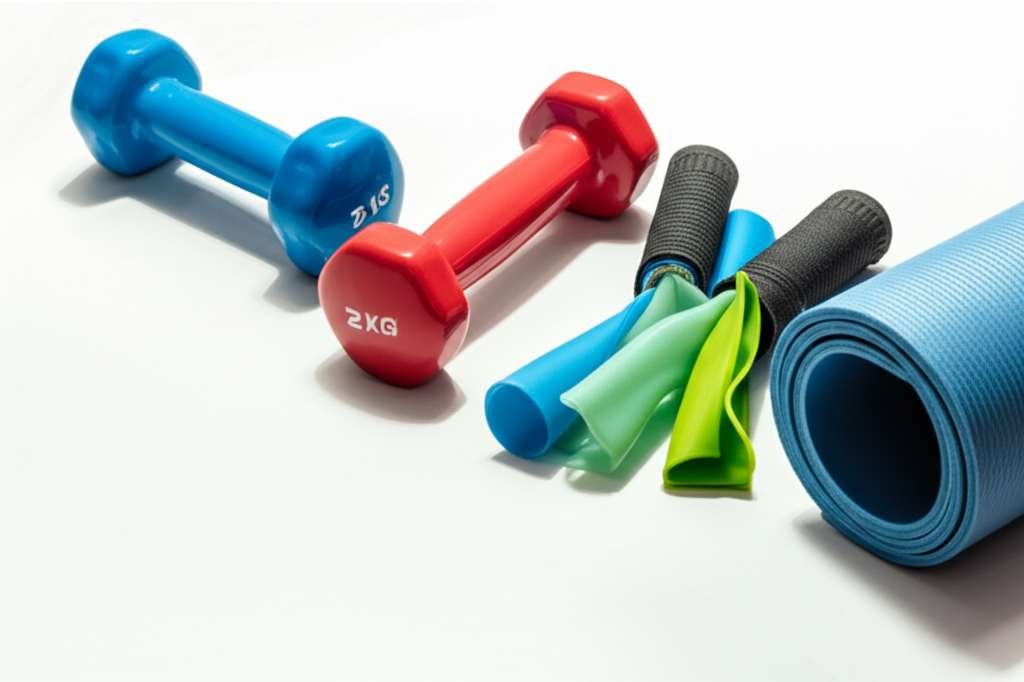
For some exercises, a comfortable mat can make a big difference by providing cushioning and preventing slips. If you plan to do exercises that involve resistance, a set of resistance bands or a pair of light dumbbells can be great additions as you get more comfortable.
Here’s a quick look at what might be helpful:
- Your Body: This is your primary tool!
- Comfortable Workout Clothes: Anything that allows you to move freely.
- Water Bottle: Staying hydrated is important, especially before and after your workout.
- Optional: Yoga Mat: For comfort and grip during floor exercises.
- Optional: Resistance Bands: Great for adding extra challenge to many moves.
- Optional: Light Dumbbells: A good starting point for adding weight.
The 15 Morning Strength Training Exercises
These exercises are designed to work different muscle groups and can be performed in a circuit or as individual routines. Focus on controlled movements and proper form. If you’re new to exercise, it’s always a good idea to check with your doctor first, especially if you have any underlying health conditions. For more information on exercise safety, the Centers for Disease Control and Prevention (CDC) offers excellent guidelines on physical activity.
Upper Body Focus
Let’s start by waking up those upper body muscles. These moves will help build strength in your arms, shoulders, and chest.
- Push-Ups (Knee or Standard)
Push-ups are a classic for a reason! They work your chest, shoulders, and triceps. If standard push-ups are too tough, start on your knees. Keep your body in a straight line from head to knees (or heels) and lower your chest towards the floor, then push back up.
How to:
- Start on your hands and knees (for knee push-ups) or hands and toes (for standard push-ups), with hands slightly wider than shoulder-width apart.
- Lower your chest towards the floor, keeping your elbows tucked slightly.
- Push back up to the starting position.
- Plank
The plank is a fantastic exercise for your core, but it also engages your shoulders and arms to keep you stable. It’s all about holding a strong, straight line.
How to:
- Start on your forearms and toes, keeping your body in a straight line from head to heels.
- Engage your core and glutes.
- Hold for 30-60 seconds.
- Dumbbell Rows (or Resistance Band Rows)
These target your back muscles, which are essential for good posture and overall upper body strength. If you don’t have dumbbells, a resistance band works just as well.
How to (Dumbbell):
- Stand with feet hip-width apart, holding a dumbbell in each hand.
- Hinge at your hips, keeping your back straight, until your torso is nearly parallel to the floor.
- Pull the dumbbells up towards your chest, squeezing your shoulder blades together.
- Lower the weights slowly.
How to (Resistance Band):
- Anchor a resistance band around a sturdy object at chest height.
- Hold the ends of the band with arms extended.
- Pull the band towards your chest, squeezing your shoulder blades.
- Return to the start slowly.
- Overhead Press (Light Dumbbells or Resistance Band)
This exercise is great for strengthening your shoulders and upper chest. It helps improve shoulder stability and strength.
How to (Dumbbell):
- Stand with feet shoulder-width apart, holding a dumbbell in each hand at shoulder height, palms facing forward.
- Press the dumbbells straight up overhead until your arms are fully extended.
- Lower the dumbbells slowly back to shoulder height.
How to (Resistance Band):
- Stand on the middle of a resistance band with feet shoulder-width apart.
- Hold the ends of the band at shoulder height, palms facing forward.
- Press the band straight up overhead.
- Lower slowly.
- Bicep Curls (Light Dumbbells or Resistance Band)
A classic for building those arm muscles. Keep your elbows tucked in and focus on the squeeze at the top.
How to (Dumbbell):
- Stand with feet hip-width apart, holding a dumbbell in each hand, palms facing forward.
- Keeping your elbows close to your sides, curl the weights up towards your shoulders.
- Squeeze your biceps at the top.
- Lower the weights slowly.
How to (Resistance Band):
- Stand on the middle of a resistance band, holding the ends with palms facing forward.
- Curl the band upwards towards your shoulders, keeping elbows tucked.
- Lower slowly.
Lower Body Focus
Now, let’s build strength in your legs and glutes. These are your body’s powerhouse muscles!
- Squats (Bodyweight or Goblet Squat with Dumbbell)
Squats are fundamental for lower body strength, targeting your quads, hamstrings, and glutes. Start with bodyweight and progress to holding a single dumbbell (goblet squat) for added challenge.
How to (Bodyweight):
- Stand with feet shoulder-width apart, toes pointing slightly outward.
- Lower your hips as if sitting back into a chair, keeping your chest up and back straight.
- Go as low as comfortable, aiming for thighs parallel to the floor.
- Push through your heels to return to standing.
How to (Goblet Squat):
- Hold one dumbbell vertically against your chest with both hands.
- Perform a squat as described above.
- Lunges (Forward or Reverse)
Lunges are excellent for balance and working each leg independently. They target your quads, hamstrings, and glutes.
How to (Forward Lunge):
- Step forward with one leg, lowering your hips until both knees are bent at approximately 90-degree angles.
- Ensure your front knee is directly above your ankle and your back knee hovers just off the floor.
- Push off your front foot to return to the starting position.
- Repeat on the other leg.
How to (Reverse Lunge):
- Step backward with one leg, lowering your hips until both knees are bent at approximately 90-degree angles.
- Ensure your front knee is directly above your ankle and your back knee hovers just off the floor.
- Push off your back foot to return to the starting position.
- Repeat on the other leg.
- Glute Bridges
These are brilliant for activating your glutes and hamstrings, crucial for a strong posterior chain and better posture. They’re also gentle on the back.
How to:
- Lie on your back with knees bent and feet flat on the floor, hip-width apart.
- Lift your hips off the floor by squeezing your glutes, creating a straight line from your shoulders to your knees.
- Hold for a second at the top, then slowly lower back down.
- Calf Raises
Don’t forget your calves! These simple raises strengthen your lower legs, which are important for walking, running, and jumping.
How to:
- Stand with feet hip-width apart, holding onto a wall or chair for balance if needed.
- Slowly rise up onto the balls of your feet, lifting your heels as high as possible.
- Hold briefly at the top.
- Lower your heels back down slowly.
- Wall Sit
This isometric exercise is a fantastic way to build endurance in your quadriceps. It requires no movement, just sustained effort.
How to:
- Lean against a wall and slide down until your knees are bent at a 90-degree angle, as if you’re sitting in an invisible chair.
- Keep your back flat against the wall and your feet shoulder-width apart.
- Hold this position for 30-60 seconds.
Full Body & Core Focus
These exercises engage multiple muscle groups at once, giving you a comprehensive workout and improving your core strength.
- Bird-Dog
This exercise is excellent for core stability, balance, and coordination. It also gently works your back and glutes.
How to:
- Start on your hands and knees, with your hands directly under your shoulders and knees under your hips.
- Extend your right arm straight forward and your left leg straight back, keeping your core engaged and hips level.
- Hold for a moment, then return to the starting position.
- Repeat on the opposite side (left arm, right leg).
- Jumping Jacks
A classic cardio move that also provides a full-body workout, warming you up and getting your heart rate up. It engages your legs, arms, and core.
How to:
- Start standing with feet together and arms at your sides.
- Jump, spreading your feet wider than hip-width and bringing your arms overhead.
- Jump again, returning to the starting position.
- Mountain Climbers
This dynamic exercise works your core, shoulders, and legs, while also getting your heart rate up for a cardio boost.
How to:
- Start in a high plank position (on your hands and toes).
- Bring one knee towards your chest, then quickly switch legs, as if you’re running in place.
- Keep your core tight and hips as stable as possible.
- Inchworm
This exercise is a great way to warm up your entire body, stretching your hamstrings and strengthening your shoulders and core.
How to:
- Start standing, then bend at your hips and place your hands on the floor in front of your feet.
- Walk your hands forward until you are in a high plank position.
- Walk your feet forward towards your hands, keeping your legs as straight as possible.
- Stand up. Repeat.
- Supermans
This exercise is fantastic for strengthening your lower back, glutes, and hamstrings, improving your posture and preventing back pain.
How to:
- Lie face down on the floor with your arms and legs extended.
- Simultaneously lift your arms, chest, and legs off the floor, squeezing your glutes and lower back muscles.
- Hold for a moment, then slowly lower back down.
Structuring Your Morning Workout
Getting the most out of your morning strength training is all about how you put it together. It doesn’t have to be complicated, but a little structure can make a big difference in how effective and enjoyable your workout is.
Think about starting with a quick warm-up to get your blood flowing and your muscles ready. This could be as simple as a few minutes of light cardio like jogging in place or some dynamic stretches like arm circles and leg swings. For more on warm-ups, resources like the Mayo Clinic provide great advice on preparing your body for activity.
Once you’re warmed up, you can move into your strength exercises. For beginners, aiming for 2-3 sets of 10-15 repetitions for each exercise is a good starting point. Focus on performing each movement with good form rather than rushing through them.
You can choose a few exercises to focus on each day, or you can try doing them in a circuit. A circuit means you do one set of each exercise back-to-back with minimal rest in between, then repeat the entire circuit 2-3 times. This keeps your heart rate up and is a time-efficient way to get a full-body workout.
Here’s a sample workout structure:
Sample Morning Strength Circuit (Beginner)
Perform each exercise for the recommended reps, move to the next with minimal rest, and rest for 60-90 seconds after completing one full round. Repeat the circuit 2-3 times.
| Exercise | Sets | Reps | Focus |
|---|---|---|---|
| Squats | 2-3 | 10-15 | Lower Body |
| Push-Ups (Knee or Standard) | 2-3 | As many as possible (AMRAP) with good form | Upper Body / Chest / Arms |
| Lunges (Alternating Legs) | 2-3 | 10-12 per leg | Lower Body / Balance |
| Plank | 2-3 | Hold for 30-60 seconds | Core / Stability |
| Dumbbell Rows (or Band Rows) | 2-3 | 10-15 per arm | Upper Body / Back |
| Glute Bridges | 2-3 | 15-20 | Lower Body / Glutes |
| Bird-Dog | 2-3 | 10-12 per side | Core / Balance |
As you get stronger, you can increase the number of reps, sets, or the duration of holds. You can also start incorporating light weights or resistance bands to make the exercises more challenging.
Progression and Listening to Your Body
It’s super important to remember that progress isn’t always linear, and that’s perfectly okay! Some days you might feel stronger and more energetic than others, and that’s a normal part of the process.
When you’re starting out, focus on mastering the form of each exercise. Watching videos or even recording yourself can help you check your technique. Good form is your best friend when it comes to preventing injuries and ensuring you’re actually working the muscles you intend to.
As you become more comfortable with the exercises, you can gradually increase the difficulty. This could mean:
- Increasing Reps or Sets: If 10 reps feel easy, try for 12 or 15. If 2 sets feel manageable, try 3.
- Adding Resistance: Introduce light dumbbells or resistance bands to exercises like squats, lunges, and rows.
- Decreasing Rest Time: As your endurance improves, you can shorten the rest periods between sets or exercises.
- Trying Variations: Once you’ve mastered a standard push-up, you could try incline push-ups (hands on a raised surface) or decline push-ups (feet on a raised surface).
Most importantly, listen to your body. If something feels painful (not just challenging), stop. It’s better to take a rest day or modify an exercise than to push through pain and risk injury. For more on safe exercise practices, the National Institutes of Health (NIH) offers a wealth of information on staying healthy and active.
Frequently Asked Questions (FAQ)
Q1: How long should my morning strength training session be?
For beginners, aiming for 20-30 minutes is a great start. This includes a short warm-up, the workout itself, and a brief cool-down. Consistency is more important than duration when you’re starting out.
Q2: Do I need to do cardio in the morning too?
You don’t have to! Morning strength training is excellent on its own. If you want to add cardio, you can do it on separate days or after your strength workout if you have the time and energy. For a balanced approach, consider incorporating both strength and cardio throughout your week.
Q3: What if I don’t have any weights or resistance bands?
No problem at all! Most of the exercises listed can be done using just your body weight. Your body provides plenty of resistance, especially when you focus on controlled movements and engaging the target muscles. Exercises like squats, lunges, push-ups, planks, and glute bridges are very effective with body weight alone.
Q4: Can I do these exercises every day?
It’s generally recommended to give your muscles at least one rest day between strength training sessions for the same muscle groups to allow them to recover and rebuild. You could do a full-body routine 2-3 times a week, or alternate between upper body and lower body focused days, ensuring you have rest days in between.
Q5: I’m really sore after my first workout. Is that normal?
Yes, some muscle soreness (often called DOMS, or Delayed Onset Muscle Soreness) is normal, especially when you’re new to strength training or trying new exercises. It usually appears 24-48 hours after your workout. Gentle stretching, staying hydrated, and light activity can help. If the soreness is severe or persists for many days, it’s a good idea to consult a healthcare professional.
Q6: How do I know if I’m doing the exercises correctly?
Focus on slow, controlled movements. Watch instructional videos online from reputable sources, or consider a session with a personal trainer to learn proper form. You can also record yourself performing the exercises to compare your form to correct technique.
Q7: What’s the best time to drink water around my workout?
It’s best to drink water before, during, and after your workout. Start your day with a glass of water. Sip water throughout your workout to stay hydrated, and continue drinking afterward to help with recovery. Aim to drink water consistently throughout the day.
Conclusion
Starting your day with strength training doesn’t have to be intimidating. By incorporating these 15 essential morning strength training exercises, you’re setting yourself up for a more energized, focused, and stronger day. Remember to start slow, focus on your form, and listen to your body.
Consistency is your greatest ally. Even a short, effective morning routine can make a significant difference in how you feel, both physically and mentally. As you build strength and confidence, you can explore new exercises and variations, continuing to challenge yourself and progress towards your fitness goals.
So, set your alarm a little earlier, grab your water bottle, and give these exercises a try. You might be surprised at how much better you feel and how much you can accomplish when you start your day with a powerful, purposeful movement. Here’s to stronger mornings and a healthier you!
As an Amazon Associate, We earn from qualifying purchases. When you purchase a product through Amazon links on pulsefitguide.com, we may earn a small commission at no extra cost to you. This helps support the site and keep our content free.