
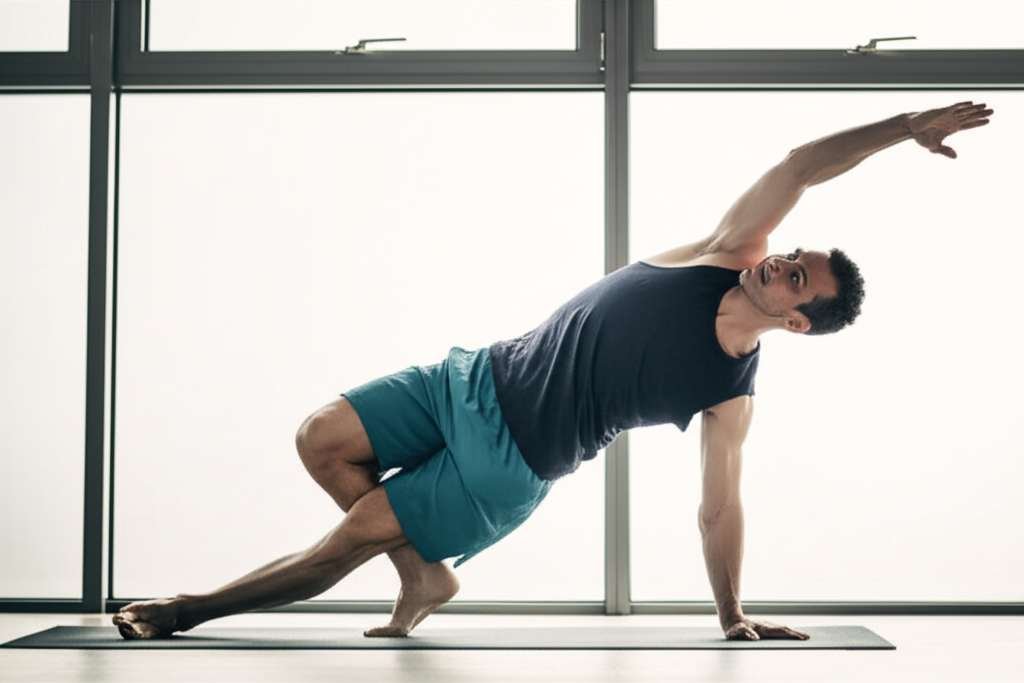
Looking to shed stubborn belly fat? These 12 yoga exercises for men are designed to strengthen your core, boost metabolism, and burn calories effectively. With simple, beginner-friendly poses, you can start seeing results and feeling healthier without complex routines.
Hey there! Let’s talk about something that might feel a bit tricky: shedding that extra belly fat. It’s a common goal for many guys, and it’s totally understandable why. Sometimes it feels like no matter what you do, that stubborn area just won’t budge.
The good news is you don’t need complicated gym equipment or intense workouts to make a difference. Yoga offers a fantastic, holistic way to tackle belly fat. It’s not just about stretching; it’s about building strength, improving your digestion, and reducing stress – all key players in weight management.
We’re going to walk through 12 yoga poses that are perfect for men looking to target their midsection. Think of this as your friendly guide to getting started, with simple steps and clear explanations.
Ready to discover how yoga can help you feel stronger and lighter? Let’s dive in!
Why Yoga for Men and Belly Fat?

You might be wondering, “Yoga? For men? To burn belly fat?” Absolutely! Yoga is a powerful practice for everyone, including men who want to improve their physical and mental well-being. It’s often misunderstood as just flexibility work, but yoga is a complete system that engages your muscles, improves your circulation, and even helps manage stress.
When it comes to belly fat, yoga works in a few key ways. Many poses engage your core muscles deeply, helping to strengthen and tone your abdominal area. This increased muscle engagement can also contribute to burning more calories throughout the day. Furthermore, yoga’s ability to reduce stress hormones like cortisol is crucial, as high cortisol levels are often linked to increased abdominal fat storage.
It’s a science-backed approach that promotes a healthier body and mind, making it a sustainable strategy for long-term weight management. By incorporating these poses into your routine, you’re not just aiming for a flatter stomach; you’re investing in your overall health.
Understanding Belly Fat
Before we jump into the poses, let’s quickly touch on why belly fat can be so persistent. Belly fat, also known as visceral fat, is fat stored deep within your abdominal cavity, surrounding your organs. While it contributes to your overall body fat percentage, visceral fat is particularly concerning for health because it’s metabolically active.
It releases hormones and inflammatory substances that can affect your heart health, increase your risk of type 2 diabetes, and contribute to other chronic diseases. Factors like diet, lack of physical activity, genetics, and especially stress can influence how and where your body stores fat. High levels of stress, for instance, can lead to an increase in cortisol, a hormone that signals your body to store more fat in the abdominal area. Understanding this helps us see why a holistic approach like yoga, which addresses both physical activity and stress, can be so effective.
The World Health Organization highlights that excess body fat, particularly around the waist, is a significant risk factor for noncommunicable diseases. This underscores the importance of managing belly fat for long-term health.
12 Yoga Exercises for Men: Essential Belly Fat Burners
These yoga exercises are chosen for their ability to engage your core, build strength, and boost your metabolism. They are beginner-friendly, meaning you can start with them even if you’ve never done yoga before. Remember to listen to your body and modify poses as needed.
1. Plank Pose (Phalakasana)
Plank pose is a foundational exercise that works your entire core, including your abs, back, and shoulders. It’s excellent for building isometric strength, which is crucial for a toned midsection.
How to do it:
- Start on your hands and knees.
- Extend your legs back, so your body forms a straight line from your head to your heels.
- Your hands should be directly under your shoulders, and your core should be engaged, pulling your belly button towards your spine.
- Keep your neck in a neutral position, looking slightly ahead of you.
- Hold for 30 seconds to 1 minute, or as long as you can maintain good form.
Benefits: Strengthens abs, back, arms, and legs; improves posture; boosts metabolism.
2. Boat Pose (Paripurna Navasana)
Boat pose is a challenging but incredibly effective pose for targeting the abdominal muscles. It requires balance and core strength, helping to sculpt your entire core.
How to do it:
- Sit on the floor with your knees bent and feet flat on the ground.
- Lean back slightly, keeping your spine straight.
- Lift your feet off the floor, bringing your shins parallel to the ground.
- Extend your arms straight out in front of you, parallel to the floor.
- For a greater challenge, straighten your legs to form a “V” shape with your body.
- Hold for 30 seconds to 1 minute, focusing on keeping your core engaged.
Benefits: Strengthens abs, hips, and spine; improves balance; stimulates digestive organs.
3. Cobra Pose (Bhujangasana)
Cobra pose is a gentle backbend that also engages your abdominal muscles as you lift your chest. It helps to strengthen the spine and open up the chest, while also improving digestion.
How to do it:
- Lie on your stomach with your legs extended and the tops of your feet on the floor.
- Place your hands palms-down under your shoulders, elbows tucked close to your body.
- Inhale and press into your hands to lift your head and chest off the floor.
- Keep your hips and lower belly on the ground.
- Gaze forward or slightly upward. Hold for 15-30 seconds.
- Exhale and slowly lower back down.
Benefits: Strengthens the spine; opens the chest and shoulders; stimulates abdominal organs; can relieve stress.
4. Warrior III Pose (Virabhadrasana III)
Warrior III is a powerful balancing pose that demands significant core strength. It engages your abdominal muscles, back muscles, and legs to maintain stability.
How to do it:
- Start in a standing position, feet together.
- Step one foot back and perform a Warrior I pose (facing forward with your back foot angled out).
- Shift your weight forward onto your front foot.
- As you exhale, lift your back leg off the ground, extending it straight behind you.
- Simultaneously, hinge forward at your hips, bringing your torso parallel to the floor.
- Extend your arms forward or keep them by your sides.
- Your body should form a “T” shape. Hold for 15-30 seconds.
Benefits: Builds core strength and stability; improves balance; strengthens legs and ankles.
5. Bow Pose (Dhanurasana)
Bow pose is an intense backbend that also works your core by strengthening the abdominal muscles that stabilize your torso. It’s a great pose for opening the chest and improving posture.
How to do it:
- Lie on your stomach with your knees bent and feet hip-width apart.
- Reach back with your hands and grasp your ankles or feet.
- Inhale and lift your chest, thighs, and head off the floor.
- Pull your feet away from your body, arching your back into a bow shape.
- Keep your gaze forward. Hold for 15-30 seconds.
Benefits: Strengthens abdominal muscles; opens chest, shoulders, and hips; stimulates abdominal organs; improves posture.
6. Crescent Lunge (Ashta Chandrasana)
Crescent lunge is a dynamic pose that strengthens your legs and core. The deep lunge requires your abdominal muscles to work hard to keep your torso upright and stable.
How to do it:
- Start in a standing position. Step your left foot back into a lunge, with your right knee bent at a 90-degree angle directly over your ankle.
- Keep your back leg straight and lift your heel.
- Inhale and sweep your arms overhead, keeping your shoulders relaxed.
- Engage your core to lift your torso upright.
- Hold for 30 seconds to 1 minute, then switch sides.
Benefits: Strengthens legs, glutes, and core; improves balance; opens hips and chest.
7. Downward-Facing Dog (Adho Mukha Svanasana)
While not directly an abdominal exercise, Downward-Facing Dog is a full-body pose that strengthens and tones. It helps to stretch the hamstrings and calves, while the core engagement required to hold the pose contributes to overall muscle tone.
How to do it:
- Start on your hands and knees.
- Tuck your toes and lift your hips up and back, forming an inverted “V” shape with your body.
- Press firmly through your hands, spreading your fingers wide.
- Let your head hang loosely between your arms.
- You can keep your knees slightly bent if your hamstrings are tight. Hold for 30 seconds to 1 minute.
Benefits: Stretches and strengthens the entire body; energizes the mind; calms the brain; helps relieve stress.
8. Wind-Relieving Pose (Pawanmuktasana)
This pose is specifically designed to help release gas and bloating, which can contribute to a distended belly. It also gently massages your abdominal organs, aiding digestion and potentially reducing belly fat over time.
How to do it:
- Lie on your back with your legs extended.
- Inhale and bring your right knee towards your chest.
- Exhale and wrap your arms around your shin, pulling your knee closer to your chest.
- Keep your left leg extended on the floor or bent with your foot flat.
- Hold for 30 seconds to 1 minute, then switch legs. You can also do both legs together.
Benefits: Aids digestion; releases gas and bloating; massages abdominal organs; relieves lower back pain.
9. Side Plank Pose (Vasisthasana)
Side plank is an excellent progression from a regular plank, targeting the oblique muscles on the sides of your abdomen. This is crucial for creating a strong and toned waistline.
How to do it:
- Start in a plank position.
- Shift your weight onto your right hand and foot, stacking your left foot on top of your right.
- Lift your left arm towards the ceiling, creating a straight line from your head to your feet.
- Engage your core to keep your hips lifted.
- Hold for 15-30 seconds, then switch sides.
Benefits: Strengthens obliques, arms, and wrists; improves balance; builds core stability.
10. Seated Spinal Twist (Ardha Matsyendrasana)
Spinal twists are fantastic for stimulating digestion and detoxification. By compressing and releasing the abdominal organs, they can help improve their function and potentially reduce bloating.
How to do it:
- Sit on the floor with your legs extended.
- Bend your right knee and place your right foot flat on the floor outside your left thigh.
- Place your right hand on the floor behind you for support.
- Inhale and lengthen your spine, then exhale and twist your torso to the right.
- You can hook your left elbow around your right knee for a deeper twist.
- Hold for 30 seconds to 1 minute, then switch sides.
Benefits: Stimulates digestive organs; detoxifies the body; improves spinal mobility; relieves back pain.
11. Chair Pose (Utkatasana)
Chair pose might seem like a leg exercise, but it heavily engages your core to maintain an upright posture. Holding this pose builds significant strength in your thighs, glutes, and also your abdominal muscles.
How to do it:
- Stand with your feet hip-width apart or together.
- Inhale and raise your arms overhead, keeping them parallel and shoulder-width apart.
- Exhale and bend your knees as if you’re sitting back into a chair.
- Lower your hips down and back, keeping your chest lifted and your spine straight.
- Your thighs should be as close to parallel with the floor as possible. Hold for 30 seconds to 1 minute.
Benefits: Strengthens legs, thighs, and core; builds stamina; stimulates abdominal organs.
12. Cat-Cow Pose (Marjaryasana-Bitilasana)
This gentle flow between two poses is excellent for warming up the spine and engaging the abdominal muscles in a dynamic way. It helps to improve flexibility in the torso and can aid in digestion.
How to do it:
- Start on your hands and knees in a tabletop position, with your hands directly under your shoulders and your knees under your hips.
- Cow Pose: Inhale, drop your belly towards the floor, lift your chest and tailbone, and gaze slightly upward.
- Cat Pose: Exhale, round your spine towards the ceiling, tuck your chin to your chest, and pull your belly button towards your spine.
- Continue to flow between these two poses for 5-10 breaths.
Benefits: Improves spinal flexibility; gently massages abdominal organs; relieves stress; warms up the body.
Putting It All Together: A Sample Routine
To get the most out of these exercises, it’s helpful to put them into a structured routine. Consistency is key for seeing results, especially when it comes to burning belly fat. Aim to practice yoga at least 3-4 times a week.
Here’s a sample routine you can follow. Remember to warm up with a few minutes of gentle movement (like Cat-Cow) and cool down with some stretching.
Beginner Routine (3-4 Times Per Week)
This routine focuses on building a solid foundation and engaging your core effectively.
| Pose Name | Hold Time / Reps | Number of Rounds |
|---|---|---|
| Plank Pose | 30-60 seconds | 3 |
| Boat Pose | 30-60 seconds | 3 |
| Cobra Pose | 15-30 seconds | 3 |
| Crescent Lunge | 30-60 seconds per side | 2 per side |
| Wind-Relieving Pose | 30-60 seconds per leg | 2 per leg |
| Side Plank Pose | 15-30 seconds per side | 2 per side |
| Cat-Cow Pose | 5-10 breaths (flow) | 2 |
Tips for your routine:
- Warm-up: Start with 5 minutes of gentle movement, like walking in place or arm circles. Include Cat-Cow pose for spinal mobility.
- Listen to your body: If a pose feels too difficult, don’t force it. Modify it or rest.
- Breathe deeply: Focus on your breath throughout the practice. Deep breathing helps calm your nervous system and aids in fat metabolism.
- Cool-down: After your poses, lie down in Savasana (Corpse Pose) for 5 minutes to relax and integrate the practice.
Beyond the Poses: Lifestyle Factors
While these yoga exercises are powerful tools, remember that sustainable belly fat loss is a journey that involves more than just one type of exercise. Integrating these poses into a healthy lifestyle will yield the best results.
Nutrition for a Flatter Stomach
What you eat plays a huge role. Focus on whole, unprocessed foods. This means plenty of fruits, vegetables, lean proteins, and healthy fats. Reducing your intake of refined sugars, processed snacks, and sugary drinks is crucial. Staying hydrated by drinking plenty of water also supports your metabolism and can help you feel fuller.
The Harvard School of Public Health offers excellent resources on healthy eating patterns that can support weight management.
Stress Management and Sleep
As we touched on earlier, stress and lack of sleep can significantly impact belly fat. Yoga is excellent for stress reduction, but also consider mindfulness, meditation, or spending time in nature. Aim for 7-9 hours of quality sleep per night. When you’re well-rested, your body is better equipped to manage stress hormones and regulate appetite.
The Centers for Disease Control and Prevention (CDC) provides guidelines on the importance of sleep for overall health and well-being.
Consistency is Key
The most important factor in achieving your goals is consistency. Don’t get discouraged if you don’t see results immediately. Stick with your yoga practice, focus on healthy eating, manage your stress, and prioritize sleep. Over time, your body will respond, and you’ll not only see a difference in your physique but also feel a significant improvement in your overall energy and well-being.
Frequently Asked Questions (FAQ)
What are the best yoga poses for men to reduce belly fat?
The best poses include Plank Pose, Boat Pose, Warrior III, Side Plank, and Crescent Lunge. These poses directly engage and strengthen your core abdominal muscles, which helps in toning the area and increasing calorie burn.
How often should I practice yoga to see results for belly fat?
Aim for consistency. Practicing yoga 3-4 times per week is a great starting point. Combining your yoga practice with a balanced diet and other forms of physical activity can accelerate your results.
Can yoga alone help me lose belly fat?
Yoga is a powerful component of a weight loss strategy. While it strengthens your core, burns calories, and reduces stress (all beneficial for belly fat), it’s most effective when combined with a healthy diet and possibly other forms of cardio exercise for optimal fat loss.
I’m a beginner. Are these poses too difficult?
These poses are presented with beginner-friendliness in mind. Modifications are possible for most poses. For example, you can keep your knees on the ground in Plank Pose or use blocks for support. Focus on proper form over intensity, and gradually build up your strength and flexibility.
How does yoga help with belly fat specifically?
Yoga helps in several ways: it strengthens abdominal muscles through poses like Plank and Boat Pose; it can boost metabolism through challenging poses; and it significantly reduces stress by lowering cortisol levels, a hormone linked to increased abdominal fat storage.
Should I do yoga in the morning or evening?
Both have benefits! Morning yoga can energize you for the day and boost your metabolism. Evening yoga can help you de-stress and prepare for a good night’s sleep. Choose a time that fits your schedule and allows you to practice consistently.
What if I can’t hold a pose for the recommended time?
That’s perfectly fine! Start with shorter holds (e.g., 15-20 seconds) and gradually increase the duration as you get stronger. The most important thing is to maintain good form and breathe deeply. Even short holds provide benefits.
Conclusion
Tackling belly fat doesn’t have to be an overwhelming challenge. By incorporating these 12 yoga exercises into your routine, you’re taking a proactive and holistic approach to building a stronger core and a healthier body. Remember that consistency, patience, and a balanced lifestyle—including mindful eating and stress management—are your greatest allies on this journey.
These poses are designed to be accessible for beginners, allowing you to build confidence and strength with each practice. You’re not just working towards a flatter stomach; you’re cultivating a stronger, more resilient, and more balanced you from the inside out. Keep up the great work, and enjoy the process of becoming a healthier, happier version of yourself!
As an Amazon Associate, We earn from qualifying purchases. When you purchase a product through Amazon links on pulsefitguide.com, we may earn a small commission at no extra cost to you. This helps support the site and keep our content free.