

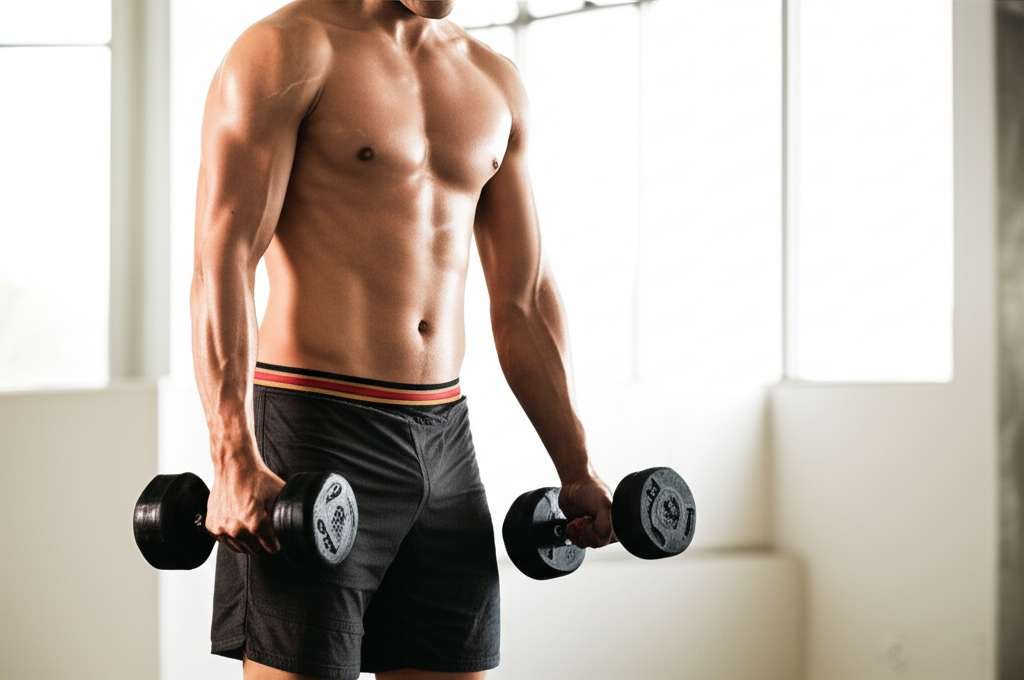
Quick Summary: Twelve essential strength training exercises for men effectively target belly fat loss by building muscle, boosting metabolism, and improving body composition. Focusing on compound movements like squats, deadlifts, and presses is key for maximum calorie burn and sustainable fat reduction.
Hey there! Feeling a bit confused about how to tackle that stubborn belly fat? You’re definitely not alone. Many guys find it tough to figure out the best way to lose weight and get leaner. It can feel like a puzzle with missing pieces.
But guess what? It doesn’t have to be complicated! We’re going to break down exactly how strength training can be your secret weapon. Think of me as your friendly guide, here to make this process clear, simple, and totally doable.
We’ll go through the best exercises that will help you shed fat and build a stronger body. Get ready to feel more confident and in control of your fitness journey!
Why Strength Training is Your Fat Loss Ally
When you think about losing fat, cardio like running or cycling often comes to mind first. While these are great for burning calories in the moment, strength training offers a powerful, long-term advantage, especially for men.
Building muscle is like upgrading your body’s engine. Muscle tissue is metabolically active, meaning it burns more calories at rest than fat tissue. The more muscle you have, the higher your resting metabolic rate (RMR), and the more calories you burn throughout the day, even when you’re just chilling on the couch.
This means that by incorporating strength training, you’re not just burning calories during your workout; you’re increasing your body’s ability to burn fat 24/7. It’s a fantastic strategy for sustainable fat loss and creating a leaner physique.
Understanding Compound vs. Isolation Exercises
When we talk about strength training for fat loss, we often focus on two main types of exercises: compound and isolation.
Compound exercises are the superstars for fat loss. These movements involve multiple joints and muscle groups working together. Think of squats, deadlifts, and push-ups. They recruit a large amount of muscle mass, which means they burn a significant amount of calories during the workout and trigger a greater metabolic response afterwards.
Isolation exercises, on the other hand, target a single muscle group and joint. Examples include bicep curls or triceps extensions. While they have their place in building specific muscles, they are less efficient for overall calorie expenditure and fat loss compared to compound movements.
For men looking to lose belly fat and get leaner, prioritizing compound exercises is the smartest approach. They give you the most bang for your buck in terms of time and results.
The 12 Essential Strength Training Exercises for Men
These 12 exercises are chosen because they are compound movements that work a large portion of your body. They are fundamental to building strength, boosting metabolism, and torching calories, which directly contributes to fat loss, including stubborn belly fat.
1. Barbell Back Squat
The king of lower body exercises. Squats work your quadriceps, hamstrings, glutes, and even your core. They demand a lot of energy, making them a calorie-burning powerhouse.
- Muscles Worked: Quads, hamstrings, glutes, core, calves.
- Why it’s great for fat loss: Engages the largest muscles in your body, leading to a significant calorie burn and hormonal response that aids fat metabolism.
- How to do it:
- Place a barbell across your upper back, resting it on your traps (not your neck).
- Stand with your feet shoulder-width apart, toes pointed slightly outward.
- Keeping your chest up and back straight, lower your hips as if sitting into a chair.
- Go down until your thighs are parallel to the floor, or as low as you can with good form.
- Push through your heels to return to the starting position.
2. Deadlift
Often called the “king of all exercises,” the deadlift is a full-body movement that works almost every muscle. It’s incredibly effective for building strength and burning calories.
- Muscles Worked: Hamstrings, glutes, back (erectors, lats), traps, forearms, core.
- Why it’s great for fat loss: One of the most metabolically demanding exercises. It recruits a massive amount of muscle, leading to a huge calorie expenditure and a significant afterburn effect.
- How to do it:
- Stand with your mid-foot under a barbell.
- Hinge at your hips and bend your knees to grip the bar just outside your shins.
- Keep your back straight, chest up, and shoulders pulled back.
- Engage your lats and take the slack out of the bar.
- Drive through your heels, extending your hips and knees to stand up, pulling the bar up along your shins.
- Lower the bar with control by reversing the motion.
3. Bench Press (Barbell or Dumbbell)
A fundamental upper-body exercise that targets your chest, shoulders, and triceps. It’s excellent for building upper body strength and contributing to overall calorie burn.
- Muscles Worked: Chest (pectorals), shoulders (deltoids), triceps.
- Why it’s great for fat loss: Works significant upper body muscle groups, contributing to a higher overall metabolic rate.
- How to do it (Barbell):
- Lie on a flat bench with your feet flat on the floor.
- Grip the barbell slightly wider than shoulder-width apart.
- Lower the bar to your mid-chest, keeping your elbows tucked slightly.
- Press the bar back up to the starting position.
4. Overhead Press (Barbell or Dumbbell)
This exercise builds strength in your shoulders, triceps, and upper chest. It’s a fantastic compound movement for developing a strong, athletic upper body.
- Muscles Worked: Shoulders (deltoids), triceps, upper chest, core.
- Why it’s great for fat loss: Develops powerful shoulder muscles, which contribute to your upper body’s metabolic capacity.
- How to do it (Barbell, standing):
- Stand with your feet shoulder-width apart, holding a barbell at shoulder height with palms facing forward.
- Engage your core and glutes.
- Press the barbell straight overhead until your arms are fully extended.
- Lower the bar back to shoulder height with control.
5. Barbell Rows
A powerful exercise for building a strong, thick back. It works your lats, rhomboids, traps, and biceps, contributing to a better posture and a higher metabolism.
- Muscles Worked: Lats, rhomboids, traps, biceps, forearms, lower back.
- Why it’s great for fat loss: Engages a large portion of your back musculature, which is crucial for overall strength and metabolic support.
- How to do it:
- Stand with your feet shoulder-width apart, knees slightly bent.
- Hinge at your hips, keeping your back straight, until your torso is nearly parallel to the floor.
- Let the barbell hang with your arms extended, palms facing each other.
- Pull the barbell towards your lower chest, squeezing your shoulder blades together.
- Lower the barbell with control.
6. Pull-Ups/Chin-Ups
These are challenging but incredibly effective bodyweight exercises for building upper body pulling strength, targeting your back and biceps.
- Muscles Worked: Lats, biceps, rhomboids, traps, forearms.
- Why it’s great for fat loss: A high-intensity bodyweight exercise that builds significant upper body muscle mass, boosting your metabolism.
- How to do it (Pull-up):
- Grip a pull-up bar with an overhand, slightly wider than shoulder-width grip.
- Hang with your arms fully extended.
- Pull your body up until your chin clears the bar, squeezing your back muscles.
- Lower yourself back down with control.
(For chin-ups, use an underhand grip.)
7. Lunges (Walking or Stationary)
Lunges are excellent for working your quads, hamstrings, and glutes individually, improving balance and strength. They are also a great calorie burner.
- Muscles Worked: Quads, hamstrings, glutes, calves, core.
- Why it’s great for fat loss: Works your lower body unilaterally, which can help address muscle imbalances and burn calories effectively.
- How to do it (Walking Lunge):
- Step forward with one leg, lowering your hips until both knees are bent at approximately 90-degree angles.
- Ensure your front knee is directly above your ankle and your back knee hovers just above the floor.
- Push off your back foot and step forward into the next lunge with the opposite leg.
8. Push-Ups
A classic bodyweight exercise that targets your chest, shoulders, and triceps. It’s a versatile exercise that can be modified for different fitness levels.
- Muscles Worked: Chest, shoulders, triceps, core.
- Why it’s great for fat loss: An accessible compound movement that engages multiple upper body muscles and the core, contributing to calorie burn.
- How to do it:
- Start in a plank position with your hands shoulder-width apart, fingers pointing forward.
- Keep your body in a straight line from head to heels, engaging your core.
- Lower your chest towards the floor by bending your elbows.
- Push back up to the starting position.
(Modify by doing them on your knees if needed.)
9. Romanian Deadlift (RDL)
Similar to the conventional deadlift but with a focus on the hamstrings and glutes. It’s a fantastic exercise for posterior chain development and calorie burning.
- Muscles Worked: Hamstrings, glutes, lower back, forearms.
- Why it’s great for fat loss: Heavily targets the hamstrings and glutes, two large muscle groups that contribute significantly to your metabolism.
- How to do it:
- Stand with your feet hip-width apart, holding a barbell or dumbbells in front of your thighs.
- Keep a slight bend in your knees.
- Hinge at your hips, pushing your glutes back, and lower the weight down your legs, keeping your back straight.
- Lower until you feel a stretch in your hamstrings, or just below your knees.
- Engage your hamstrings and glutes to pull yourself back up to the starting position.
10. Barbell Hip Thrust
This exercise is fantastic for targeting the glutes and hamstrings directly. Strong glutes are important for overall power and can contribute to a higher metabolic rate.
- Muscles Worked: Glutes, hamstrings, lower back, core.
- Why it’s great for fat loss: Directly targets the glutes, the largest muscle group in the body, which can have a significant impact on your metabolism.
- How to do it:
- Sit on the floor with your upper back against a bench or stable surface.
- Roll a padded barbell over your hips.
- Place your feet flat on the floor, hip-width apart, with knees bent.
- Drive through your heels, lifting your hips towards the ceiling until your body forms a straight line from shoulders to knees.
- Squeeze your glutes at the top.
- Lower your hips back down with control.
11. Kettlebell Swings
A dynamic, full-body exercise that combines strength and cardio. It’s excellent for building power in your hips and burning a lot of calories in a short amount of time.
- Muscles Worked: Glutes, hamstrings, hips, core, shoulders, back.
- Why it’s great for fat loss: A highly effective ballistic exercise that elevates your heart rate and burns a significant number of calories, promoting fat loss.
- How to do it:
- Stand with your feet slightly wider than shoulder-width apart, with a kettlebell on the floor slightly in front of you.
- Hinge at your hips and bend your knees to grab the kettlebell handle with both hands.
- Keeping your back straight, hike the kettlebell back between your legs.
- Explosively drive your hips forward and squeeze your glutes to swing the kettlebell up to chest or eye level.
- Let the kettlebell swing back down between your legs, absorbing the momentum with your hips.
12. Farmer’s Walk
A simple yet incredibly effective exercise for building grip strength, core stability, and overall conditioning. It’s a great way to add metabolic stress.
- Muscles Worked: Forearms, traps, shoulders, core, legs, glutes.
- Why it’s great for fat loss: Engages a huge amount of stabilizing muscles throughout your body, requiring significant energy expenditure and improving overall work capacity.
- How to do it:
- Hold a heavy dumbbell, kettlebell, or specialized farmer’s walk handle in each hand.
- Stand tall with your chest up and shoulders back.
- Walk for a set distance or time, maintaining good posture and a tight core.
Structuring Your Strength Training Program for Fat Loss
Knowing the exercises is only half the battle. How you put them together in a program matters just as much for fat loss.
For beginners, a full-body workout routine done 2-3 times per week is a great starting point. This allows each muscle group to be stimulated multiple times per week, promoting muscle growth and consistent calorie burn without overtraining.
As you get more comfortable, you can explore other splits like an upper/lower body split or a push/pull/legs split. The key is consistency and progressive overload – gradually increasing the weight, reps, or sets over time to keep challenging your muscles.
Sample Beginner Full-Body Workout
Here’s a sample workout you can try. Focus on learning the form first, and then gradually increase the weight.
| Exercise | Sets | Reps | Rest (seconds) |
|---|---|---|---|
| Barbell Back Squat | 3 | 8-12 | 60-90 |
| Bench Press | 3 | 8-12 | 60-90 |
| Barbell Rows | 3 | 8-12 | 60-90 |
| Overhead Press | 3 | 8-12 | 60-90 |
| Romanian Deadlift | 3 | 10-15 | 60 |
| Push-Ups | 3 | As many as possible (AMRAP) | 60 |
Remember to warm up for 5-10 minutes before each workout with light cardio and dynamic stretching. Cool down afterwards with static stretches.
The Role of Nutrition in Fat Loss
Strength training is a powerful tool, but it works best when paired with the right nutrition. To lose fat, you need to be in a calorie deficit, meaning you consume fewer calories than your body burns.
Focus on whole, unprocessed foods. This includes lean proteins (chicken, fish, beans), plenty of vegetables, fruits, and healthy fats (avocado, nuts, olive oil). These foods provide essential nutrients and keep you feeling full, making it easier to stick to a calorie deficit.
Protein is especially important when you’re strength training. It helps repair and build muscle tissue, and it’s also very satiating, which can help control hunger. Aim for about 0.7-1 gram of protein per pound of body weight.
Hydration is also key. Drinking enough water can help with metabolism and appetite control. Aim for at least 8 glasses of water a day, and more if you’re exercising.
For a deeper dive into creating a sustainable eating plan, resources like the National Institute of Diabetes and Digestive and Kidney Diseases (NIDDK) offer excellent guidance on healthy weight management strategies.
Consistency is Key: Making it Sustainable
The biggest hurdle for many guys is staying consistent. It’s easy to get motivated for a week or two, but long-term success comes from building habits that fit into your life.
Start small. If going to the gym five times a week feels overwhelming, start with three. If lifting heavy weights is intimidating, start with lighter weights or bodyweight exercises. The goal is to build momentum and confidence.
Find activities you enjoy. If you dread every workout, it’s going to be hard to stick with it. Experiment with different exercises and training styles until you find what you like. Maybe you love the challenge of deadlifts, or perhaps you prefer the dynamic nature of kettlebell swings.
Track your progress. Seeing how much stronger you’re getting or how your body is changing can be incredibly motivating. Keep a workout journal, take progress photos, or simply note how your clothes fit differently.
Don’t aim for perfection; aim for progress. There will be days when you miss a workout or eat something off-plan. That’s okay! The important thing is to get back on track the next day. It’s a marathon, not a sprint.
Frequently Asked Questions (FAQ)
Q1: How often should I strength train for fat loss?
For beginners aiming for fat loss, training 2-3 times per week with at least one rest day in between sessions is a great starting point. This allows your muscles to recover and grow while still stimulating your metabolism.
Q2: How much weight should I lift?
You should lift a weight that challenges you to complete the target number of reps with good form. The last 1-2 reps of each set should feel difficult, but not impossible. If you can easily do more reps than prescribed, the weight is too light. If you can’t complete the minimum number of reps, it’s too heavy.
Q3: Do I need to do cardio in addition to strength training?
Cardio is beneficial for burning extra calories and improving cardiovascular health, but it’s not strictly necessary for fat loss if you’re consistent with strength training and manage your nutrition. A balanced approach often includes both.
Q4: How long will it take to see results?
Results vary depending on your starting point, consistency, and adherence to your diet. Most people start noticing changes in strength and body composition within 4-8 weeks, with more significant fat loss visible over 3-6 months.
Q5: What if I have no gym access? Can I still do these exercises?
Absolutely! Many of these exercises can be modified for home workouts. You can use bodyweight (like push-ups, squats, lunges), resistance bands, or even household items like water jugs for added resistance. For exercises like deadlifts and squats, investing in a barbell and weights or using dumbbells can be very effective for home training.
Q6: How do I avoid injury while strength training?
Focus on proper form above all else. Start with lighter weights to master the movement patterns. Don’t ego lift (lifting too heavy with bad form). Warm up properly before each session and cool down afterwards. Listen to your body; if something feels painful, stop.
Q7: Will strength training make me bulky?
For most men, especially beginners, building significant bulky muscle is very difficult and requires a specific, high-calorie diet and intense training. Strength training for fat loss typically leads to a leaner, more toned physique by building muscle and burning fat. Women have hormonal differences that make significant muscle bulking even less common.
Conclusion
Embarking on a strength training journey for fat loss can seem daunting, but by focusing on fundamental compound exercises, you’re setting yourself up for success. These 12 exercises – from the powerful squat and deadlift to the accessible push-up and kettlebell swing – provide a solid foundation for building muscle, boosting your metabolism, and effectively shedding unwanted fat.
Remember that consistency is your greatest ally. Pair these workouts with a balanced, nutrient-dense diet, and be patient with yourself. Progress takes time, and every step you take, every workout you complete, brings you closer to your goals.
You’ve got this! By integrating these strength training principles into your routine, you’re not just working towards a leaner physique; you’re building a stronger, healthier, and more confident you. Keep pushing, keep learning, and enjoy the transformation!
As an Amazon Associate, We earn from qualifying purchases. When you purchase a product through Amazon links on pulsefitguide.com, we may earn a small commission at no extra cost to you. This helps support the site and keep our content free.