
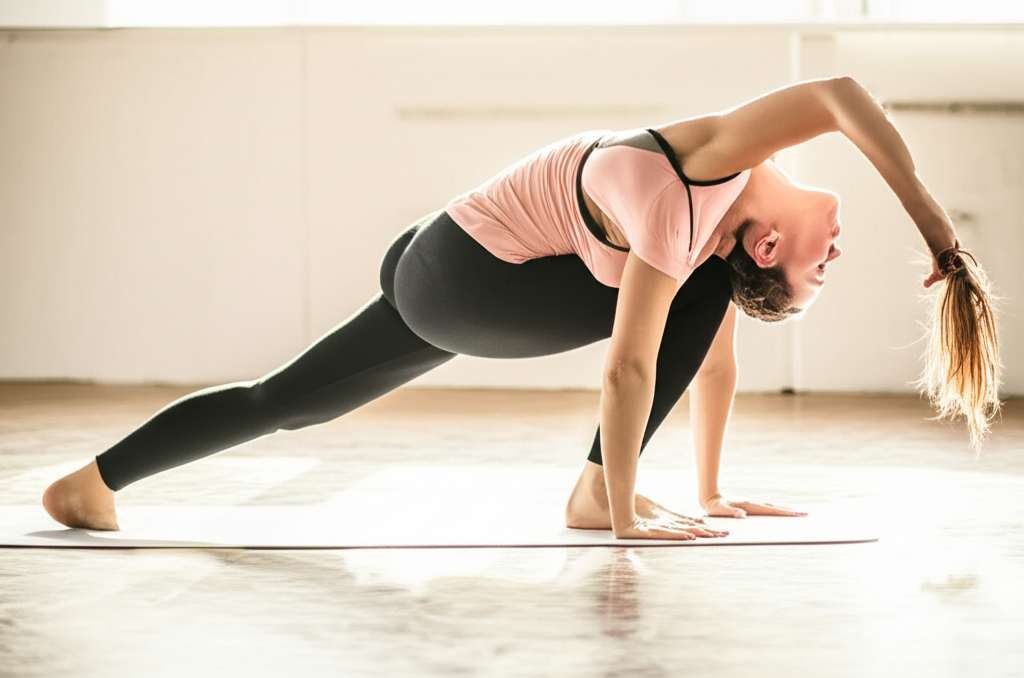
Yes, you can boost your morning energy and support fat loss with simple yoga flows! These 12 beginner-friendly routines awaken your body, ignite your metabolism, and set a positive tone for your day, making healthy habits feel easy and achievable.
Feeling sluggish in the mornings? Do you find yourself confused by all the different advice on losing weight?
You’re not alone. Many people struggle to find a starting point that feels right for them. It can seem complicated, but it doesn’t have to be!
This guide breaks down how simple morning yoga can be your secret weapon for more energy and a healthier metabolism. We’ll go through easy-to-follow yoga flows designed just for you.
Let’s get your day started with a smile and some gentle movement!

Why Morning Yoga for Energy & Fat Loss?
Starting your day with yoga is like giving your body a gentle, energizing wake-up call. It’s not about intense workouts; it’s about connecting with your breath and moving your body mindfully.
For weight management, morning movement helps kickstart your metabolism. This means your body becomes more efficient at burning calories throughout the day. Plus, a good yoga session can reduce stress, which is a major factor in why many people find weight loss challenging.
When we’re less stressed, we tend to make better food choices and have more energy to be active. It’s a win-win!
Understanding the Science (Simply Put!)
Let’s look at why yoga can help with energy and fat loss without getting too technical.
Metabolism Boost
When you practice yoga, especially poses that involve twisting or engaging your core, you can help improve circulation. Better circulation means your body’s systems work more efficiently. This can lead to a slight increase in your resting metabolic rate, meaning you burn more calories even when you’re not exercising. Think of it as gently warming up your internal engine.
Stress Reduction & Cortisol
Stress is a big player in weight gain. When you’re stressed, your body releases a hormone called cortisol. High cortisol levels can lead to increased appetite, cravings for unhealthy foods, and the storage of fat, especially around your belly. Yoga’s focus on deep breathing and mindful movement helps calm your nervous system, lowering cortisol levels. This makes it easier to manage your weight and feel more in control.
According to the National Center for Complementary and Integrative Health, yoga has been shown to reduce stress and improve overall well-being, which are key components of a healthy lifestyle.
Improved Digestion
Certain yoga poses, like gentle twists, can stimulate your digestive organs. This can help improve digestion and reduce bloating. A well-functioning digestive system is crucial for nutrient absorption and can play a role in how your body processes food.
Mindful Eating Habits
Practicing yoga helps you become more aware of your body and your thoughts. This increased mindfulness can extend to your eating habits. You might start noticing your hunger cues better and feel more satisfied with smaller portions. This mind-body connection is powerful for long-term healthy eating.
The 12 Essential Morning Yoga Flows for Energy & Fat Loss
These flows are designed to be done in sequence or picked and chosen based on how much time you have. Remember to listen to your body and modify poses as needed.
Flow 1: Gentle Awakening (5 Minutes)
This is a perfect way to start your day, focusing on breath and gentle movement to wake up your body without any strain.
- Seated Easy Pose (Sukhasana): Sit comfortably with your legs crossed. Close your eyes and take 5 deep breaths, focusing on inhaling calm and exhaling any tension.
- Neck Rolls: Gently drop your chin to your chest, then slowly roll your right ear towards your right shoulder, then your left ear towards your left shoulder. Repeat 3 times in each direction.
- Shoulder Rolls: Inhale and roll your shoulders up towards your ears, then exhale and roll them back and down. Repeat 5 times.
- Seated Cat-Cow: Place your hands on your knees. Inhale, arch your back, lift your chest, and look up (Cow). Exhale, round your spine, tuck your chin, and draw your navel in (Cat). Repeat 5 times.
Flow 2: Sun Salutation A (Surya Namaskar A) – Modified (7-10 Minutes)
Sun Salutations are a fundamental yoga sequence that warms the entire body, boosts circulation, and builds a gentle heat that can help with calorie burning.
- Mountain Pose (Tadasana): Stand tall with your feet together or hip-width apart. Engage your core and lengthen your spine.
- Upward Salute (Urdhva Hastasana): Inhale and sweep your arms overhead, palms facing each other.
- Forward Fold (Uttanasana): Exhale and hinge at your hips, folding your torso over your legs. Bend your knees generously if needed.
- Halfway Lift (Ardha Uttanasana): Inhale, lengthen your spine, and bring your hands to your shins or thighs. Flat back.
- Plank Pose (Phalakasana): Exhale and step or jump your feet back to a plank position. Keep your body in a straight line from head to heels.
- Knees-Chest-Chin Pose (Ashtanga Namaskara): Lower your knees, then your chest, and finally your chin to the mat. Hips stay lifted.
- Cobra Pose (Bhujangasana): Inhale and gently lift your chest off the mat, keeping your elbows bent and close to your body.
- Downward-Facing Dog (Adho Mukha Svanasana): Exhale, tuck your toes, and lift your hips up and back. Pedal out your feet by bending one knee and then the other.
- Step Forward: Inhale and step your right foot forward between your hands, then your left foot.
- Halfway Lift: Inhale, lengthen your spine.
- Forward Fold: Exhale, fold forward.
- Mountain Pose: Inhale, rise all the way up, sweeping arms overhead. Exhale, bring hands to heart center.
Repeat this flow 3-5 times. Focus on linking your breath to each movement.
Flow 3: Warrior Series for Strength & Stamina (8-12 Minutes)
These poses build strength, improve balance, and create a sense of grounding, which can be empowering for your day.
- Start in Downward-Facing Dog.
- Warrior I (Virabhadrasana I): Inhale and step your right foot forward between your hands. Spin your left heel down so it’s flat on the floor at an angle. Inhale and lift your torso, extending your arms overhead. Your hips should be square to the front. Hold for 5 breaths.
- Warrior II (Virabhadrasana II): Exhale and open your hips to the left, so your torso faces the side of the mat. Extend your arms parallel to the floor, gaze over your right fingertips. Hold for 5 breaths.
- Reverse Warrior (Viparita Virabhadrasana): Inhale and reach your right arm up and back, resting your left hand on your left thigh. Feel the stretch along your right side. Hold for 3 breaths.
- Triangle Pose (Trikonasana): Exhale and straighten your right leg. Hinge at your right hip and lower your right hand towards your shin, ankle, or the floor. Extend your left arm straight up. Gaze up. Hold for 5 breaths.
- Transition: Inhale and come back up to standing. Step your right foot back to meet your left, then return to Downward-Facing Dog.
- Repeat on the left side (Warrior I, Warrior II, Reverse Warrior, Triangle Pose).
Flow 4: Twisting for Detox & Digestion (5-7 Minutes)
Twists are excellent for stimulating digestion and releasing tension in the spine. They can also help with improving your core strength.
- Seated Spinal Twist (Ardha Matsyendrasana): Sit with your legs extended. Bend your right knee and place your right foot on the outside of your left thigh. Place your right hand on the floor behind you. Inhale and lengthen your spine, then exhale and twist your torso to the right, bringing your left elbow to the outside of your right knee (or hugging your knee). Gaze over your right shoulder. Hold for 5 breaths.
- Repeat on the left side.
- Supine Spinal Twist: Lie on your back. Hug your right knee into your chest. Extend your right arm out to the side at shoulder level. Exhale and gently drop your right knee across your body to the left. Gaze over your right shoulder. Hold for 5 breaths.
- Repeat on the other side.
Flow 5: Hip Openers for Flexibility & Release (6-9 Minutes)
Tight hips can affect your posture and overall comfort. These poses gently open the hips, releasing stored tension and improving mobility.
- Pigeon Pose Prep (Eka Pada Rajakapotasana Prep): Start in Downward-Facing Dog. Bring your right knee forward towards your right wrist, angling your shin across the mat. Extend your left leg straight back. Keep your hips square. You can stay upright or fold forward over your front leg. Hold for 5-8 breaths.
- Repeat on the left side.
- Butterfly Pose (Baddha Konasana): Sit with the soles of your feet together. Let your knees fall out to the sides. Hold your feet and sit up tall, or gently fold forward. Hold for 5-8 breaths.
Flow 6: Core Strengthening Flow (5-8 Minutes)
A strong core is vital for good posture, stability, and efficient movement. These poses target your abdominal muscles.
- Plank Pose: Hold for 30-60 seconds.
- Forearm Plank: Lower onto your forearms, keeping your body in a straight line. Hold for 30-60 seconds.
- Boat Pose (Navasana): Sit on your sit bones, knees bent. Lean back slightly, lifting your chest and engaging your core. Extend your arms forward or keep them by your sides. You can keep your knees bent or straighten your legs. Hold for 5-8 breaths.
- Cobra Pose: Hold for 5 breaths.
Flow 7: Heart Openers for Energy & Mood (4-6 Minutes)
Opening the chest and shoulders can help counteract the effects of sitting and can significantly boost your mood and energy levels.
- Cobra Pose (Bhujangasana): As described in Flow 2. Hold for 5 breaths.
- Upward-Facing Dog (Urdhva Mukha Svanasana): From Cobra, press into your hands and lift your chest and hips off the mat, keeping your thighs and shins on the floor. Shoulders away from ears. Hold for 3-5 breaths.
- Camel Pose (Ustrasana) – Gentle Version: Start on your knees. Place your hands on your lower back, fingers pointing down. Inhale and gently lift your chest, arching your back. You can stay here or gently allow your head to drop back. Hold for 3-5 breaths.
Flow 8: Standing Balance for Focus (5-7 Minutes)
Improving balance enhances concentration and body awareness. These poses also engage smaller stabilizing muscles, contributing to overall strength.
- Tree Pose (Vrksasana): Stand in Mountain Pose. Shift your weight onto your left foot. Place the sole of your right foot on your inner left ankle, calf, or thigh (avoid the knee joint). Bring your hands to heart center or extend them overhead. Hold for 5-8 breaths.
- Repeat on the right side.
- Eagle Pose Arms (Garudasana Arms) in Mountain Pose: Stand tall. Cross your right arm under your left arm at the elbows. Bend your elbows and bring your palms together. Lift your elbows and press your hands away from your face. Hold for 5 breaths. Repeat with the left arm crossed under.
Flow 9: Gentle Flow with Hip Circles & Cat-Cow (6-8 Minutes)
This flow focuses on fluid movement and spinal mobility, excellent for easing into the day.
- Tabletop Pose: Start on your hands and knees, wrists under shoulders, knees under hips.
- Hip Circles: Keeping your knees on the ground, make slow, large circles with your hips, first clockwise 5 times, then counter-clockwise 5 times.
- Cat-Cow: As described in Flow 1. Repeat 5-8 times, linking breath to movement.
- Thread the Needle Pose: From Tabletop, inhale and reach your right arm up. Exhale and thread your right arm under your left arm and torso, resting your right shoulder and ear on the mat. Your left hand can stay put or walk forward. Hold for 5 breaths.
- Repeat on the left side.
Flow 10: Seated Forward Bend & Twists (5-7 Minutes)
A calming sequence that stretches the hamstrings and spine, promoting relaxation and aiding digestion.
- Seated Forward Bend (Paschimottanasana): Sit with your legs extended. Inhale and lengthen your spine, reaching your arms overhead. Exhale and hinge at your hips, folding forward. You can hold your feet, ankles, or shins. It’s okay if your back rounds slightly, the goal is a gentle stretch. Hold for 5-8 breaths.
- Seated Wide-Legged Forward Bend (Upavistha Konasana): Sit with your legs spread wide. Inhale and lengthen your spine. Exhale and walk your hands forward, folding from your hips. Hold for 5-8 breaths.
- Seated Spinal Twist: As described in Flow 4. Hold for 5 breaths per side.
Flow 11: Bridge Pose for Back Strength & Chest Opening (4-6 Minutes)
Bridge pose is a gentle backbend that strengthens the posterior chain and opens the chest, promoting better posture and energy.
- Lie on your back with knees bent and feet flat on the floor, hip-width apart. Arms by your sides, palms down.
- Bridge Pose (Setu Bandhasana): Inhale and press into your feet, lifting your hips off the floor. Keep your thighs parallel. You can clasp your hands underneath your back and press your arms into the floor to lift your chest further. Hold for 5-8 breaths.
- Repeat 2-3 times.
- Knees-to-Chest Pose (Apanasana): Gently hug your knees into your chest to release your lower back.
Flow 12: Final Relaxation & Intention Setting (3-5 Minutes)
This short, sweet relaxation helps you integrate the benefits of your practice and set a positive intention for the day ahead.
- Corpse Pose (Savasana): Lie on your back, legs extended and arms by your sides, palms facing up. Allow your body to completely relax. Close your eyes and breathe naturally. Stay here for 2-3 minutes.
- Intention Setting: Before you get up, think of one positive intention for your day. It could be “I will be patient,” “I will drink enough water,” or “I will move my body.”
Structuring Your Morning Routine
You don’t need to do all 12 flows every day! Here are some ways to mix and match:
| Time Available | Recommended Flow Focus | Example Flows |
|---|---|---|
| 5-10 Minutes | Quick Wake-Up & Metabolism Boost | Flow 1 (Gentle Awakening) + 2-3 rounds of modified Sun Salutation A (Flow 2) |
| 15-20 Minutes | Full Body Energizer | Flow 1 + Flow 2 (3-4 rounds) + 1-2 poses from Flow 3 (Warrior I & II) |
| 25-30 Minutes | Balanced Energy & Strength | Flow 1 + Flow 2 (4-5 rounds) + Flow 3 (Warrior Series) + Flow 7 (Heart Openers) |
| 30+ Minutes | Comprehensive Mind-Body Session | Choose 3-4 flows that resonate with your energy needs for the day (e.g., Flow 2, Flow 4, Flow 5, Flow 11) |
Consistency is key. Even 5 minutes of movement can make a difference. Find what works for your schedule and stick with it.
Tips for Beginners
Starting something new can feel a bit daunting, but yoga is incredibly adaptable. Here are some tips to make your journey smooth and enjoyable:
- Listen to Your Body: This is the most important rule. If something feels painful, stop or modify the pose. Yoga is not about pushing yourself to the limit, but about finding your edge and working within it.
- Don’t Compare: Everyone’s yoga journey is unique. Focus on your own progress and how you feel, rather than how others look or perform.
- Breathe Deeply: Your breath is your guide. Try to maintain a steady, even breath throughout your practice. If your breath becomes shallow or strained, it’s a sign to ease back.
- Use Props: Yoga blocks, straps, and blankets can make poses more accessible and comfortable. For example, a block under your hands in Forward Fold can help maintain a flatter back.
- Find a Quiet Space: Set up a small area where you won’t be interrupted. Even a corner of your bedroom can be your personal yoga sanctuary.
- Wear Comfortable Clothing: Anything that allows you to move freely will work perfectly.
- Stay Hydrated: Drink a glass of water before or after your practice.
Beyond Yoga: Complementary Habits for Fat Loss
While morning yoga is fantastic, combining it with other healthy habits can amplify your results. Think of it as a powerful team!
- Nutrition: Focus on whole, unprocessed foods. Plenty of vegetables, fruits, lean proteins, and healthy fats. Eating a balanced breakfast after your yoga session can further support your metabolism.
- Hydration: Drinking enough water throughout the day is crucial for metabolism, energy levels, and overall health.
- Sleep: Aim for 7-9 hours of quality sleep per night. Poor sleep can disrupt hormones that regulate appetite and fat storage.
- Mindfulness Throughout the Day: Continue the mindful awareness you cultivate in yoga into your daily activities, including eating and interacting with others.
- Regular Movement: Beyond yoga, try to incorporate other forms of activity you enjoy, like walking, dancing, or swimming.
According to the Mayo Clinic, a comprehensive approach combining diet, exercise, and lifestyle changes is most effective for sustainable weight loss.
Frequently Asked Questions (FAQ)
Q1: How often should I do these morning yoga flows?
A1: Aim for consistency! Doing them 3-5 times a week is a great start. Even a few minutes daily can bring benefits. Listen to your body and adjust as needed.
Q2: I’m not flexible at all. Can I still do yoga?
A2: Absolutely! Yoga is for every body. The poses are designed to be modified. Focus on gentle movement and breath, and you’ll gradually build flexibility.
Q3: Will yoga alone help me lose weight?
A3: Yoga can definitely support fat loss by boosting metabolism, reducing stress, and promoting mindful habits. For significant weight loss, it’s best combined with a balanced diet and other forms of physical activity.
Q4: What if I’m too tired to do yoga in the morning?
A4: Start with the gentlest flow (Flow 1) or just a few minutes of stretching and deep breathing. Sometimes, just starting the movement is enough to wake you up and boost your energy.
Q5: Can I do these flows at any time of day?
A5: Yes! While they are designed for mornings to set a positive tone, you can practice them whenever you need an energy boost, a moment of calm, or a gentle stretch.
Q6: How long will it take to see results from morning yoga?
A6: You’ll likely feel more energized and less stressed quite quickly! Physical changes, like increased strength and potential for fat loss, are gradual and depend on consistency, diet, and lifestyle. Focus on the immediate benefits of feeling better.
Conclusion
Starting your day with these 12 morning yoga flows is a simple yet powerful way to boost your energy and support your fat loss goals. Remember, yoga is a journey, not a destination. Be patient with yourself, celebrate small victories, and enjoy the process of connecting with your body and mind.
By incorporating these gentle, energizing movements into your routine, you’re investing in your well-being, setting a positive tone for the day, and building sustainable healthy habits. You’ve got this!
As an Amazon Associate, We earn from qualifying purchases. When you purchase a product through Amazon links on pulsefitguide.com, we may earn a small commission at no extra cost to you. This helps support the site and keep our content free.