
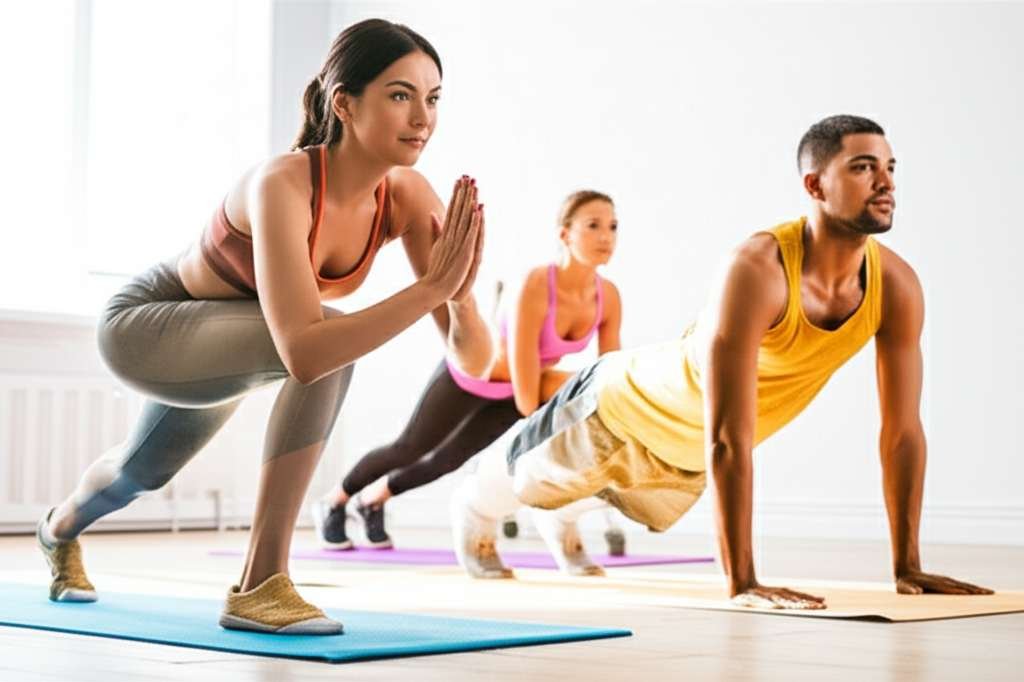
12 Best Home Workouts for Beginners to Lose Weight: Simple Moves for Real Results. Get started with effective, easy-to-follow exercises you can do at home. These workouts require no special equipment and are designed to help beginners build strength, boost metabolism, and achieve sustainable weight loss. Learn simple techniques to burn calories and feel great!
Feeling a bit lost on your weight loss journey? You’re not alone. Many people find it hard to know where to start when it comes to exercise, especially if they’re new to fitness or don’t have access to a gym. It can feel confusing with all the different workout types out there.
But here’s the good news: you don’t need fancy equipment or a gym membership to see amazing results. We’re going to break down some of the best home workouts designed specifically for beginners. These are simple, effective, and can be done right in your living room.
This guide will walk you through easy-to-follow exercises that will help you build confidence, burn calories, and kickstart your weight loss. Let’s get moving!
Why Home Workouts are Perfect for Beginners
Starting a fitness routine can feel like a big step. Home workouts offer a comfortable and convenient way to begin. You can exercise on your own schedule, in a space where you feel relaxed. This removes many common barriers that stop beginners from getting started, like feeling self-conscious at the gym or dealing with travel time.

Plus, many effective exercises require no equipment at all. This means you can start today without needing to buy anything. It’s a budget-friendly and accessible way to improve your health and work towards your weight loss goals.
Getting Started Safely: Important Tips for Beginners
Before diving into any new workout routine, it’s important to prepare your body and mind. Safety and proper form are key to preventing injuries and making sure you get the most out of each exercise.
Consult Your Doctor: If you have any underlying health conditions or concerns, it’s always a good idea to chat with your doctor before starting a new exercise program. They can offer personalized advice.
Warm-Up is Key: Never skip your warm-up! A 5-10 minute warm-up increases blood flow to your muscles, making them more flexible and less prone to injury. Think light cardio like jogging in place, arm circles, and leg swings.
Focus on Form: It’s better to do fewer repetitions with perfect form than many with poor form. Watch videos, use a mirror if possible, and focus on controlled movements.
Listen to Your Body: Your body will tell you what it needs. If something feels sharp or painful, stop. Pushing too hard too soon can lead to injury and setbacks.
Stay Hydrated: Drink water before, during, and after your workouts. This is crucial for your body’s performance and recovery.
Cool Down and Stretch: After your workout, take 5-10 minutes to cool down with some gentle stretching. This helps your heart rate return to normal and can improve flexibility.
The 12 Best Home Workouts for Beginners to Lose Weight
These workouts are chosen for their effectiveness, simplicity, and minimal equipment needs. They target different muscle groups and help boost your metabolism, which is essential for weight loss.
1. Bodyweight Squats
Squats are a fundamental exercise that works your legs and glutes. They are excellent for building lower body strength and burning calories.
How to do it: Stand with your feet shoulder-width apart, toes pointing slightly outwards. Keep your chest up and your back straight. Lower your hips as if you’re sitting back into a chair, keeping your knees behind your toes. Go as low as you comfortably can, aiming to get your thighs parallel to the floor. Push through your heels to return to the starting position.
Reps/Sets: Aim for 3 sets of 10-15 repetitions.
2. Push-Ups (Knee or Wall Variation)
Push-ups are a fantastic upper body exercise, working your chest, shoulders, and triceps. For beginners, starting on your knees or against a wall makes it more manageable.
How to do it (Knee Push-Ups): Start on your hands and knees. Place your hands slightly wider than shoulder-width apart. Keep your body in a straight line from your head to your knees. Lower your chest towards the floor by bending your elbows, keeping them tucked slightly towards your body. Push back up to the starting position.
How to do it (Wall Push-Ups): Stand facing a wall, about arm’s length away. Place your hands on the wall at shoulder-width apart, slightly higher than shoulder level. Lean towards the wall by bending your elbows, keeping your body straight from head to heels. Push back to the starting position.
Reps/Sets: Aim for 3 sets of 8-12 repetitions.
3. Lunges
Lunges are a great way to work your legs and glutes individually, which helps improve balance and can highlight any muscle imbalances.
How to do it: Stand with your feet hip-width apart. Step forward with one leg, lowering your hips until both knees are bent at about a 90-degree angle. Your front knee should be directly above your ankle, and your back knee should hover just off the floor. Push off your front foot to return to the starting position. Repeat on the other leg.
Reps/Sets: Aim for 3 sets of 10-12 repetitions per leg.
4. Plank
The plank is a powerful core exercise that strengthens your abdominal muscles, back, and shoulders. It’s excellent for improving posture and stability.
How to do it: Start in a push-up position, but rest on your forearms instead of your hands. Your elbows should be directly under your shoulders, and your body should form a straight line from your head to your heels. Engage your core muscles, making sure your hips don’t sag or rise too high.
Hold Time/Sets: Aim to hold for 30-60 seconds, for 3 sets.
5. Glute Bridges
Glute bridges are excellent for activating and strengthening your glutes and hamstrings. They are also great for improving hip mobility.
How to do it: Lie on your back with your knees bent and your feet flat on the floor, hip-width apart. Your arms should be by your sides. Engage your glutes and lift your hips off the floor until your body forms a straight line from your shoulders to your knees. Hold for a second at the top, then slowly lower back down.
Reps/Sets: Aim for 3 sets of 12-15 repetitions.
6. Jumping Jacks
Jumping jacks are a fantastic cardiovascular exercise that gets your heart rate up quickly, helping to burn calories and improve endurance.
How to do it: Start standing with your feet together and your arms at your sides. Jump, spreading your feet wider than shoulder-width apart and bringing your arms overhead. Jump again, returning your feet and arms to the starting position.
Duration/Sets: Aim for 3 sets of 30-60 seconds each, with 30 seconds of rest in between.
7. Bird-Dog
This exercise is brilliant for improving core stability, balance, and coordination, while also working your back and glutes.
How to do it: Start on your hands and knees, with your hands directly under your shoulders and your knees directly under your hips. Keep your back flat and your core engaged. Slowly extend your right arm straight forward and your left leg straight back, keeping them parallel to the floor. Keep your hips level and avoid arching your back. Return to the starting position and repeat on the other side (left arm, right leg).
Reps/Sets: Aim for 3 sets of 10-12 repetitions per side.
8. Mountain Climbers
Mountain climbers are a high-intensity exercise that works your entire body, especially your core, while also providing a great cardio workout.
How to do it: Start in a plank position with your hands directly under your shoulders. Bring your right knee towards your chest, then quickly switch legs, bringing your left knee towards your chest while extending the right leg back. Continue alternating legs in a running motion.
Duration/Sets: Aim for 3 sets of 30-45 seconds each, with 30 seconds of rest in between.
9. Crunches
Crunches are a classic abdominal exercise that targets your upper abs. They are a good starting point for building core strength.
How to do it: Lie on your back with your knees bent and your feet flat on the floor. Place your hands lightly behind your head or across your chest. Engage your abdominal muscles and lift your head and shoulders off the floor, focusing on bringing your rib cage towards your hips. Slowly lower back down.
Reps/Sets: Aim for 3 sets of 15-20 repetitions.
10. Standing Calf Raises
This exercise targets your calf muscles, which are important for balance and mobility. It’s a simple yet effective move.
How to do it: Stand with your feet hip-width apart. You can hold onto a wall or chair for balance if needed. Slowly rise up onto the balls of your feet, lifting your heels as high as possible. Hold for a moment at the top, then slowly lower your heels back down.
Reps/Sets: Aim for 3 sets of 15-20 repetitions.
11. High Knees
High knees are another excellent cardio exercise that mimics running in place but with more intensity, targeting your quads and core.
How to do it: Stand tall and start to run in place, bringing your knees up as high as you can towards your chest. Swing your arms to help with momentum. Keep your core engaged and your back straight.
Duration/Sets: Aim for 3 sets of 30-60 seconds each, with 30 seconds of rest in between.
12. Triceps Dips (Using a Chair)
Triceps dips are a great way to strengthen your triceps (the back of your arms) and shoulders. You can use a sturdy chair or step.
How to do it: Sit on the edge of a sturdy chair or step, with your hands gripping the edge next to your hips. Slide your hips forward off the chair, keeping your legs bent in front of you. Lower your body by bending your elbows until they are at about a 90-degree angle, keeping your back close to the chair. Push back up to the starting position using your triceps.
Reps/Sets: Aim for 3 sets of 10-15 repetitions.
Creating Your Beginner Workout Routine
Consistency is key when it comes to weight loss and fitness. For beginners, it’s best to start slow and gradually increase the intensity and duration of your workouts.
Sample Weekly Schedule for Beginners
Here’s a sample schedule to get you started. Remember, this is a template, and you can adjust it based on how you feel and your progress.
| Day | Workout Focus | Duration |
| :——– | :—————————————————————————- | :————– |
| Monday | Full Body Strength (Squats, Push-ups, Lunges, Plank, Glute Bridges) | 20-30 minutes |
| Tuesday | Cardio (Jumping Jacks, High Knees, Mountain Climbers) | 15-20 minutes |
| Wednesday | Rest or Active Recovery (light walking, stretching) | – |
| Thursday | Full Body Strength (Repeat Monday’s routine or mix in Bird-Dog, Calf Raises) | 20-30 minutes |
| Friday | Cardio (Repeat Tuesday’s routine or try different combinations) | 15-20 minutes |
| Saturday | Full Body Strength (or focus on exercises you enjoyed most) | 20-30 minutes |
| Sunday | Rest | – |
Progression: How to Level Up
As you get stronger, you’ll want to challenge yourself to keep seeing results. Here are a few ways to progress:
Increase Reps or Hold Time: If you can easily complete 15 squats, try for 18 or 20. If holding a plank for 30 seconds is easy, aim for 45 or 60.
Increase Sets: Once you’re comfortable with the number of reps, you can add an extra set to each exercise.
Decrease Rest Time: Shorter rest periods between sets can increase the intensity of your workout.
Add New Exercises: As you gain confidence, research and incorporate new beginner-friendly exercises.
Increase Frequency: If you’re feeling good and recovering well, you might consider adding an extra workout day or making your rest days more active.
The Science Behind Home Workouts and Weight Loss
Weight loss is fundamentally about creating a calorie deficit – burning more calories than you consume. Exercise plays a huge role in this by increasing the number of calories you burn each day.
How Exercise Burns Calories
When you engage in physical activity, your body uses energy, which comes from the calories you’ve eaten. Different types of exercise burn calories at different rates.
Cardiovascular Exercise (Cardio): Activities like jumping jacks, high knees, and mountain climbers get your heart rate up and are very effective at burning calories during the workout itself.
Strength Training: Exercises like squats, lunges, and push-ups build muscle. Muscle tissue is metabolically active, meaning it burns calories even when you’re at rest. The more muscle you have, the higher your resting metabolic rate, which helps with long-term weight management. According to the Mayo Clinic, building muscle is a key component of sustainable weight loss.
Building a Healthy Metabolism
Your metabolism is the process your body uses to convert food and drinks into energy. A higher metabolism means your body burns more calories at rest. Strength training is crucial for boosting your metabolism. By increasing your muscle mass, you essentially increase your body’s “engine,” allowing it to burn more fuel throughout the day.
Nutrition: The Other Half of the Weight Loss Equation
While exercise is vital for burning calories and building a strong body, nutrition is equally, if not more, important for weight loss. You can’t out-exercise a poor diet.
Focus on Whole Foods: Prioritize fruits, vegetables, lean proteins, and whole grains. These foods are nutrient-dense and help you feel full and satisfied.
Portion Control: Be mindful of how much you’re eating. Using smaller plates can help trick your brain into feeling satisfied with less food.
Hydration: Drinking plenty of water can help you feel fuller and can boost your metabolism slightly. Sometimes, thirst can be mistaken for hunger.
Limit Processed Foods and Sugary Drinks: These often contain “empty calories” – lots of calories with little nutritional value – and can lead to weight gain.
For a comprehensive understanding of healthy eating habits, resources like the American Heart Association offer excellent guidance.
Frequently Asked Questions (FAQ)
Q1: How often should a beginner exercise for weight loss?
A1: For beginners aiming for weight loss, aim for at least 150 minutes of moderate-intensity aerobic activity or 75 minutes of vigorous-intensity activity per week, spread across 3-5 days. Incorporate strength training 2-3 times per week. Consistency is more important than intensity when you’re starting out.
Q2: How long will it take to see results from home workouts?
A2: Results vary greatly depending on individual factors like diet, metabolism, and consistency. However, many beginners start to notice changes in energy levels and how their clothes fit within 2-4 weeks. Visible weight loss typically takes longer, often 1-3 months of consistent effort.
Q3: What if I can’t do a full push-up?
A3: That’s perfectly normal! Use knee push-ups or wall push-ups as shown in the guide. As you get stronger, you’ll be able to progress to standard push-ups. Focus on maintaining good form throughout.
Q4: Do I need any equipment for these workouts?
A4: The exercises listed are primarily bodyweight exercises, meaning you don’t need any special equipment to start. For triceps dips, you’ll need a sturdy chair or step, and for some balance exercises, a wall can be helpful.
Q5: How can I stay motivated to continue my workouts?
A5: Find an exercise buddy, track your progress, set realistic goals, and celebrate your achievements. Listen to music you enjoy, try new exercises to keep things interesting, and remember why you started. Seeing small improvements can be a great motivator.
Q6: Is it okay to feel sore after a workout?
A6: Yes, some muscle soreness (often called DOMS – Delayed Onset Muscle Soreness) is normal, especially when you’re starting or trying new exercises. It’s a sign that your muscles are adapting. Ensure you’re getting enough rest and hydration. If the pain is sharp or persistent, consult a healthcare professional.
Q7: How do I know if I’m doing the exercises correctly?
A7: Watch instructional videos, use a mirror to check your form, and focus on controlled movements rather than speed. Start with fewer repetitions to ensure proper technique. If possible, having a friend or family member observe you can also be helpful.
Conclusion: Your Journey to a Healthier You Starts Now
Embarking on a weight loss journey can feel daunting, but with these 12 best home workouts for beginners, you have a clear, actionable plan to get started. Remember, consistency, proper form, and listening to your body are your best allies.
By incorporating these simple yet effective exercises into your routine, you’re not just burning calories; you’re building strength, boosting your metabolism, and creating healthy habits that can last a lifetime. Pair this with a balanced diet, and you’re well on your way to achieving your weight loss goals and feeling fantastic.
Don’t wait for the “perfect” moment to start. Your home is your gym, and today is the perfect day to take that first step. You’ve got this!
As an Amazon Associate, We earn from qualifying purchases. When you purchase a product through Amazon links on pulsefitguide.com, we may earn a small commission at no extra cost to you. This helps support the site and keep our content free.