
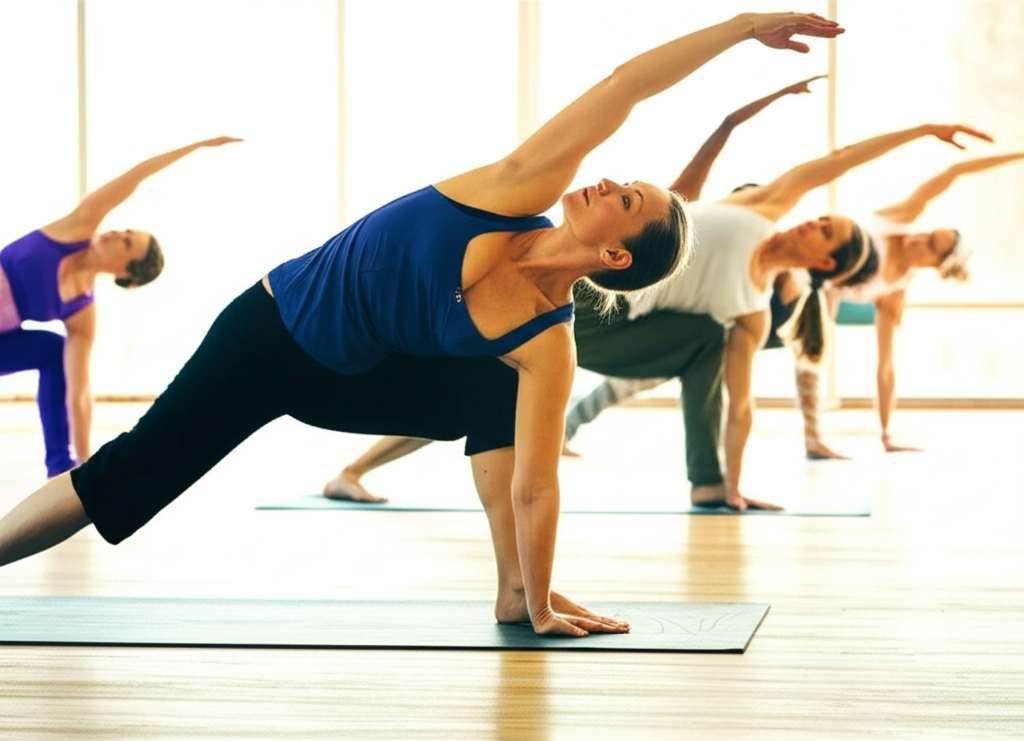
10 Yoga Poses: Essential Body Toning
Want to tone your whole body with yoga? This guide breaks down 10 effective yoga poses that build strength and definition. Learn simple, step-by-step instructions to sculpt your muscles and boost your fitness, even if you’re completely new to yoga. Get ready to feel stronger and more confident!
Feeling like your body could use a little more definition? You’re not alone. Many of us look for ways to tone our muscles, and the idea of doing it through yoga can be appealing but also a bit confusing when you’re starting out.
It’s easy to get overwhelmed with all the different poses and what they’re supposed to do. You might wonder if yoga can really help build muscle tone, or if it’s just about flexibility.
The good news is, yoga is a fantastic and accessible way to build lean muscle and improve your overall physique. It works by using your own body weight to create resistance, which helps strengthen and tone muscles throughout your body.

This guide is designed to cut through the confusion. We’ll walk you through 10 essential yoga poses, explaining exactly how to do them and which parts of your body they target.
We’ll break down each pose into simple, manageable steps. You’ll learn how to engage the right muscles and get the most out of your practice.
By the end of this article, you’ll have a clear, actionable plan to start toning your body with yoga. Let’s get started on building a stronger, more confident you!
—
Why Yoga for Body Toning?
Yoga is more than just stretching; it’s a holistic practice that can significantly contribute to body toning. It focuses on building strength through holding poses, engaging multiple muscle groups simultaneously, and improving your body’s natural alignment.
When you practice yoga, you’re often using your own body weight as resistance. This isometric contraction helps to build lean muscle mass over time. Unlike weightlifting, which often isolates muscles, yoga works your entire body in a functional way, leading to balanced strength and improved posture.
The mind-body connection in yoga also plays a crucial role. By focusing on your breath and precise movements, you learn to activate muscles more effectively. This mindful engagement ensures that you’re not just going through the motions, but truly working towards your toning goals.
Understanding Muscle Tone
Before we dive into the poses, let’s quickly clarify what “body toning” really means. It’s not about bulking up like a bodybuilder, but rather about developing lean muscle that gives your body a more defined, sculpted appearance.
Toning happens when muscles become stronger and more visible beneath the skin. This is achieved through a combination of strength training (like yoga poses) and a healthy diet that supports muscle growth and reduces body fat. When you reduce the layer of fat over your muscles, they naturally appear more defined.
Yoga helps in two main ways: it builds the muscle itself, and it can also improve circulation and flexibility, which contribute to a more aesthetically pleasing physique. It’s about creating a strong, resilient, and well-proportioned body.
10 Essential Yoga Poses for Body Toning
Here are 10 powerful yoga poses that will help you build strength, endurance, and definition throughout your body. Remember to listen to your body and modify poses as needed, especially when you’re just starting out.
1. Plank Pose (Phalakasana)
Plank pose is a foundational pose for building core strength and toning the entire body. It engages your abs, arms, shoulders, and legs, making it a fantastic full-body toner.
How to do it:
- Start on your hands and knees.
- Walk your hands slightly forward and extend your legs back, coming onto the balls of your feet.
- Your body should form a straight line from your head to your heels.
- Engage your core by drawing your belly button towards your spine.
- Keep your wrists directly under your shoulders and your neck in a neutral position.
- Hold for 30 seconds to 1 minute, breathing deeply.
Muscles Targeted:
- Core (abdominals, obliques, lower back)
- Shoulders
- Arms (triceps)
- Glutes
- Quadriceps
2. Downward-Facing Dog (Adho Mukha Svanasana)
This classic pose is a mild inversion that stretches and strengthens the entire posterior chain of your body, from your hamstrings to your shoulders.
How to do it:
- Begin on your hands and knees, with your hands shoulder-width apart and knees hip-width apart.
- Tuck your toes under and lift your hips up and back, forming an inverted V-shape.
- Press firmly through your palms, spreading your fingers wide.
- Let your head hang naturally between your arms.
- You can keep a slight bend in your knees if your hamstrings are tight, and gradually work towards straightening them.
- Hold for 5-10 breaths.
Muscles Targeted:
- Hamstrings
- Calves
- Shoulders
- Arms
- Back muscles
- Glutes
3. Warrior II (Virabhadrasana II)
Warrior II is a powerful standing pose that builds strength and stamina in the legs and opens the hips and chest. It’s excellent for toning the thighs, glutes, and shoulders.
How to do it:
- Step your feet about 3-4 feet apart. Turn your right foot out 90 degrees and your left foot slightly in.
- Align your front heel with the arch of your back foot.
- Bend your right knee so it’s directly over your ankle, forming a 90-degree angle.
- Extend your arms parallel to the floor, reaching out to the sides.
- Gaze over your right fingertips.
- Keep your torso upright and engage your core.
- Hold for 5-10 breaths, then repeat on the other side.
Muscles Targeted:
- Quadriceps
- Hamstrings
- Glutes
- Shoulders
- Core
- Ankles and feet
4. Chaturanga Dandasana (Four-Limbed Staff Pose)
Often a transition pose in Vinyasa flow, Chaturanga is a challenging pose that significantly strengthens the arms, shoulders, and core. It’s crucial for building upper body tone.
How to do it:
- Start in Plank Pose.
- As you exhale, bend your elbows, keeping them tucked close to your ribs, and lower your body until your upper arms are parallel to the floor.
- Your body should hover just a few inches above the ground, forming a straight line from head to heels.
- Keep your core engaged and your neck long.
- Hold for a breath or two before transitioning to Upward-Facing Dog or lowering to the floor. (If this is too difficult, you can lower your knees to the mat first).
Muscles Targeted:
- Triceps
- Chest (pectorals)
- Shoulders (deltoids)
- Core
- Wrists
5. Cobra Pose (Bhujangasana)
Cobra pose is a gentle backbend that strengthens the spine, tones the back muscles, and opens the chest. It helps to counteract the effects of prolonged sitting.
How to do it:
- Lie on your stomach with your legs extended and the tops of your feet on the floor.
- Place your hands flat on the mat beneath your shoulders, with your elbows tucked in.
- As you inhale, press your pelvis and the tops of your feet into the mat, and lift your chest off the floor using the strength of your back muscles.
- Keep your neck long, gazing slightly forward or up.
- Avoid pushing up with your hands; they are there for support, not to do the work.
- Hold for a few breaths, then exhale and lower back down.
Muscles Targeted:
- Spinal erectors (back muscles)
- Glutes
- Hamstrings
- Chest
- Shoulders
6. Triangle Pose (Trikonasana)
Triangle pose is a standing pose that stretches and strengthens the legs, hips, and spine. It’s excellent for toning the sides of the body and improving balance.
How to do it:
- From a standing position, step your feet about 3-4 feet apart. Turn your right foot out 90 degrees and your left foot slightly in.
- Extend your arms parallel to the floor.
- As you exhale, hinge at your right hip and reach your right hand forward, then lower it down towards your shin, ankle, or a block.
- Extend your left arm straight up towards the ceiling, stacking your shoulders.
- Gaze upwards towards your left hand.
- Keep both legs straight and engaged.
- Hold for 5-10 breaths, then repeat on the other side.
Muscles Targeted:
- Quadriceps
- Hamstrings
- Glutes
- Obliques
- Shoulders
- Calves
7. Boat Pose (Paripurna Navasana)
Boat pose is a fantastic core strengthener. It targets your abdominal muscles, hip flexors, and lower back, helping to create a strong and toned midsection.
How to do it:
- Sit on the floor with your knees bent and feet flat.
- Lean back slightly, keeping your spine straight.
- Lift your feet off the floor, bringing your shins parallel to the ground.
- Extend your arms forward, parallel to the floor, or keep your hands on the floor for support.
- For a deeper challenge, straighten your legs to form a V-shape with your body.
- Engage your core and hold for 30 seconds to 1 minute.
Muscles Targeted:
- Abdominals (rectus abdominis, transverse abdominis)
- Hip flexors
- Lower back
- Quadriceps
8. Chair Pose (Utkatasana)
Chair pose is like doing a squat in yoga. It’s a powerful pose for building strength in the legs and glutes, and also engages the core and shoulders.
How to do it:
- Stand with your feet together or hip-width apart.
- As you exhale, bend your knees and lower your hips as if you were sitting into a chair.
- Keep your chest lifted and your spine long.
- Extend your arms overhead, parallel to each other, or bring your palms together at your heart.
- Ensure your knees don’t go past your toes.
- Hold for 5-10 breaths.
Muscles Targeted:
- Quadriceps
- Hamstrings
- Glutes
- Calves
- Core
- Shoulders
9. Crow Pose (Bakasana)
Crow Pose is an arm balance that requires significant core strength, arm strength, and balance. It’s a great pose for building definition in the arms, wrists, and core.
How to do it:
- Start in a squatting position with your feet hip-width apart.
- Place your hands shoulder-width apart on the mat, fingers spread wide.
- Bend your elbows and place your shins on the backs of your upper arms, as close to your armpits as possible.
- Shift your weight forward, lifting one foot off the ground, then the other.
- Engage your core and look slightly forward to help with balance.
- Hold for a few breaths. (This pose takes practice, so don’t be discouraged if you don’t get it right away!)
Muscles Targeted:
- Wrists
- Forearms
- Triceps
- Shoulders
- Core
- Hip flexors
10. Locust Pose (Salabhasana)
Locust pose is a backbend that strengthens the entire back, glutes, and hamstrings. It’s excellent for improving posture and toning the posterior chain.
How to do it:
- Lie on your stomach with your legs extended and your arms alongside your body, palms facing down.
- As you inhale, lift your head, chest, arms, and legs off the floor.
- Keep your neck in line with your spine, gazing slightly forward.
- Engage your glutes and back muscles to lift.
- You can interlace your fingers behind your back and lift them away from your body for a deeper stretch.
- Hold for 3-5 breaths, then exhale and lower back down.
Muscles Targeted:
- Spinal erectors (back muscles)
- Glutes
- Hamstrings
- Shoulders
- Calves
Structuring Your Toning Practice
To get the most out of these poses for body toning, consider how you integrate them into your practice. Consistency is key, and a well-rounded approach will yield the best results.
You can incorporate these poses into a daily routine, a few times a week, or as part of a longer yoga class. For beginners, starting with holding each pose for shorter durations and focusing on proper form is more important than holding for extended periods.
Sample Weekly Schedule
Here’s a sample structure to help you get started. Remember to always warm up before your practice and cool down afterward.
| Day | Focus | Poses to Include |
|---|---|---|
| Monday | Core & Upper Body | Plank, Chaturanga, Boat Pose, Cobra Pose |
| Tuesday | Legs & Balance | Warrior II, Triangle Pose, Chair Pose |
| Wednesday | Full Body Strength | Downward-Facing Dog, Plank, Warrior II, Locust Pose |
| Thursday | Rest or Gentle Stretch | Light stretching, meditation |
| Friday | Core & Arms Focus | Plank, Chaturanga, Boat Pose, Crow Pose (practice) |
| Saturday | Legs & Back Strength | Warrior II, Triangle Pose, Chair Pose, Locust Pose |
| Sunday | Rest or Active Recovery | Walking, light yoga flow |
For poses like Chaturanga and Crow Pose, which are more advanced, focus on building the foundational strength needed to perform them safely. You can hold Plank Pose longer to build arm and core strength for Chaturanga, and practice holding Boat Pose to prepare for arm balances like Crow Pose.
Modifications for Beginners
Yoga is adaptable! Don’t be afraid to modify poses to suit your current fitness level. Here are some common modifications:
- Plank Pose: Drop to your knees.
- Downward-Facing Dog: Keep knees bent and focus on lengthening the spine.
- Chaturanga: Lower knees to the mat before bending elbows.
- Crow Pose: Focus on lifting one foot at a time, or practice lifting your hips in a squat with hands on the floor.
- Warrior II & Triangle Pose: Shorten your stance if needed. Use a yoga block under your hand for support in Triangle Pose.
Utilizing yoga blocks can significantly aid beginners in achieving proper alignment and stability in various poses, making the practice more accessible and effective. You can find affordable blocks at most sporting goods stores or online retailers.
The Role of Breath in Toning
Breath, or ‘prana,’ is central to yoga. It’s not just about filling your lungs; it’s about using your breath to power your movements and deepen your poses. This mindful connection between breath and body is crucial for effective muscle engagement.
When you coordinate your breath with your movements, you create a more dynamic and efficient workout. For instance, inhaling often signals expansion or lifting, while exhaling signifies folding or lowering. This rhythm helps you maintain energy and focus.
Deep, conscious breathing also helps to calm your nervous system, reducing stress and improving recovery. This is important because consistent practice, supported by adequate rest, is what leads to muscle toning and overall fitness gains. For more on the science behind breathwork and its impact on the body, resources from institutions like the National Center for Complementary and Integrative Health offer valuable insights.
Nutrition for Muscle Tone
While yoga builds muscle, proper nutrition is essential for that muscle to become visible and toned. You need to fuel your body with the right nutrients to support muscle repair and growth.
Protein is particularly important. It provides the building blocks for muscle tissue. Aim to include lean protein sources in your meals and snacks throughout the day. Examples include chicken, fish, beans, lentils, tofu, and Greek yogurt.
Don’t forget about complex carbohydrates for energy, healthy fats for hormone production, and plenty of fruits and vegetables for vitamins, minerals, and antioxidants. Staying hydrated is also critical for muscle function and recovery.
A balanced diet, combined with your yoga practice, will help reduce body fat and allow your newly toned muscles to show through. It’s a synergistic approach that leads to sustainable results. Understanding your body’s nutritional needs can be a significant step in your journey; resources like the MyPlate initiative from the USDA offer great guidance on balanced eating.
Frequently Asked Questions
Q1: Can yoga really help me build muscle and tone my body?
Yes! Yoga uses your own body weight to build strength. Holding poses engages muscles, and consistent practice leads to lean muscle development and toning, especially when combined with proper nutrition.
Q2: How often should I practice these yoga poses to see results?
Aim for consistency. Practicing these poses 3-5 times a week can yield noticeable results within a few weeks to months. Listen to your body and allow for rest days.
Q3: What if I can’t do some of the poses perfectly?
That’s completely normal, especially when you’re starting! Focus on the basic form and use modifications. Progress comes with practice. Don’t compare yourself to others; celebrate your own journey.
Q4: Do I need any special equipment for these yoga poses?
A yoga mat is highly recommended for comfort and grip. Yoga blocks and straps can be helpful for modifications and to deepen stretches, but they are not essential to start.
Q5: Is yoga good for toning my stomach area?
Absolutely. Poses like Plank Pose, Boat Pose, and Chaturanga are excellent for strengthening your core muscles, which helps to tone your abdomen and create a more stable midsection.
Q6: How long should I hold each pose for toning?
For toning, aim to hold poses for at least 30 seconds to 1 minute, or for 5-10 deep breaths. Focus on engaging the muscles and maintaining good form throughout the hold.
Q7: Can yoga help with weight loss as well as toning?
Yes, yoga can contribute to weight loss. It burns calories, builds muscle (which boosts metabolism), and can reduce stress-related eating. However, for significant weight loss, it’s best combined with a calorie-conscious diet and potentially other forms of cardio exercise.
Conclusion
Toning your body through yoga is an achievable and rewarding goal. By incorporating these 10 essential poses into your routine, you’ll build strength, improve your physique, and enhance your overall well-being. Remember that consistency, proper form, and mindful breathing are your greatest allies on this journey.
Don’t be discouraged if some poses feel challenging at first. Every practice is an opportunity to learn and grow. Listen to your body, embrace modifications, and celebrate the progress you make each day. With dedication and a balanced approach that includes nutrition, you’ll be well on your way to a stronger, more toned, and more confident you!
As an Amazon Associate, We earn from qualifying purchases. When you purchase a product through Amazon links on pulsefitguide.com, we may earn a small commission at no extra cost to you. This helps support the site and keep our content free.