
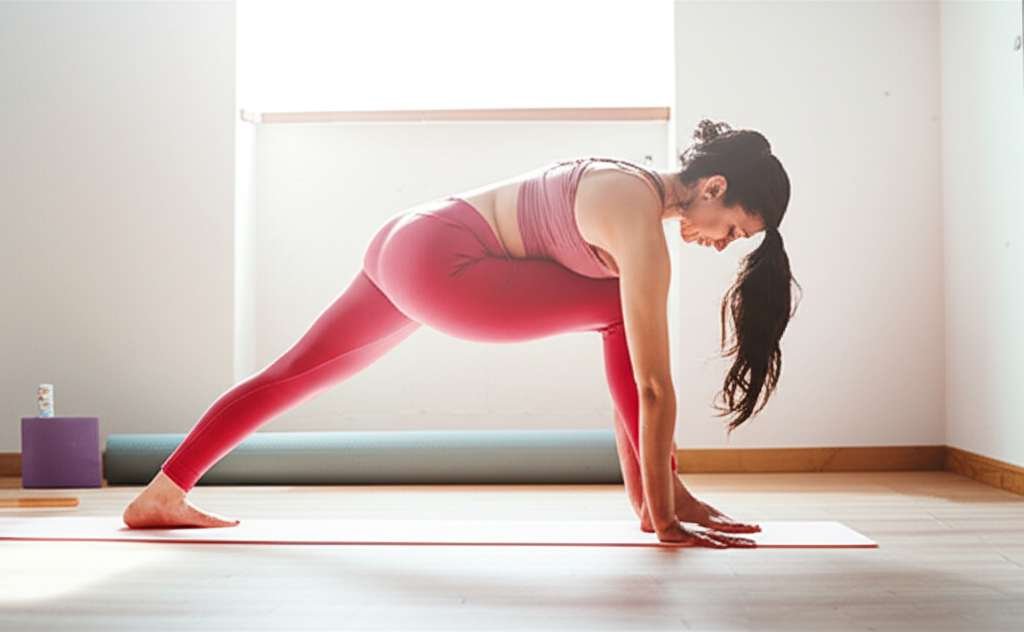
10 yoga flows for weight loss at home can help you burn calories, build lean muscle, and boost your metabolism right from your living room. These accessible routines are perfect for beginners looking for a fun and effective way to support their weight loss journey.
Feeling like shedding a few pounds is a puzzle you can’t quite solve? You’re not alone. Many of us find the journey to a healthier weight confusing and overwhelming.
It’s easy to get lost in complicated diets or intense workout plans that just don’t fit our busy lives. But what if there was a gentler, yet powerful, way to support your weight loss goals?
Yoga offers a unique blend of physical movement, mindfulness, and breathwork that can make a real difference. And the best part? You don’t need a fancy gym or expensive equipment to start.
We’re going to explore 10 simple yoga flows you can do right at home. These routines are designed to be beginner-friendly, helping you build strength, increase your calorie burn, and feel amazing in your own body.

Understanding Yoga for Weight Loss
Yoga is often associated with flexibility and relaxation, but it’s also a fantastic tool for weight management. How does it work?
Firstly, yoga poses (asanas) build muscle. More muscle means a higher metabolism, which helps your body burn more calories even when you’re at rest. Think of it like upgrading your body’s engine!
Secondly, many yoga flows involve continuous movement, which elevates your heart rate and burns calories during the practice. This is similar to a low-impact cardio workout.
Finally, yoga encourages mindfulness and a better connection with your body. This can lead to more conscious eating habits and a reduced tendency to stress eat. It helps you tune into what your body truly needs.
Key Principles for Weight Loss Through Yoga
To get the most out of your yoga practice for weight loss, keep these principles in mind:
Consistency is Key: Aim to practice regularly, ideally most days of the week. Even 20-30 minutes can make a difference.
Focus on Breath: Deep, conscious breathing (pranayama) is a cornerstone of yoga. It helps manage stress, which can be a major factor in weight gain.
Build Intensity: As you get stronger, gradually increase the duration or intensity of your flows.
Listen to Your Body: Never push yourself into pain. Modifications are always welcome.
Combine with Healthy Habits: Yoga is a powerful support, but it works best alongside a balanced diet and adequate sleep.
10 Yoga Flows for Weight Loss: Essential Home Routines
Let’s dive into some practical, beginner-friendly yoga flows you can do at home to support your weight loss journey. These flows focus on engaging major muscle groups, boosting your heart rate, and improving overall fitness.
1. The Sun Salutation A (Surya Namaskar A) Flow
This is a foundational flow in yoga, often used as a warm-up. It’s a dynamic sequence that warms the body, builds heat, and can be repeated multiple times to increase calorie burn.
How to do it:
1. Mountain Pose (Tadasana): Stand tall with feet together, arms by your sides.
2. Upward Salute (Urdhva Hastasana): Inhale, sweep arms overhead, palms touching.
3. Forward Fold (Uttanasana): Exhale, hinge at hips, fold forward, hands to the floor or shins.
4. Halfway Lift (Ardha Uttanasana): Inhale, flatten back, gaze forward.
5. Plank Pose (Phalakasana): Exhale, step or jump feet back to a plank. Keep your core engaged.
6. Chaturanga Dandasana (Four-Limbed Staff Pose): Lower halfway down, elbows bent at 90 degrees, close to your body. (Beginners can drop knees to the floor).
7. Upward-Facing Dog (Urdhva Mukha Svanasana) or Cobra Pose (Bhujangasana): Inhale, press through hands, lift chest. For Cobra, keep hips on the floor.
8. Downward-Facing Dog (Adho Mukha Svanasana): Exhale, lift hips up and back, forming an inverted V.
9. Step Forward: Inhale, step one foot forward between hands.
10. Forward Fold: Exhale, step other foot forward, return to Forward Fold.
11. Halfway Lift: Inhale, flatten back.
12. Upward Salute: Exhale, engage core, rise up with arms extended overhead.
13. Mountain Pose: Inhale, bring arms down by sides.
Why it helps: This flow works the entire body, builds stamina, and significantly raises your heart rate. Repeating it 5-10 times can be a great workout.
2. The Warrior Series Flow
This flow builds strength in the legs and core, improves balance, and opens the hips. The sustained poses can contribute to calorie burning.
How to do it:
1. Start in Downward-Facing Dog.
2. Inhale, step your right foot forward between your hands.
3. Spin your left heel down so your left foot is parallel to the back edge of the mat.
4. Inhale, rise up, extending your arms parallel to the floor, gaze over your right fingertips. This is Warrior II (Virabhadrasana II).
5. From Warrior II, inhale, flip your right palm and reach your right arm up and back, left hand gliding down your back leg. This is Reverse Warrior (Viparita Virabhadrasana).
6. Exhale, return to Warrior II.
7. Inhale, straighten your right leg.
8. Exhale, hinge at your right hip, bringing your right hand down to your shin, ankle, or the floor outside your right foot. Extend your left arm towards the ceiling. This is Triangle Pose (Trikonasana).
9. Inhale, rise back up to standing.
10. Turn your right toes to face forward, then turn your left toes to face forward. Step your feet together.
11. Repeat on the left side.
Why it helps: Builds significant leg strength, which is crucial for boosting metabolism. It also improves balance and focus.
3. The Standing Balance Flow
This flow challenges your balance and strengthens stabilizing muscles in your legs, core, and ankles. Holding poses requires focus and burns calories.
How to do it:
1. Start in Mountain Pose.
2. Shift your weight onto your left foot.
3. Inhale, bring your right knee up towards your chest. Hold your right thigh with your hands. This is Standing Knee to Chest Pose (Eka Pada Ashwa Sanchalanasana).
4. From here, you can transition to Tree Pose (Vrksasana). Release your hands and place the sole of your right foot on your inner left calf or thigh (avoiding the knee). Bring your hands to heart center or extend them overhead.
5. Hold for several breaths.
6. Gently release your right leg and return to Mountain Pose.
7. Repeat on the other side.
Why it helps: Improves balance, strengthens ankles and core muscles, and requires concentration, which can distract from hunger pangs.
4. The Core Strength Flow
A strong core is vital for overall health and supports efficient movement. This flow targets your abdominal muscles directly.
How to do it:
1. Start in Plank Pose. Ensure your wrists are under your shoulders and your body forms a straight line from head to heels.
2. Engage your core. Imagine drawing your belly button towards your spine.
3. Inhale, lift your right leg a few inches off the floor, keeping your hips level.
4. Exhale, lower your right leg.
5. Inhale, lift your left leg.
6. Exhale, lower your left leg.
7. Hold Plank Pose for 30-60 seconds.
8. Transition to Downward-Facing Dog.
9. Return to Plank.
10. From Plank, bring your knees to the mat.
11. Lie on your back and come into Boat Pose (Paripurna Navasana). Sit with knees bent, feet flat on the floor. Lean back slightly, lift your feet off the floor, and extend your arms parallel to the floor. Keep your spine long.
12. Hold Boat Pose for 30 seconds.
Why it helps: Directly strengthens abdominal muscles, which are key for posture and metabolism. A strong core also helps you perform other poses more effectively.
5. The Hip Opener & Detox Flow
This flow focuses on opening the hips, which is great for releasing tension and can help with the body’s natural detoxification processes.
How to do it:
1. Start in a seated position with legs crossed.
2. Move into Pigeon Pose (Eka Pada Rajakapotasana). Bring your right knee forward, tucking your right foot towards your left hip. Extend your left leg straight back. Keep your hips square. You can stay upright or fold forward.
3. Hold for 5-10 breaths.
4. Gently come out and switch sides.
5. Lie on your back and come into Supine Spinal Twist (Supta Matsyendrasana). Lie on your back, draw your knees into your chest. Extend your left leg long. Drop your right knee across your body to the left side, extending your right arm out to the side. Gaze over your right shoulder.
6. Hold for 5-10 breaths and switch sides.
Why it helps: Hip opening can release emotional and physical tension, and improved circulation can support detoxification.
6. The Energizing Flow
This flow is designed to invigorate your body and mind, boosting your energy levels and metabolism. It incorporates gentle backbends and twists.
How to do it:
1. Start in Downward-Facing Dog.
2. Inhale, bring your chest forward into Plank Pose.
3. Exhale, lower to Chaturanga (or knees-chest-chin).
4. Inhale into Cobra Pose or Upward-Facing Dog.
5. Exhale into Downward-Facing Dog.
6. Inhale, lift your right leg high behind you.
7. Exhale, draw your right knee towards your nose and hold for a breath.
8. Inhale, extend your right leg back.
9. Exhale, step your right foot forward between your hands.
10. Inhale, rise up into High Lunge. Keep your back heel lifted.
11. Inhale, reach arms overhead.
12. Exhale, twist your torso to the right. Bring your left elbow to the outside of your right knee, pressing palms together. This is Low Lunge Twist.
13. Hold for 3-5 breaths.
14. Inhale, unwind back to High Lunge.
15. Exhale, lower hands to the mat, step back to Plank, and flow through a Vinyasa (Chaturanga, Upward Dog, Downward Dog).
16. Repeat on the left side.
Why it helps: Combines strength-building with dynamic movement to increase heart rate and oxygen flow, leading to more calorie expenditure.
7. The Chair Pose & Power Flow
Chair Pose (Utkatasana) is a powerful pose that works your quads, glutes, and core, building strength and burning calories.
How to do it:
1. Start in Mountain Pose.
2. Inhale, sweep your arms overhead.
3. Exhale, bend your knees as if sitting into a chair. Keep your chest lifted and try to bring your thighs parallel to the floor. Your knees should be over your ankles.
4. Hold Chair Pose for 5-10 breaths.
5. From Chair Pose, inhale and twist your torso to the right. Bring your left elbow to the outside of your right knee, pressing palms together at heart center. This is Chair Pose Twist (Utkatasana Parivrtta).
6. Hold for 3-5 breaths.
7. Inhale, return to Center Chair Pose.
8. Exhale, twist to the left.
9. Inhale, return to Center Chair Pose.
10. Exhale, straighten legs and return to Mountain Pose.
Why it helps: Chair pose is a metabolically demanding pose that builds significant leg strength. Twisting also aids digestion.
8. The Bridge Pose & Backbend Flow
Gentle backbends can help counteract the effects of prolonged sitting and can be invigorating. Bridge Pose also strengthens the glutes and hamstrings.
How to do it:
1. Lie on your back with knees bent, feet flat on the floor hip-width apart, arms by your sides, palms down.
2. Inhale, press into your feet and hands to lift your hips off the floor. Keep your thighs parallel. This is Bridge Pose (Setu Bandhasana).
3. Hold for 5-10 breaths.
4. Exhale, slowly lower your hips back to the mat.
5. Repeat 3-5 times.
6. From lying on your back, draw your knees to your chest.
7. Gently roll up to a seated position and then to standing.
8. From standing, inhale, sweep arms overhead.
9. Exhale, gently arch your back slightly, opening your chest. This is Standing Backbend.
10. Hold for 3-5 breaths and slowly return to upright.
Why it helps: Strengthens the posterior chain (back, glutes, hamstrings), improves posture, and opens the chest for better breathing.
9. The Flowing Cat-Cow Sequence
This simple, yet effective, flow is great for spinal mobility and can help release tension in the back. It’s also a gentle way to warm up the core.
How to do it:
1. Start on your hands and knees in a tabletop position. Wrists under shoulders, knees under hips.
2. Inhale, drop your belly towards the mat, lift your chest and tailbone towards the ceiling. Gaze slightly upward. This is Cow Pose (Bitilasana).
3. Exhale, round your spine towards the ceiling, tuck your chin to your chest, and draw your belly button towards your spine. This is Cat Pose (Marjaryasana).
4. Flow between Cat and Cow for 5-10 breaths, synchronizing your movement with your breath.
Why it helps: Improves spinal flexibility, which is important for overall mobility and can help with posture. It’s also a great way to connect breath with movement.
10. The Releasing & Resting Flow
This flow is crucial for recovery and mindfulness. It helps to calm the nervous system, which can impact stress hormones related to weight.
How to do it:
1. Lie on your back and hug your knees to your chest.
2. Gently rock side to side to massage your lower back.
3. Extend your legs long on the mat, letting your feet fall open. Let your arms rest by your sides, palms facing up. This is Corpse Pose (Savasana).
4. Close your eyes and relax completely. Focus on your breath.
5. Stay in Savasana for at least 5-10 minutes.
Why it helps: Aids muscle recovery, reduces stress, and promotes relaxation. Lowering stress can help regulate appetite and reduce cortisol levels, which are linked to weight gain.
Structuring Your Home Yoga Routine for Weight Loss
To maximize the benefits for weight loss, consider structuring your practice. Here’s a simple guide:
Beginner Structure (3-4 times per week):
Warm-up (5 mins): Sun Salutation A (2-3 rounds)
Main Practice (15-20 mins): Choose 2-3 of the flows above, focusing on different areas each time (e.g., Warrior Series, Core Strength, Hip Opener).
Cool-down (5 mins): Cat-Cow, gentle stretches, Savasana.
Intermediate Structure (5-6 times per week):
Warm-up (5-7 mins): Sun Salutation A & B (3-4 rounds each)
Main Practice (25-30 mins): Combine 3-4 flows, perhaps linking them together more dynamically. Focus on holding poses longer and increasing repetitions.
Cool-down (5-7 mins): Backbends, twists, longer Savasana.
Tips for Home Practice:
Find a Quiet Space: Designate a corner of your room where you won’t be disturbed.
Use a Yoga Mat: This provides cushioning and grip.
Wear Comfortable Clothing: Choose attire that allows for easy movement.
Stay Hydrated: Drink water before and after your practice.
Consider Online Resources: Many free or affordable yoga classes are available online if you need guidance.
Nutrition and Lifestyle Support for Weight Loss
While these yoga flows are excellent for supporting weight loss, remember that nutrition and lifestyle play a huge role.
Balanced Diet: Focus on whole foods like fruits, vegetables, lean proteins, and healthy fats. Learn more about balanced eating from the USDA’s MyPlate program.
Portion Control: Be mindful of how much you’re eating.
Adequate Sleep: Aim for 7-9 hours of quality sleep per night. Poor sleep can affect hormones that regulate appetite.
Hydration: Drink plenty of water throughout the day.
Stress Management: Yoga is a great tool, but also consider deep breathing exercises or meditation.
Frequently Asked Questions About Yoga for Weight Loss
Q1: How often should I practice yoga for weight loss?
A1: Aim for consistency. Practicing 3-5 times a week for 20-40 minutes can yield noticeable results when combined with a healthy lifestyle.
Q2: Can yoga alone help me lose weight?
A2: Yoga is a fantastic tool to support* weight loss by building muscle, burning calories, and improving mindfulness. However, for significant weight loss, it’s most effective when combined with a balanced diet and other healthy habits.
Q3: What types of yoga are best for weight loss?
A3: More vigorous styles like Vinyasa, Ashtanga, or Power Yoga tend to burn more calories. However, even gentle flows done consistently can contribute to weight loss by building lean muscle and improving metabolism. The flows provided are beginner-friendly versions.
Q4: Do I need any special equipment for home yoga?
A4: A comfortable yoga mat is highly recommended for cushioning and grip. Beyond that, just comfortable clothing and a willingness to move!
Q5: How long will it take to see results?
A5: Results vary greatly depending on individual factors like diet, consistency, and metabolism. You might feel more energetic and less stressed within a few weeks. Visible physical changes can take a few months of consistent practice and healthy habits.
Q6: I’m not flexible. Can I still do these yoga flows?
A6: Absolutely! Yoga is a journey, not a destination. The goal is not to be perfectly flexible, but to move your body and build strength. Many poses have modifications for beginners. Focus on your breath and listen to your body.
Q7: What if I can’t hold a pose for long?
A7: That’s perfectly okay! Start with shorter holds and gradually increase the duration as you build strength. Even a few breaths in a pose are beneficial. Don’t compare yourself to others; focus on your own progress.
Conclusion
Embarking on a weight loss journey doesn’t have to be complicated or daunting. By incorporating these 10 yoga flows into your home routine, you’re taking a proactive, sustainable step towards a healthier you.
Remember, consistency and patience are your greatest allies. Each pose, each breath, each session builds upon the last, contributing to increased strength, a boosted metabolism, and a more mindful approach to your well-being.
Combine these practices with mindful eating and a supportive lifestyle, and you’ll be well on your way to achieving your weight loss goals. So, unroll your mat, take a deep breath, and enjoy the transformative power of yoga. You’ve got this!
As an Amazon Associate, We earn from qualifying purchases. When you purchase a product through Amazon links on pulsefitguide.com, we may earn a small commission at no extra cost to you. This helps support the site and keep our content free.