
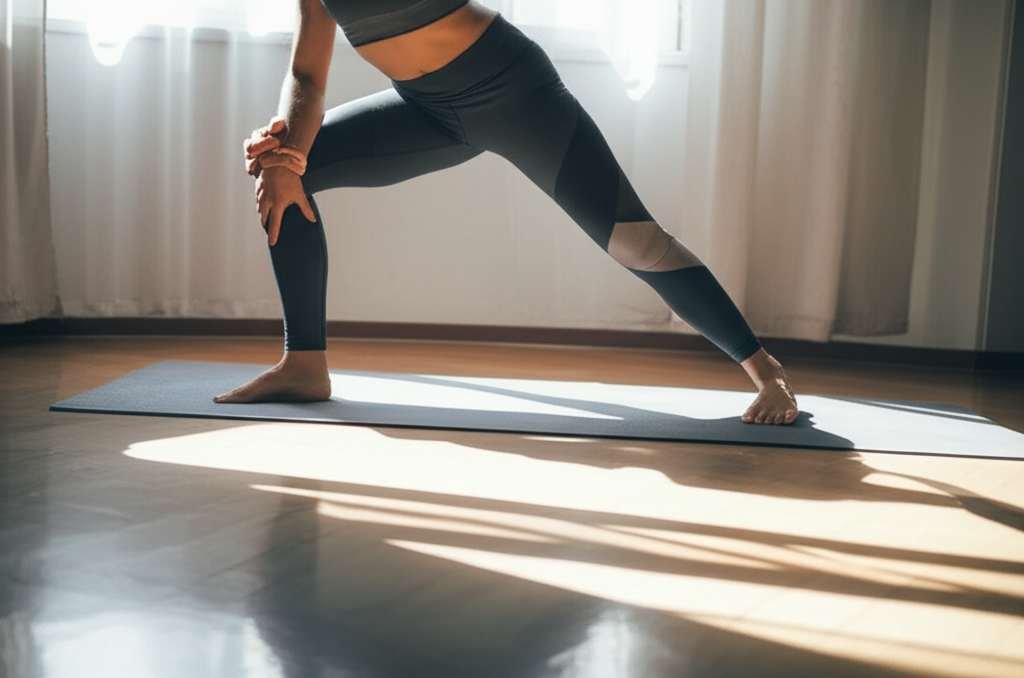
10 home workouts without equipment for beginners: This guide offers simple, effective exercises you can do anywhere, anytime, to boost fitness and confidence without needing gym gear.
Feeling overwhelmed by complicated workout routines or the need for fancy equipment? You’re not alone! Many people find starting a fitness journey daunting, especially when they think they need a gym membership or expensive gear.
But here’s some great news: you can achieve fantastic fitness results right at home, with no equipment at all! This guide is designed to make it easy and enjoyable for you to get moving and feel amazing.
We’ll walk through ten simple, effective workouts perfect for beginners. Get ready to build strength, improve your endurance, and boost your energy, all from the comfort of your living room!
Why Home Workouts Without Equipment Are Perfect for Beginners
Starting a fitness routine can sometimes feel like trying to solve a puzzle with missing pieces. You might wonder where to begin, what exercises are safe, or if you’re even doing them right. This is especially true when you see fitness influencers using all sorts of machines and weights.

The beauty of bodyweight exercises is their simplicity and accessibility. They use your own body as resistance, meaning you can perform them anywhere, at any time. This removes common barriers like travel time to a gym or the cost of memberships and equipment.
For beginners, this means you can focus on learning fundamental movements, building a strong foundation, and developing consistency. As you get stronger, you can naturally progress by doing more repetitions, increasing the duration of your sets, or trying more challenging variations of the exercises. It’s a journey of building confidence, one successful workout at a time.
The 10 Essential Home Workouts Without Equipment for Beginners
These ten exercises are foundational and work a wide range of muscle groups. They are easy to learn and can be modified to suit your current fitness level. Remember to listen to your body and focus on proper form over speed.
1. Squats
Squats are a fundamental lower-body exercise that targets your quadriceps, hamstrings, glutes, and core. They mimic everyday movements like sitting down and standing up, making them incredibly functional.
How to do it:
- Stand with your feet shoulder-width apart, toes pointing slightly outward.
- Keep your chest up, shoulders back, and core engaged.
- Lower your hips as if you’re sitting back into a chair, keeping your back straight and knees tracking over your toes (not caving inward).
- Aim to lower until your thighs are parallel to the floor, or as low as comfortably possible.
- Push through your heels to return to the starting position.
Beginner Tip: If a full squat is challenging, start by practicing sitting down onto a sturdy chair and standing back up, focusing on the movement pattern.
2. Push-Ups
Push-ups are a fantastic upper-body exercise that works your chest, shoulders, triceps, and core. They are a true test of upper-body strength.
How to do it:
- Start in a plank position with your hands slightly wider than shoulder-width apart, fingers pointing forward.
- Keep your body in a straight line from your head to your heels, engaging your core.
- Lower your chest towards the floor by bending your elbows. Keep your elbows tucked slightly towards your body, not flaring out wide.
- Push back up to the starting position, fully extending your arms.
Beginner Tip: If standard push-ups are too difficult, perform them on your knees. Ensure your body still forms a straight line from your head to your knees.
3. Lunges
Lunges are excellent for building lower-body strength and improving balance. They work your quadriceps, hamstrings, and glutes individually, which can help address muscle imbalances.
How to do it:
- Stand with your feet hip-width apart.
- Step forward with one leg, lowering your hips until both knees are bent at approximately a 90-degree angle.
- Ensure your front knee is directly above your ankle, and your back knee hovers just above the floor.
- Push off your front foot to return to the starting position.
- Repeat on the other leg.
Beginner Tip: Start with smaller steps to get a feel for the movement. You can also hold onto a wall or chair for balance if needed.
4. Plank
The plank is a powerful core exercise that strengthens your entire midsection, including your abdominals, obliques, and lower back. It also engages your shoulders and glutes.
How to do it:
- Start on your hands and knees.
- Extend your legs back one at a time, resting on your forearms and toes.
- Your elbows should be directly under your shoulders, and your forearms should be parallel to each other.
- Keep your body in a straight line from head to heels. Avoid letting your hips sag or rise too high.
- Engage your core by drawing your belly button towards your spine.
- Hold this position for a set amount of time (e.g., 20-30 seconds).
Beginner Tip: If a forearm plank is too intense, try a forearm plank on your knees. Focus on maintaining a straight line from your head to your knees.
5. Glute Bridges
Glute bridges are a great exercise for activating and strengthening your glutes and hamstrings. They are also beneficial for improving hip mobility and reducing lower back pain.
How to do it:
- Lie on your back with your knees bent and feet flat on the floor, hip-width apart.
- Keep your arms by your sides, palms facing down.
- Engage your glutes and lift your hips off the floor until your body forms a straight line from your shoulders to your knees.
- Squeeze your glutes at the top of the movement.
- Slowly lower your hips back down to the starting position.
Beginner Tip: Focus on squeezing your glutes at the top. Imagine you’re trying to crack a walnut between them!
6. Jumping Jacks
Jumping jacks are a classic cardiovascular exercise that gets your heart rate up quickly, improving your aerobic fitness. They also work your legs, arms, and shoulders.
How to do it:
- Start standing with your feet together and your arms at your sides.
- Jump while spreading your feet wider than hip-width apart and bringing your arms overhead to clap your hands.
- Immediately jump again, returning your feet to the starting position and bringing your arms back down to your sides.
- Repeat in a continuous rhythm.
Beginner Tip: If jumping is too strenuous on your joints, try a “step-out” version where you step one foot out to the side at a time while raising your arms.
7. Crunches
Crunches are a targeted exercise for your abdominal muscles, helping to build strength in your upper abs. They are a simple way to engage your core.
How to do it:
- Lie on your back with your knees bent and feet flat on the floor.
- Place your hands lightly behind your head or across your chest.
- Engage your abdominal muscles and lift your head and shoulders off the floor, curling your rib cage towards your hips.
- Focus on using your abs to lift, not your neck.
- Slowly lower back down to the starting position.
Beginner Tip: Don’t pull on your neck. Keep your neck relaxed and focus the movement on contracting your abdominal muscles.
8. Bird Dog
The bird dog is an excellent exercise for improving core stability, balance, and coordination. It also works your glutes and back muscles without putting stress on your spine.
How to do it:
- Start on your hands and knees, with your hands directly under your shoulders and your knees directly under your hips.
- Engage your core to keep your back flat and stable.
- Simultaneously extend your right arm straight forward and your left leg straight back.
- Keep your hips and shoulders square to the floor; avoid twisting.
- Hold for a moment, then return to the starting position.
- Repeat with your left arm and right leg.
Beginner Tip: Focus on slow, controlled movements. If extending fully is difficult, start by extending just one limb at a time.
9. Mountain Climbers
Mountain climbers are a dynamic exercise that works your core, shoulders, arms, and legs. They provide a cardiovascular challenge while building strength.
How to do it:
- Start in a high plank position, with your hands directly under your shoulders and your body in a straight line from head to heels.
- Bring your right knee towards your chest, keeping your core engaged.
- Quickly switch legs, bringing your left knee towards your chest as you extend your right leg back.
- Continue alternating legs in a running motion, bringing your knees towards your chest.
Beginner Tip: Start slowly, focusing on controlled movements rather than speed. You can also perform this exercise at a slower pace, bringing one knee to your chest at a time.
10. Burpees (Modified)
Burpees are a full-body exercise that combines a squat, plank, and jump. They are excellent for cardiovascular fitness and strength, but can be modified for beginners.
How to do it (Modified):
- Start standing.
- Lower into a squat position.
- Place your hands on the floor in front of your feet.
- Step your feet back one at a time into a plank position.
- Step your feet forward one at a time back into a squat.
- Stand up.
- (Optional, for a slight progression) Add a small jump at the end, reaching your hands overhead.
Beginner Tip: Focus on mastering the stepping motion before adding any jumps. This modified version is still incredibly effective without the high impact.
Structuring Your Beginner Home Workout Routine
Now that you have your list of effective exercises, let’s talk about how to put them together into a routine. Consistency is key, and a well-structured plan will help you stay motivated and see results.
For beginners, it’s often best to start with a full-body workout. This means including exercises that target different muscle groups in each session. You can also focus on performing a set number of repetitions for each exercise, or holding a position for a specific duration.
A good starting point is to aim for 2-3 sets of 10-15 repetitions for most exercises, or holding planks for 20-30 seconds. Rest for 60-90 seconds between sets.
Sample Beginner Workout Schedule
Here’s a sample schedule you can adapt:
| Day | Focus | Exercises | Notes |
|---|---|---|---|
| Monday | Full Body | Squats, Push-Ups (on knees), Lunges, Plank, Glute Bridges | 2 sets of 10-12 reps each, hold plank for 20-30 secs. |
| Tuesday | Rest or Light Activity | Walking, stretching | Active recovery is important! |
| Wednesday | Full Body | Squats, Push-Ups (on knees), Bird Dog, Mountain Climbers (slow), Jumping Jacks (modified) | 2 sets of 10-12 reps each, hold plank for 20-30 secs. |
| Thursday | Rest or Light Activity | Walking, stretching | Listen to your body. |
| Friday | Full Body | Squats, Modified Burpees, Lunges, Plank, Glute Bridges | 3 sets of 8-10 reps each, hold plank for 30 secs. |
| Saturday | Rest or Light Activity | Yoga, gentle walk | Enjoy your weekend! |
| Sunday | Rest | Full rest day | Allow your body to recover and rebuild. |
How to Progress
As you get stronger, you can gradually increase the difficulty. Here are a few ways to do that:
- Increase Repetitions: If 10 reps feel easy, try 12 or 15.
- Increase Sets: Move from 2 sets to 3 sets.
- Decrease Rest Time: Shorten the rest periods between sets.
- Increase Hold Time: Hold planks or other isometric exercises for longer.
- Try More Challenging Variations: For example, progress from knee push-ups to standard push-ups, or from modified burpees to full burpees.
- Add More Exercises: Introduce new bodyweight exercises as you learn them.
Remember, progress is about consistent effort and gradual improvement. Don’t rush the process!
The Importance of Proper Form
When you’re working out at home without a trainer, it’s super important to pay close attention to how you perform each exercise. Doing an exercise with incorrect form can not only make it less effective but can also lead to injuries. This is especially true for beginners who are still learning the movements.
Think of your body like a well-built structure; each part needs to be aligned correctly for it to be strong and stable. For example, in a squat, keeping your back straight and your knees over your toes ensures you’re engaging the right muscles and not putting undue stress on your joints.
To help ensure you’re using proper form:
- Watch Videos: Many reputable fitness channels on platforms like YouTube offer detailed demonstrations of each exercise. Look for channels from certified trainers or well-known fitness organizations. The NHS also provides excellent, easy-to-understand guidance on strength exercises.
- Use a Mirror: If possible, set up in front of a mirror so you can see your form and make adjustments as needed.
- Go Slow: Perform each movement slowly and deliberately, focusing on the muscle engagement. This allows you to feel what the exercise should feel like.
- Focus on One Thing at a Time: If you’re struggling with multiple aspects of form, focus on correcting one element per set or per workout.
Prioritizing form over the number of repetitions or the speed of your workout will set you up for long-term success and prevent potential setbacks from injuries.
Mindset Matters: Staying Motivated
Starting a new workout routine is exciting, but keeping that motivation going can be the biggest challenge for many beginners. Life gets busy, and sometimes the couch just looks more appealing than a workout. But building a sustainable fitness habit is less about willpower and more about smart strategies.
One of the most effective ways to stay motivated is to set realistic goals. Instead of aiming to become a marathon runner overnight, set small, achievable goals like completing three workouts a week for the first month. Celebrate these small wins! They build confidence and show you that you are capable of making progress.
Another powerful tool is accountability. This could mean:
- Workout Buddy: Find a friend or family member to exercise with, either in person or virtually. Knowing someone else is counting on you can be a great motivator.
- Tracking Your Progress: Use a notebook or an app to log your workouts, including the exercises you did, the number of reps, and how you felt. Seeing how far you’ve come is incredibly encouraging. Websites like Verywell Fit offer tips on effective progress tracking.
- Finding Joy: Experiment with different exercises and find what you enjoy. If you dread a certain movement, try to find an alternative that works similar muscles but feels more fun. Sometimes, putting on your favorite music can make a huge difference!
Remember why you started. Whether it’s to feel more energetic, improve your health, or boost your confidence, keeping your “why” in mind will help you push through those days when motivation is low.
Frequently Asked Questions About Home Workouts for Beginners
Q1: How often should I do these home workouts as a beginner?
A1: Aim for 2-3 full-body workouts per week, with at least one rest day in between. This allows your muscles to recover and rebuild, which is crucial for progress and preventing burnout.
Q2: How long should each workout session last?
A2: For beginners, a workout session can range from 20 to 40 minutes. Focus on quality over quantity, ensuring you complete each exercise with good form.
Q3: What if I can’t do a full push-up or squat?
A3: That’s perfectly normal! Use the beginner modifications provided, such as knee push-ups or using a chair for squats. The key is to start where you are and gradually build strength to perform the full versions.
Q4: How do I know if I’m doing the exercises correctly?
A4: Watch reputable video demonstrations, use a mirror to check your form, and focus on slow, controlled movements. It’s better to do fewer reps with correct form than many reps with poor form.
Q5: Will these workouts help me lose weight?
A5: Yes, these workouts can contribute to weight loss by burning calories and building muscle. Muscle burns more calories at rest than fat, so increasing your muscle mass can boost your metabolism over time. However, weight loss is also significantly influenced by your diet. For a science-backed approach to weight loss, focusing on a balanced and calorie-conscious diet is essential.
Q6: What are some signs I should rest instead of working out?
A6: Listen to your body. If you experience sharp pain, extreme fatigue, or feel unwell (like having a fever), it’s best to rest. Soreness is normal, but persistent or intense pain is a sign to stop and recover.
Conclusion
Embarking on a fitness journey doesn’t require a gym membership or expensive equipment. You have the power to transform your health and well-being right in your own home with just your body weight.
The ten exercises we’ve covered – squats, push-ups, lunges, planks, glute bridges, jumping jacks, crunches, bird-dog, mountain climbers, and modified burpees – are a fantastic starting point for any beginner. They are simple to learn, highly effective, and can be adapted to your individual fitness level.
Remember to prioritize proper form to maximize benefits and prevent injuries. Structure your workouts consistently, listen to your body, and don’t be afraid to modify exercises as needed. Celebrate your progress, no matter how small, and stay motivated by remembering your personal goals.
By incorporating these bodyweight workouts into your routine, you’re not just building physical strength and endurance; you’re also building confidence, discipline, and a sustainable healthy habit that will serve you well for years to come. So, lace up your shoes (or go barefoot!), clear a little space, and get ready to feel amazing!
As an Amazon Associate, We earn from qualifying purchases. When you purchase a product through Amazon links on pulsefitguide.com, we may earn a small commission at no extra cost to you. This helps support the site and keep our content free.